Salone Selection

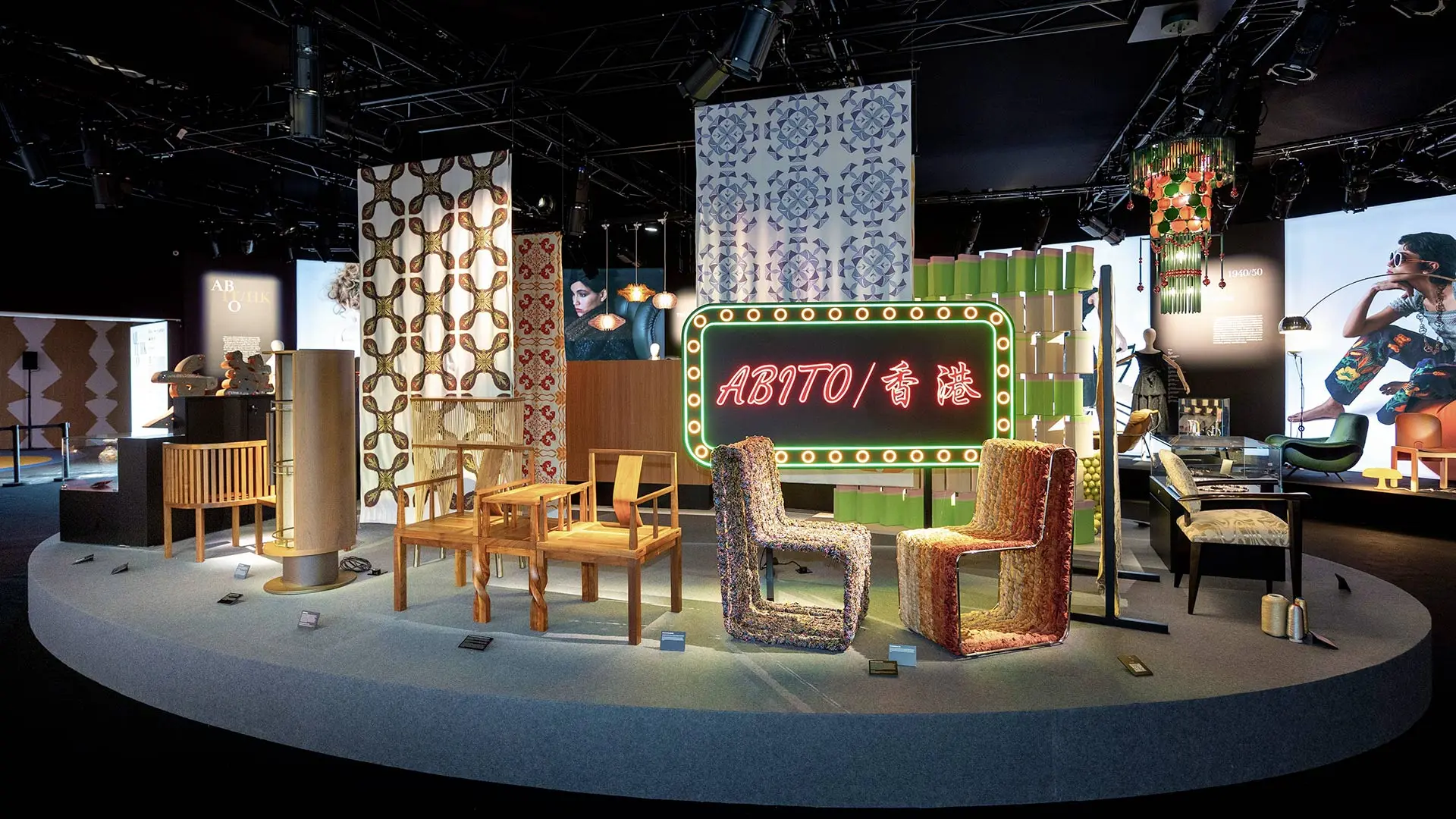
Following its debut at Salone del Mobile.Milano 2026, the exhibition – organised and promoted by the Ministry of Foreign Affairs and International Cooperation and curated by Palomba Serafini Associati – will be held in China from 18 to 21 November as part of DesignInspire
11 pieces that since 1990 have told a story of beauty, technology and dreams
Text by
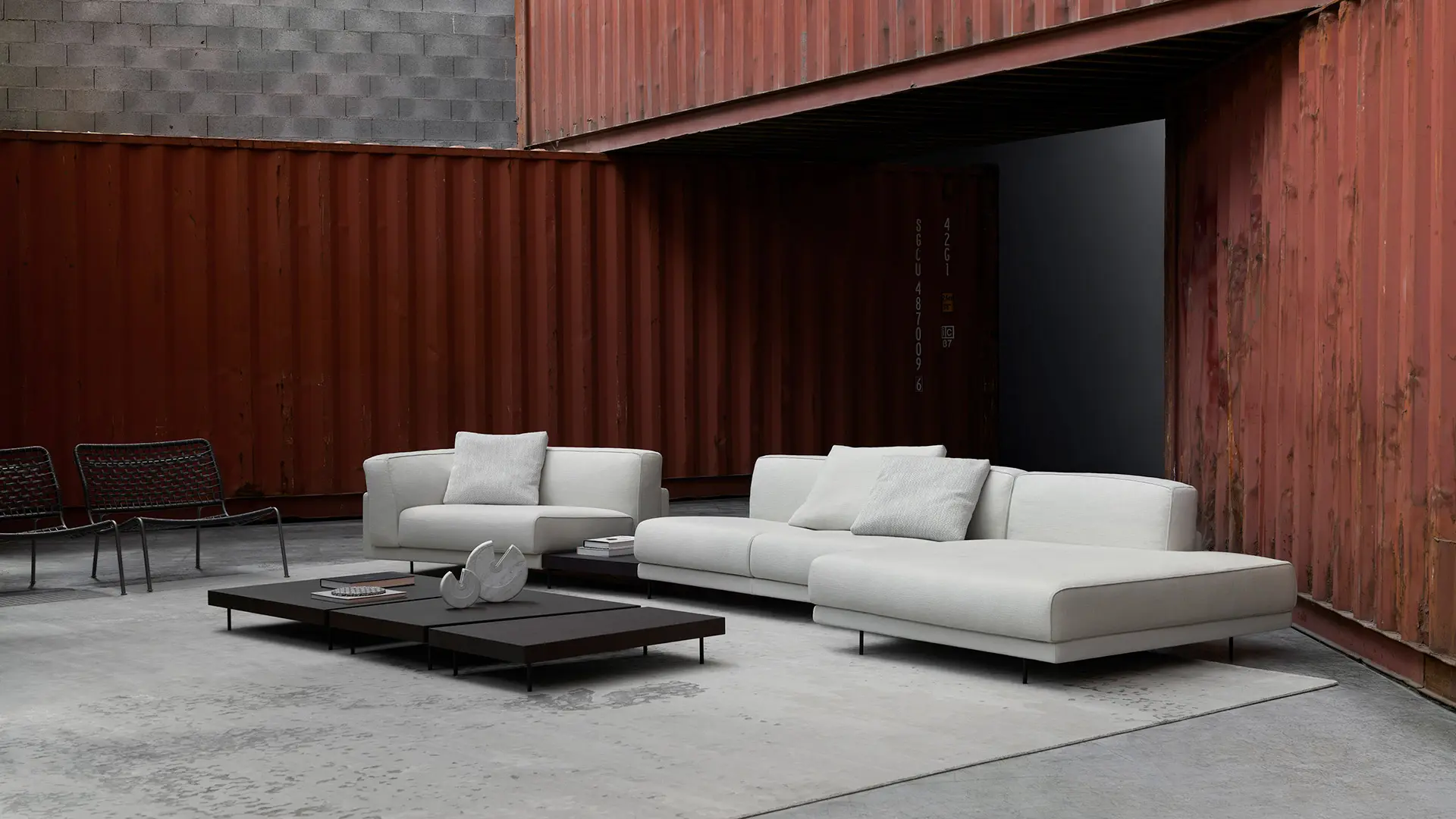
Frog, design Piero Lissoni, Living Divani
The winged lamp by Ingo Maurer, the spiral bookcase by Ron Arad or the transformable sofa by Magistretti. Exercises in freedom to reinvent everyday objects that are light, ironical and innovative
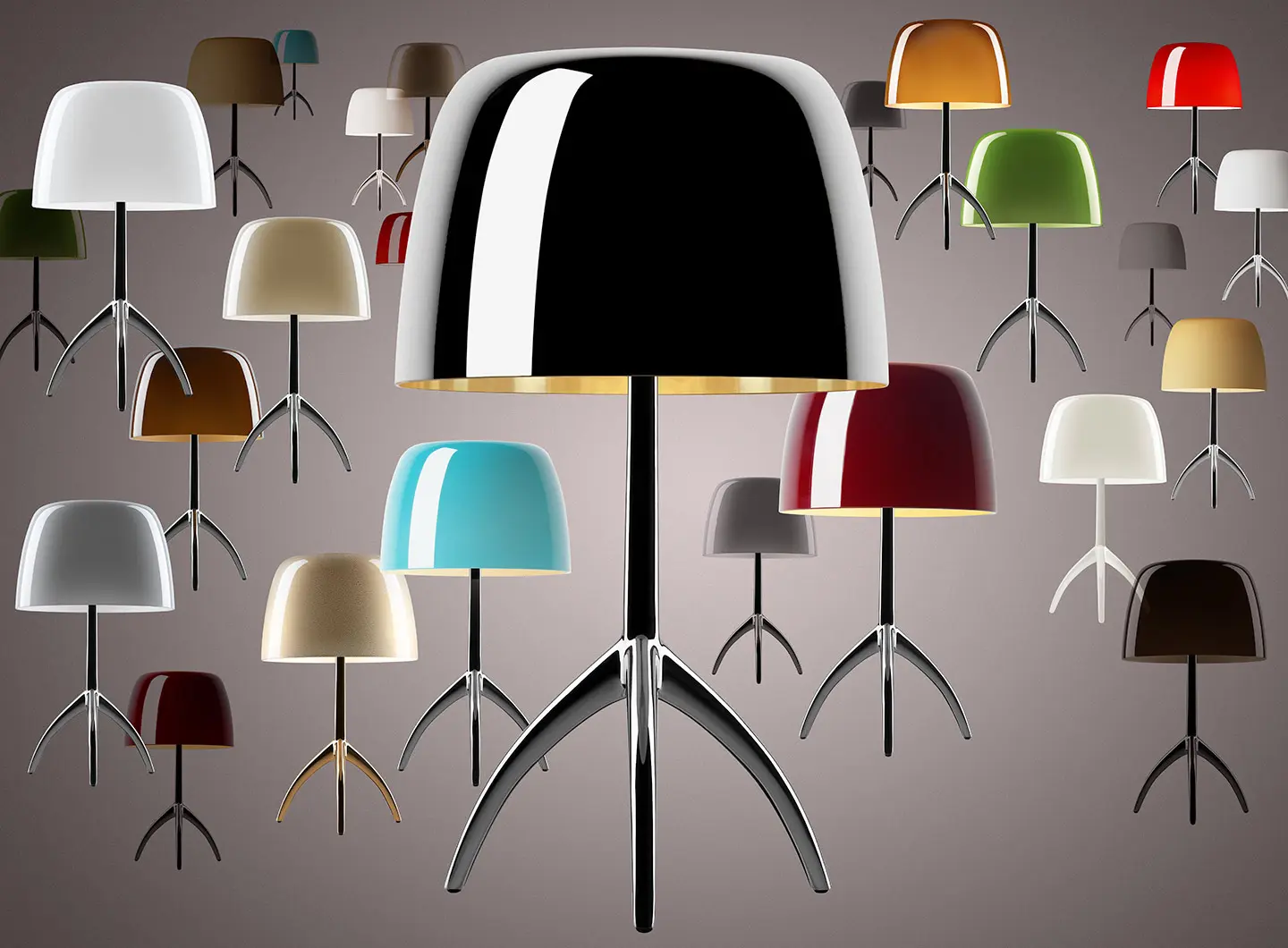
Lumiere lamp, design by Rodolfo Dordoni, Foscarini, 1990
A reinterpretation of the classic bedside lamp, this immediately revealed itself as a piece of decor that was unique yet familiar, with its fluid and restrained lines and the combination of the glass of the diffuser and the metal of the tripod. Over these more than thirty years it has been constantly renewed, without ever sacrificing its personality: from the proportions — Large and Small — to the finishes — Pastilles and Bulles — and the colours. This continues in the latest additions, the Lumiere Nuances, with chromatically coordinated metal diffuser and base. Three colours are available: Cipria, a pinkish shade; Creta, greyish-green, and Sahara, a warm colour evoking the desert sand. These innovative changes are more than just aesthetic: they also affect the design of light, capable of ensuring that the brightness spreads more uniformly, eliminating shadows and securing lower energy consumption through the use of LED replacement bulbs.
Seating: Rose Chair and Getsuen, Flowers Collection, design by Masanori Umeda, Edra, 1990
Two poetic and surprising interpretations, that transform nature into an original domestic landscape. The first, more than a lounge chair, is a rose ready to open that changes the form of a flower into a welcoming chair, where nature and craftsmanship meet in an exercise in haute couture. The petals, handcrafted and upholstered one by one, then assembled in layers on the moulded metal structure, with shaped wooden elements, are upholstered in velvet that is soft and sensuous to the touch to evoke the texture of a real corolla. The same botanical inspiration returns in Getsuen, the lily-chair with a delicate silhouette that conceals a sturdy steel structure crafted by hand. The polyurethane foam padding and velvet accentuate its softness, while small wheels make it easy to move.
Read also: Edra: two icons, two anniversaries
Lucellino lamp, design by Ingo Maurer, Ingo Maurer, 1992
One of the most iconic creations from the poet-seducer of light, instinctively attracted by its immaterial magic. The play on words in its name (luce = light and ucellino = bird) becomes a poetic image, first, and then a functional object. A simple incandescent bulb is turned into a light, surprising creature by a pair of wings handcrafted with real goose feathers. Supported by a slender copper arm and crossed by the designer’s characteristic red cable, it seems ready to take flight, suspended between irony and poetry. A simple, almost childlike image that subverts the conventions of lighting and transforms an everyday object into a small animated presence. A project that perfectly reflects Ingo Maurer’s expressive freedom and his ability to surprise with minimalist gestures, avoiding formal conventions. It comes in wall and table versions, and also in a model with two bulbs and touch mode.
Storet chest of drawers, design by Nanda Vigo, Acerbis, 1994
Presented for the first time at the Salone del Mobile, this playful and lively chest of drawers features glossy, vibrant colours. Simple in its verticality but transgressive in its geometry, it plays on the contrast between the clear lines of the structure and the rounded shapes of the fronts, transforming a storage unit into a decorative presence with a strong personality. Reissued in 2020, it renews the dialogue between tradition and innovation through the elegant cabinetry of the structure, available in black ash, dark-stained walnut or matte lacquer. In a tall version with eight drawers and a more compact one, it sports a glossy palette ranging from white to black, linen to burgundy, pink to navy blue and fluorescent green — a tribute to Nanda Vigo’s installations, in which light and colours redefined the perception of space, transforming it into a sensory, dynamic experience.
Lumiere, design Rodolfo Dordoni, Foscarini
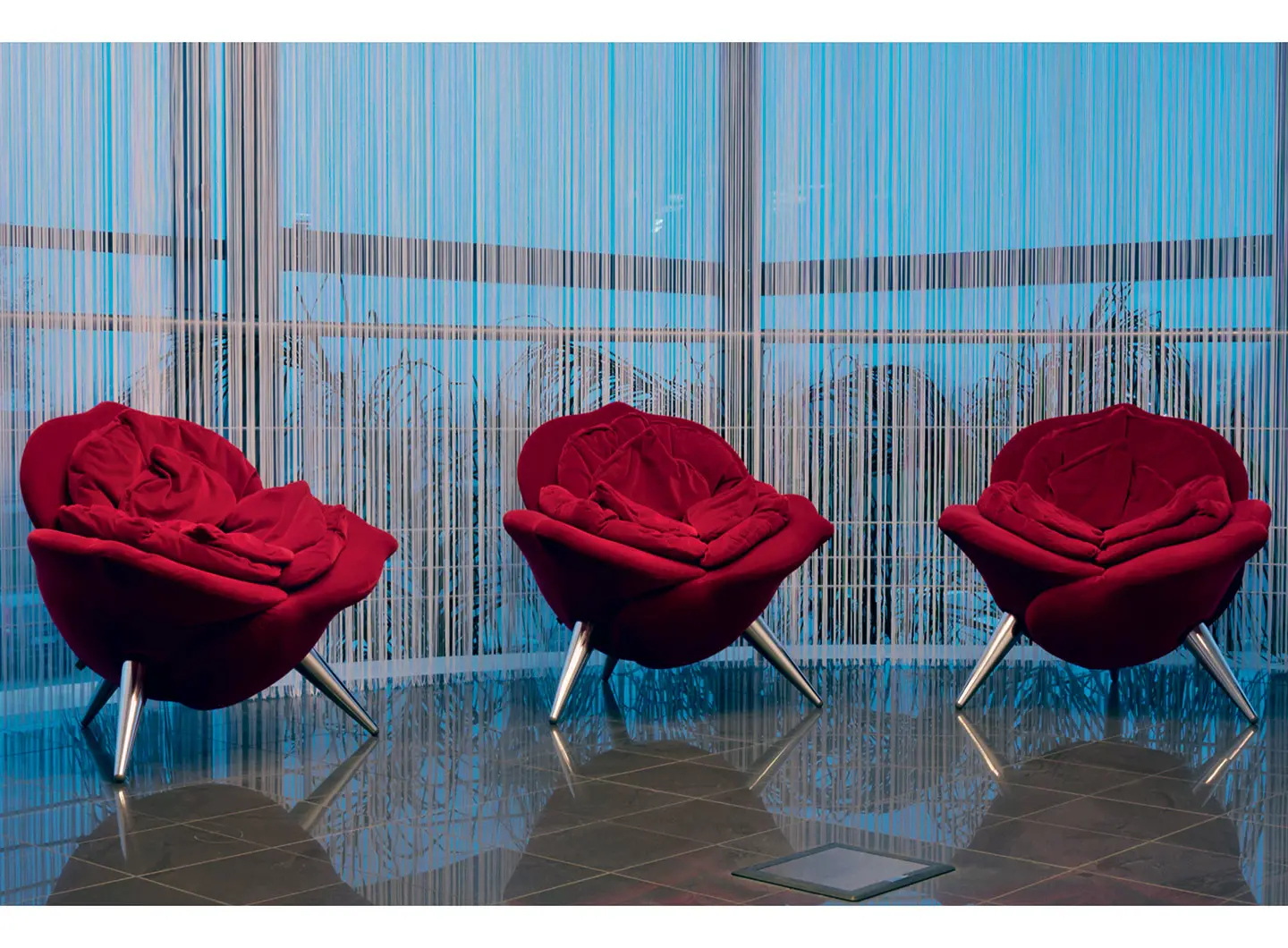
Rose Chair, design Masanori Umeda, Edra - Ph. Andrea Martiradonna
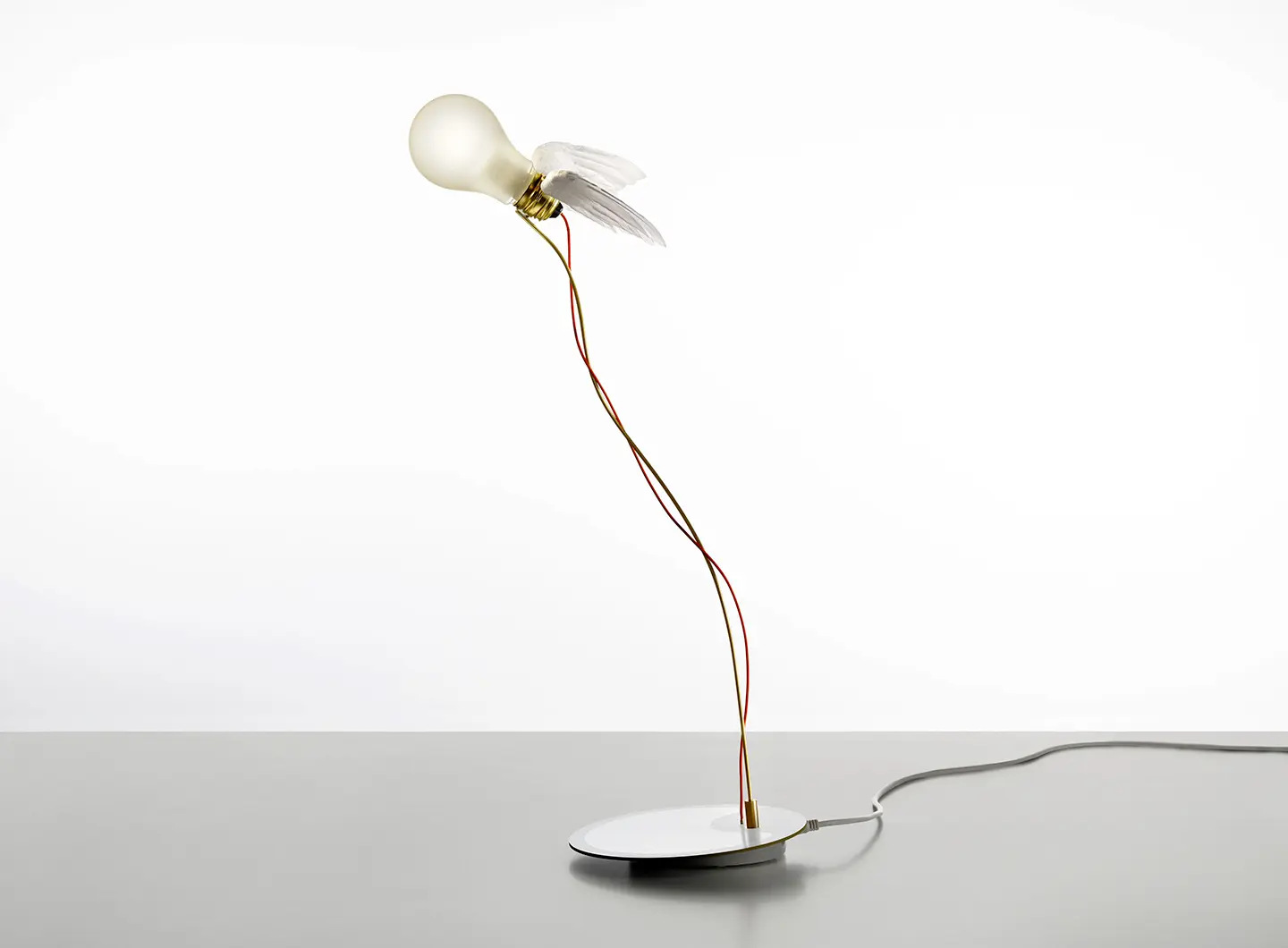
Lucellino, design Ingo Maurer, Ingo Maurer
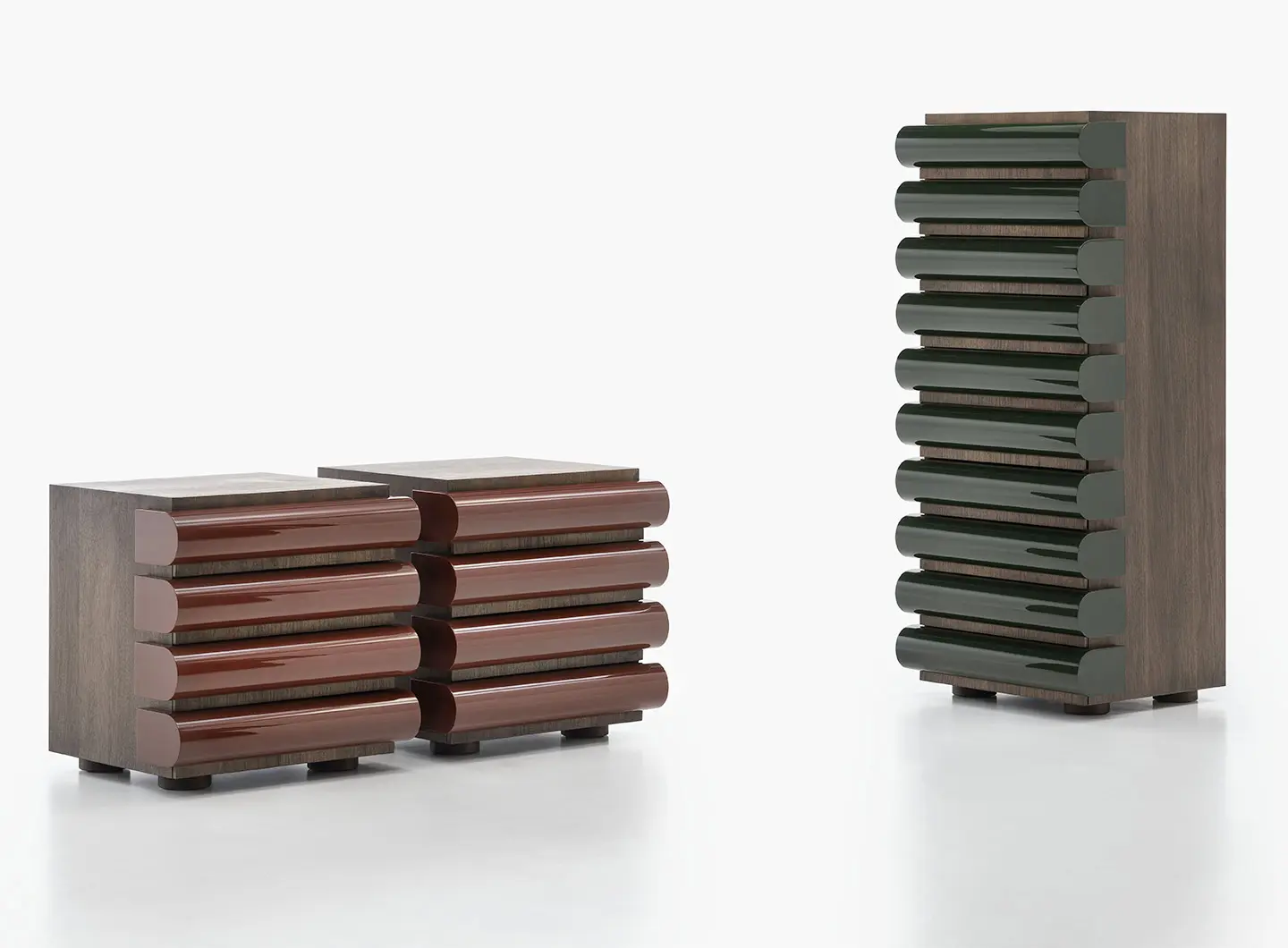
Storet, designer Nanda Vigo, Acerbis


Bookworm Bookcase, designed by Ron Arad, Kartell, 1994
A revolutionary bookcase, freed from the rigid geometry of traditional shelving and transformed into a sculptural sign. Born from Arad’s experiments with flexible metal ribbons, it is reinterpreted in extruded PVC, elastic but resistant, enabling it to be shaped at will and adapted to any space. The result is a modular system with surprising compositional freedom: just fix the bookends to the wall to shape the ribbon at will into curves, waves, spirals and ever-changing configurations. Innovative and disruptive, capable of combining formal research, functionality and accessibility, this project marked Arad’s transition from research into the one-off piece to industrial production. With over three million metres sold, it is an international icon, present in the collections of the most important museums and featured in high-impact exhibition installations. A bookcase, but also a habitable sculpture, which transforms function into a creative gesture.
Frog Chair, design by Piero Lissoni, Living Divani, 1995
This is one of those chairs that seem untouched by time. Thirty years since its debut, it retains it as fresh as ever, thanks to its unusual formal purity and effortless elegance, capable of fitting into different settings and styles. With a lightweight structure and welcoming proportions, it interprets an idea of informal comfort that evokes the pleasure of relaxation and the light-heartedness of summer. Its identity also stems from the encounter between the industrial precision of metal and the craft skills of weaving, available in different materials: leather, fabric, saddle leather, cord and PVC. Over time, the collection has been enriched with the padded version and the chaise-longue, interpreted for indoors and outdoors. A project that shows that true contemporaneity lies not in the search for effect, but in the ability to remain timely without losing one’s identity. And just think that the manufacturers were convinced they would never sell a single chair!
Tato seat/footrest, design by Denis Santachiara, Baleri Italia, 1995
This is the forerunner of a family of seats characterised by ironical design, minimalist forms and an explosion of colour. A direct invitation to a free and informal use of space. Ovoid in form and with a surprising elasticity, Tato, two years since its launch, is enriched with two spherical versions of different sizes — Tatino and Tatone designed by Enrico Baleri — which expand the concept, transforming the initial intuition into a true collection. Seats, footrests or furnishing elements that are easy to move, the three poufs share side slits that allow the elastic fabric to remain in place and a rigid internal structure covered in flexible CFC-free cold-foamed polyurethane, capable of adapting to the body and then recovering its geometry. Completing the project is the removable cover in bi-elastic fabric, available in numerous colour variants. In these playful and versatile objects, technological research meets the freedom to reinvent everyday gestures and functions.
Ospite sofa, design by Vico Magistretti, Campeggi, 1996
The answer to the new theme of the ’90s: furniture that is nomadic, aka transformable. This is a discreetly elegant small sofa that converts into a bed to welcome an unexpected guest. Inspired by military camp beds, it has a folding beechwood frame, a jute seat top and a few details that define its character, such as the blue maple bar of the backrest. When not in use, it folds back on itself into just 13 centimetres thick, practically disappearing from view. Functional, but without ever being banal, it expresses a conception of design that shuns excesses, with versatility, restraint and subtle irony coexisting in perfect balance. Ospite interprets with irony, grace and lightness one of Magistretti’s most successful intuitions: turning a simple gesture into an intelligent solution for inhabiting space, giving rise to a product capable of solving the most difficult spatial situations.
Charles sofa, design byAntonio Citterio, B&B Italia, 1997
A classic of contemporary design, as well as the manufacturer’s best seller, capable of traversing fashions and generations without losing its timeliness. Charles launched the aesthetics of single-block cushions, marking a breakthrough in the evolution of the modular sofa, exploring how restraint can generate variety. Its distinctive feature is its airy image, defined by the unmistakable inverted L-shaped feet in die-cast aluminium that raise the structure off the floor. A minimalist sign that dialogues with the slender armrest, the single-seat cushion and the loose cushions of the backrest, composing a balance between formal rigour and comfort. Thanks to the interchangeable elements, the flexible platform makes it possible to create multiple configurations — linear, corner or chaise longue — so adapting to different spaces and needs. Available in fabric or leather, it retains its timeless elegance unchanged.
Fortebraccio, design by Alberto Meda and Paolo Rizzatto, Luceplan, 1998
A new interpretation of the work lamp, in which efficiency, sturdy construction and freedom of movement are embodied in a balanced design. The secret lies in the innovative central joint, inspired by robotics, which enables the two arms to rotate independently on the horizontal and vertical axes, shedding light even in the most unusual positions. A feature of its design is the ergonomic polycarbonate handle, located on the top of the diffuser which, in addition to endowing it with an unmistakable identity, enables to the light beam to be directed with a natural, precise gesture. The control, dimmer or switch, is also located here, enabling the light to be adjusted simply and immediately. The universal attachments and its various configurations — for table, floor, wall, or as a spotlight — ensure that it adapts to multiple domestic and professional settings.
SUI lamp, design by Carlotta de Bevilacqua, Artemide, 1999, production 2002 (discontinued)
This was the first LED lamp and also portable to be made by the leading lighting company. The name in the ancient Chinese text I Ching means “following”. It recalls the philosophy behind the project: to free light from the constraints of architecture and make it a personal tool enabling everyone to carry their own light with them, authors of their own space and creating their own lighting scenario. Compact and handy, it has a polycarbonate body with an organic, prehensile form, easy to grip both to direct the light and to use it as a torch. It has a rechargeable lithium battery and touch-sensitive switch. The rounded base not only houses an LED that shows its charging status but also allows the lamp to rest comfortably against the body. It is completed by a pioneering design in which technological innovation and freedom of use merge naturally.
Read also: 10 Eighties design pieces. A blend of industrial production, irony and poetry
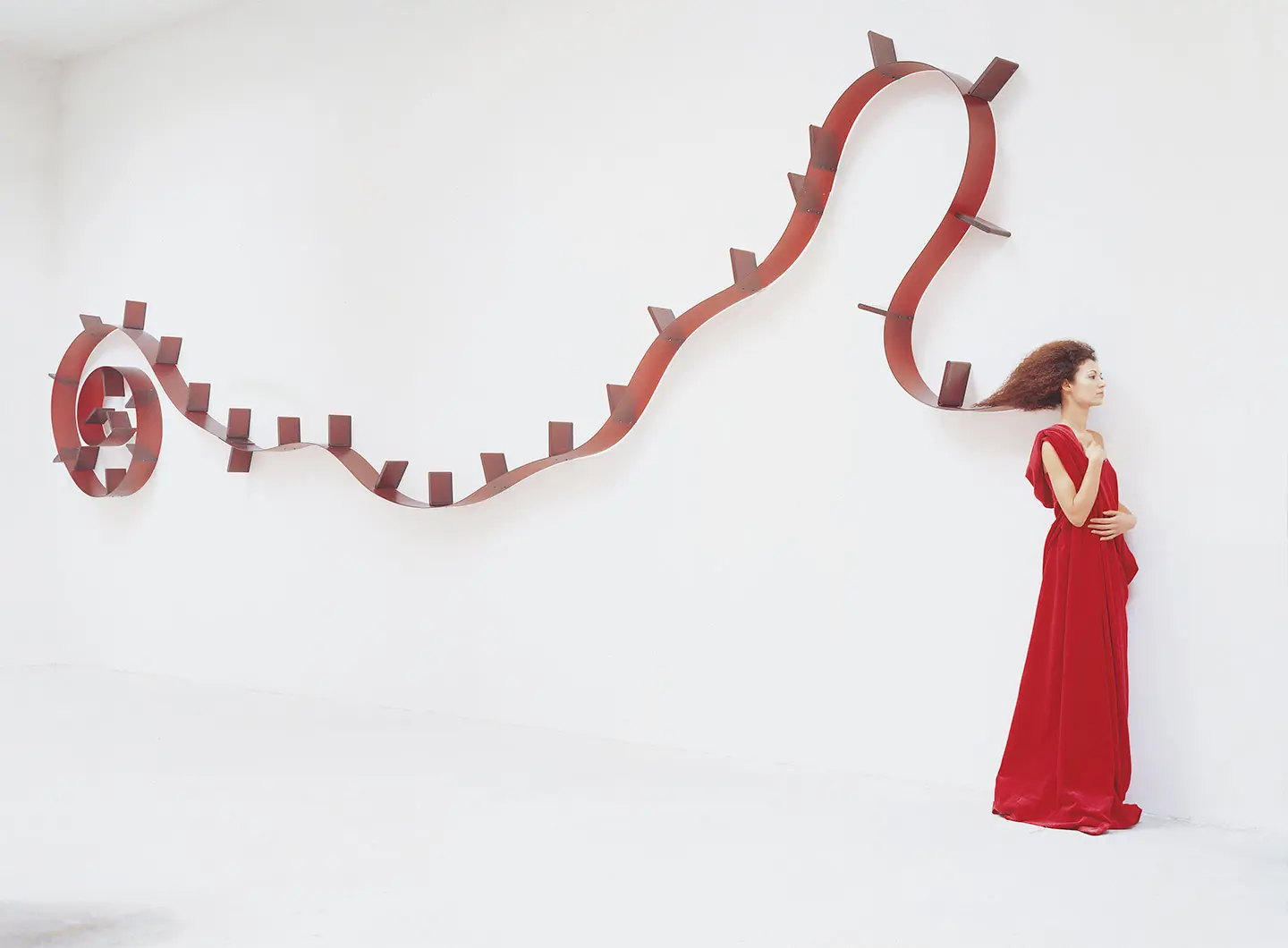
Bookworm, design Ron Arad, Kartell - Ph. Giovanni Gastel
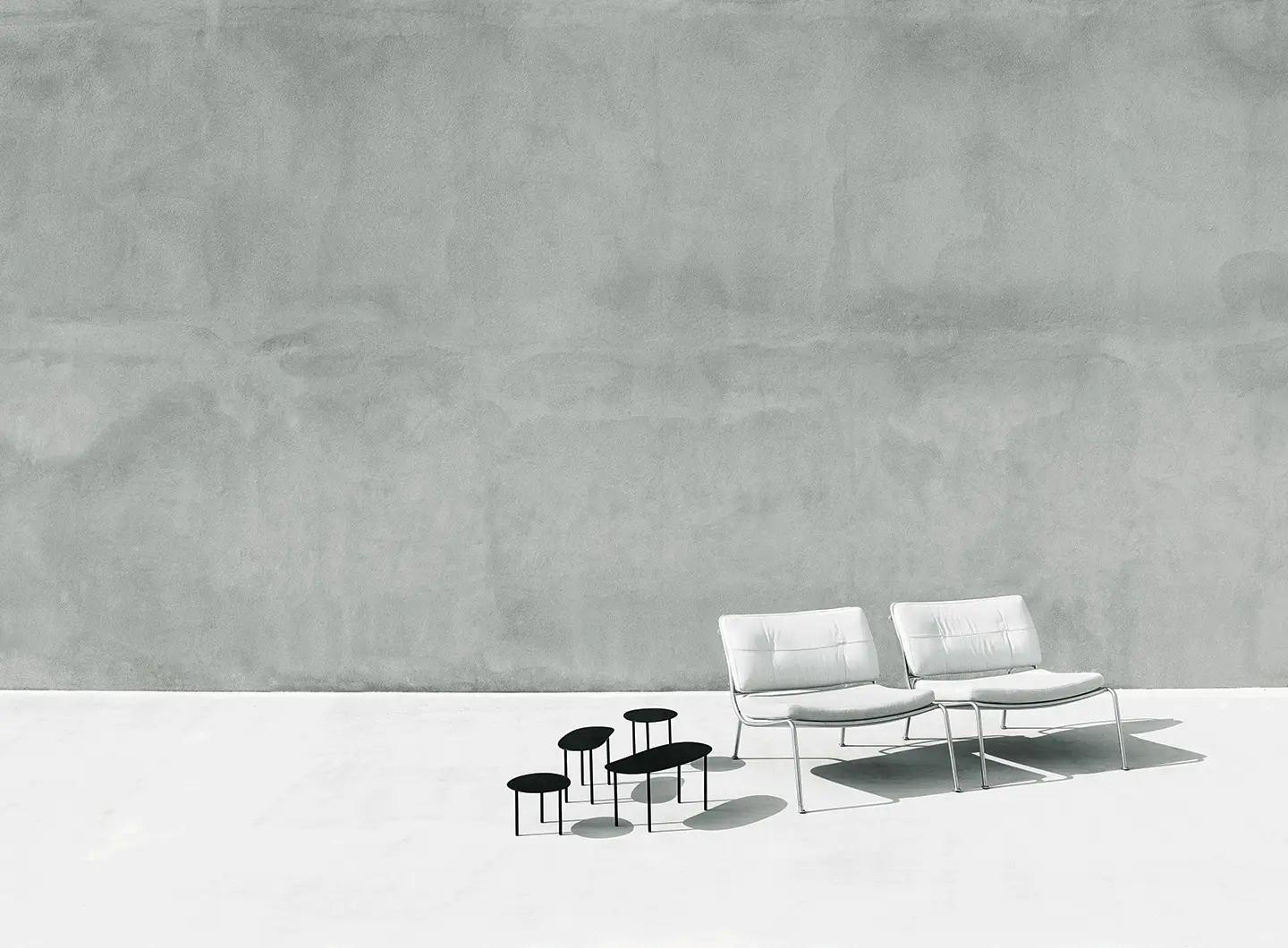
Frog, design Piero Lissoni, Living Divani
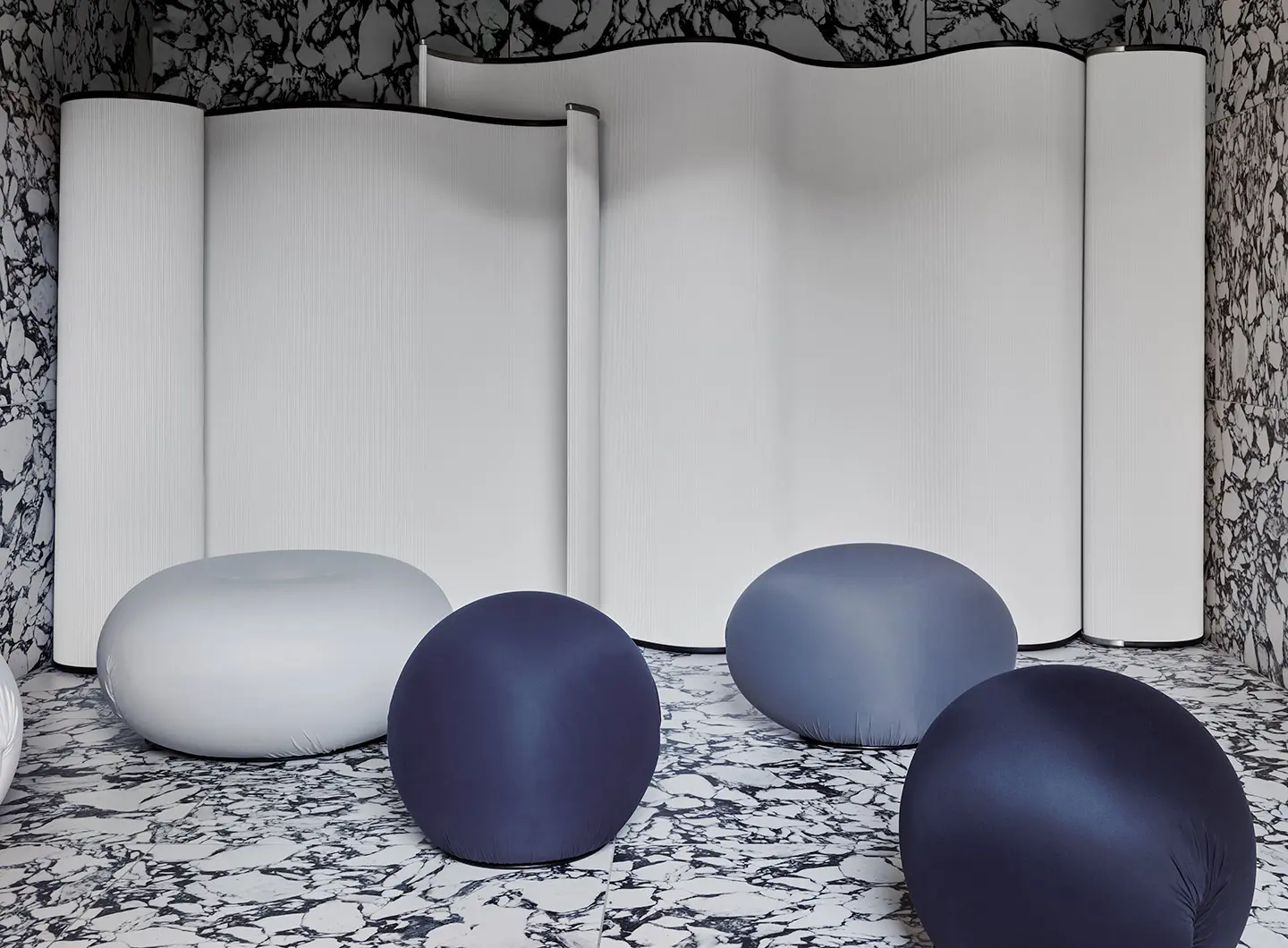
Tato, design Denis Santachiara, Baleri Italia
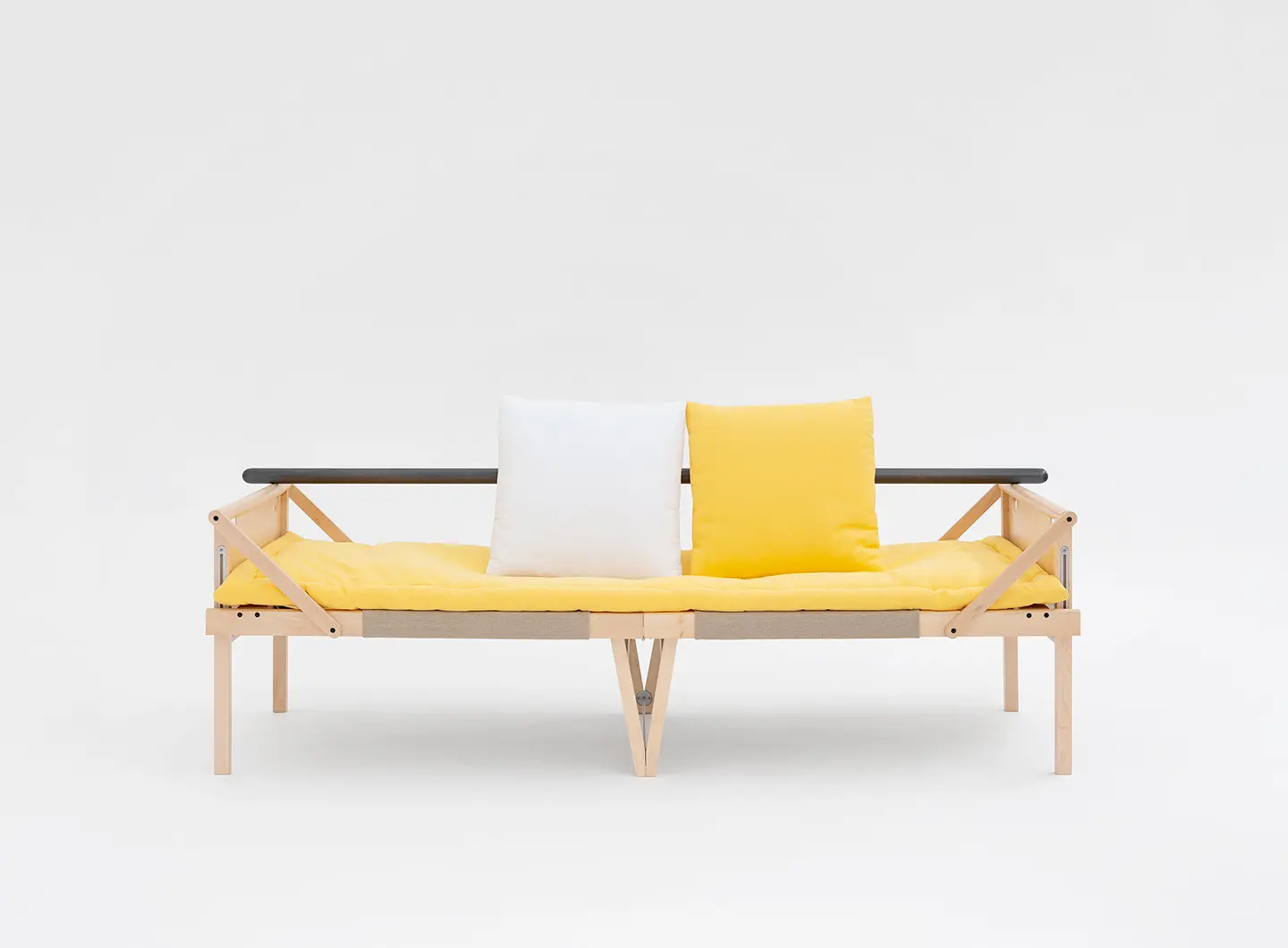
Ospite, design Vico Magistretti, Campeggi - Ph. Michele Foti
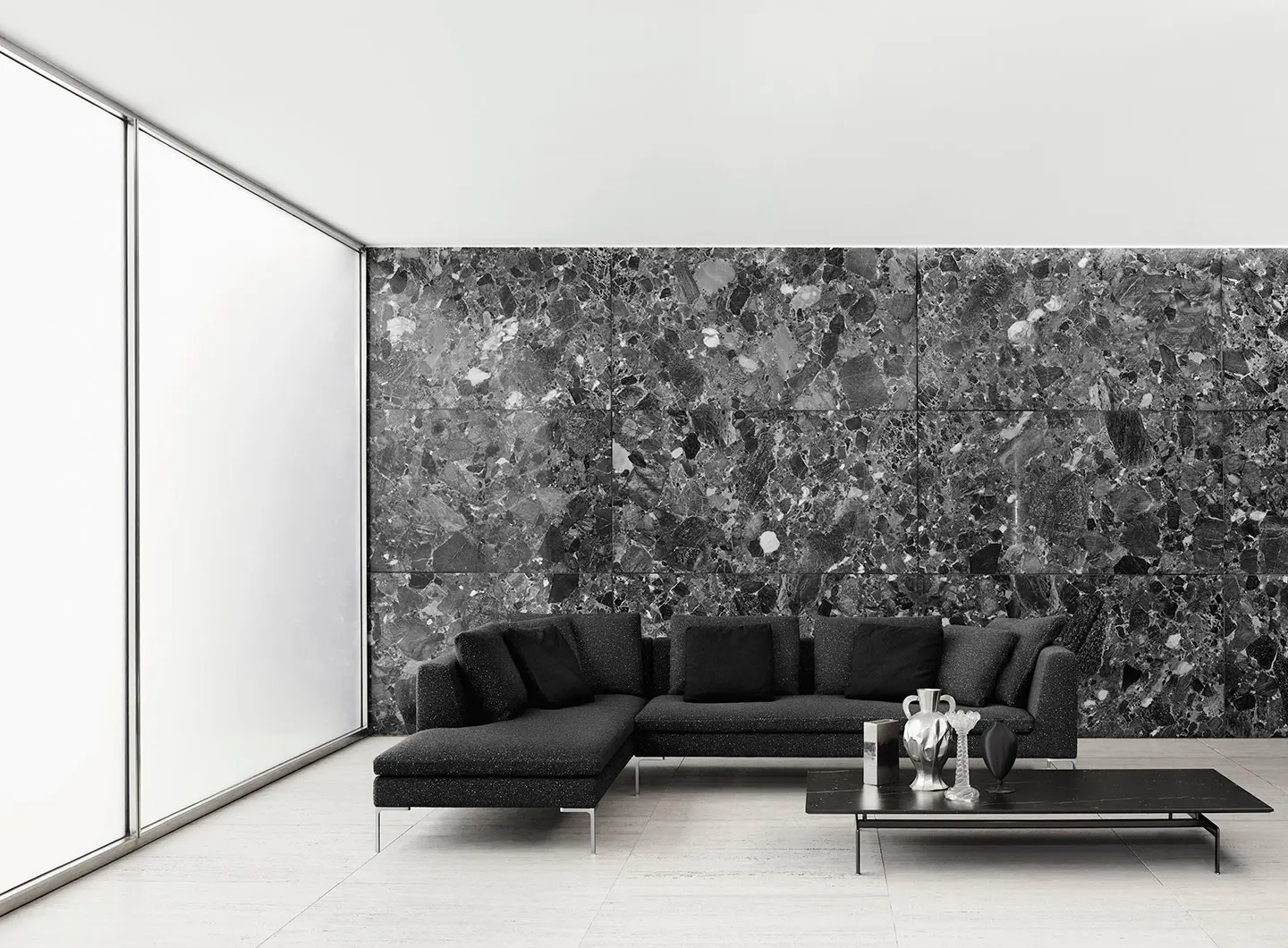
Charles, design Antonio Citterio, B&B Italia
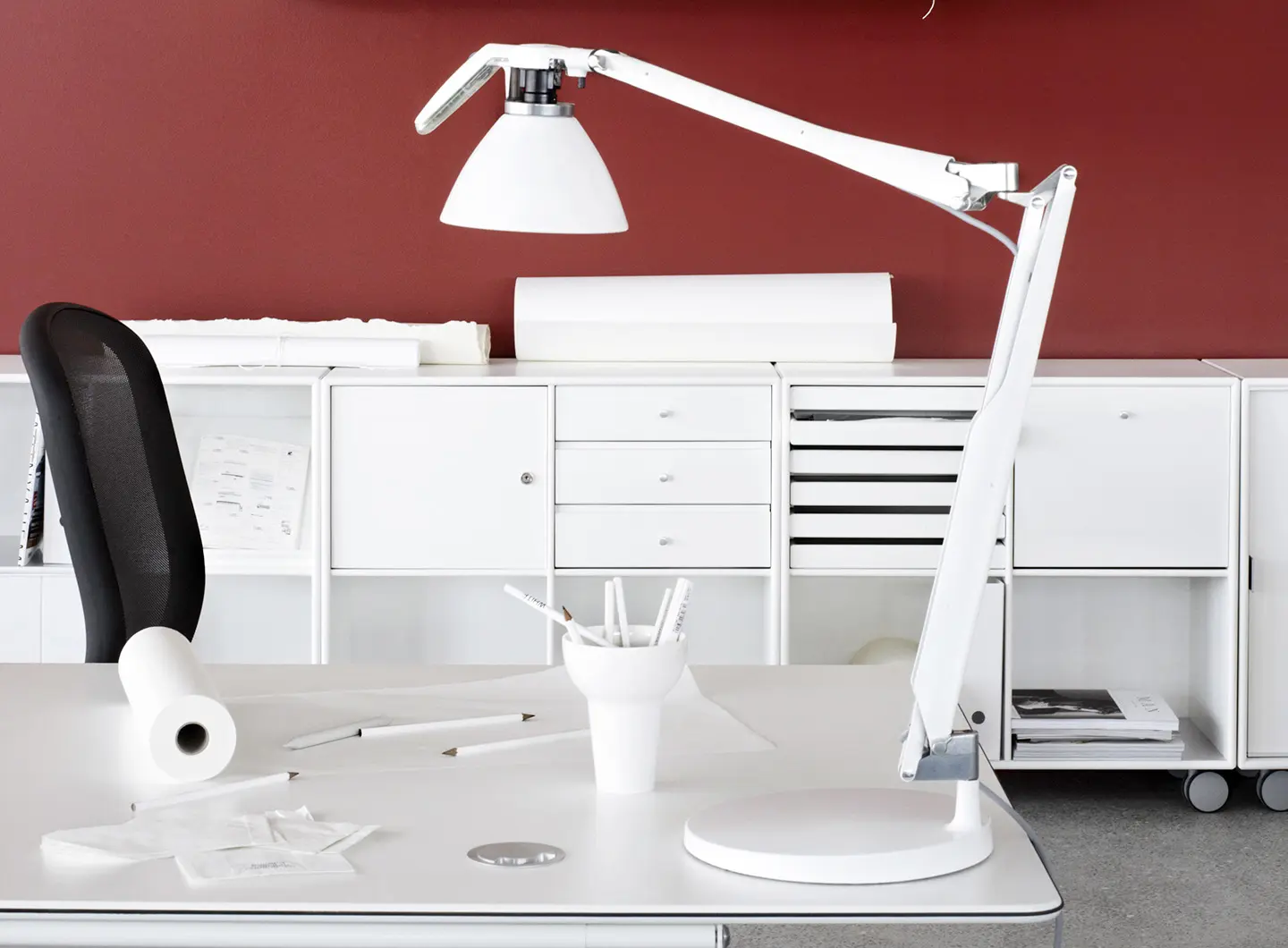
Fortebraccio, design Alberto Meda e Paolo Rizzatto, Luceplan
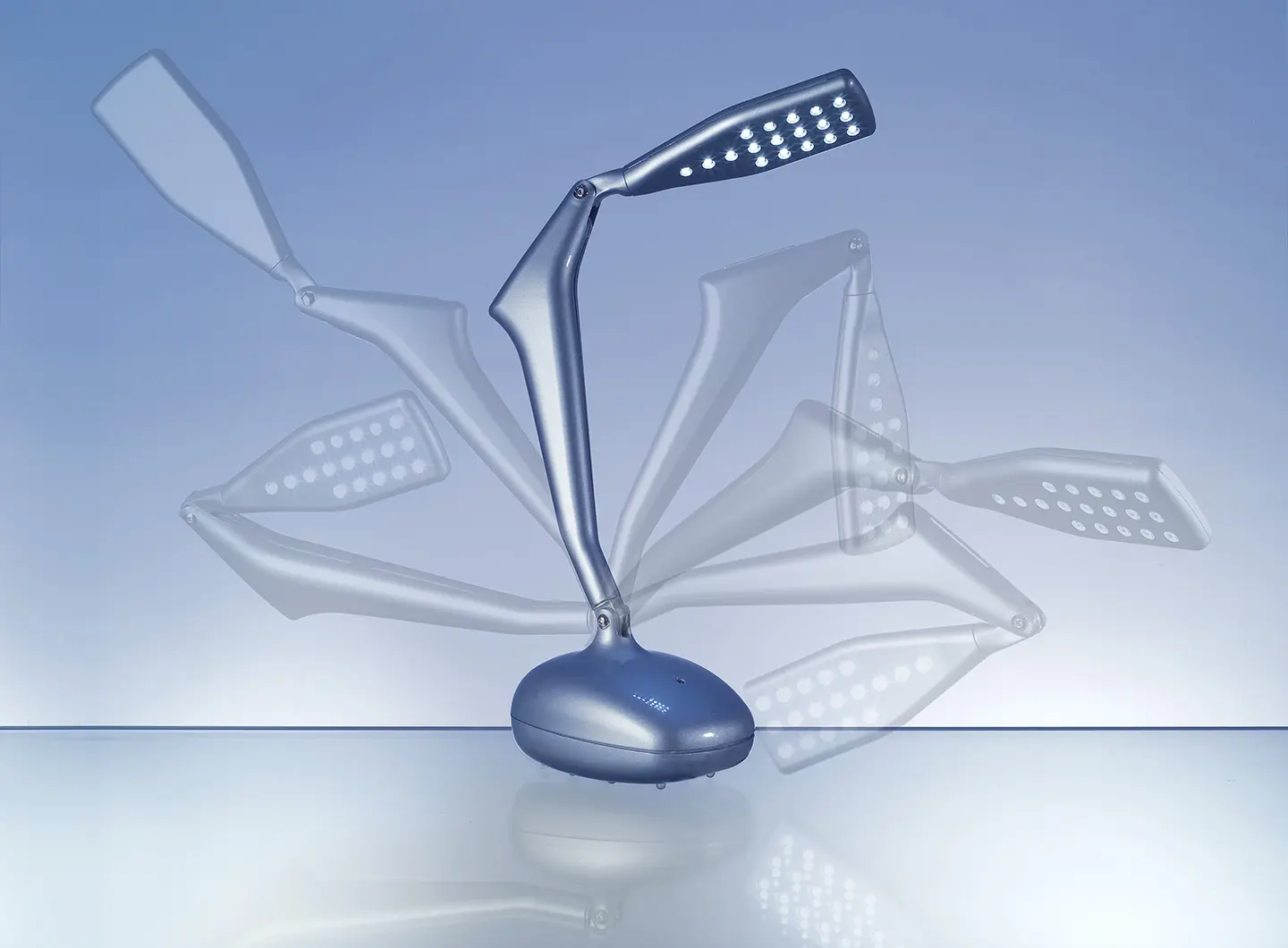
SUI, design Carlotta de Bevilacqua, Artemide, 1999
20 November 2026
Share




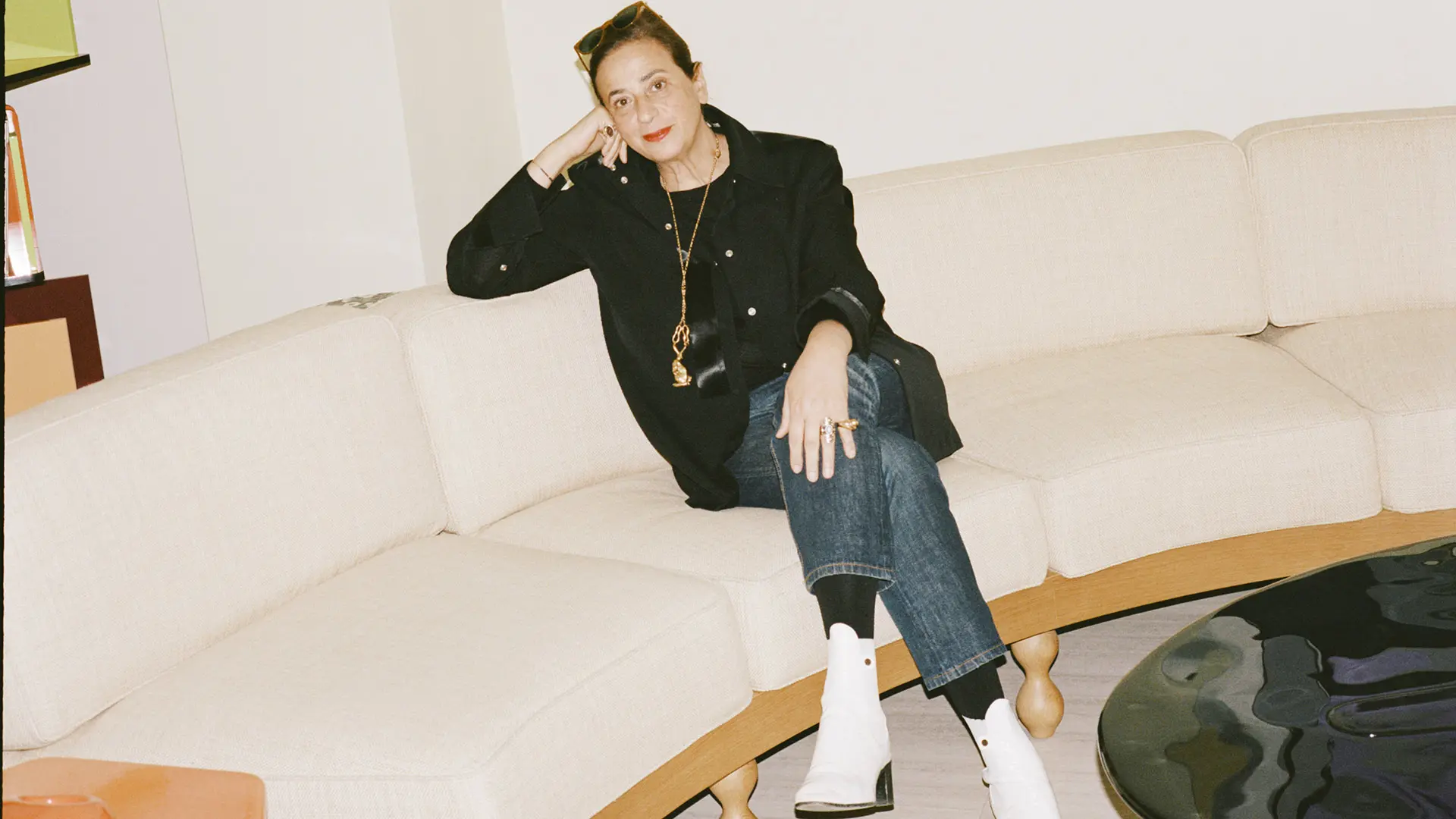
India Mahdavi: “It is time to overcome the misunderstandings between East and West”
An interview with the architect, designer and set designer, Mahdavi has been working for over twenty years, seamlessly bridging architecture, interiors, furniture design, objects and exhibition design. She will be one of the key figures at the second edition of Salone Raritas, curated by Annalisa Rosso, Editorial & Cultural Director, Advisor, with exhibition design by Formafantasma