Stories

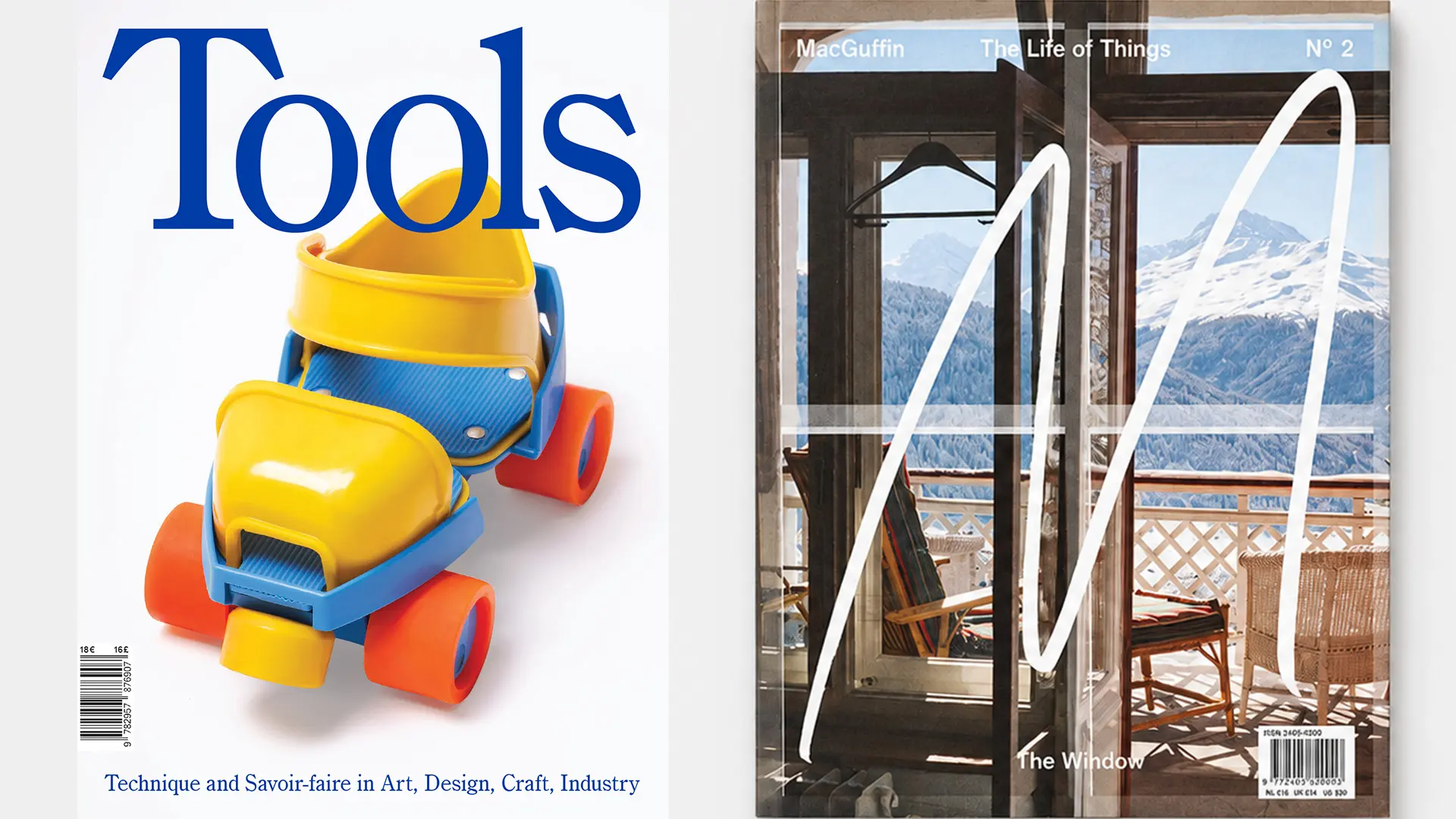
There are some magazine that we always remember our first encounter with. The place we came across them, the cover, the surprise of discovering a whole universe behind a seemingly tiny topic. Sometimes all it takes is a window. Or a roller skate.
India Mahdavi: “It is time to overcome the misunderstandings between East and West”
Text by
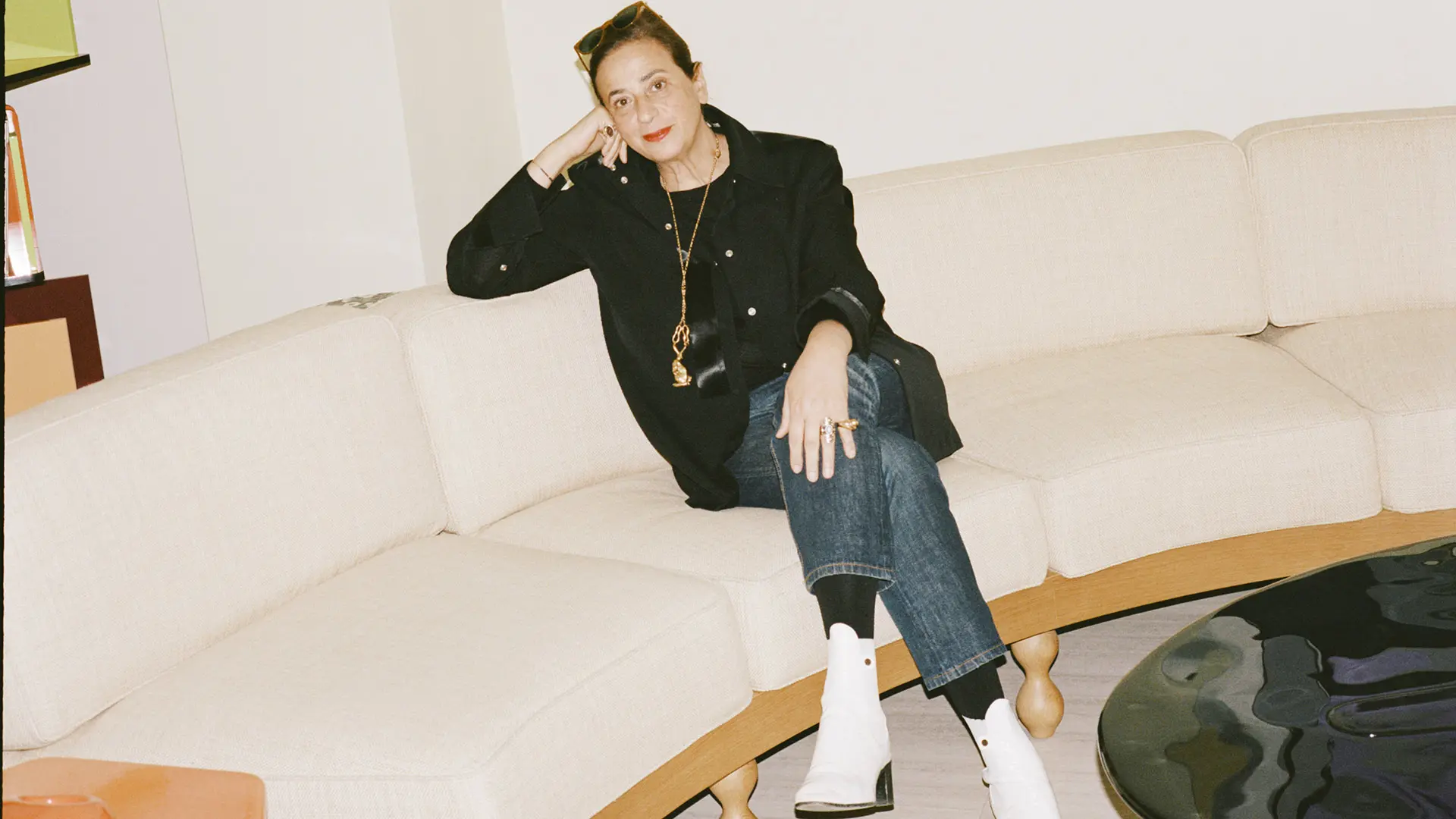
India Mahdavi - Ph. Matteo Verzini
An interview with the architect, designer and set designer, Mahdavi has been working for over twenty years, seamlessly bridging architecture, interiors, furniture design, objects and exhibition design. She will be one of the key figures at the second edition of Salone Raritas, curated by Annalisa Rosso, Editorial & Cultural Director, Advisor, with exhibition design by Formafantasma
A French-Iranian architect, designer and scenographer based in Paris, India Mahdavi met with us in Doha during the Design Biennial, directed by Fahad Al Obaidly, who appointed her chair of the Design Doha Prize jury. What emerged was a spontaneous and candid conversation, offering an intimate and unexpected portrait of a designer who has made cultural hybridity a defining feature of her work, without shying away from its more political dimension.
Mahdavi champions the value of design from the Arab region, calling for it to be freed from the exoticising, folkloric lens through which the West has long viewed it. “A Bauhaus chair is design; a Damascus inlay is craftsmanship,” she notes, highlighting a cultural hierarchy that is long overdue for reconsideration. The same applies to the relationship between ornament and femininity, which in her practice becomes an expression of feminist conviction: not so much through statements as through the creation of a professional and cultural ecosystem, and a determination to open up new possibilities for women, particularly younger generations. Her design does more than bring together shapes and colours: it challenges conventions and established categories, opening up new ways of seeing. And to joy.
Perhaps this same belief in singularity explains her understanding of rarity, not as market-driven scarcity, but as an irreproducible quality born from the convergence of material and craftsmanship, vision and emotion. A vision that resonates naturally with Salone del Mobile.Milano, which has entrusted her with the next edition of Salone Raritas, the second edition of the initiative curated by Annalisa Rosso that presents special and limited design editions, unique pieces, antiques, and high-end creative craftsmanship. As India Mahdavi reminds us: “In a world that tends towards uniformity, protecting rarity above all means protecting singularity.”
Who is India Mahdavi? In this exclusive interview, she tells her own story, moving beyond the public image of the cosmopolitan designer to reveal a more intimate and personal side, shaped by multiple roots, sensitivity and a deep sense of hospitality.
I have always found it difficult to answer the question "who are you?" with a single word. I was born in Tehran, and my childhood took me from Cambridge, Massachusetts, to Heidelberg, then to the south of France and finally to Paris. I changed schools eleven times. That kind of movement does not give you an identity. It gives you a plural one, built from many layers, and it teaches you early that there is never only one way of seeing, living or inhabiting a space. I became an architect, a designer and a scenographer, but in the end I think of myself as someone who builds environments: places where emotion comes first and form follows.
How has your personal history, shaped by different identities and cultures, influenced your understanding of femininity and feminism?
As for femininity and feminism, I would separate the two. For a long time, Western modernism treated colour, curves, softness and ornament as minor, decorative and, in its own words, "feminine". These were things to distrust. A great deal of my work has been a quiet refusal of that hierarchy. Colour is not a surface for me. It is an emotional consequence. Generosity of form is not indulgence but a kind of hospitality. If that is feminine, I accept it, as long as it is understood as a form of intelligence and not as an ornament.
My feminism did not start with a theory. It started at home. I grew up as one of five children, three girls and two boys, and my parents raised us in exactly the same way. My father made sure his daughters received the same education as his sons, and that his sons knew how to run a household. Equality was not a principle we discussed. It was simply how we lived. I think this is why my feminism lies less in what I declare than in what I have built. I set up my own ecosystem, which includes a studio, editions, manufacturing and spaces for cultural programming, because the structures I needed did not exist. Creating your own conditions of freedom is perhaps the most concrete political act a woman can make in a profession that was long shaped without her.
Without ever setting out to do so, I have come to realise that my path means something to young women who want to enter this profession, particularly in the Middle East. I receive their messages, and I meet them through Design Doha and elsewhere. I don't see myself as a model so much as a proof of possibility, and that is a responsibility I take seriously. It is also why passing things on matters so much to me today, whether through the Project Room, the Tiny Room or simply by keeping the door open
Material experimentation, carefully considered forms and a thoughtful use of colour: how does your sensibility speak to different cultures and audiences?
I sometimes describe myself as polyglot and polychrome. The two go together. Having grown up between several languages and countries, I learned very early to read a place before speaking in it. My work has taken me from a restaurant in London or Miami to a hotel in Monaco, from coffee shops in Tokyo, Geneva or Los Angeles to an eco-lodge in the Egyptian desert. Each time, the project begins with an act of listening: to a climate, a light, a way of gathering and of receiving guests. I am not looking for a universal language that would sound the same everywhere. I am looking for the point where my own vocabulary and the culture of a place can recognise each other.
I describe this as working with two kinds of emotion - One is the emotion-memory: what a space recalls in us, a colour from childhood, the coolness of a courtyard, the shade of a terrace. The other is the emotion-hypothesis: what a space might make us feel that we have not yet felt. A good interior holds both. It feels familiar enough to welcome you and strange enough to move you.
Colour is my most direct means of translation, because it travels further than words. It reaches the body before it reaches the intellect, so it can create a shared emotion between people who have no common reference. Materials and craft do the opposite work. They anchor the project in a specific territory and in specific hands. Between the two, I try to build something that is neither international in the neutral sense nor local in the folkloric sense.
Does speaking to different audiences also mean rejecting hierarchies?
Speaking to different audiences also means refusing hierarchies. I have always liked to stretch across extremes, designing nomadic objects for Louis Vuitton and also a collection for Monoprix. A design language that only speaks to a few would contradict everything I believe about hospitality. At the Villa Médicis, I was invited to rethink the chambre turque and the 2 adjacent bedrooms , a nineteenth-century French fantasy of the Orient. Revisiting it as someone born in Tehran meant appropriating an appropriation. This is perhaps where my position is most precise. I am neither entirely inside nor entirely outside any culture, and that distance allows me to translate rather than to imitate.
Tehran, Paris and New York: what has each of these cities given you, and how have they shaped your distinctive design language?
I would say Tehran gave me an origin rather than an education. I left very young, so what I carry from Iran is less a body of knowledge than a sensibility, passed down through family, language and memory. There is the garden as an image of paradise, and above all there is poetry. They say there is a poet in the heart of every Iranian. I have come to think that I work with colour the way a poet works with words. I choose each one for its weight and its resonance, and I place them side by side so that, together, they say something none of them could say alone.
Paris gave me rigour. Studying architecture there taught me structure, proportion and the discipline of thinking from the scale of the city down to the scale of a detail. I also learned the importance of narrative and of the intellectual concept, along with a certain idea of elegance and of craft. It is where I understood that a space has to hold before it can move anyone.
New York gave me freedom and a sense of entrepreneurship. Above all, it taught me to be fearless. When I arrived there after architecture, I turned to furniture, objects and graphic design. I discovered that the boundaries between disciplines were largely conventions, and that I could cross them. For me, freedom has always meant the absence of borders, and my freedom consists in crossing them. My practice grew out of that conviction. I never chose between architecture, interiors, furniture, scenography, graphic arts and textiles. I let them intersect, so that a project can move from the scale of a building to that of a lamp, a fabric or an exhibition without changing its language. New York also showed me that you could design your own structure to fit your own life, rather than shape your life to fit an existing one.
Then there was the decade I spent alongside Christian Liaigre, which was an apprenticeship of another kind. I learned the intelligence of the hand, the value of a long dialogue with artisans, and the idea that a designer can build an entire world, not just a series of objects.
Running through all of this is a principle that comes from my nomadic childhood: always start from the place. I need projects beyond borders the way one needs oxygen. Yet each time, it is the local context that becomes the starting point of my inspiration. This applies equally to a house, a hotel or a museum. Exhibition design is perhaps where it is most visible, because there I am working with something that already exists, the works themselves, and my role is to create the conditions for an encounter.
Arles, a place to put down roots after a nomadic life. What made you feel at home there?
For someone who moved eleven times as a child, choosing a house is never neutral. When I first visited the house in Arles, in Trinquetaille on the other bank of the Rhône, I recognised something before I understood it. Its scale and its vegetation reminded me of my parents' house in Tehran. It was as though a lost place had found an echo somewhere else. For the first time, I felt the possibility of anchoring.
That is also why I chose not to erase it. Rather than demolishing and starting again, I added layers. I let the existing house speak and then responded to it, much as one adds a verse to a poem rather than rewriting it. In a way this is my whole method in miniature: to start from what is there and enrich it, to transform without erasing.
Arles belongs to all the Souths I come from. Its light and shadow are those of the Mediterranean, but also of Persia and of every place where a garden is a refuge from the sun. My colours come from these Souths. They carry the nostalgia for a lost paradise and, at the same time, the desire to imagine new ones. Arles is where those two impulses meet.
The house is not only a retreat. It is also a place of work, where my archives live, and where I can step back from the speed of Paris and look at my practice over time. Arles has also been a long professional story. For nearly eighteen years I have worked there alongside Maja Hoffmann, on the Hôtel du Cloître, the Villa des Alyscamps and the Résidence du Cloître. The city has become a kind of laboratory where I can test ideas at the scale of a room, a building and a whole cultural ecosystem. It is a place where Van Gogh's colour, Roman stone and contemporary art coexist, and that is very close to how I try to work.
For a long time, the West has viewed Middle Eastern culture through the lens of exoticism. What does it still fail to see?
The deepest misunderstanding concerns what the West chose to call "design". For a century, the discipline was codified in Europe and America and then exported as if it were universal. The Bauhaus, Scandinavian modernism, Italian rationalism: extraordinary traditions, but they became the default against which everything else was measured. A Bauhaus chair was design; a Damascene inlay was craft. A modernist grid was theory; the geometry of a Persian garden was ornament. The difference was never about intelligence. It was about who was allowed to be considered a thinker, and who was considered a source of material for someone else's thinking.
I have felt this hierarchy from the inside. Early in my career I was praised for my "saturated colours" and my "exoticism", words meant kindly but which really said: interesting, but not quite serious. It took years for colour and ornament to be read as a language with its own logic.
This is why presiding over the jury of the Design Doha Biennale meant so much to me. It meant asking an international jury to judge work from the region with the same seriousness one would bring to Milan or to a museum acquisition, and to recognise a weaving pattern translated into architecture not as folklore, but as design.
What strikes me today is that history has turned. Craft has become the most celebrated dimension of contemporary design, as Homo Faber or the Fondation Bettencourt Schueller's commitment to the "intelligence of the hand" show. Yet in the Middle East, design has never been separated from craft, from know-how passed on within communities. What the West long dismissed as tradition turns out to be exactly what it is now looking for. After all these years of disregard, East and West can finally meet on common ground.
Colour is therefore much more than an aesthetic choice: it is an emotion, a vibration, even a form of resistance. How can its expressive power be defended at such a difficult time in history?
Colour is not a layer I add at the end of a project. It is where the project begins, and often what it is ultimately about. I have never thought of it as a decorative choice. For me, colour is an emotional consequence: it is what a space makes you feel before you have understood anything about it. I work, in relationships, tensions and harmonies. I often say that working with colour is like walking along the edge of a precipice without ever falling.
What I am really looking for is vibration. Think of the sun passing through the leaves of a tree and making the shade shimmer beneath it. The shade is not dark. It is alive. That is what I want colour to do in a space, to make it vibrate, to bring a moment of joy, especially in Europe, when the sky hangs low for months.
In times of uncertainty, the temptation is to retreat into neutrality: grey, beige, caution. I see this as a form of fear. Today I believe in the seriousness of joy. Joy is not naive or superficial. It is a choice, and sometimes a form of resistance. Those of us who come from regions marked by exile and loss know that beauty is often what remains when everything else has been taken.
There is something else. We live more and more through screens, in a world that is smooth, flat and without friction. We need to feel human again, and anything that awakens the senses helps: texture, colour, music, food. A velvet you want to touch, a lacquer that catches the light, a colour you feel almost physically. These are ways of bringing us back to the body. Colour, in that sense, is not an escape from reality. It is a return to it.[Ritorno a capo del testo]
In your work, the encounter between East and West (and between seemingly distant languages) becomes an exercise in coexistence. When can design become a genuine form of cultural diplomacy?
I have never believed in choosing between opposites. My life has been made of them: East and West, several languages, several homes. I see myself as a hyphen between East and West, someone who understands both from the inside rather than looking at one from the other. I am hybrid, and my work is too. I would describe my process as a kind of metabolism. Memories, places, images and encounters are absorbed over time, digested and transformed, until they become something else entirely. What emerges in a project is never a quotation or a collage of references. It is a language of its own, made from everything I have lived.
I learned early that contradictions do not need to be resolved. They need to be held together. A space becomes interesting precisely where a curve meets a straight line, where a warm colour is placed against a cool one, where a handmade surface sits beside an industrial one. Harmony, for me, is not the absence of tension. It is tension held in balance.
The same is true of how I work with makers. Since the beginning I have worked with French workshops: the enamels of Longwy, the Manufacture de Cogolin, Pierre Frey, Lison de Caunes's straw marquetry, and so many artisans whose hands carry knowledge that cannot be written down. I place that know-how alongside industrial production without any hierarchy between the two. Freedom, for me, is also this: bringing different kinds of know-how together and letting their differences enhance one another.
As for educating the eye, I would rather say inviting it. Albers showed that we never really see a colour as it is, that perception must be trained. In the same way, a space can gently unsettle our habits, put together what we thought incompatible and show that it works. When someone feels at ease in a room that mixes a Persian memory, a Mediterranean light and a Parisian rigour, something has shifted without a word being said.
If there is a political dimension to my work, it lies there. A space where opposites coexist is a small rehearsal for a world where differences can coexist. Design cannot change the world, but it can make that possibility tangible, and it can make it desirable.
PoMo in Trondheim and the Fondation Beyeler in Basel: two very different cultural spaces, and two distinct approaches to the relationship between art, space and hospitality. How did you approach each project, and how does your design perspective shift when working with a cultural institution?
PoMo was my first museum, and it was a transformation on the scale of a whole building. With the Norwegian architect Erik Langdalen, we had to give new life to Trondheim's former post office, an Art Nouveau landmark from 1911, without betraying its memory. A post office is by definition a place of exchange, open to everyone. That idea guided the whole project: a museum of contemporary art that would feel welcoming rather than intimidating. We drew on the city itself, on the colours of its wooden houses, its skyline and Norwegian folk art. My main intervention focused on the in-between spaces: the main staircases, the shop, the reading room. These are the places where a visitor becomes a guest. That is where I brought my experience of hospitality, adapted to a public space. It is different from the togetherness of a restaurant and from the intimacy of a hotel. What I was looking for was a sense of permeability with art.
The Fondation Beyeler is almost the opposite exercise. It is a small, precise intervention within one of the most meaningful foundations in the world, alongside the architecture of Renzo Piano and Peter Zumthor. In the Orangerie, an eighteenth-century building, we created a greenhouse of plants resilient to climate change, together with a café and a shop devoted to plants and books. Here the subject was nature itself, and the question of how we will live with it tomorrow. The challenge was to give this entirely new concept both flexibility and a discreet identity of its own.
What changes when I work with an institution is above all my position. In a hotel or a restaurant, the space is the experience. In a museum, the works come first. My role is to create the conditions for an encounter, to prepare the body and the eye, and then step back. Yet I don't believe in the neutrality of the white cube. A museum is also a host. Hospitality, for me, means that visitors feel welcome before they are asked to look. If they feel at ease, they look better, and longer.
Temporary projects seem to offer you a particular freedom to experiment. How does your approach to design change when a space is conceived to exist for a limited time?
A temporary project frees me from the obligation to last, and that freedom changes everything. A permanent space has to age well, resist wear and adapt to daily life. An ephemeral one can be pushed to its limit. It can be radical and total, because it only has to exist for the time of an emotion. For me it is a laboratory, a place where I can test ideas with an intensity I would not always allow myself elsewhere, and which then flow back into the permanent work.
Rose, c'est la vie was conceived as total immersion. With Luca Pronzato of We Are Ona and the chef Jesús Durón, we turned a former car repair garage in the 7th arrondissement into a hidden room where every surface was covered in a single textile inspired by the Isfahan rose. Fabric became architecture. It erased the edges of the space and enveloped the guests like a second skin. The rose also carried a memory, both Persian and Parisian, which is perhaps why it felt so personal. In the middle of the intensity of an art fair, it offered a pause, a sanctuary of softness. I think of this as the seriousness of happiness.
At the Grand Palais, for Art Paris, the exercise was different. There I was presenting the pieces of my editions under the great glass roof, and the real material was light. Natural light shifts throughout the day and constantly alters the perception of colour. So I composed by saturation and contrast, geometry beside fluid forms, and invited the artist Julian Farade to introduce his strange creatures among the furniture. I was not interested in showing objects one by one, but in creating an atmosphere where each piece takes its meaning from the whole.
In the end, what remains of an ephemeral project is not the object but the memory. That is what I try to design: a moment intense enough to stay with people long after it has disappeared.
In a world where everything seems reproducible and readily accessible, what truly makes an object or a space rare? And what does rarity mean in contemporary design?
I would first separate rarity from scarcity. Scarcity is a market mechanism: you make fewer of something so that it costs more. That is not what interests me. For me, rarity is a quality rather than a quantity. It is what happens when time, the hand, an idea and an emotion meet in a single object or space, and could not quite have met in the same way elsewhere.
Today luxury is splitting into two directions. One is industrial: replicable, global and interchangeable, the same hotel lobby from Dubai to Miami. The other is authored: rooted in a place, a vision and the know-how of specific people. Rarity belongs to the second. It lies in the straw marquetry that takes weeks to lay, in an enamel whose colour no one can reproduce exactly, in a room designed for one city and no other.
We are also entering a time when images can be generated endlessly and instantly. In that context, what becomes rare is precisely what cannot be duplicated: physical presence, texture, the trace of a gesture, the experience of being somewhere. I believe design has a role to play here. It can remind us that we have bodies and that we live in real places.
Finally, rarity is also a matter of attention. Rare things are often hidden: a young designer no one has noticed yet, a craft on the point of disappearing, a culture that has been looked at without being seen. This is why I created the Project Room and the Tiny Room, to give space to voices that might otherwise go unheard. To me, the role of rarity in contemporary design is not to separate a few people from everyone else. It is to protect singularity in a world that tends towards sameness
17 November 2026
Share