

 Stories


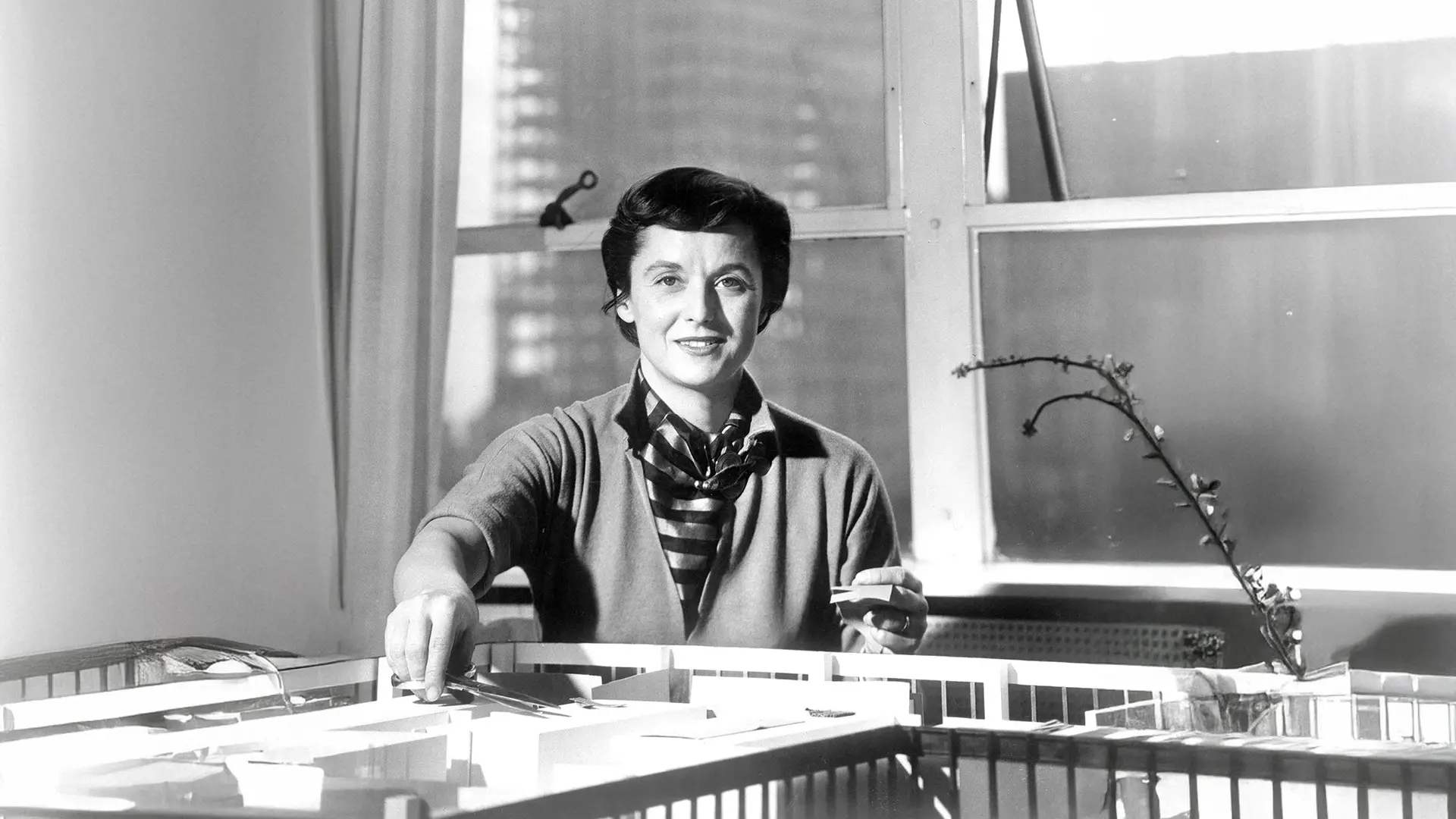
The Planning Unit, the collective catalogue of Mies, Saarinen and Bertoia and “meat and potatoes” furniture: how Florence Knoll invented the modern office whilst opting to stay out of the limelight.
Taking care of the body with neuroarchitecture and spatial psychology
Text by
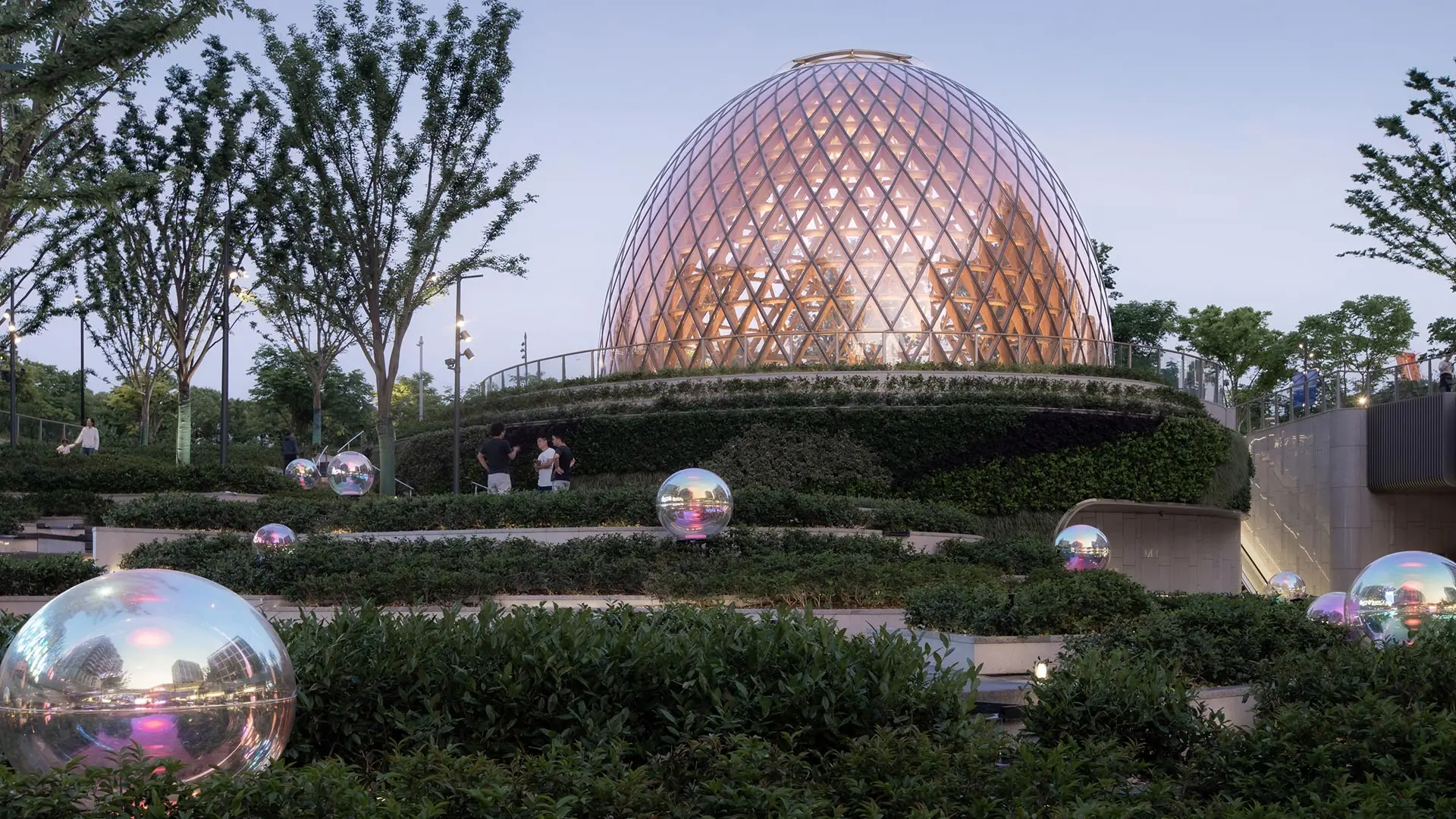
OHL Cultural Center for the Arts, ph. Ricardo Oliveira Alves
Interior design and performing architecture projects by AB+AC: the Lisbon-based studio discusses its practice ahead of the Salone del Mobile
If you believe that architecture is capable of improving the quality of life of living species (humans and animals), we have good news for you: talented designers are able to go even further – by blazing new paths, despite bureaucratic constraints and beyond any rigid textbook protocols.
Looking at the work of Arianna Bavuso and Andre Chedid, who founded the AB+AC studio in Lisbon in 2020, we can’t help but be optimistic – if only about the living spaces available to each one of us. Amongst their most recent explorations, are the OHL Cultural Space for the Arts, the Casa dei Patii Verdi, the Red Sea Meditation Space, and the Luxury of Less pavilion, which – in the year of the International Bathroom Exhibition and EuroCucina / FTK – Technology For the Kitchen – all seem to take on the role of impromptu manifestos of good design. It’s simple: what we used to collectively think about as that room “down the hall, on the right” has transformed, over time, into a hybrid space that can break down the rules of modern systems; and in their practice, it’s transforming again. Arianna and Andre see the home as a conceptual dimension, a place to nurture the mind: like a synapse, it exists when activated by forms, proportions, and relationships to scale, never in a restorative mode, but in a regenerative one.
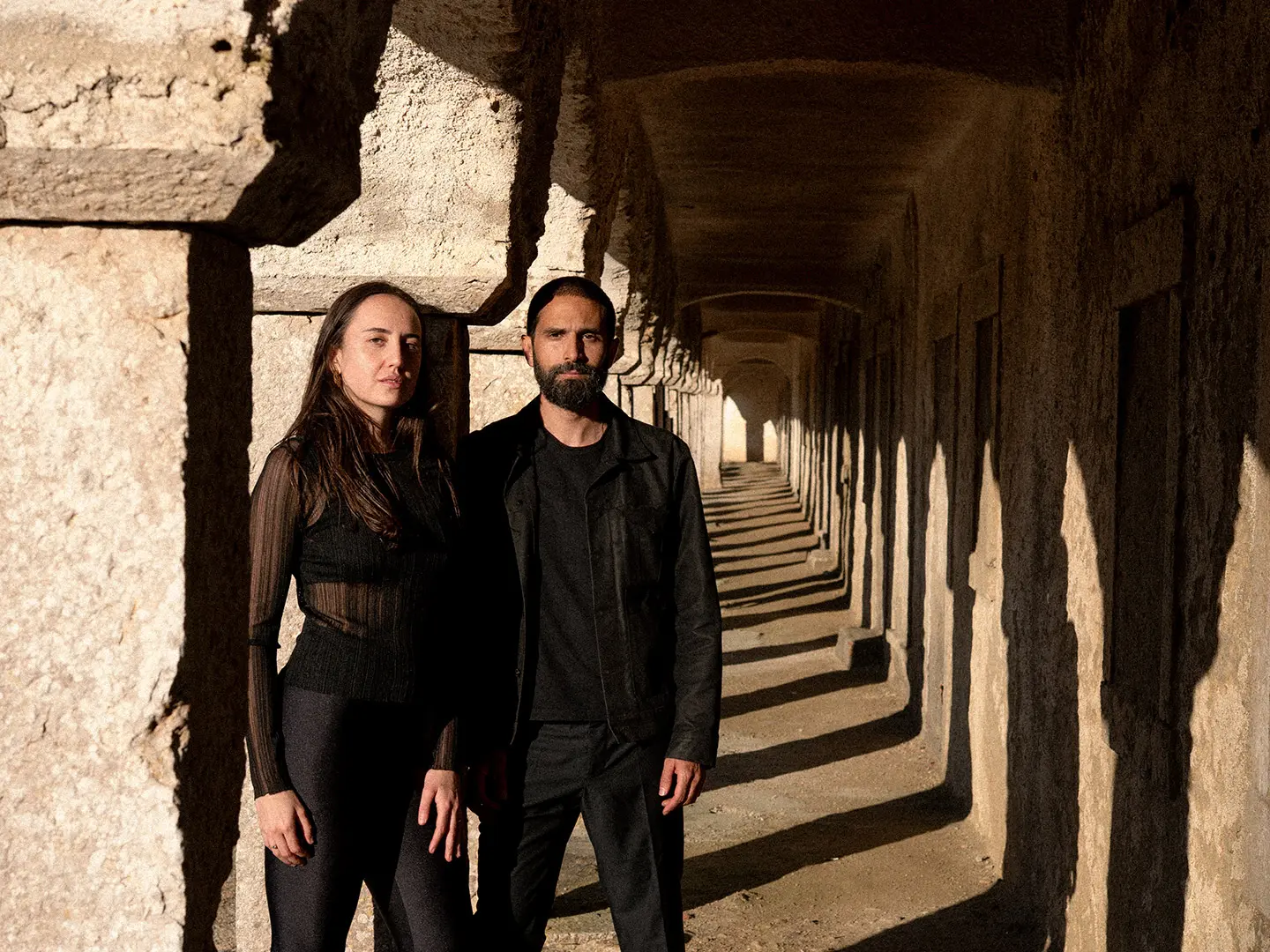
Arianna Bavuso and Andre Chedid, AB+AC
The duo of architects – Andre earned his degree at the American University of Beirut (AUB), while Arianna started her education at Politecnico di Milano and concluded with a master’s degree at the Royal Danish Academy of Fine Arts in Copenhagen – has always worked on the concept of space with a marked auteur approach. “The floor plan is the dimension that supports all our reflections on living, be it at a permanent or temporary home”, Arianna begins the conversation. Over the phone, she tells me how, in their work, the floor plan is never a simple neutral container of daily actions, but an active element that can influence behaviours, decisions, and moods. “The way we organise the environments in which we live and work deeply impacts our habits: every object, position, and path inside a room suggests gestures, invites repetition, consolidates routines. Clearly, if a space can reinforce existing habits, it can also help us change them”, she points out. “Rethinking a space means addressing those small, automatic mechanisms that, when combined, shape our daily lives. A counter that faces towards natural light can promote focus and well-being; a kitchen that is open to functional experimentation can encourage more mindful eating; a corner dedicated to reading or meditation practice can teach us to listen to our bodies. These are not magic formulas, but rather micro-design choices that, over time, produce tangible effects on the psycho-physical balance of people living in an environment”.
“The place where we choose to be, in this sense, can help us defuse unhealthy habits and replace them with healthier alternatives that are consistent with our goals. Eliminating distractions, making nourishing things more accessible, simplifying complications: these actions impact behaviour more than we can imagine”. Our environment becomes a sort of invisible infrastructure that supports individual willpower, making change less laborious and more natural.
But the role of space isn’t limited to its functional dimension; “on the contrary, it holds a symbolic and narrative component that we strive to express”, Arianna continues. “Environments tell us who we are and, at the same time, suggest who we could become. Surrounding ourselves with textured surfaces, structured colours, welcoming images, and even gentle sounds, natural frequencies, and warm lights, projects on the outside a vision of ourselves that we gradually internalise. It’s a constant dialogue between identity and context: we modify the space, and the space, in turn, modifies us”. The drive for improvement, to which we all aspire, emerges in the game of reflections and aspirational tensions that accompanies transformation.
“Designing or reorganising a space can therefore become an intentional act of personal transformation. It’s not just about aesthetics, but about vision. Who do we want to be? What habits do we want to cultivate? What behaviours do we want to leave behind? Every spatial choice can be geared towards supporting that direction. In this way, space becomes a map, a daily reminder of the path we’ve chosen to take”.
This approach to architecture returns the emotional element to the central role it had lost: while cluttered or inconsistent environments can generate confusion and stress, spaces that are harmonious and easy to decode foster balance and calm. “When the environment reflects a precise intention, it conveys stability. And stability is a necessary foundation for any growth process. Feeling supported by the place where you live means having a stable starting point from which to explore new possibilities”.
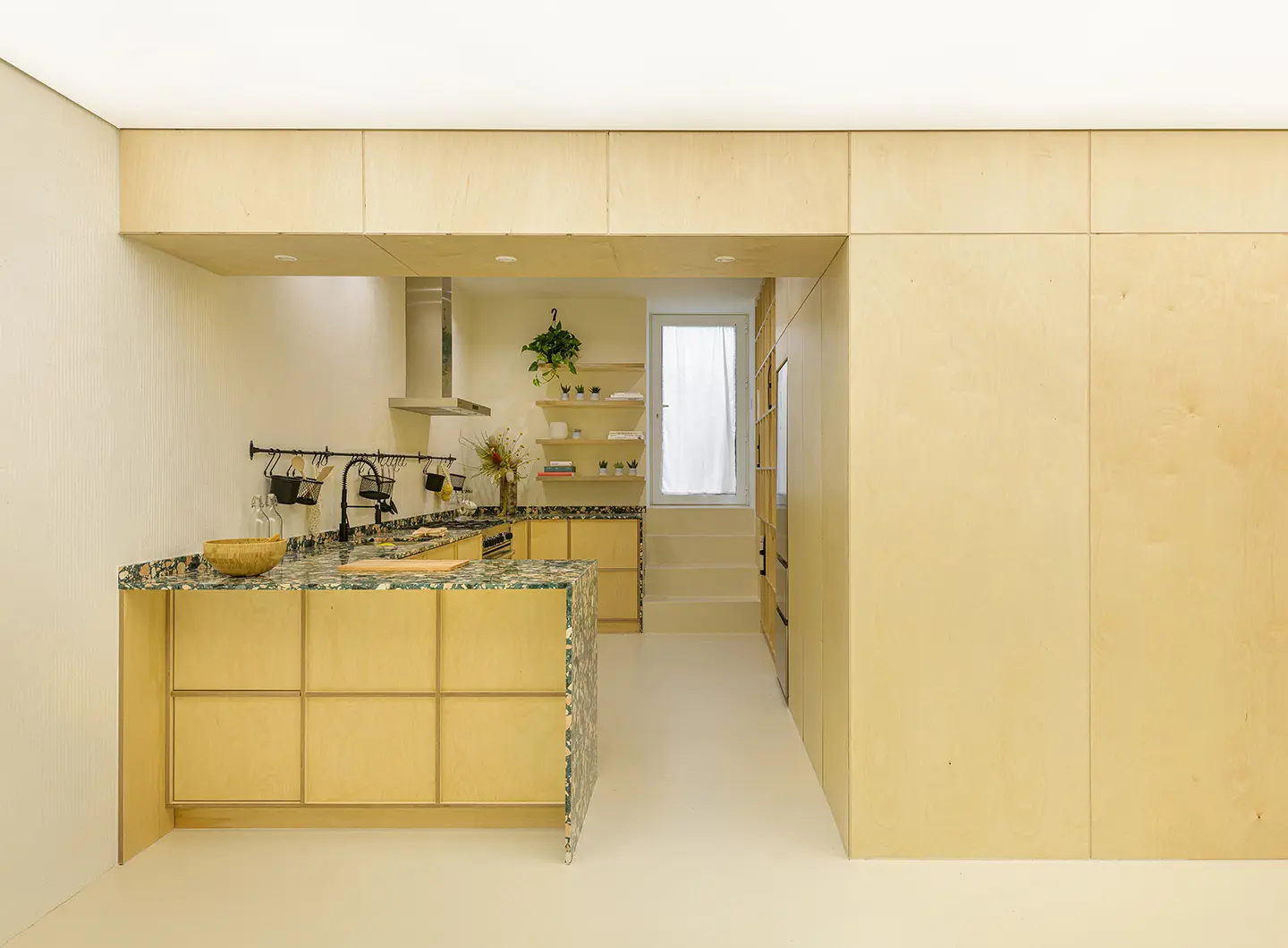
OHL Cultural Center for the Arts, ph. Ricardo Oliveira Alves
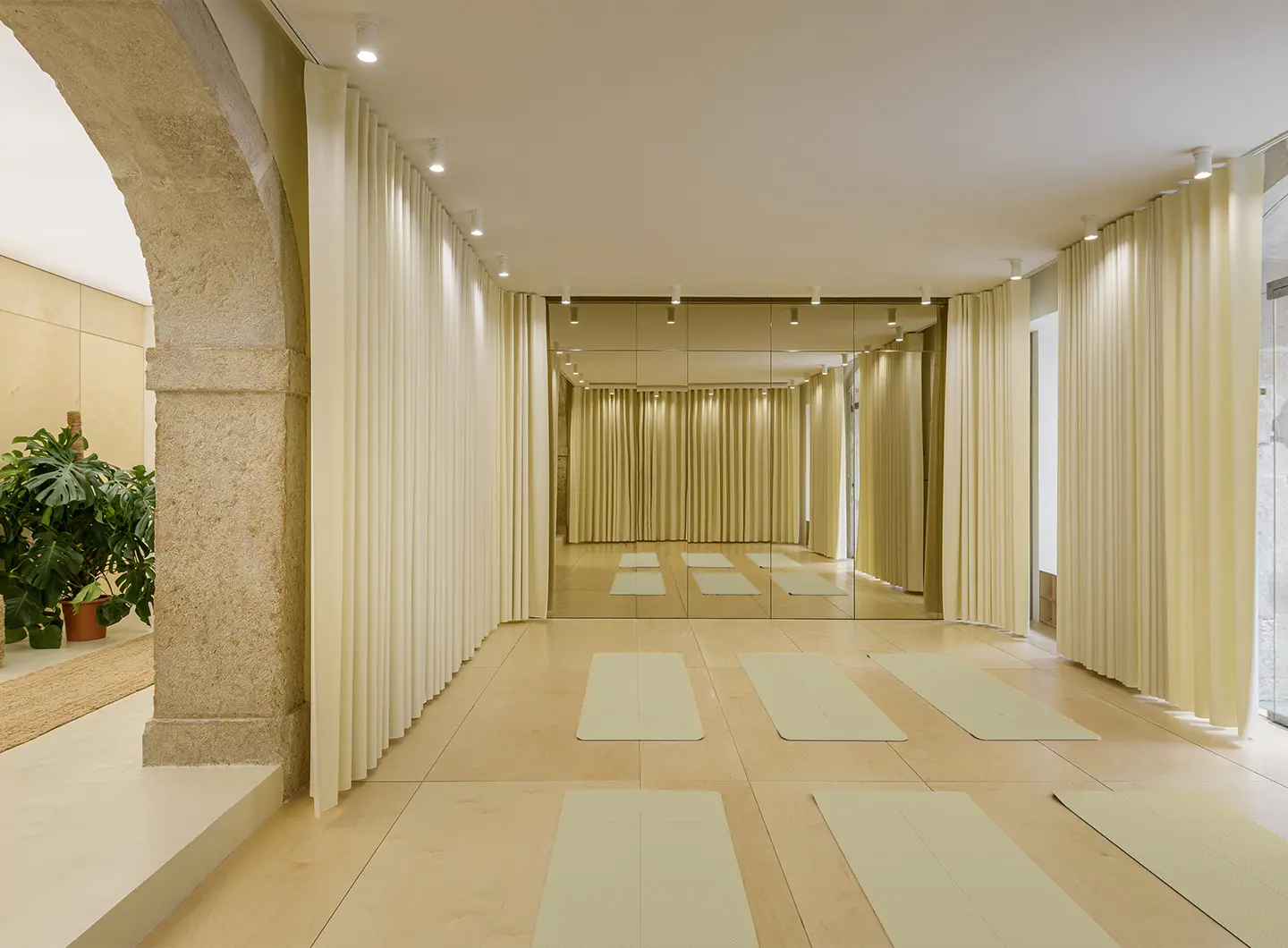
OHL Cultural Center for the Arts, ph. Ricardo Oliveira Alves
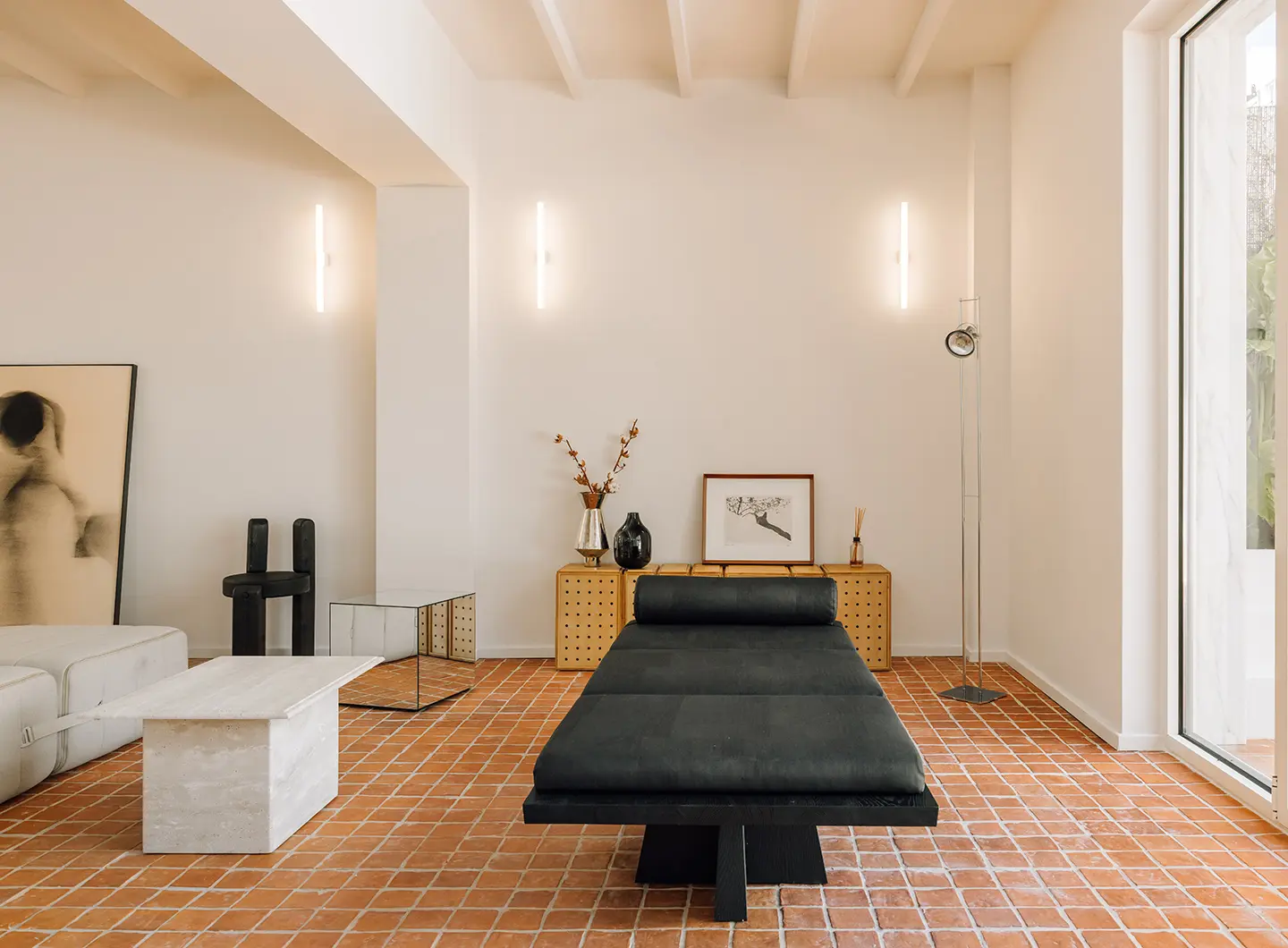
Casa dei Patii Verdi, ph. Lourenço Teixeira de Abreu
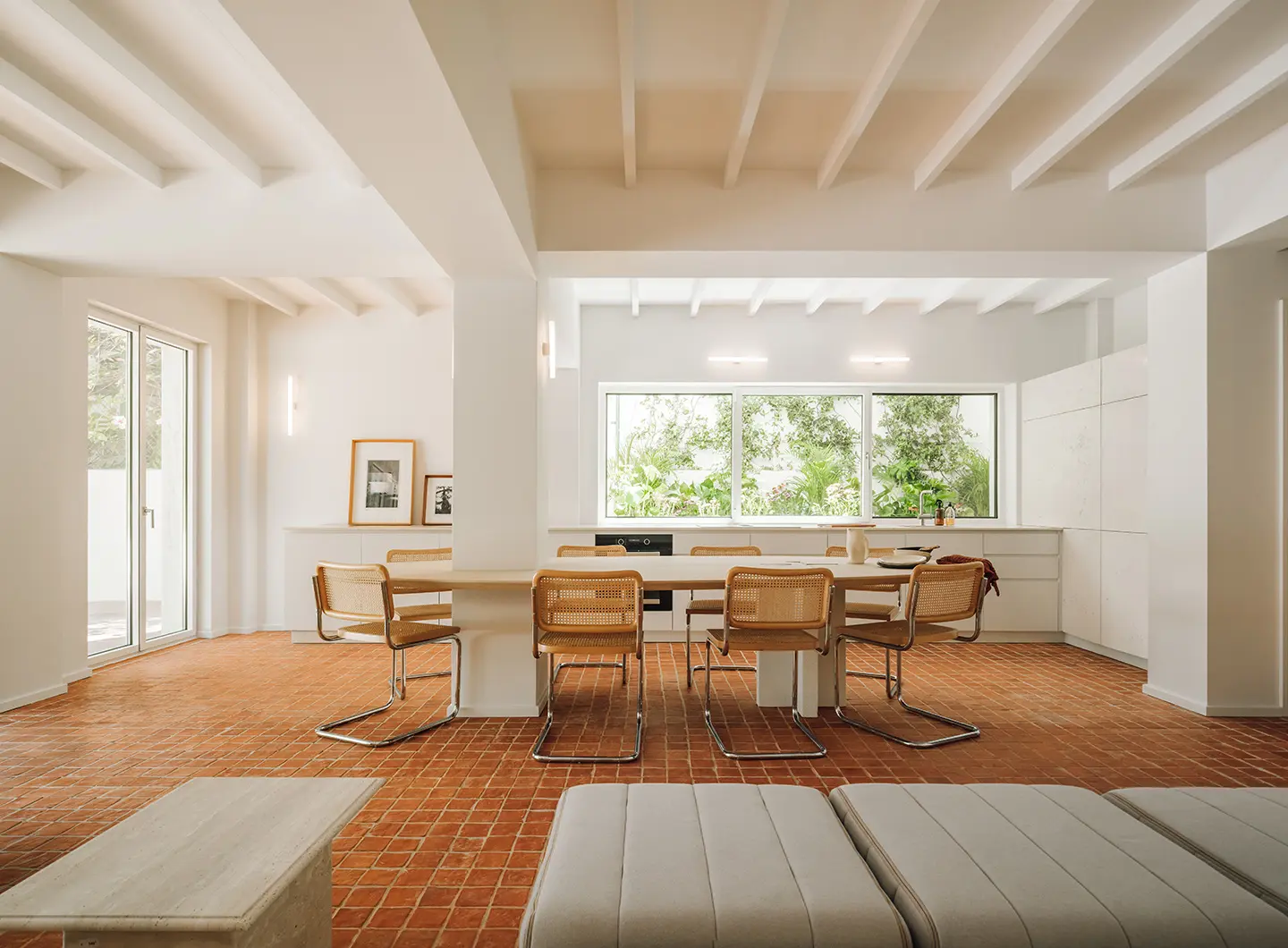
Casa dei Patii Verdi, ph. Lourenço Teixeira de Abreu


In this framework, transformation no longer appears as a sudden leap, but as a gradual process, built day after day. “Rearranging a piece of furniture, eliminating a superfluous object, adding a new function to a room: these are small gestures that, repeated over time, help redefine our trajectory. Twenty or thirty minutes exposed to nature”, explains Arianna, “help drastically reduce cortisol production”, hugely benefiting our immune system. “Taking care of your body shouldn’t be just about repairing damage, but about elevating it from its state of alert. That’s how even your heartbeat becomes more agile, resilient. So, every space in our architecture is connected to some form of nature: be it a forest, a garden, or a balcony”. In other words, inclusion influences change, making it tangible, visible, and daily.
If you are wondering how Arianna and Andre developed their spatial awareness, the answer is simple: “By engaging with mindfulness, meditation, and neuroscience, of course. But also by reflecting on our personal history”, reveals Arianna, who was born in Milan but moved first to Lisbon and then to Copenhagen, where she completed her training as an architect. “The fact that in Denmark there’s no light for six months out of the year led me to re-examine people’s behaviours and rituals, along with the way they live in their homes”.
“When we worked in China, where the sun was shining but the air was unbreathable, I realised that staying healthy in a polluted city required some habit reorganisation. In Beijing, jogging outdoors has the same effect as smoking, but the alternative – that is, running indoors – exposes the body to Sick Building Syndrome”. In this kind of context, the body is constantly on high alert.
“It is by mixing curiosity and experience that we approached neuroscience, sharing research with the students of the Neuroarchitecture: Psychology of Space course at the Gritnova Global Campus. It’s a way to explain to professionals that our job is to articulate the sequence of stimuli and information that react with our skin before reaching our brain, because entering a room means entering into a relationship with what we touch, see, and use. It’s similar to what happens in the kitchen, where the palate maintains the balance of the culinary experience: this is why architecture that concerns itself with the human nervous system cannot help but address the skin, the body, and the emotions that touch us.
A good project’s strength lies in the intertwining between what people imagining the space and what those living in it want: space doesn’t take decisions, but it accompanies them. It is a facilitator of good practices, a silent yet powerful tool, capable of guiding behaviours and supporting profound transformations. We are not alone in front of our goals and our weaknesses. Through space, we can build a supportive context that reduces resistance and amplifies possibilities. We can project ourselves towards the person we desire to become and, step by step, make that vision increasingly concrete”.
Because space, as AB+AC presents it to us, is not just the place we live in, but a field of action where our intentions take shape. Learn to consider it as an ally, and it becomes a tool for continuous evolution, capable of leading us down a path of transformation towards the version of ourselves we feel most authentic.
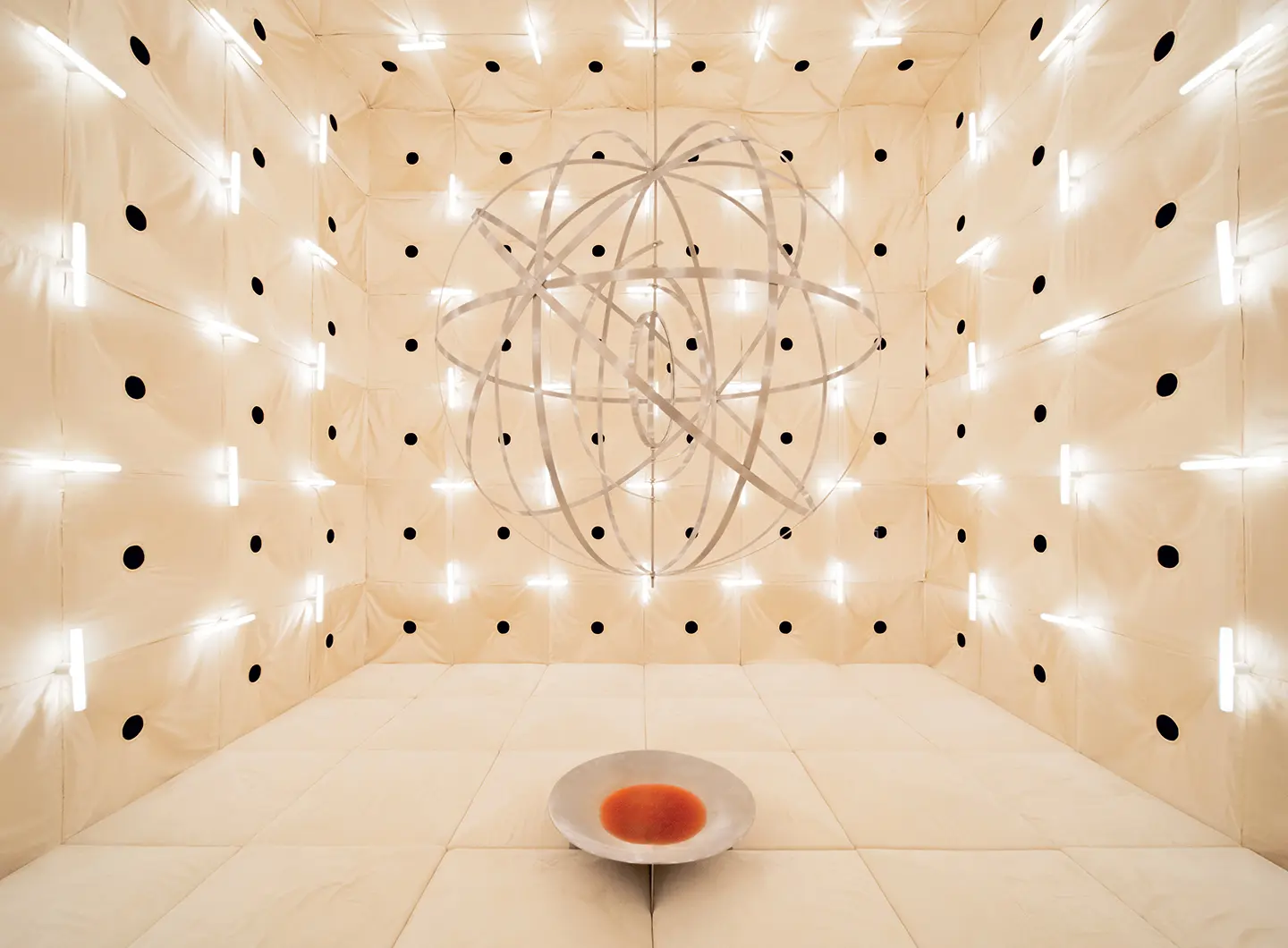
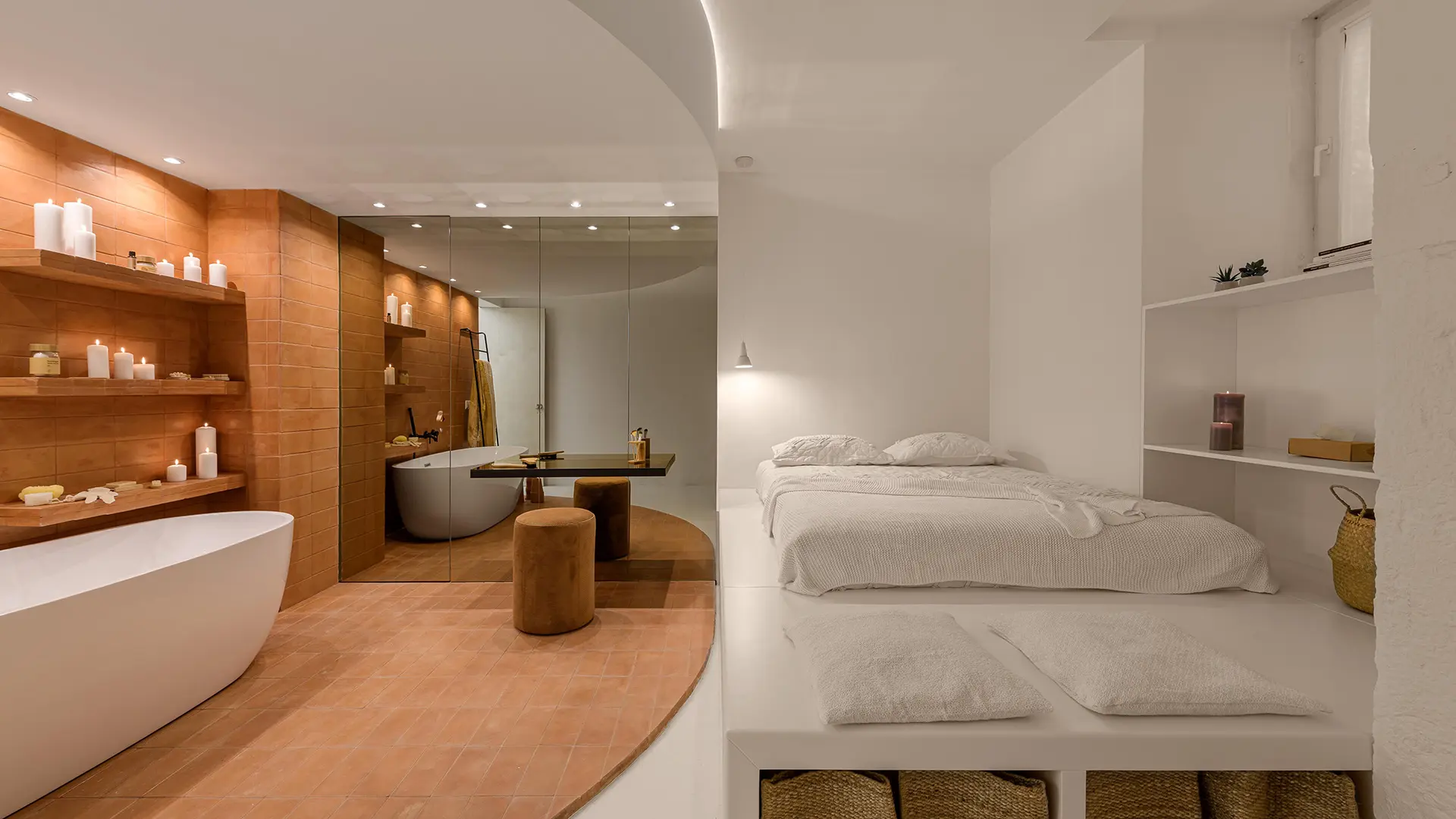
Luxury of Less pavilion, ph. Matteo Viti
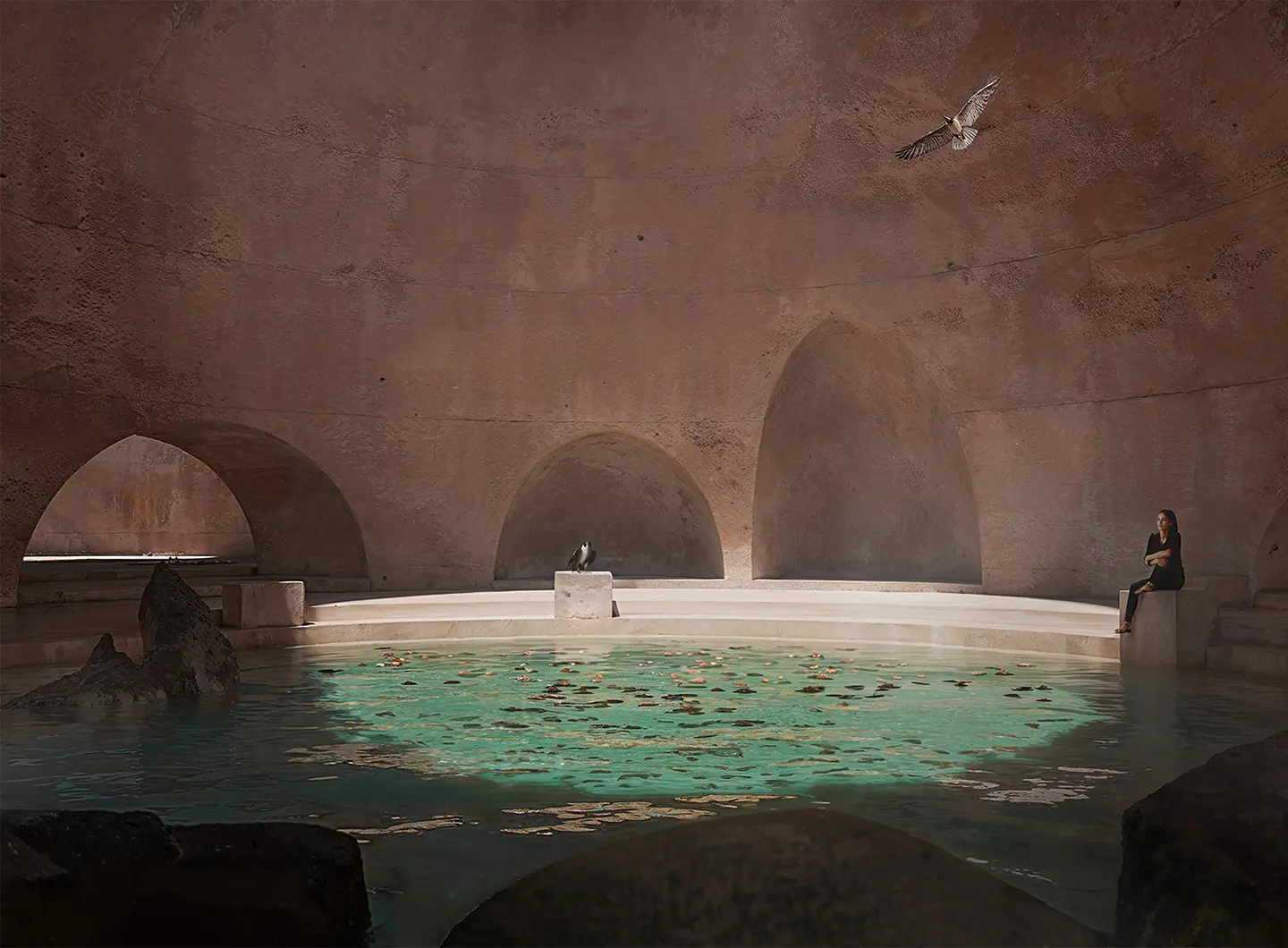
Red Sea Meditation Space, AB+AC Architects
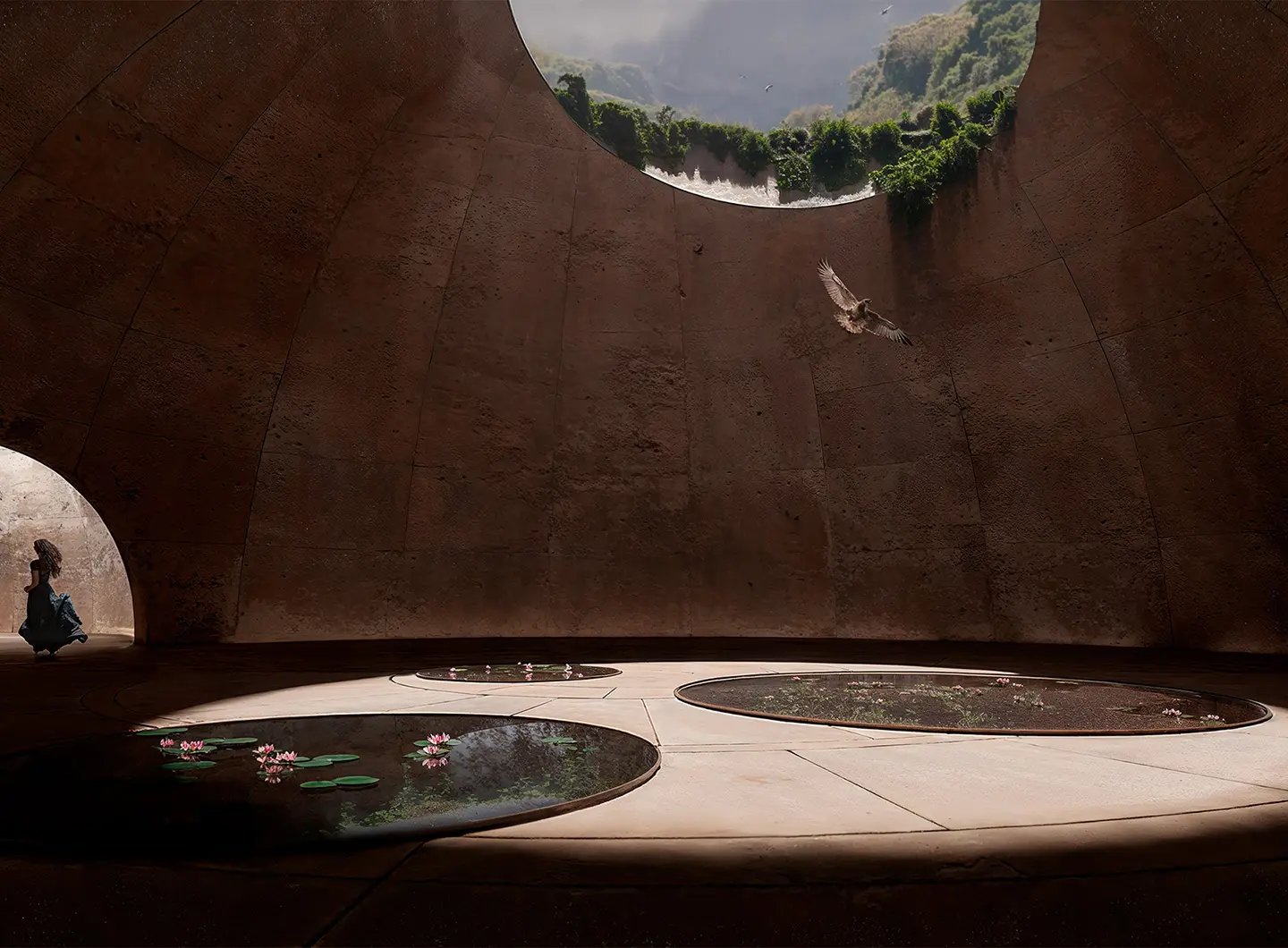
Red Sea Meditation Space, AB+AC Architects
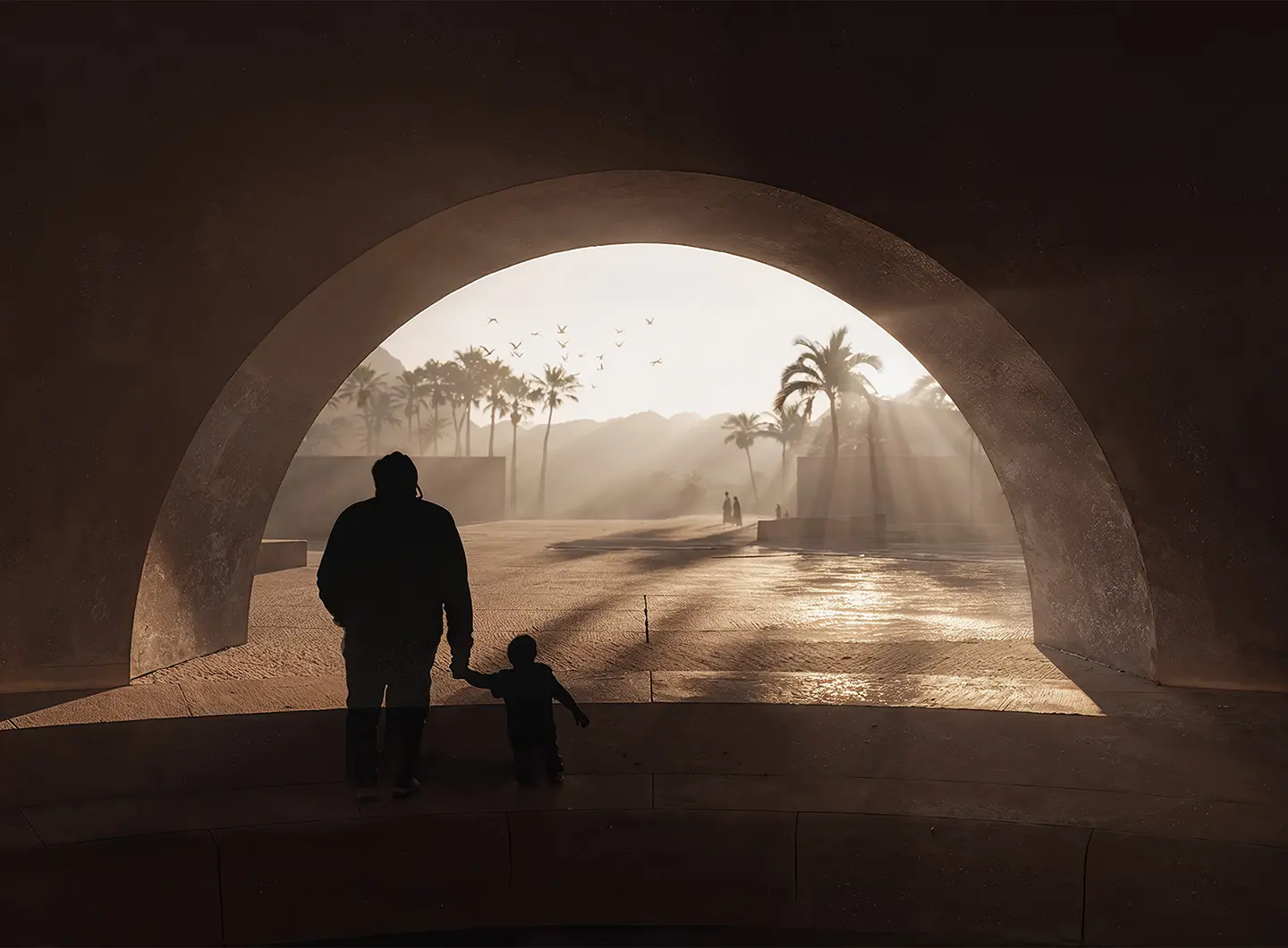
Red Sea Meditation Space, AB+AC Architects
24 February 2026
Share