

 Exhibitions


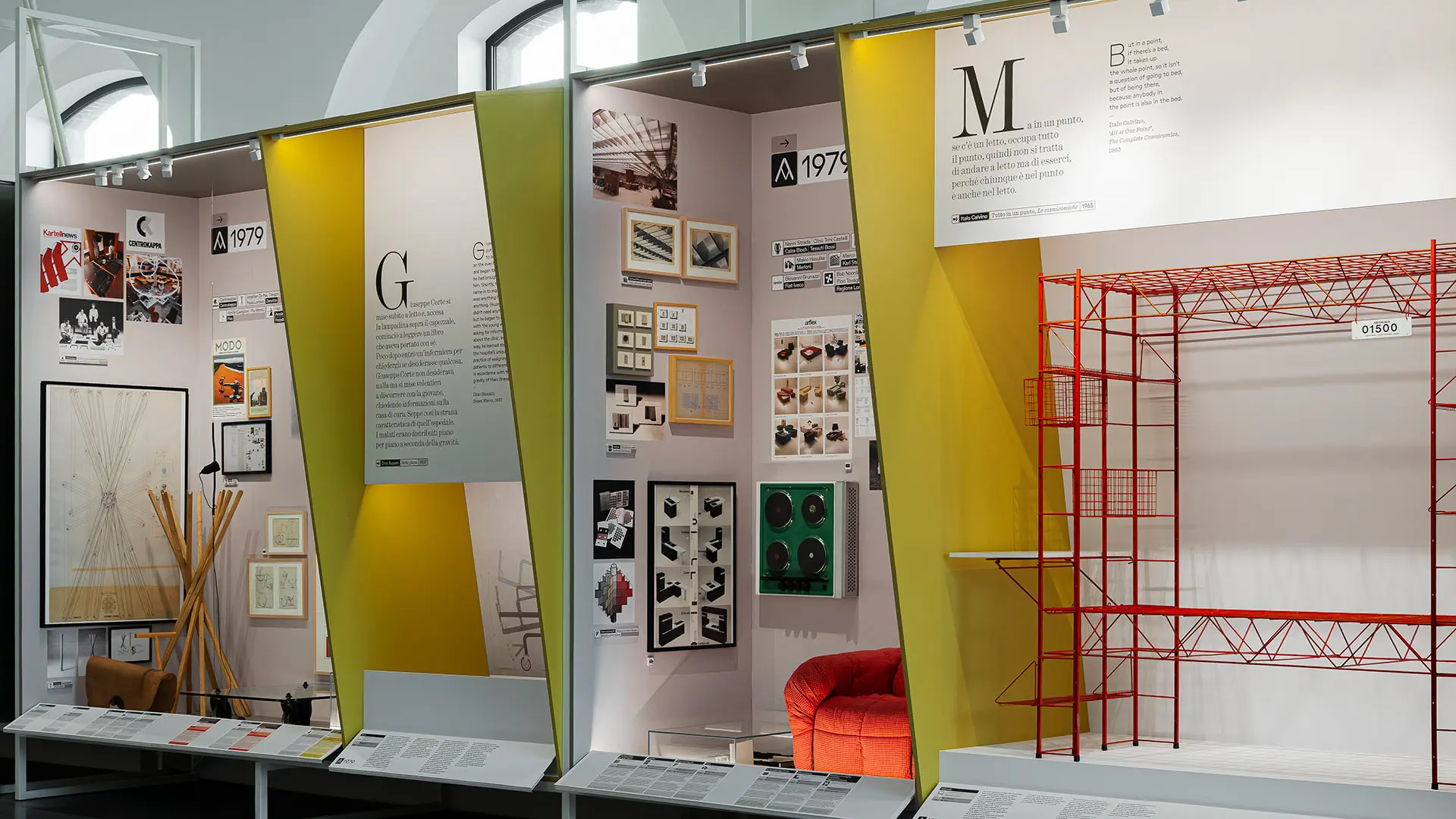
Five years since it opened, the museum in Milan presents the first new scientific reordering of its Historical Collection. Curator Maite García Sanchis relates how the way of interpreting over seventy years of design is changing, while Domitilla Dardi explains why the “Anthological” study enables the award-winning objects to dialogue with literature
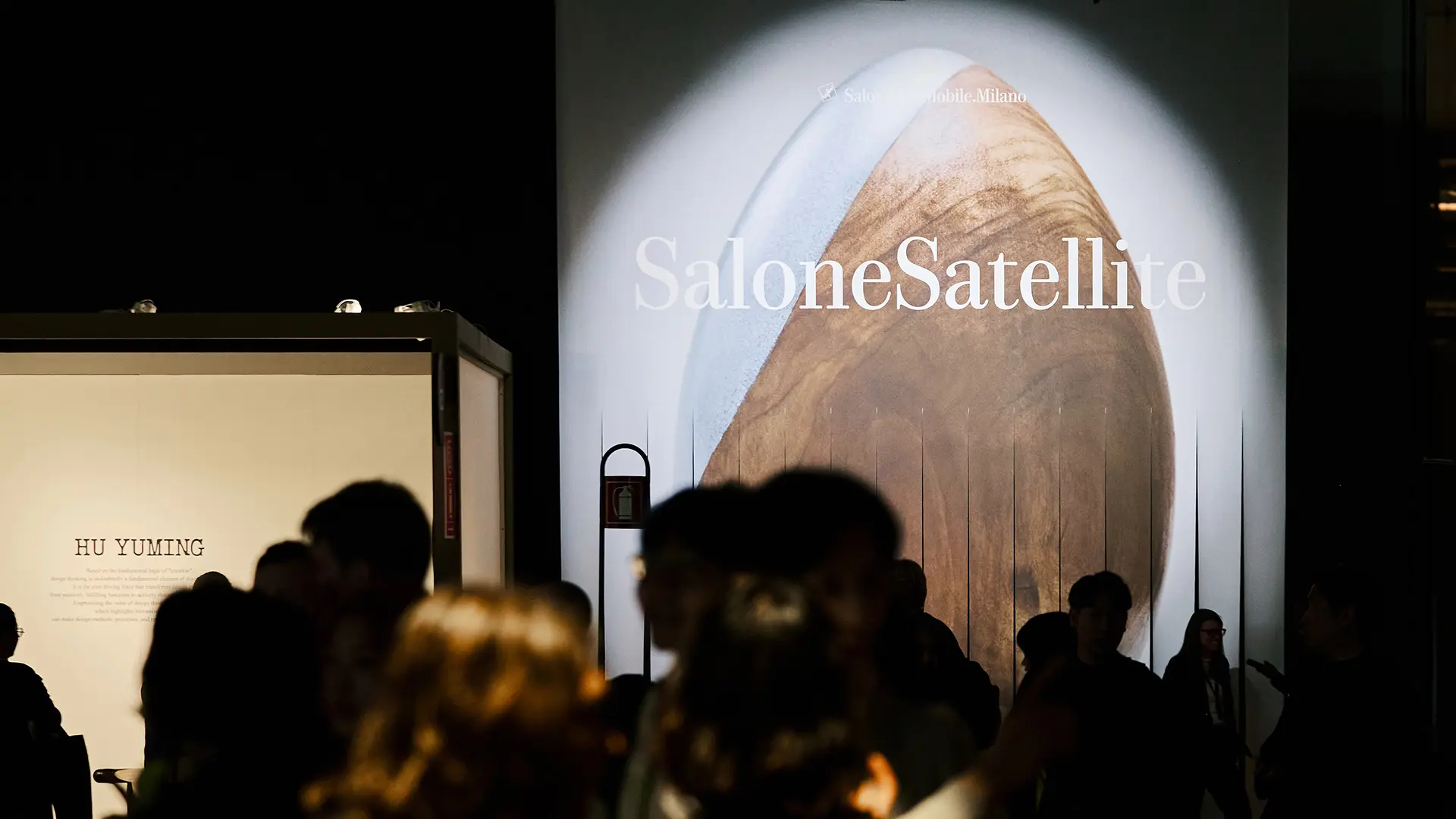
SaloneSatellite Award 2026
The designers awarded in the 2026 edition manipulate digital techniques to arrive at a unique, artisanal artifact. And they tell us about their experience at the fair, a propulsive platform focused on dialogue and relationships
Showcase. Observatory on new design. A launch pad for the younger generations. In the 27 years of its honorable career, the SaloneSatellite has been all this and much more. Born from an intuition of Marva Griffin Wilshire, the Satellite has a separate exhibition format. (The name was invented by Massimo and Lella Vignelli, who worked for the fair at the time, and today are being celebrated by an impressive monographic exhibition at the Triennale.) Not only is participation by selection, but the existence of an outstanding jury, this year chaired by Paola Antonelli, Senior Design Curator of The Museum of Modern Art in New York, means that the awards go beyond the mere recognition of talent. Because it’s true that over the years the Satellite has promoted careers that have subsequently made a mark, as shown by the achievements of Nendo, Matali Crasset and Jean-Marie Massaud. But the function of this vital rib of the Salone del Mobile.Milano is not limited to talent-scouting, to a privileged exchange between entrepreneurs and designers. The SaloneSatellite, in fact, has always rendered it possible to create valuable connections and make change tangible before it became obvious, showing how individual authorial voices are capable of anticipating what is in the air, whether it is a new technology, a new aesthetic, or a new way of conceiving home living.
In this 2026, the award-winning projects share the same outlook: hacking technology, devising inventive workarounds capable of making new applications possible. To do this, many of them turn to 3D printers, here used in different ways with varied materials. Perhaps the jury had something to do with this technique sweeping the awards, one might wonder? Possibly. But it is also a matter of fact: digital fabrication has developed to a more advanced level, and is now fulfilling its potential with more intriguing and experimental results.
The first prize of the SaloneSatellite Award 2026, awarded to the Copenhagen-based studio RUSSO BETAK, is perfectly in keeping with this vision. Their Nippon lamp, part of the Ark collection, is in fact printed from a mixture of shells and biopolymer. For Stefannia Russo and Søren Betak, the studio’s founders, 3D printing is a means, not an exhaustive process, and the production of each piece does not end with the printing. Each lamp, an assemblage of biopolymer sheets, is hand-crafted to achieve artisanal sculptural modelling. “Nippon represented a new frontier in design, where craftsmanship is not lost in the increasingly automated industry,” the designers told us, “where the quest for sustainability lies in overlooked materials, and where the role of the designer is to bridge innovation and tradition, without forgetting the foundations that make design timeless.” The response of the visitors, as well as the jury, went beyond the duo’s expectations. “While the public were fascinated with the story, industry professionals were intrigued by the scaling potential of the Ark collection through the material and technological choices we've made. As well as how the design of the pieces themselves resonated with different markets.”
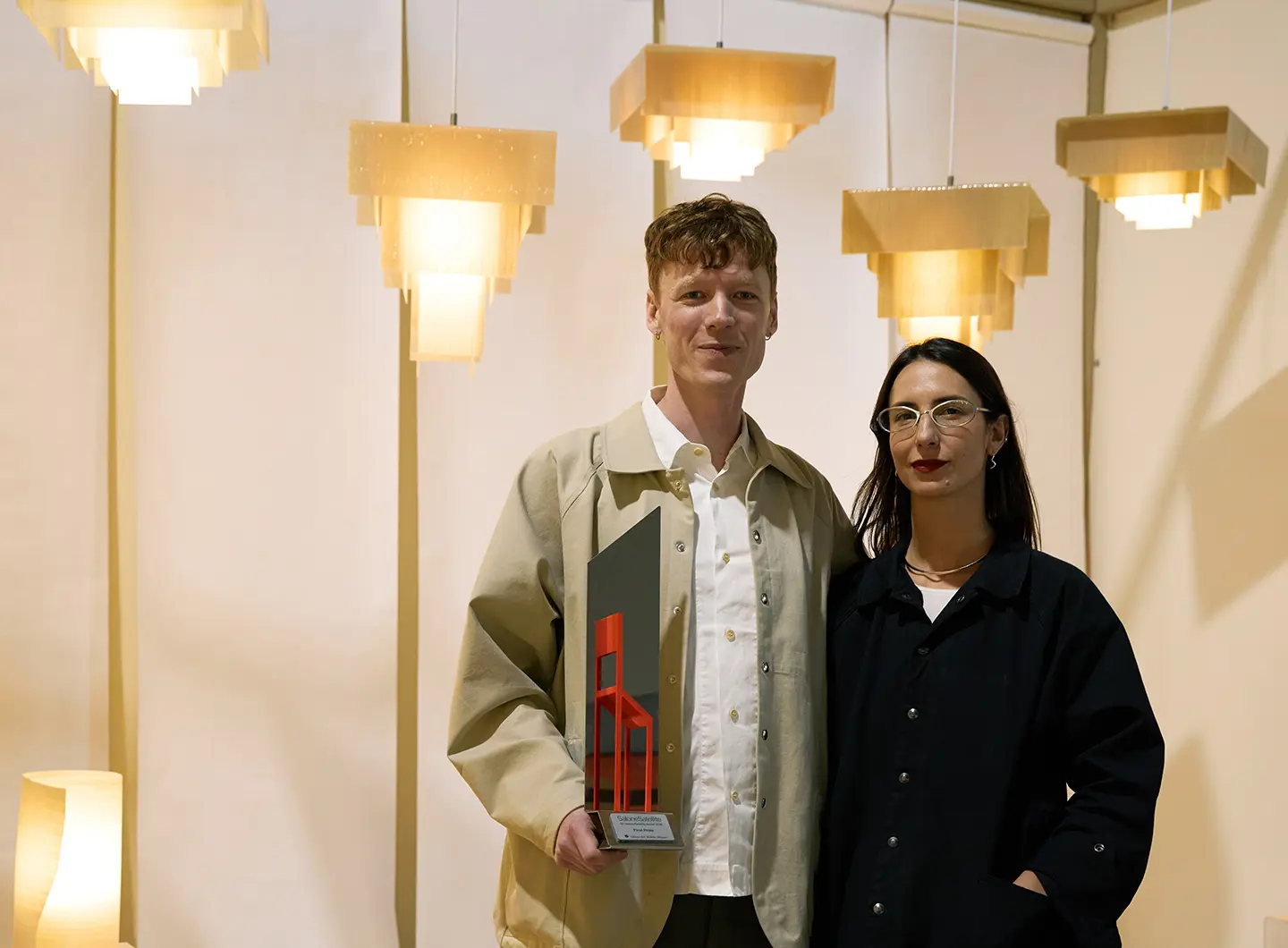
First prize: Copenhagen-based studio RUSSO BETAK, Stefannia Russo and Søren Betak – SaloneSatellite 2026
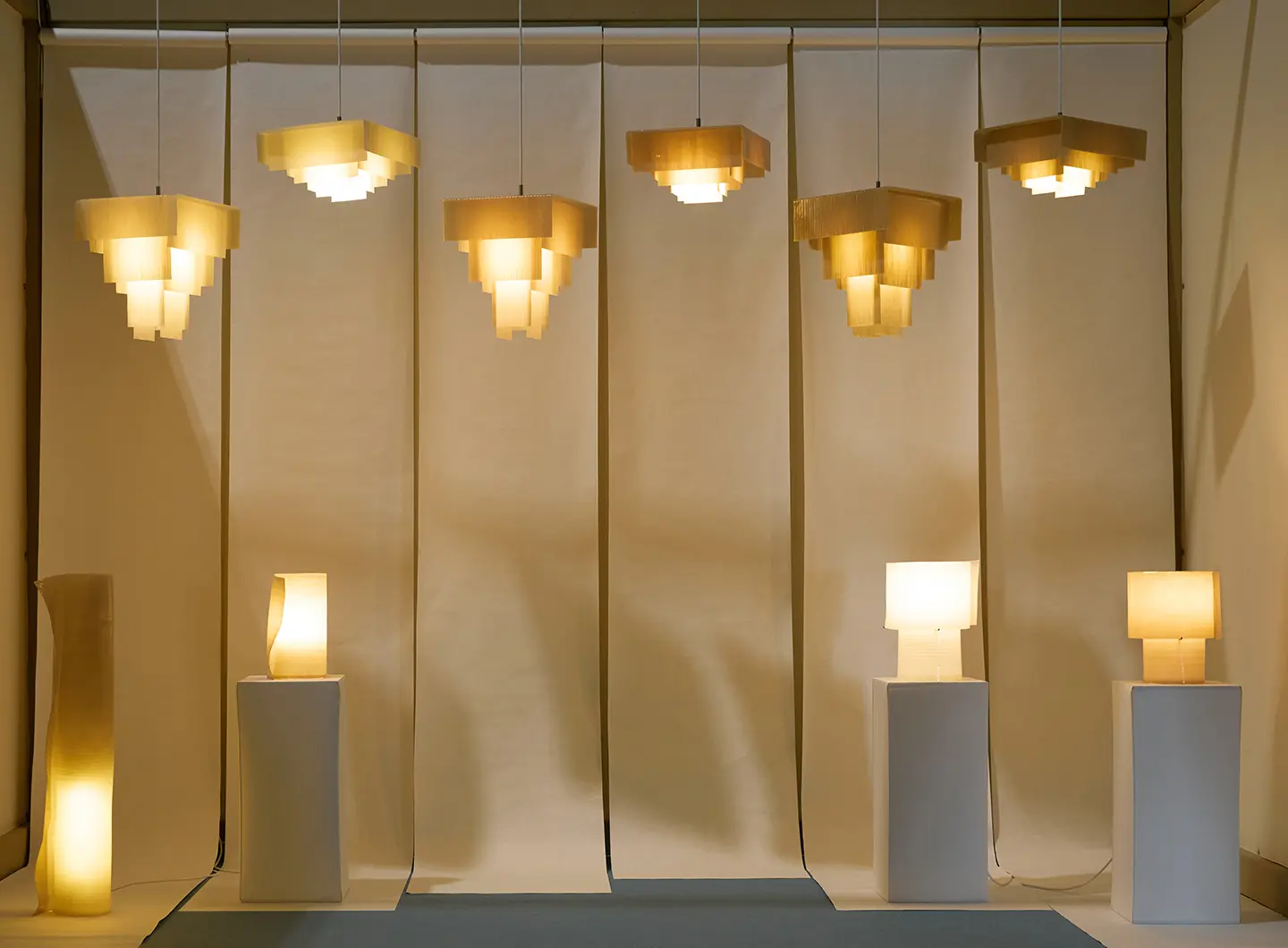
First prize: Nippon lamp, Ark collection, designed by the Copenhagen-based studio Russo Betak – SaloneSatellite 2026
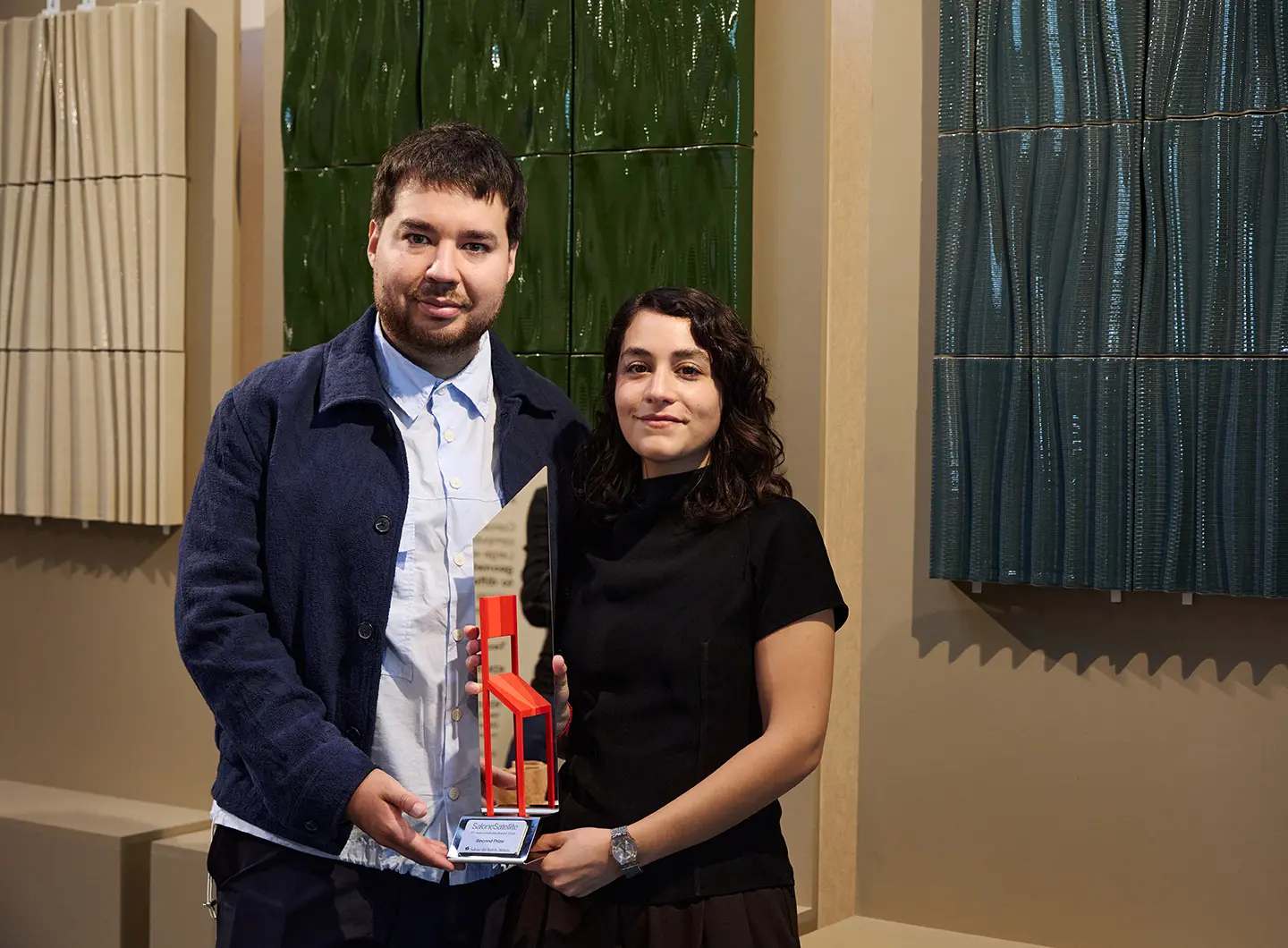
Second prize: Dutch studio Ious – SaloneSatellite 2026
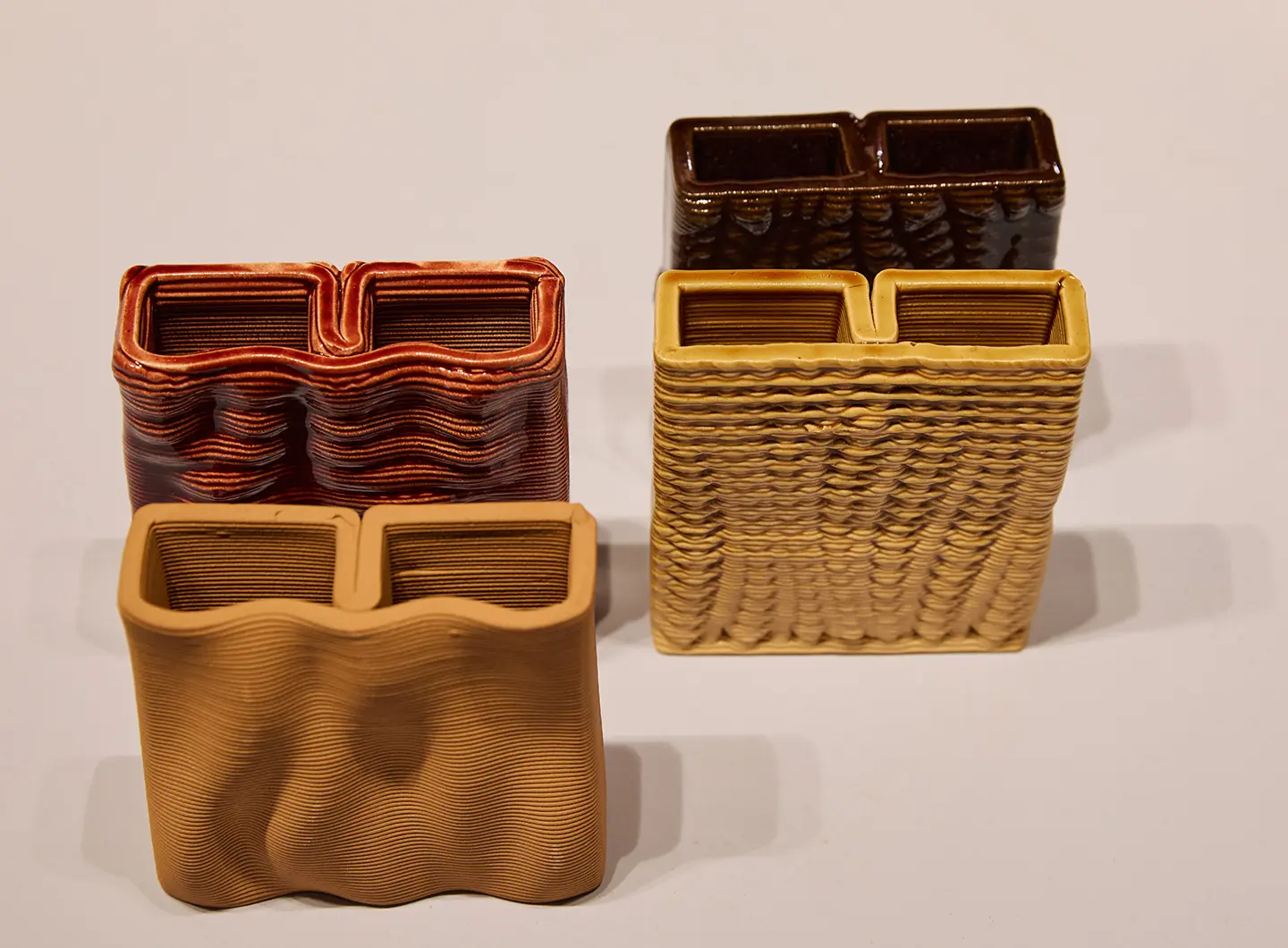
Second prize: Dutch studio Ious – SaloneSatellite 2026
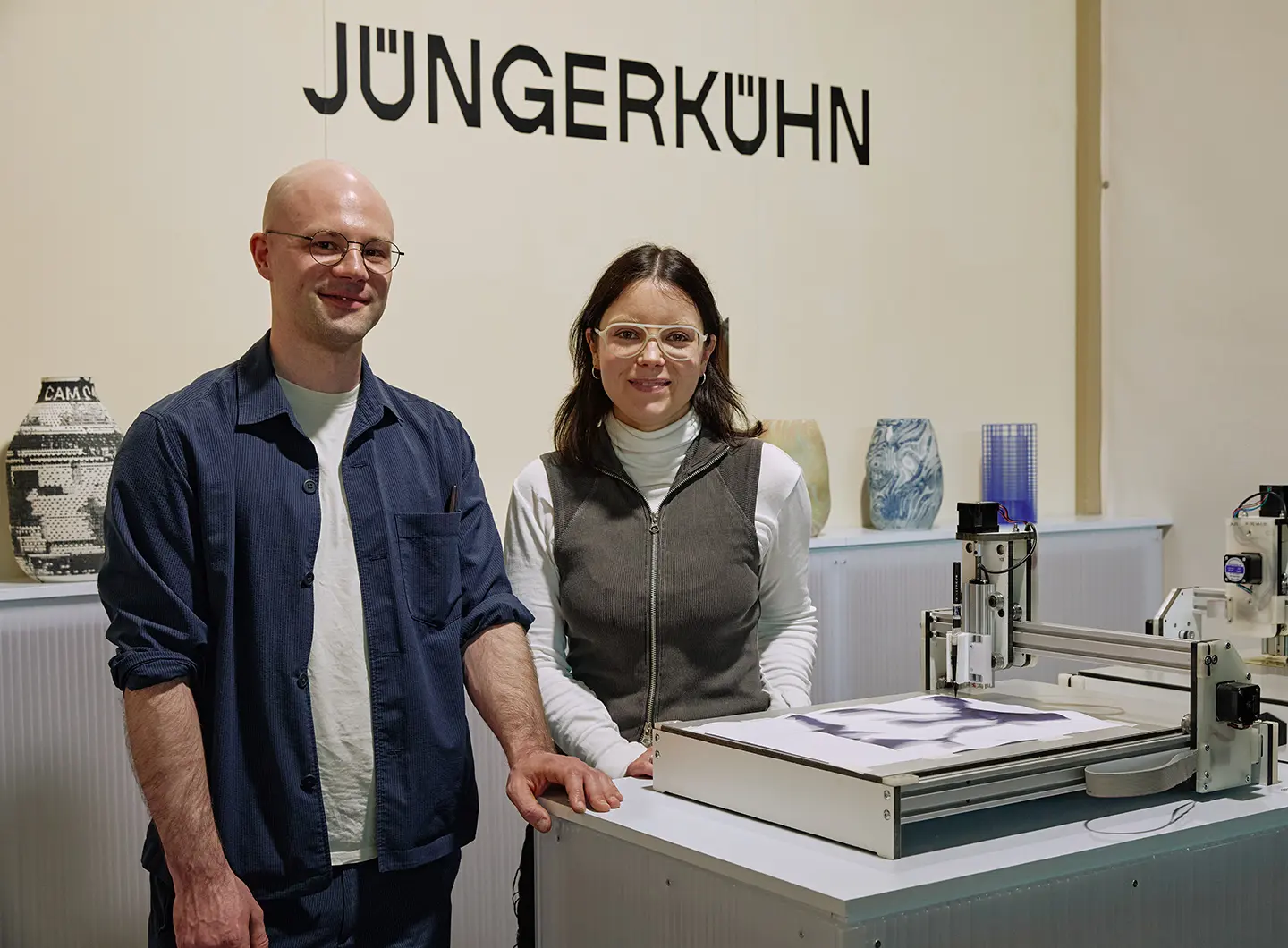
Third prize: Berlin-based studio Jüngerkühn, Konrad Jünger and Verena Kühn – SaloneSatellite 2026
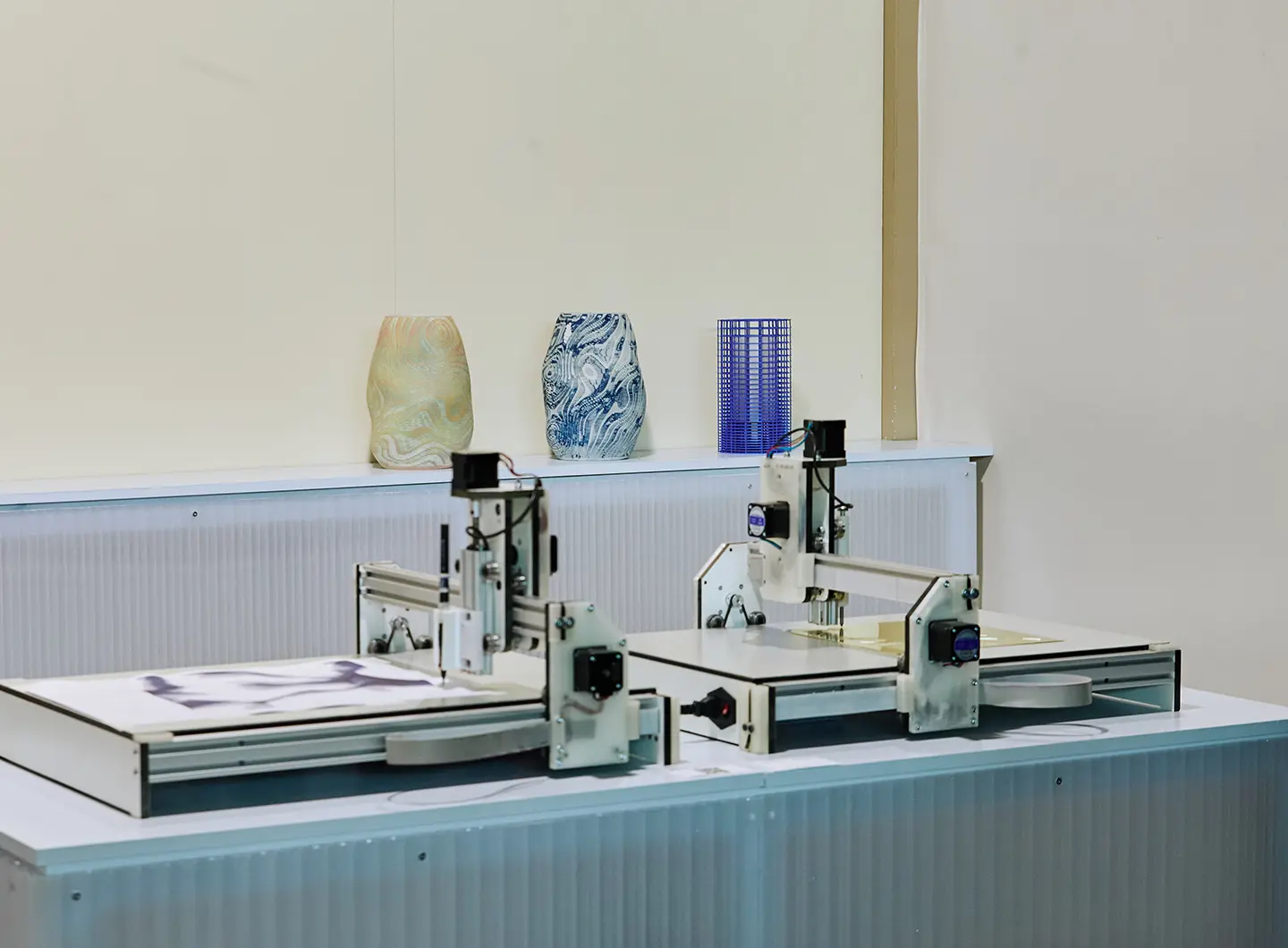
Third prize: Berlin-based studio Jüngerkühn, a porcelain vase created using a subtractive technique – SaloneSatellite 2026
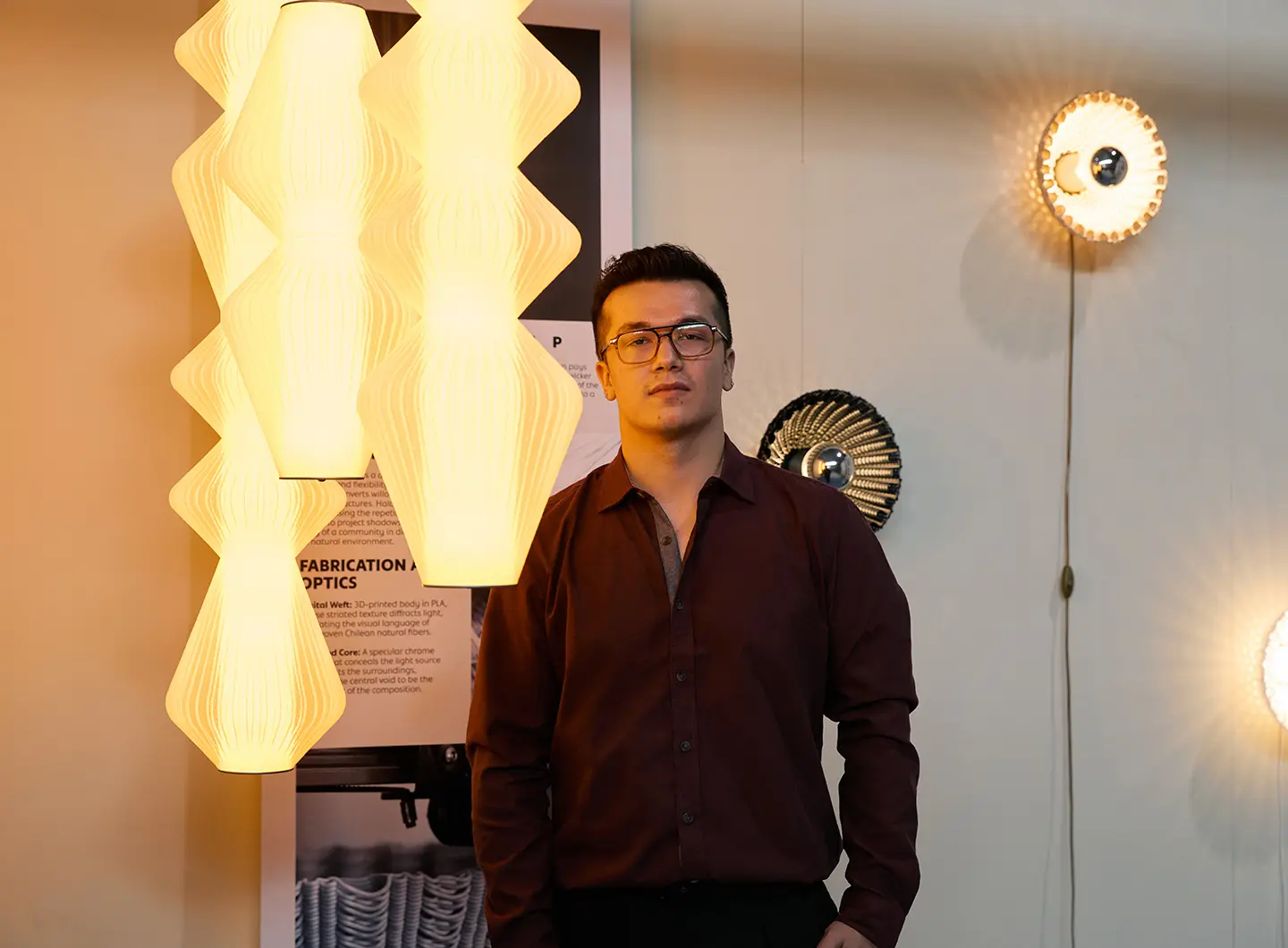
Special mention: Nicolás Romero, founder of Aiko Design – Salonesatellite 2026
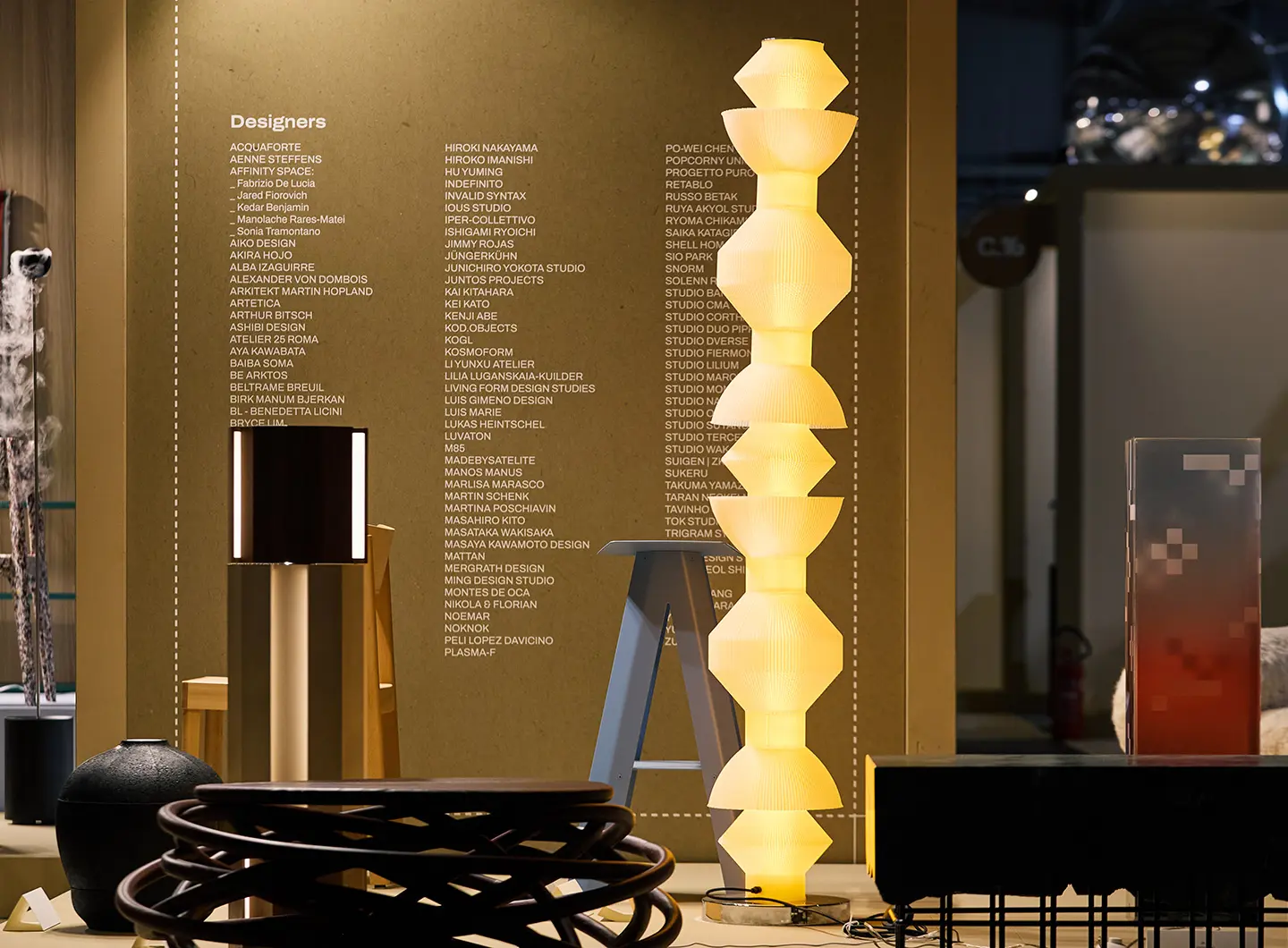
Special mention: the Númina lamp, designed by Nicolás Romero, founder of Aiko Design – Salonesatellite 2026
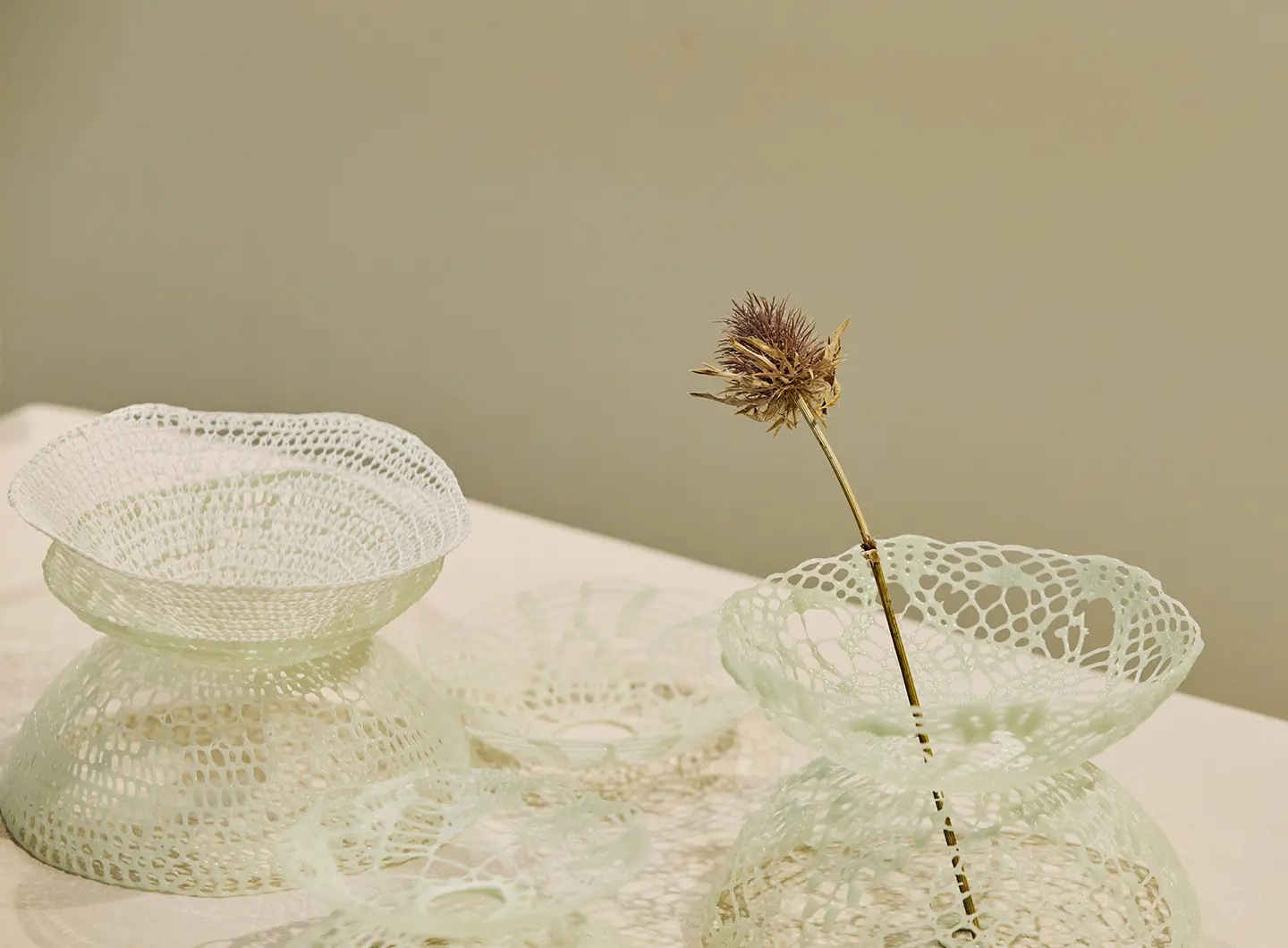
Special mention: Foggy collection, designed by Yixian Wang – SaloneSatellite 2026
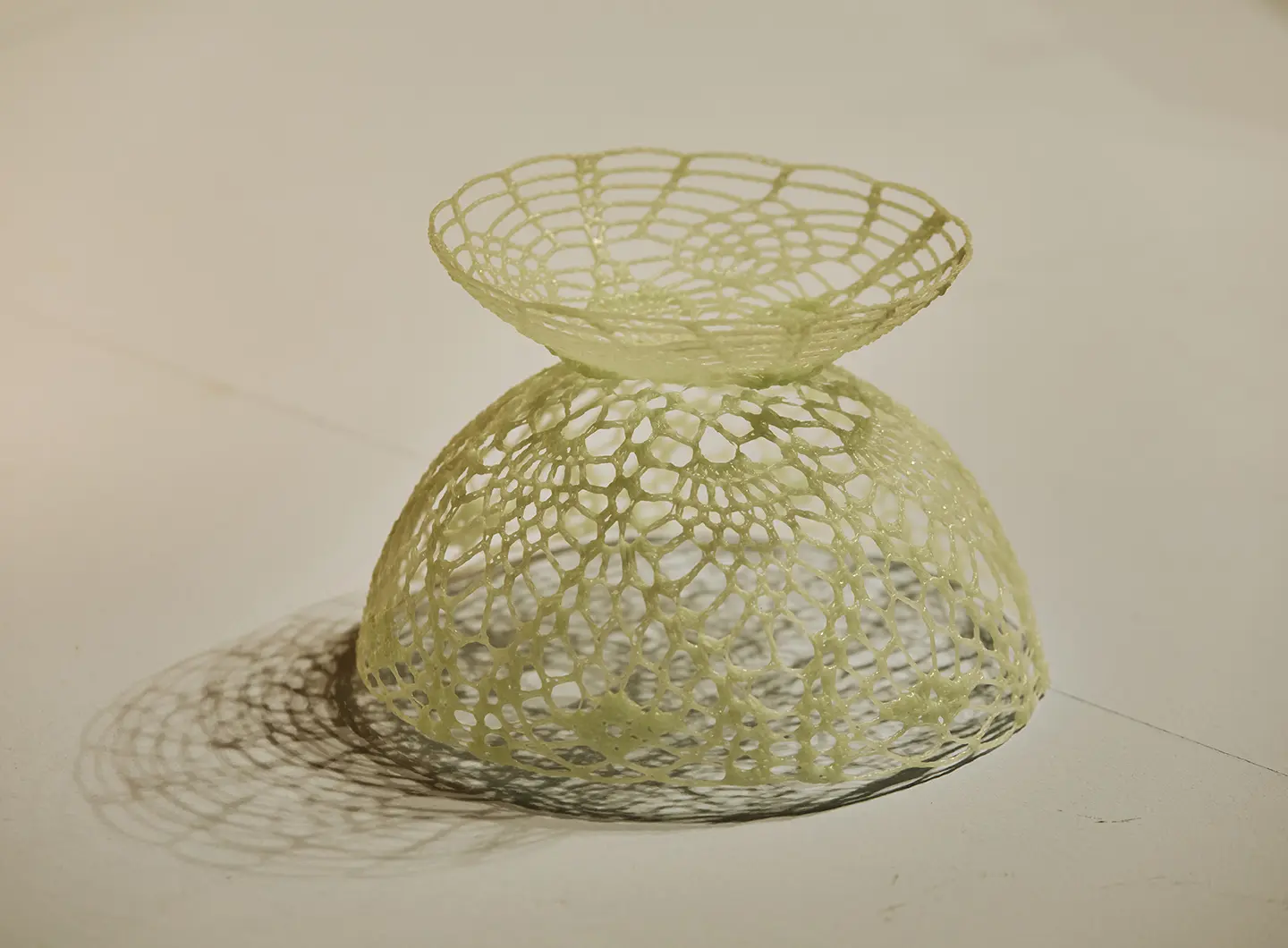
Special mention: Foggy collection, designed by Yixian Wang – SaloneSatellite 2026


The second prize awarded by the jury of the SaloneSatellite is also 3D printed. The winner is the Dutch studio Ious, which has developed an extrusion printing method for ceramic tiles. Ious is back at the Satellite after first taking part in 2024: “Coming back this year with the same project, now fully developed and recognized with an award, felt incredibly rewarding,” they told us. “It was very rewarding to see that people understood the project not simply as a technological experiment, but as a proposal for a new design language and production methodology. […] The fair led to many valuable conversations and new contacts regarding future collaborations and projects, which for us is one of the most important outcomes of participating in an event like SaloneSatellite.” Their technique, now developed, is in fact about to be used in a larger-scale project. A new challenge, and a way to explore its broader spatial and expressive potential.
The third prize was for a porcelain vase made by the Berlin studio Jüngerkühn. It is produced, by contrast, using a subtractive technique – i.e. not by adding layers of material, but eliminating them. First poured into a mold, the material is then covered with colored liquid clay which is then partially scraped with a small CNC machine to reveal different underlying colors each time. Konrad Jünger and Verena Kühn say: “Since we did not show furniture and our submission might have easily been overlooked, we had not expected to win an award. So we especially appreciate the jury taking their time to understand our project and put a spotlight on our approach to digital crafting. The recognition produced quite a bit of press and we hope that it helps us to reach a wider audience, particularly industrial producers, with our ideas.”
In addition to the three main awards, the jury also extended the awards to two special mentions. The Chilean Nicolás Romero, founder of Aiko Design, also worked on the expressive opportunities of 3D printing. Printed in PLA, his Númina lamp draws inspiration from the ancestral cultures of his land and its craft techniques, such as woven horsehair and wickerwork. “All my work is designed to create atmospheres. I want the light from my lamps to invite a moment of disconnection, connection, and closeness,” he told us. “The reception at SaloneSatellite pleasantly surprised me. Visitors highlighted exactly that very thing: the light. They congratulated me for daring to play with a different color and atmosphere, for the finishes and the shapes, telling me it was something they didn’t usually see.”
The Chinese designer Yixian Wang received another special mention at this edition of the Satellite. She also chose to focus on a process of transformation of matter. The objects in her Foggy collection, including a lamp and a vase, are produced by baking crocheted fiberglass in an oven. “The combination of glass, weaving, and handicraft seemed almost contradictory, even impossible, yet somehow the work held all three together.” The result is poetic and reveals biographical elements: the designer was taught to crochet when she was a child. But it again bears testimony to a definite urge to transform matter, where the machine is an accomplice but it is up to the individual to leave an indelible mark. This is the hallmark of all the awards in this edition, which perhaps never before as this year has shown its ability to combine experimental craft skills with research guided by the potential of the material.
18 May 2026
Share