

 Exhibitions


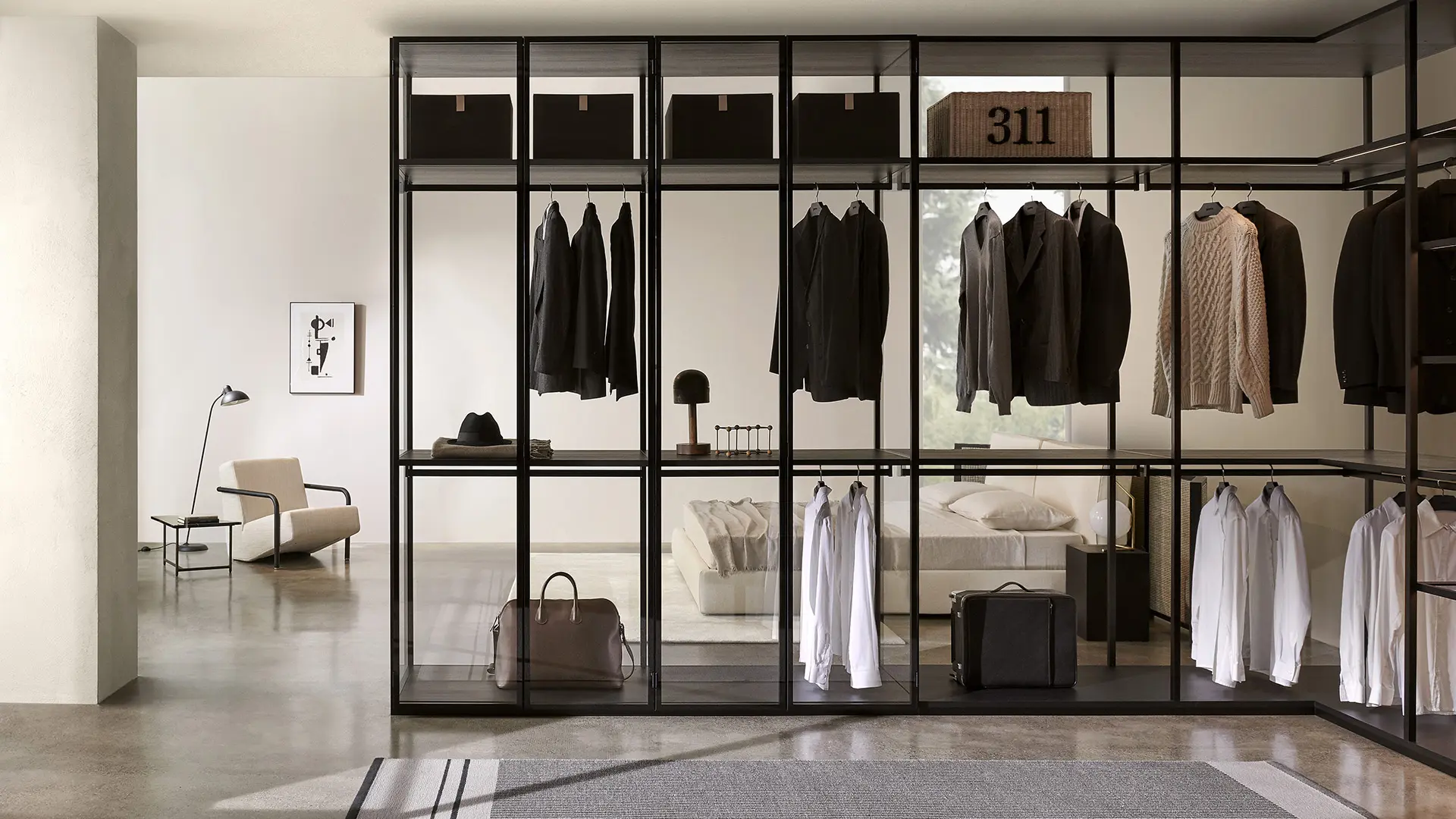
Bedrooms are the places where we are reborn each day, which is why they are deserving of particular attention. Our bodies are extraordinary machines, capable of regenerating themselves whilst we sleep, and our daily wellbeing depends, at least in part, on the quality of that sleep.
Invisible technology, sustainable materials and ubiquitous intelligence
Text by
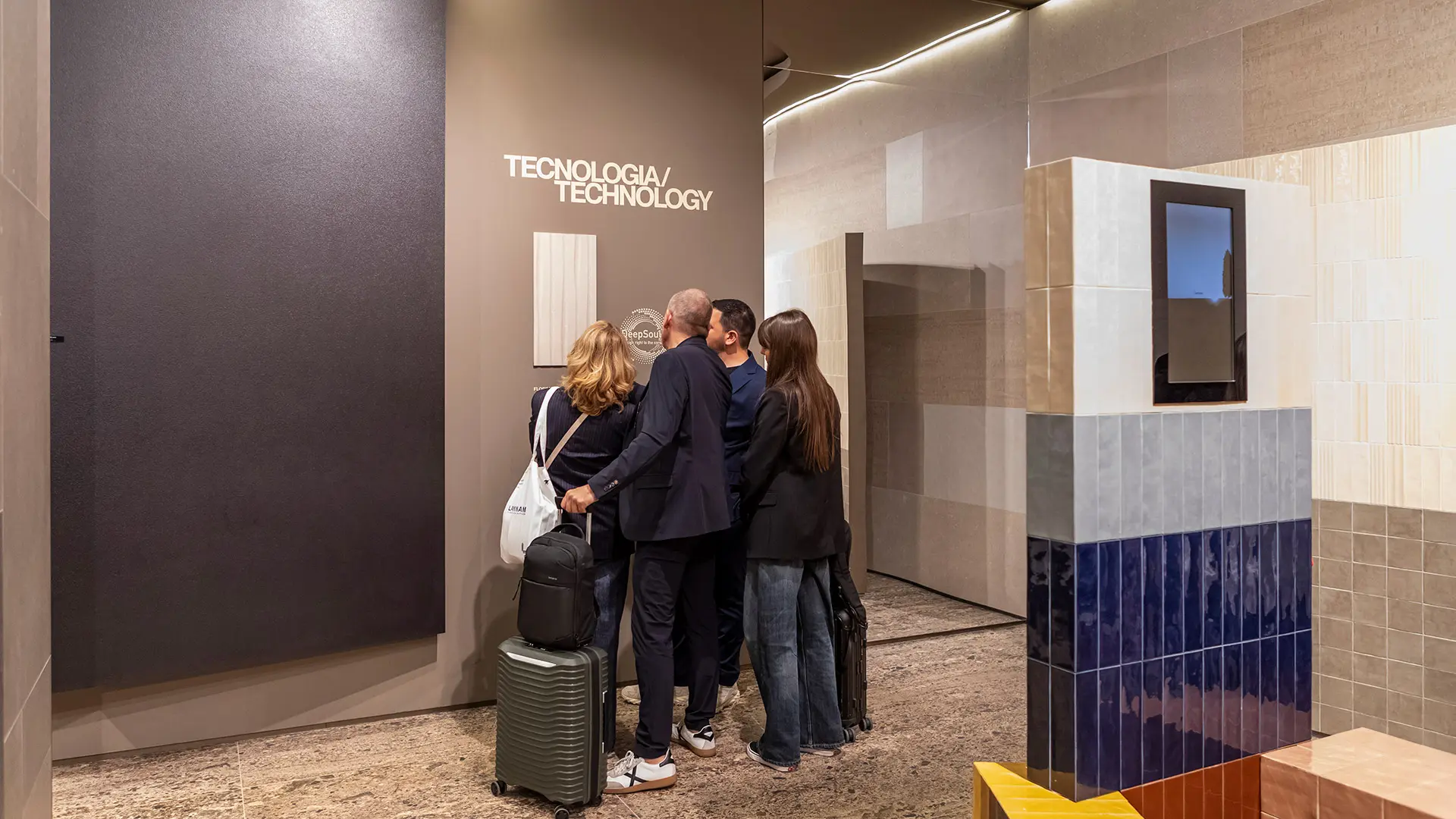
Florim, Salone del Mobile 2026
At the 2026 edition of Salone del Mobile.Milano, technology was no longer something to be showcased; it is not synonymous with form, nor with overt design gestures. Instead, it operates on a more subtle level, where innovation, materials and sustainability intertwine, and digital technology blends in to the point of becoming almost imperceptible
Present, silent technology
There was no attempt to make technology a prominent feature, rather a discreet one, ceasing to define the identity of a design, but improving its performance and quality of use, often unnoticed. The Salone del Mobile 2026 painted a clear picture in which innovation no longer relates to visible new qualities but to the ability to build coherent, sustainable and durable systems. The technology lies in materials that last, in surfaces that simplify, in appliances that learn.
Ubiquitous intelligence and smart systems
In the 90s Mark Weiser coined the expression ubiquitous computing, now, in the age of Artificial Intelligence, we can take this concept a step further and talk about ubiquitous intelligence. Technology and digital are no longer confined to individual products, but are seamlessly embedded throughout the home. In tandem with Samsung, Veneta Cucine has introduced a smart kitchen that uses data and interfaces to monitor food, suggest possible uses and cut waste.
Artificial intelligence is not thematised as an autonomous element, but as part of a system geared to everyday wellbeing. Elica is taking the same approach with its Lhov project, developing integrated solutions in which a number of different functions co-exist within the same appliance. Voice control, connectivity and automation help make for more fluid, almost invisible interaction.
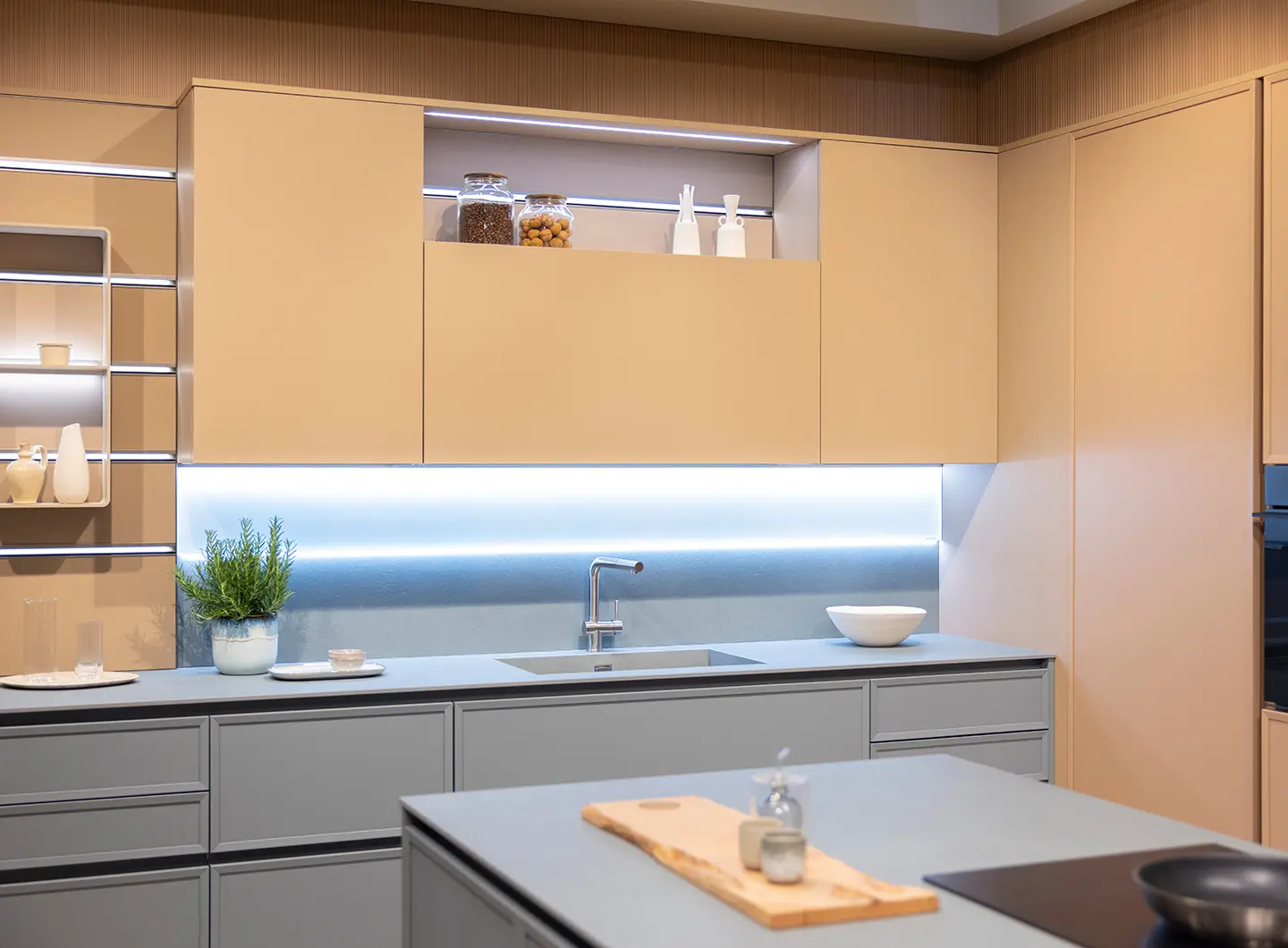
Veneta Cucine, Salone del Mobile 2026
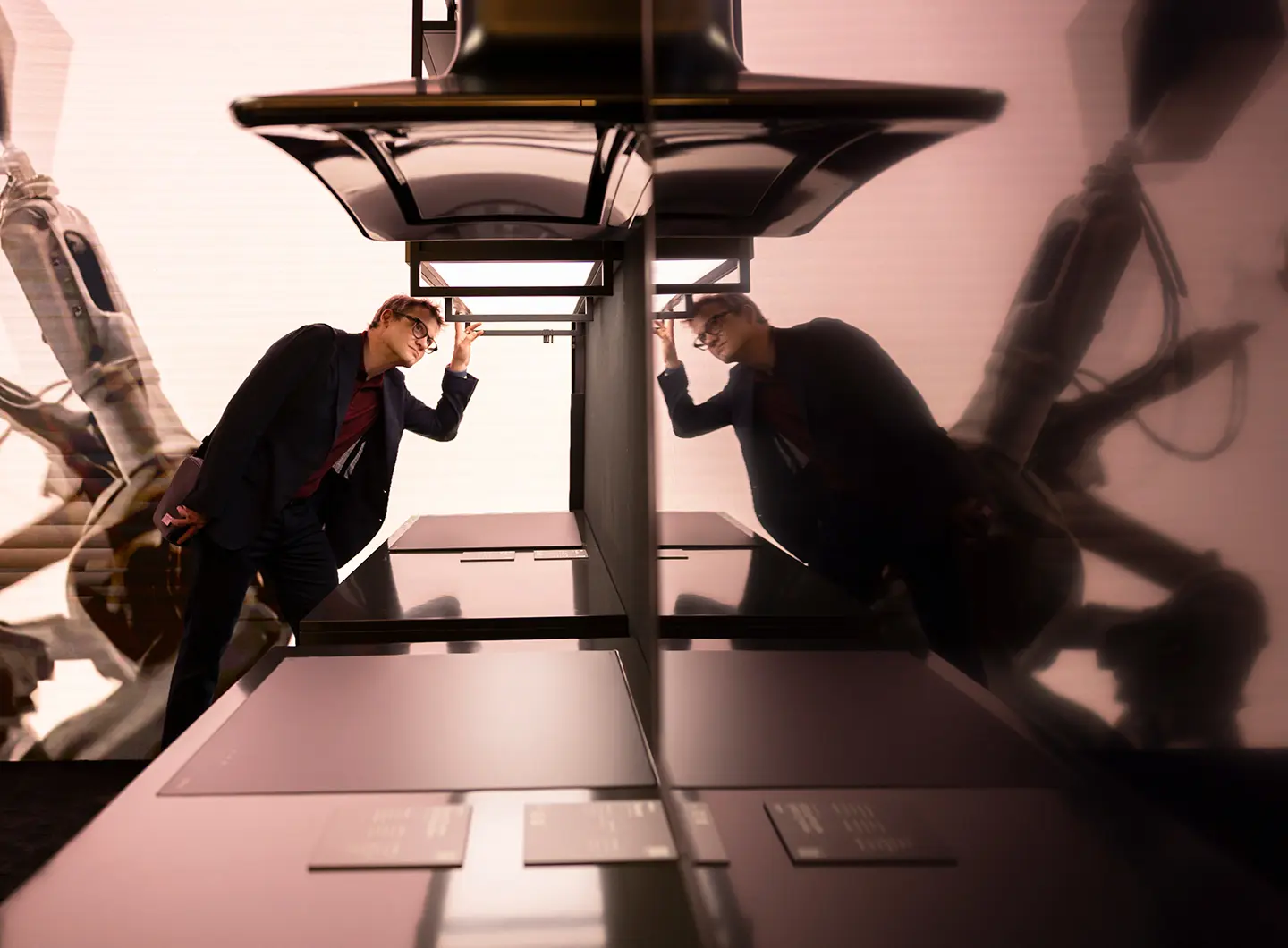
Elica, Salone del Mobile 2026
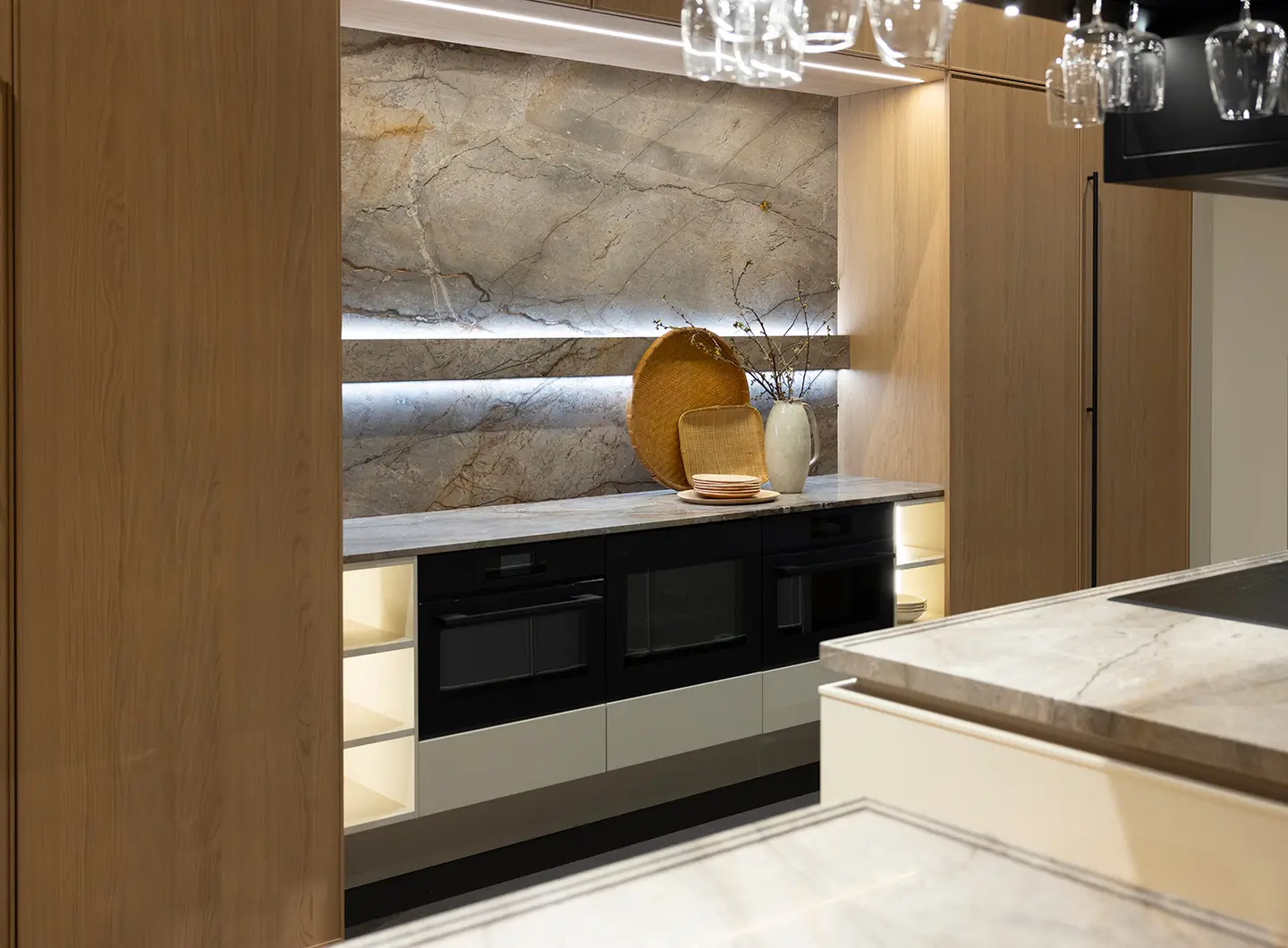
Snaidero, Salone del Mobile 2026
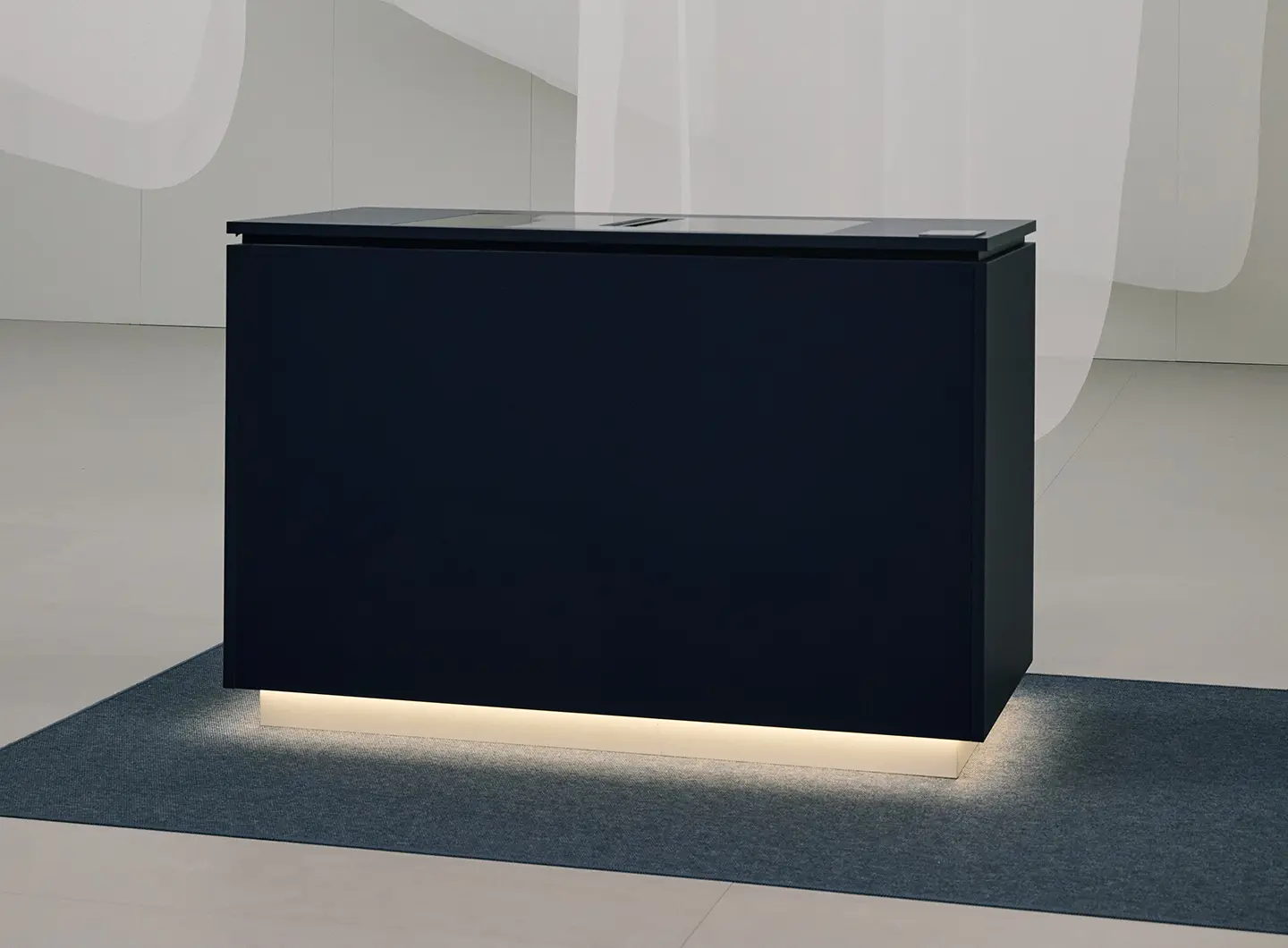
Beko, Salone del Mobile 2026
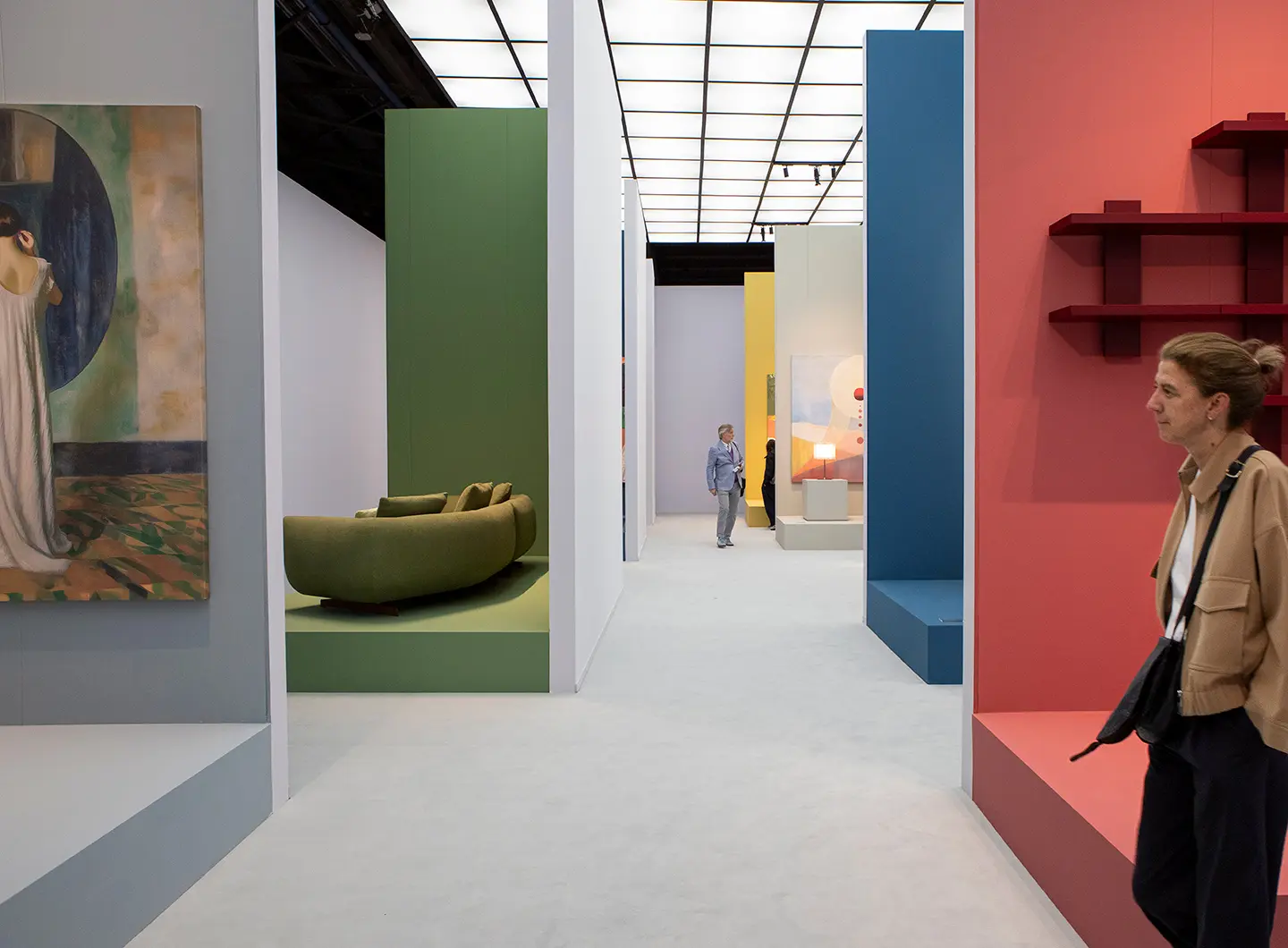
Kartell, Salone del Mobile 2026
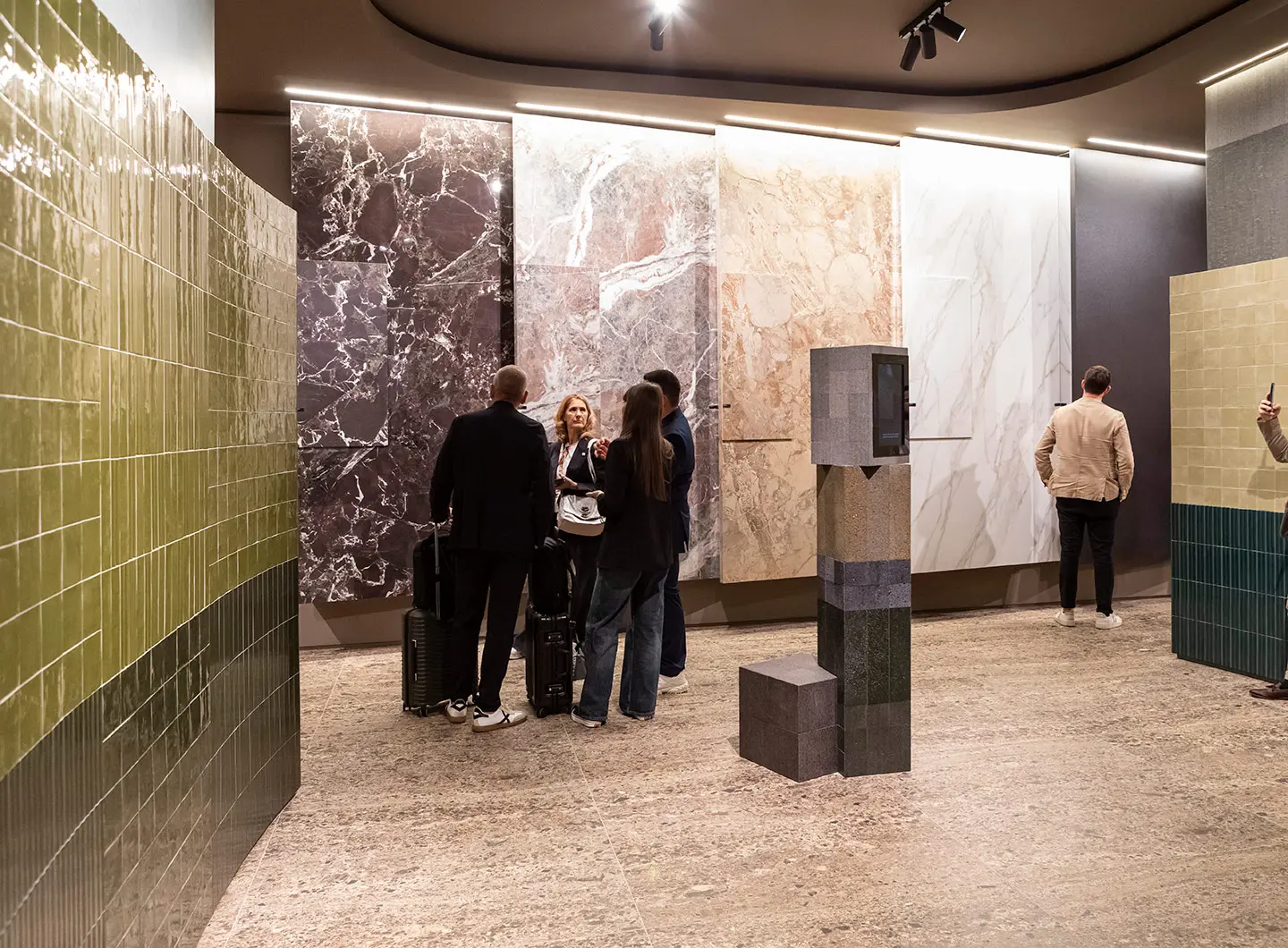
Florim, Salone del Mobile 2026
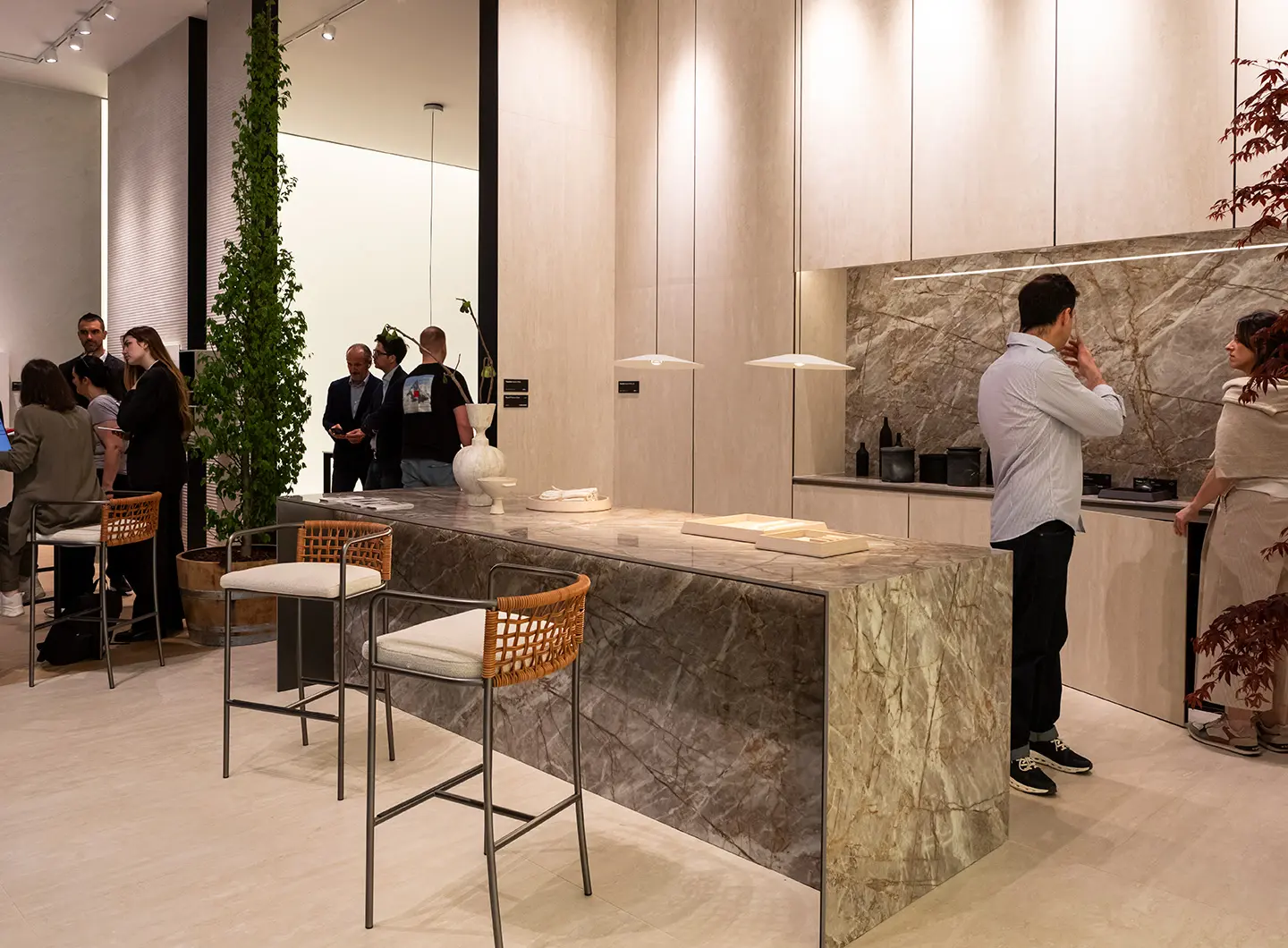
Atlas Concorde, Salone del Mobile 2026
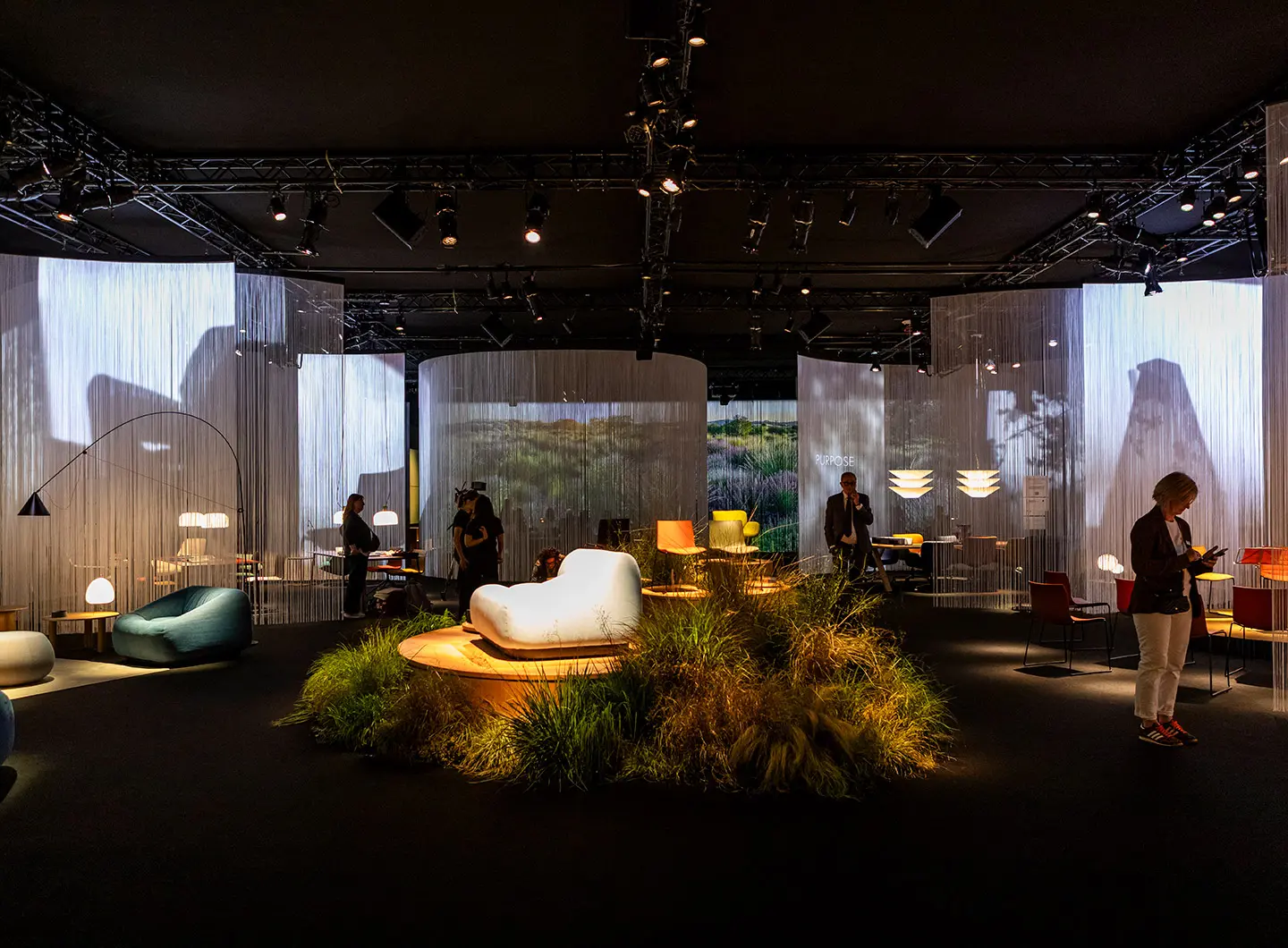
Arper, Salone del Mobile 2026
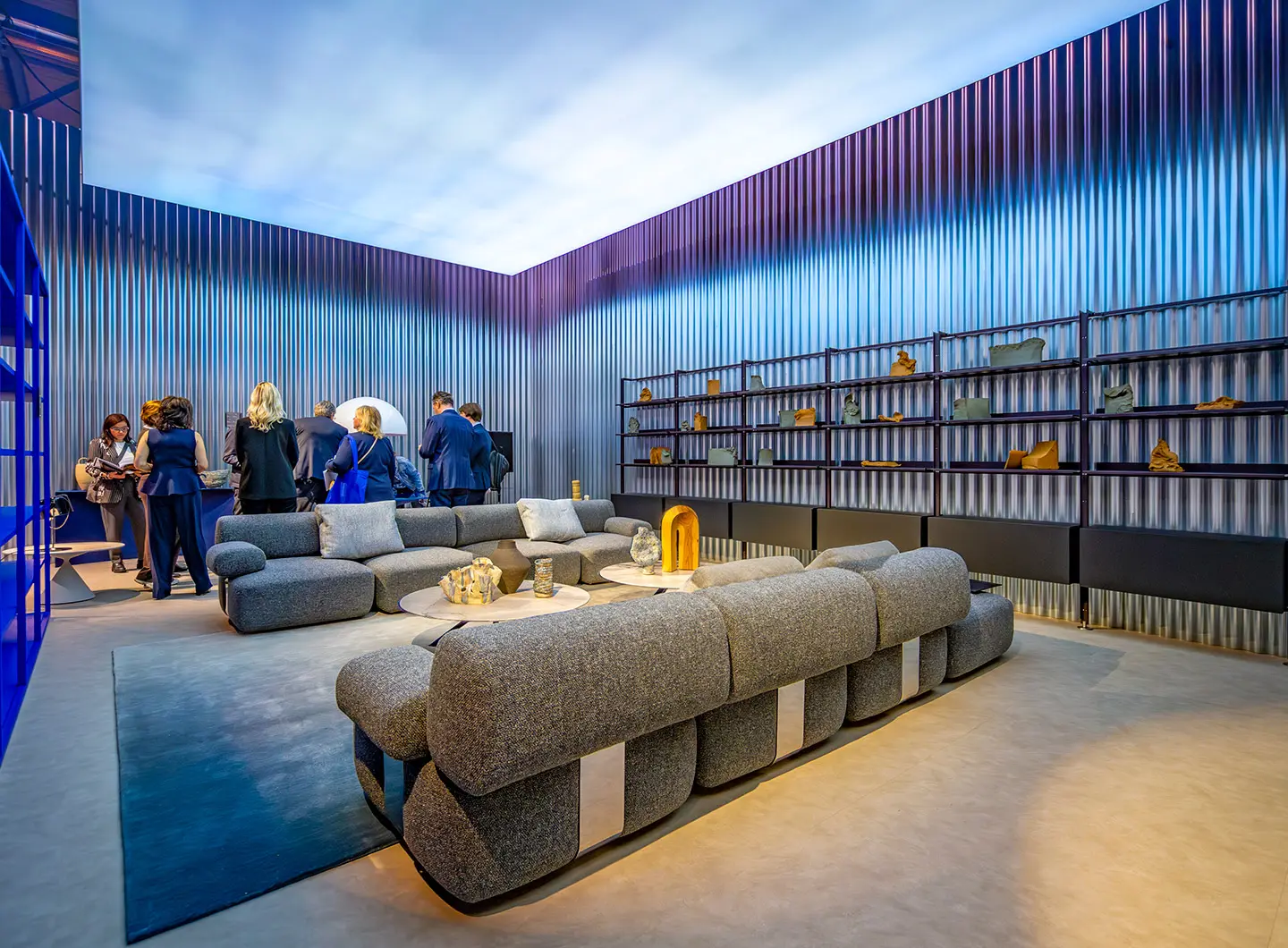
Desalto, Salone del Mobile 2026


Material as sustainable infrastructure
A significant part of this changing pattern relates to the materials. No longer mere supports to the form, but as design devices in their own right. Research is focused on high-performance surfaces, advanced ceramics, finishes designed to last and reduce impact over time. Within this context, the kitchen becomes a privileged field of experimentation. With its Continuous Space concept, Veneta Cucine is interpreting the domestic environment as a continuous system, in which interior and exterior interact through materials that flow seamlessly from one to the other. Ceramic allows for the creation of surfaces that extend throughout a space, turning the kitchen into a unifying element rather than a merely functional one.
The same approach also goes for Snaidero, with marble, wood and stone-effect surfaces marking out cohesive spaces, designed to last and adapt to increasingly fluid layouts, with, sustainability translated into quality and continuity, rather than mere rhetoric. Equally, the materials themselves become increasingly noticeable. Beko’s Midnight Line features matte, anti-reflective surfaces that enhance the visual and tactile experience, reducing signs of wear and the need for maintenance. This focus on materials as technology is also evident at Kartell, which is furthering its research into innovative and sustainable materials, and in companies such as Florim and Atlas Concorde, where advanced ceramics are becoming an increasingly high-performance, durable material capable of creating continuity between architecture and furnishings.
This is also true of the furnishing world, in which companies such as Arper and Desalto are working on advanced manufacturing processes and on optimising materials, coming up with lightweight solutions, pared back to the essential and designed to stand the test of time. Here sustainability is not a overt factor, but chimes with constructive precision and the ability to do away with the superfluous. As with the materials, technology does not add complexity, rather it reduces wear, improving user interaction and building more coherent, durable and conscious environments.
Rather than a collection of objects, contemporary homes take the form of systems, spaces in which materials, technology and ubiquitous intelligence coexist without hierarchies, shaping a continuous experience.
Here, the innovation is not visible, but perceptible, it lies in the quality of the space, in the durability of the materials, the naturalness of the actions: it is discreet technology, which is precisely why it becomes more effective.
7 May 2026
Share