

 Salone Selection


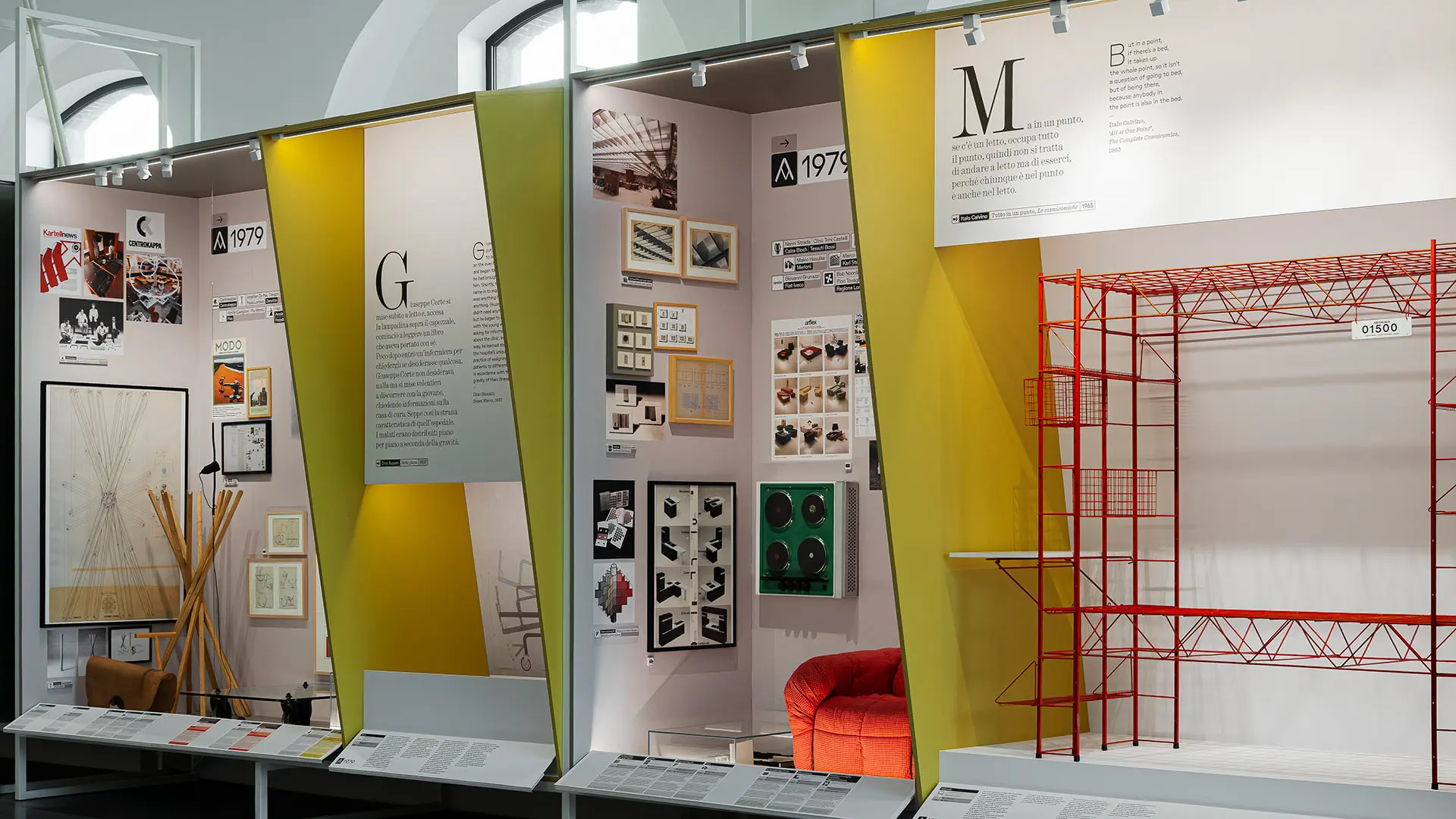
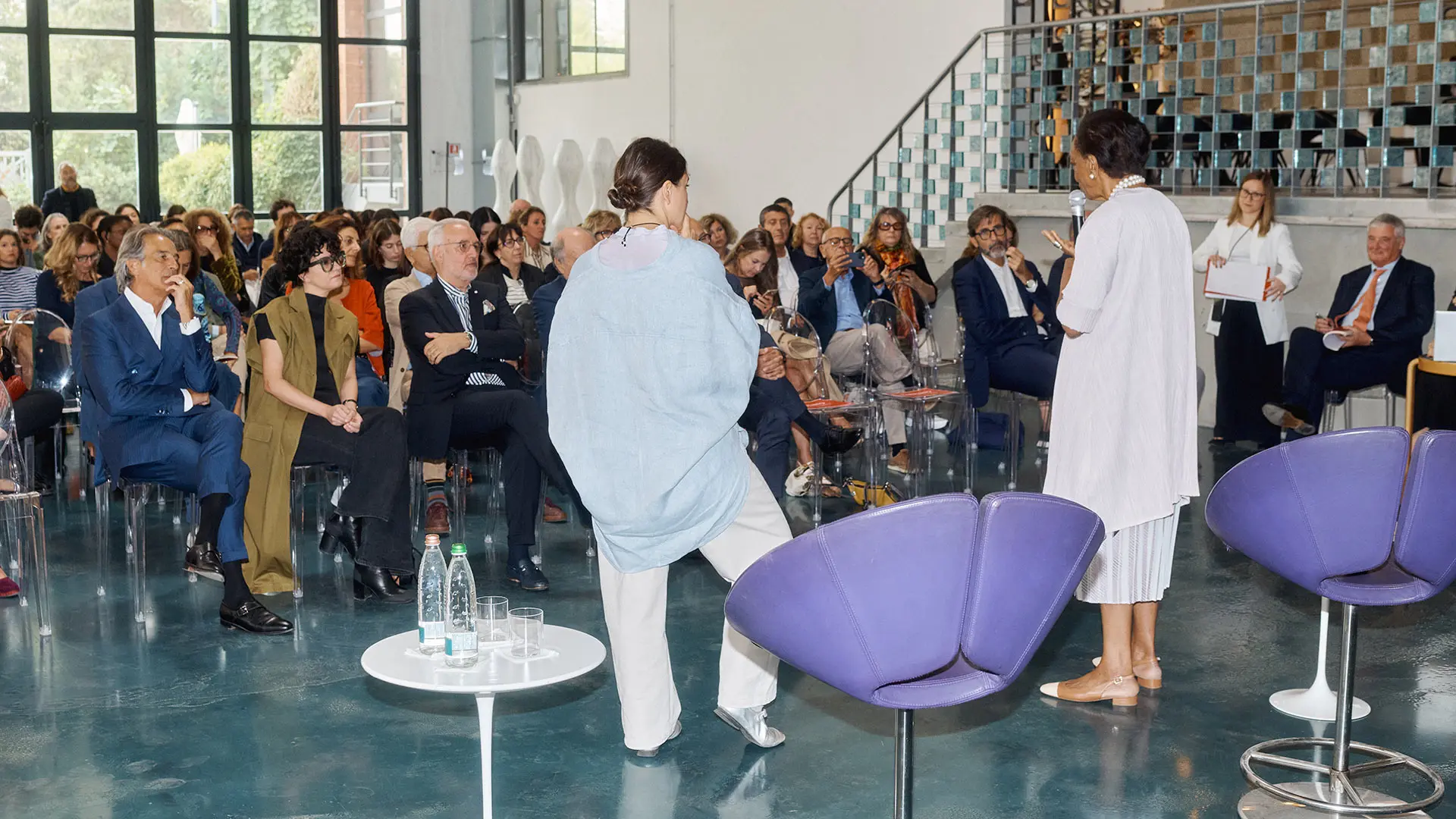
Five years since it opened, the museum in Milan presents the first new scientific reordering of its Historical Collection. Curator Maite García Sanchis relates how the way of interpreting over seventy years of design is changing, while Domitilla Dardi explains why the “Anthological” study enables the award-winning objects to dialogue with literature
The Compasso d’Oro award for the Annual Report and an Honourable Mention for “The City of Lights”
Text by
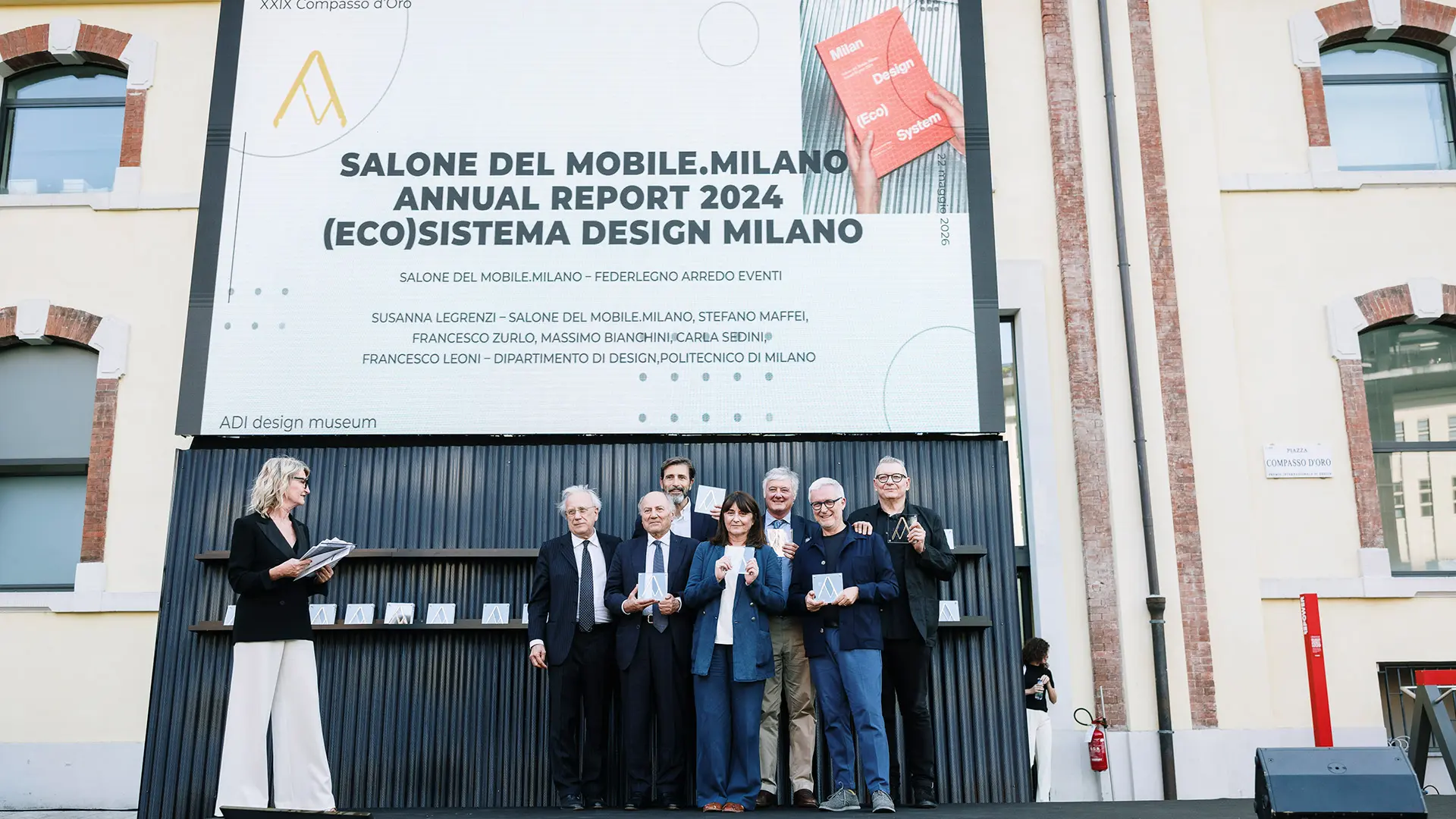
The XXIX Compasso d'Oro ADI Awards Ceremony - Ph. ADI Design Museum
The ADI recognises the Salone del Mobile’s ability to invest in cultural production and to transform this temporary event into a shared cultural heritage
There are awards that celebrate an object. And then there is recognition that reflects a change of state: the precise moment when an institution stops being just an organization and becomes a cultural device capable of producing vision, knowledge and method.
The awards obtained by the Salone del Mobile.Milano at the 29th Compasso d’Oro ADI belong to this second category. On the one hand, the Compasso d’Oro was awarded to the “Milan Design (Eco) System” Annual Report, a research project conceived and promoted by the Salone with the scientific support of the School of Design of the Politecnico di Milano. On the other, the Honorable Mention for “The City of Lights”, the major curatorial project that in 2023 transformed Euroluce into an immersive and interdisciplinary platform dedicated to the theme of light.
These are two very different awards, yet closely connected.
Because both recognize something that goes beyond the traditional perimeter of the fair. They reward the Salone’s ability to invest in cultural production, research, and the construction of content certain to leave a trace beyond the time of the event.
And this is perhaps the most interesting point.
We are accustomed to recounting objects, icons, products that have entered the collective imagination. More rarely do we paint the invisible systems that make all this possible: the relationships, the effort of thought, the cultural infrastructures, the research, the collective work that binds a creative community together.
Today the Salone wants to direct attention to this. The Compasso d’Oro awarded to the Annual Report marks this step. For years, the Salone del Mobile has been described through impressive numbers: visitors, exhibitors, international presences, economic downstream benefits. But what was missing was perhaps a more radical, almost existential question: What dos the week of the Salone really produce in the city? What transformations does it generate in urban life? How does it change Milan, its rhythms, its language, its cultural and economic identity?
The Annual Report arose out of this very need. Not as a simple editorial publication, but as a permanent infrastructure of knowledge. It is a project that attempts something rare: to stop a phenomenon in motion and try to interpret it as it is happening.
The work takes shape within the Salone del Mobile.Milano Observatory, a research structure created to collect, read and interpret the data of an extremely complex ecosystem. A work that brings together institutions, universities, study centers, companies, associations, professionals, public and private stakeholders.
It is headed by Susanna Legrenzi, Communication Strategy Advisor and curator of the Salone del Mobile.Milano Observatory, together with the School of Design of the Politecnico di Milano represented by Francesco Zurlo and Stefano Maffei, with the scientific contribution of Massimo Bianchini, Carla Sedini and Francesco Leoni.
But what is really striking is not only the methodological structure of the project. It is its human subtext. Because behind graphs, field observations, interdisciplinary tables and theoretical frameworks, the Annual Report actually expresses something profoundly contemporary: the need to understand how a global cultural community is built, behaves and evolves today.
The first edition of the Report involved 37 data holders, 86 sources, over 530 field observations, presented in more than 260 pages of research and 90 graphs. The second further expanded the scope of the survey: 861 observations, 31 contributors, insights into urban flows, the economic impact and cultural production of design in Milan.
These numbers, if read superficially, risk appearing technical.
But in reality they reveal a much more fragile and living material: people.
They tell of millions of trajectories that intersect. Designers who come from different continents. Students traveling across Milan at night to view an installation. Companies working towards global visibility. Professionals building networks and relationships. Neighborhoods that are temporarily transformed into open laboratories. A city that, for a week, changes its tempo.
The Annual Report tries to do something that cultural institutions rarely really do: listen to what they produce. It is no coincidence that, in the citation for the award, the Compasso d’Oro jury speaks of the Salone’s ability to “assume vast responsibilities in relation to the design system as a whole.”
This is probably the deep heart of the entire project. Because the Salone does not limit itself to organizing an event, but builds the instruments for a collective understanding of the contemporary world.
Read also: Award-winning design: the Compasso d’Oro showcases the best of the Salone del Mobile

The XXIX Compasso d'Oro ADI Awards Ceremony - Ph. ADI Design Museum

The XXIX Compasso d'Oro ADI Awards Ceremony - Ph. ADI Design Museum
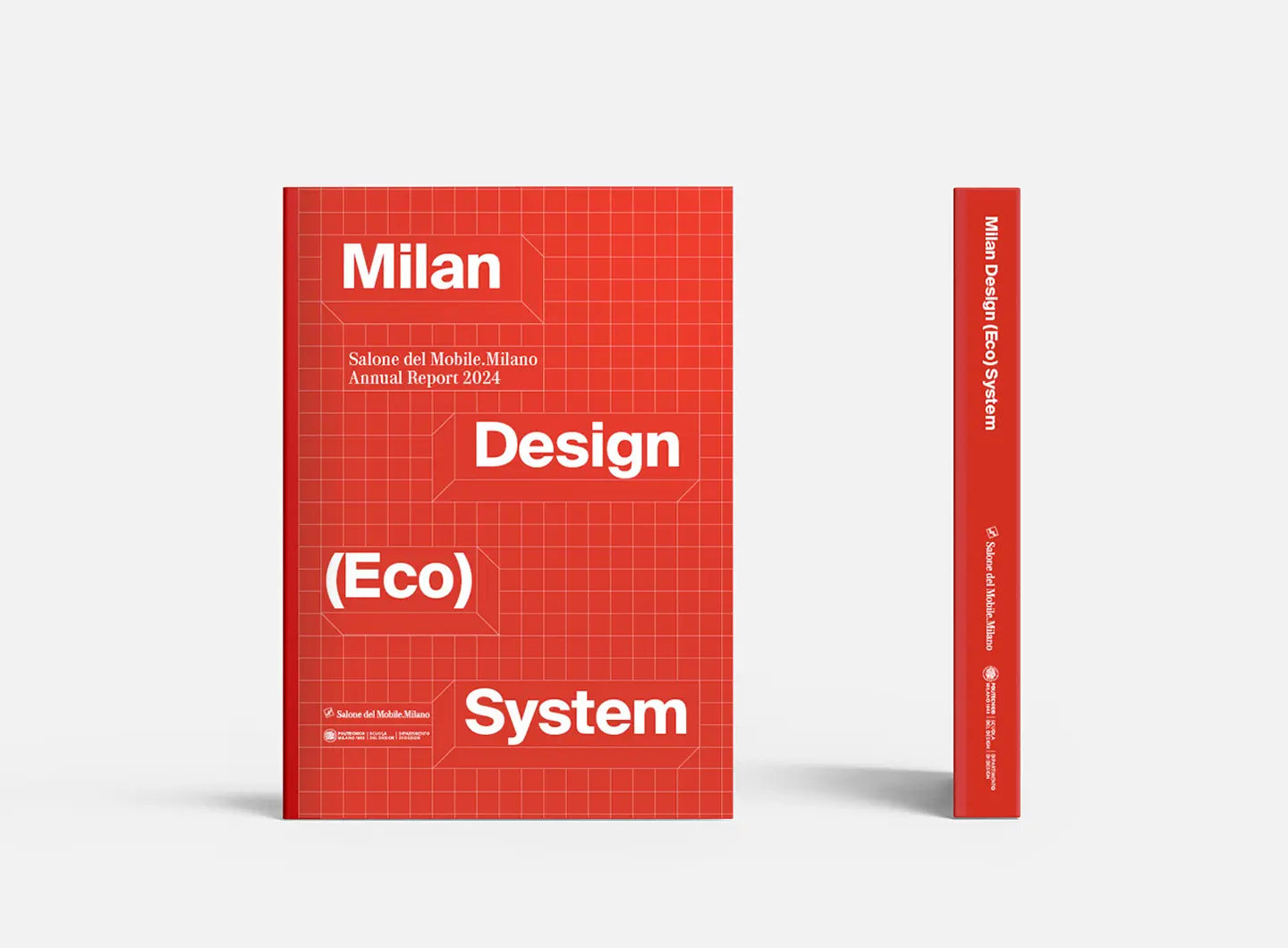
“Milan Design (Eco) System” Annual Report 2024 – Salone del Mobile.Milano, produced in collaboration with the School of Design at the Politecnico di Milano and winner of the ADI Compasso d’Oro award
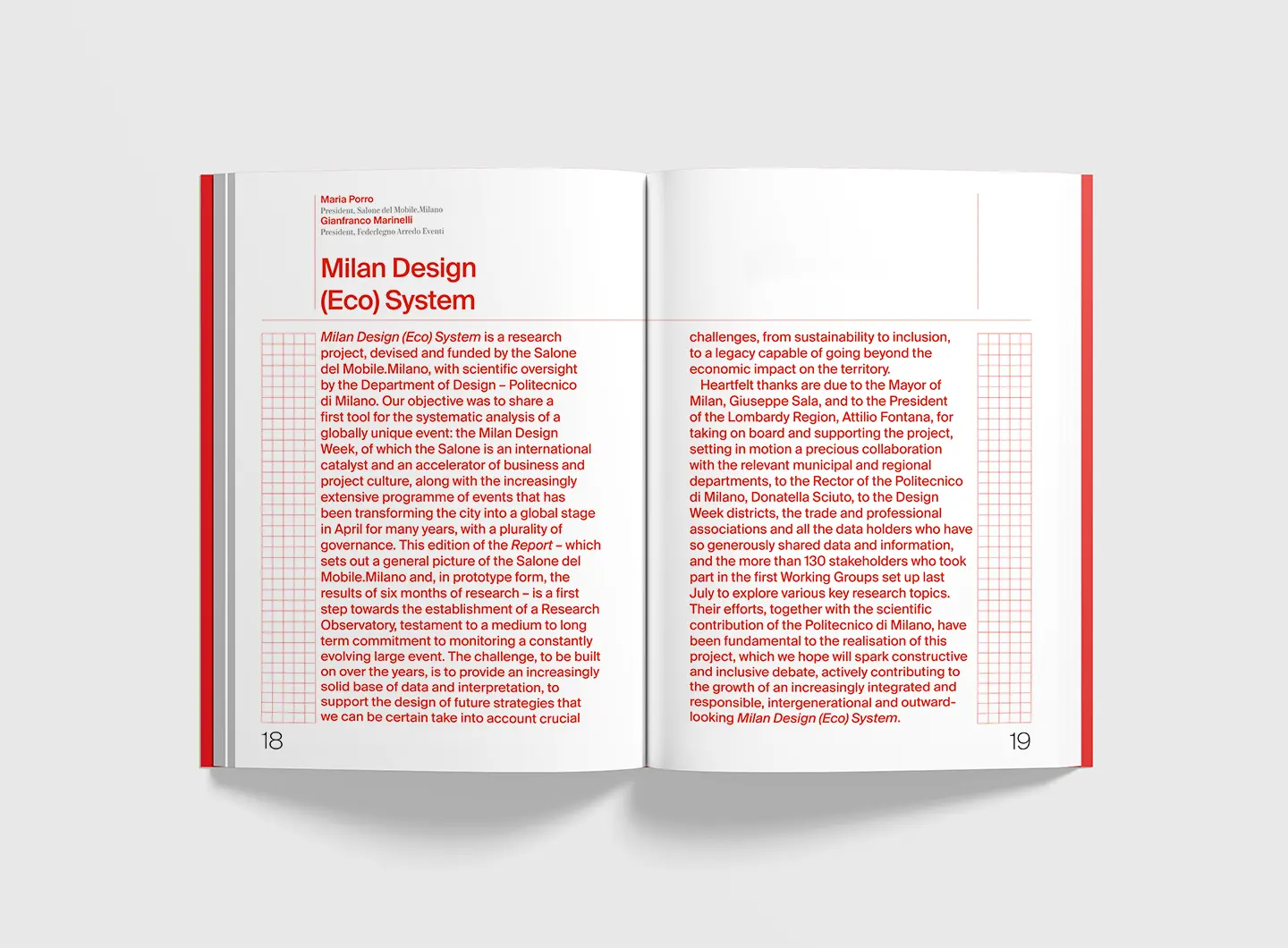
“Milan Design (Eco) System” Annual Report 2024 – Salone del Mobile.Milano, produced in collaboration with the School of Design at the Politecnico di Milano and winner of the ADI Compasso d’Oro award
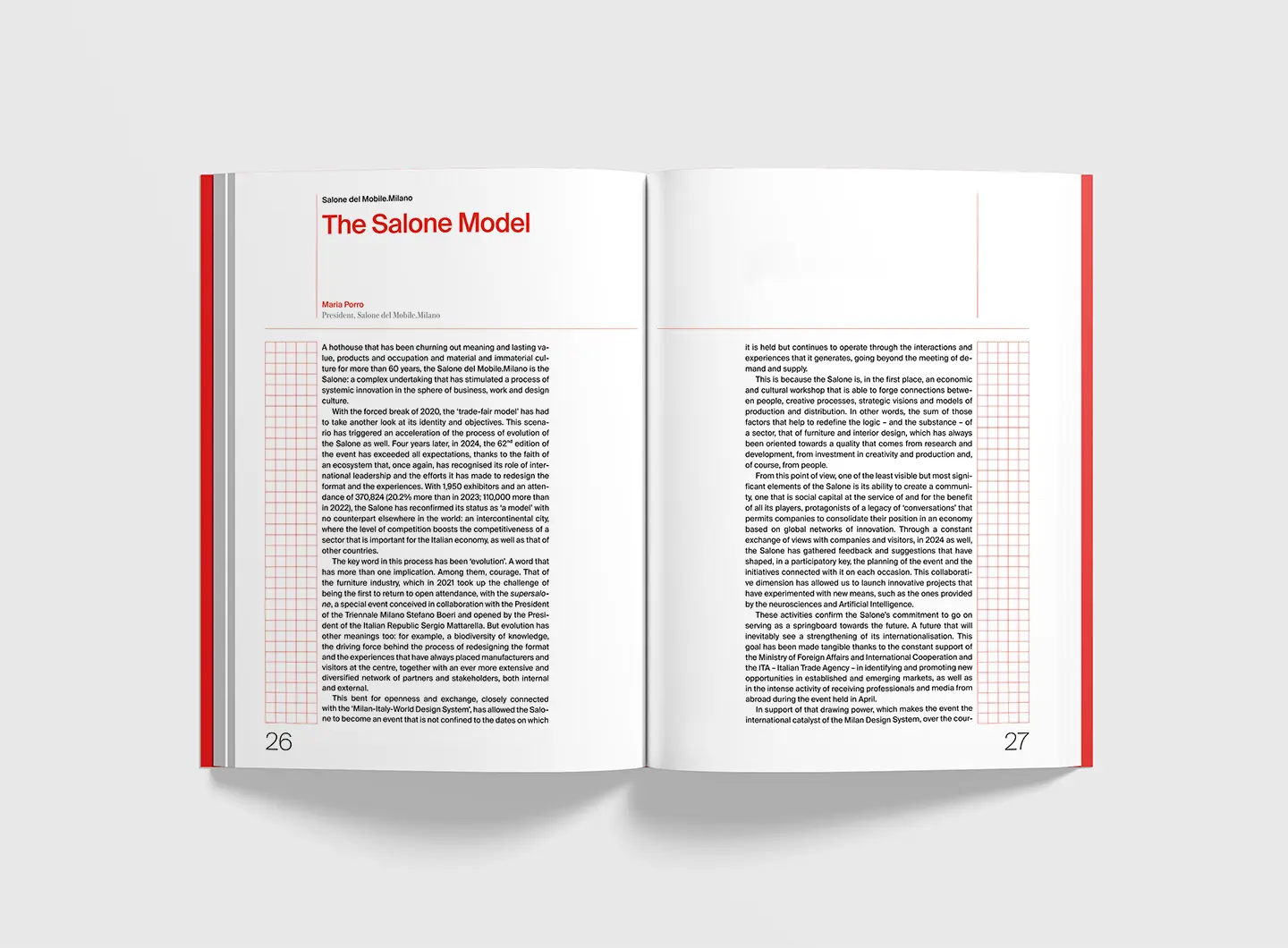
“Milan Design (Eco) System” Annual Report 2024 – Salone del Mobile.Milano, produced in collaboration with the School of Design at the Politecnico di Milano and winner of the ADI Compasso d’Oro award
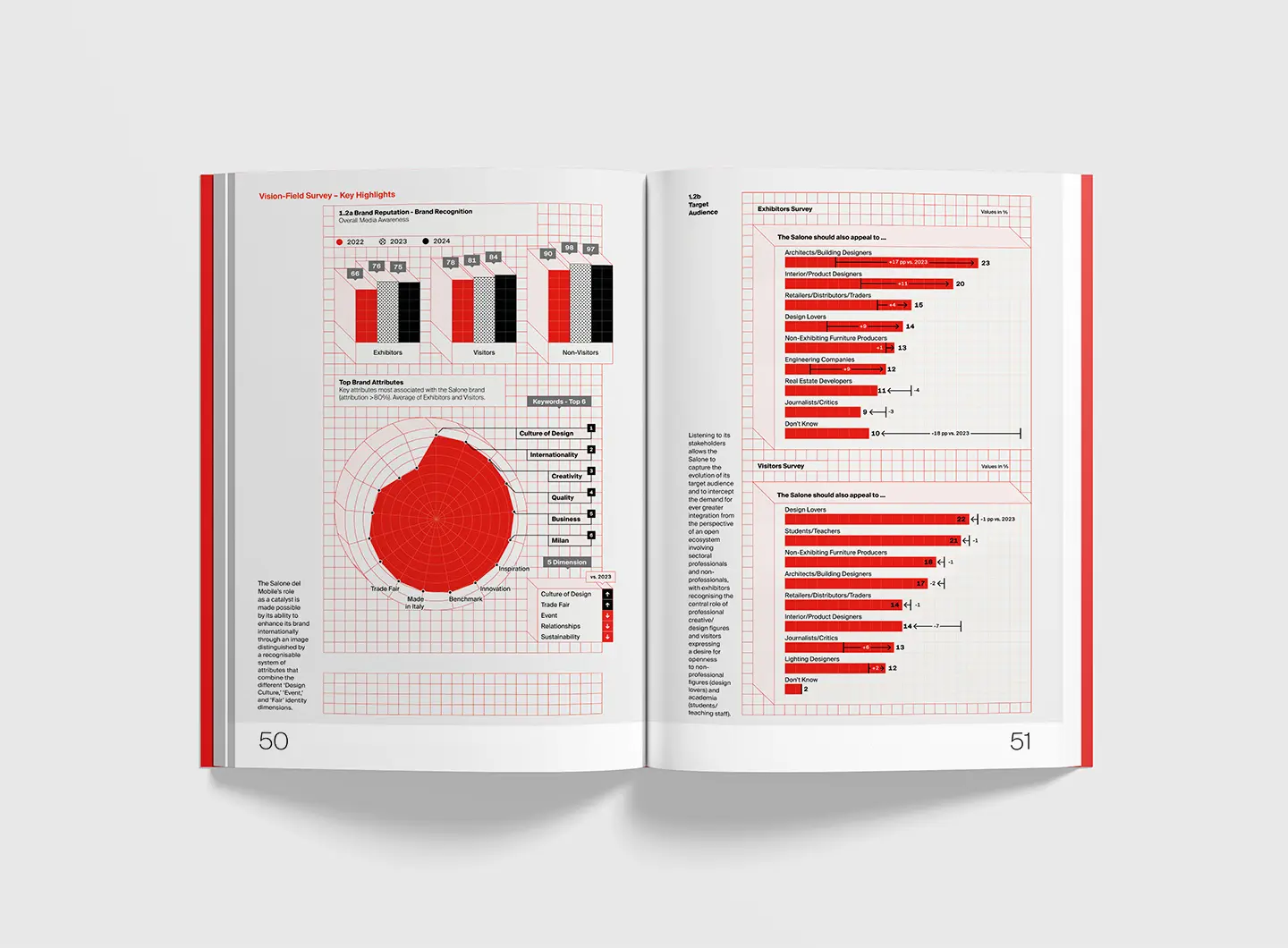
“Milan Design (Eco) System” Annual Report 2024 – Salone del Mobile.Milano, produced in collaboration with the School of Design at the Politecnico di Milano and winner of the ADI Compasso d’Oro award
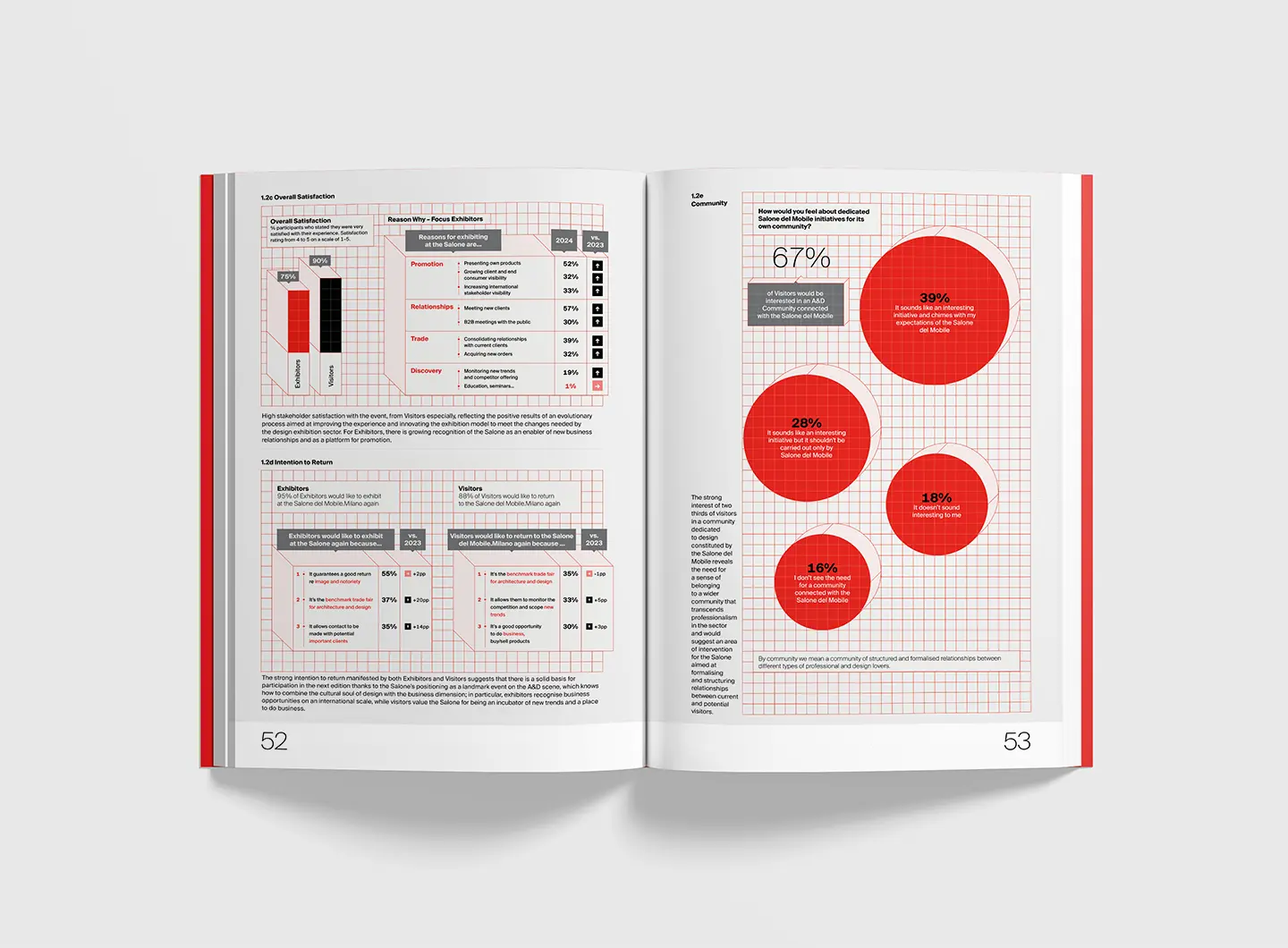
“Milan Design (Eco) System” Annual Report 2024 – Salone del Mobile.Milano, produced in collaboration with the School of Design at the Politecnico di Milano and winner of the ADI Compasso d’Oro award
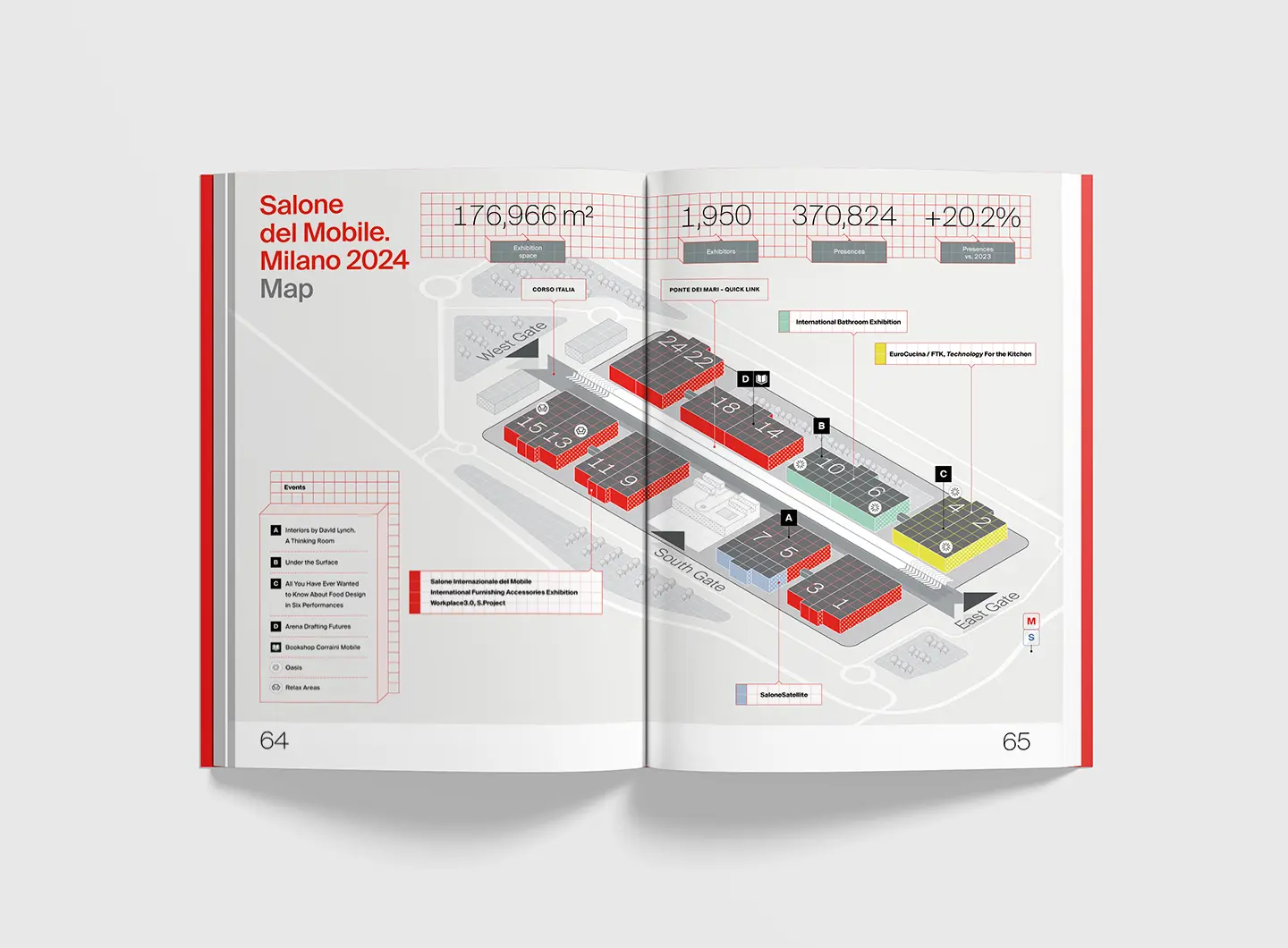
“Milan Design (Eco) System” Annual Report 2024 – Salone del Mobile.Milano, produced in collaboration with the School of Design at the Politecnico di Milano and winner of the ADI Compasso d’Oro award
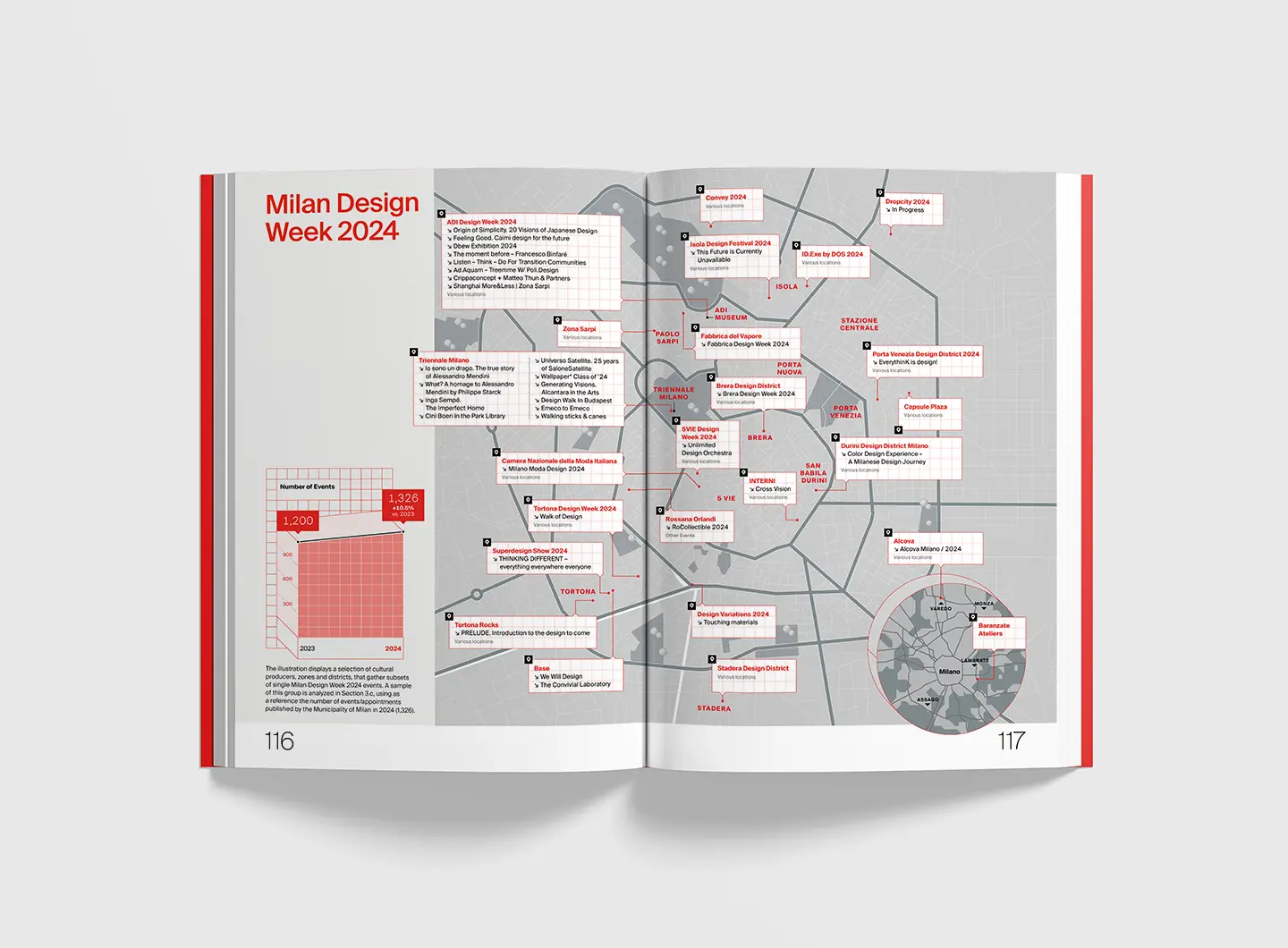
“Milan Design (Eco) System” Annual Report 2024 – Salone del Mobile.Milano, produced in collaboration with the School of Design at the Politecnico di Milano and winner of the ADI Compasso d’Oro award
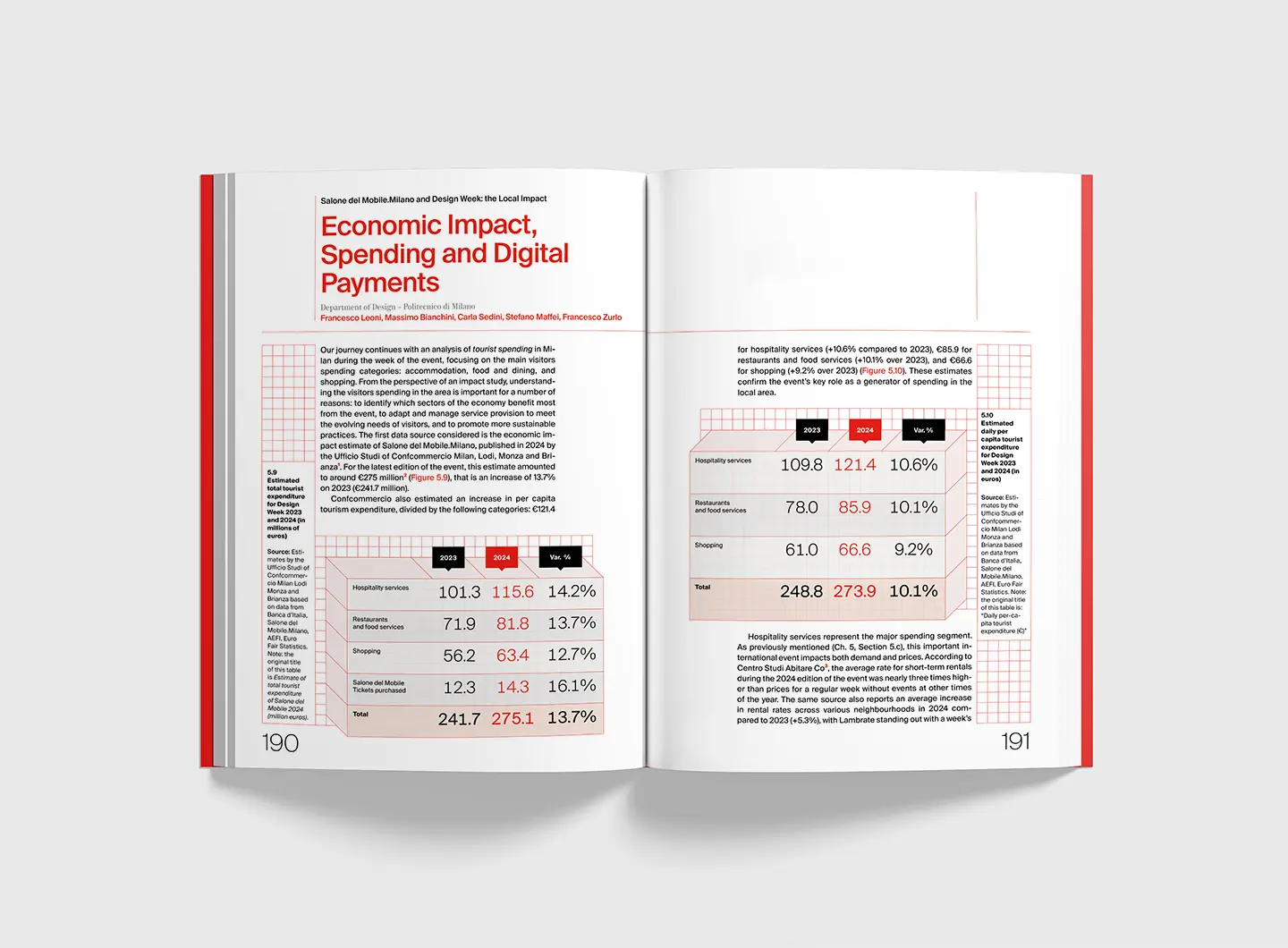
“Milan Design (Eco) System” Annual Report 2024 – Salone del Mobile.Milano, produced in collaboration with the School of Design at the Politecnico di Milano and winner of the ADI Compasso d’Oro award


The same effort emerges strongly in “The City of Lights”, the Honorable Mention awarded to the cultural project developed for Euroluce 2023. Here too, the award does not simply reward an exhibition design. It rewards a paradigm shift.
Euroluce has been completely rethought as an urban and relational experience. The traditional exhibition grid gives way to a real “city of light”: a fluid organism made up of crossings, squares, immersive environments, cultural content, installations, moments for pauses and discussions. The cultural concept and artistic direction of the project are by Beppe Finessi, who has created a plural, multidisciplinary and polycentric narrative capable of interweaving design, contemporary art, photography, publishing and theoretical research. The general exhibition layout was developed by Lombardini22, which transforms the trade fair facility into an open-ended structure, designed around people’s experience.
The exhibition design was entrusted to Formafantasma, while the graphic system and visual identity were designed by Leftloft, capable of transforming the language of signage and information into an integral part of the curatorial experience itself.
Also fundamental was the editorial work developed together with Corraini Edizioni. With Leftloft, it produced the volume “The City of Lights”: not a simple catalogue, but a critical archive devised to extend the project’s theoretical and cultural life over time.
And it is perhaps here that the two awards really come together.
Both the Annual Report and “The City of Lights” share the same goal: to transform something temporary into a permanent heritage.
A fair lasts a few days. Cultural content, on the other hand, can continue to produce significance for years. In an age dominated by speed, continuous obsolescence and the compulsive production of images, the Salone seems to have chosen a more complex and (perhaps) slower path: investing in the construction of memory, in the production of research, in the ability to generate collective thought.
Perhaps this is the reason why these awards seem to express something that goes beyond the project. They tell of the contemporary need to create places capable not only of displaying the present, but of interpreting it. Places where culture is not consumed quickly but accrues.
Places that still have the courage to produce depth.
The fact that all this is recognized by the Compasso d’Oro, an award founded in 1954 from an intuition of Gio Ponti’s, then takes on an almost symbolic value. Because Italian design, through these awards, seems to remind itself of its original nature: not just the production of objects, but the construction of culture.
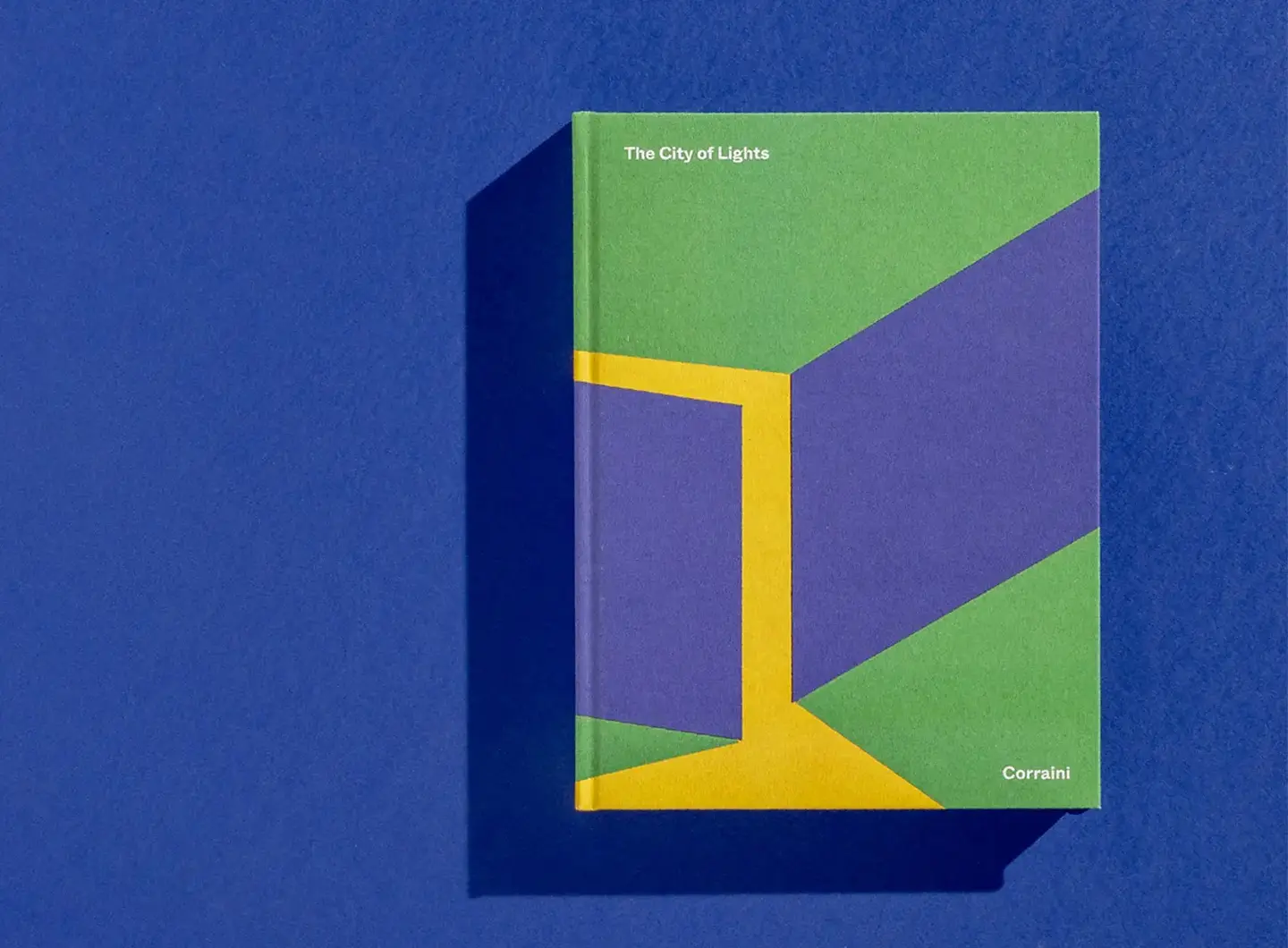
The volume ‘The City of Lights’ — a cultural project for Euroluce 2023 designed by Beppe Finessi, Lombardini22, Formafantasma and Leftloft, which received an Honourable Mention at the ADI Compasso d’Oro awards
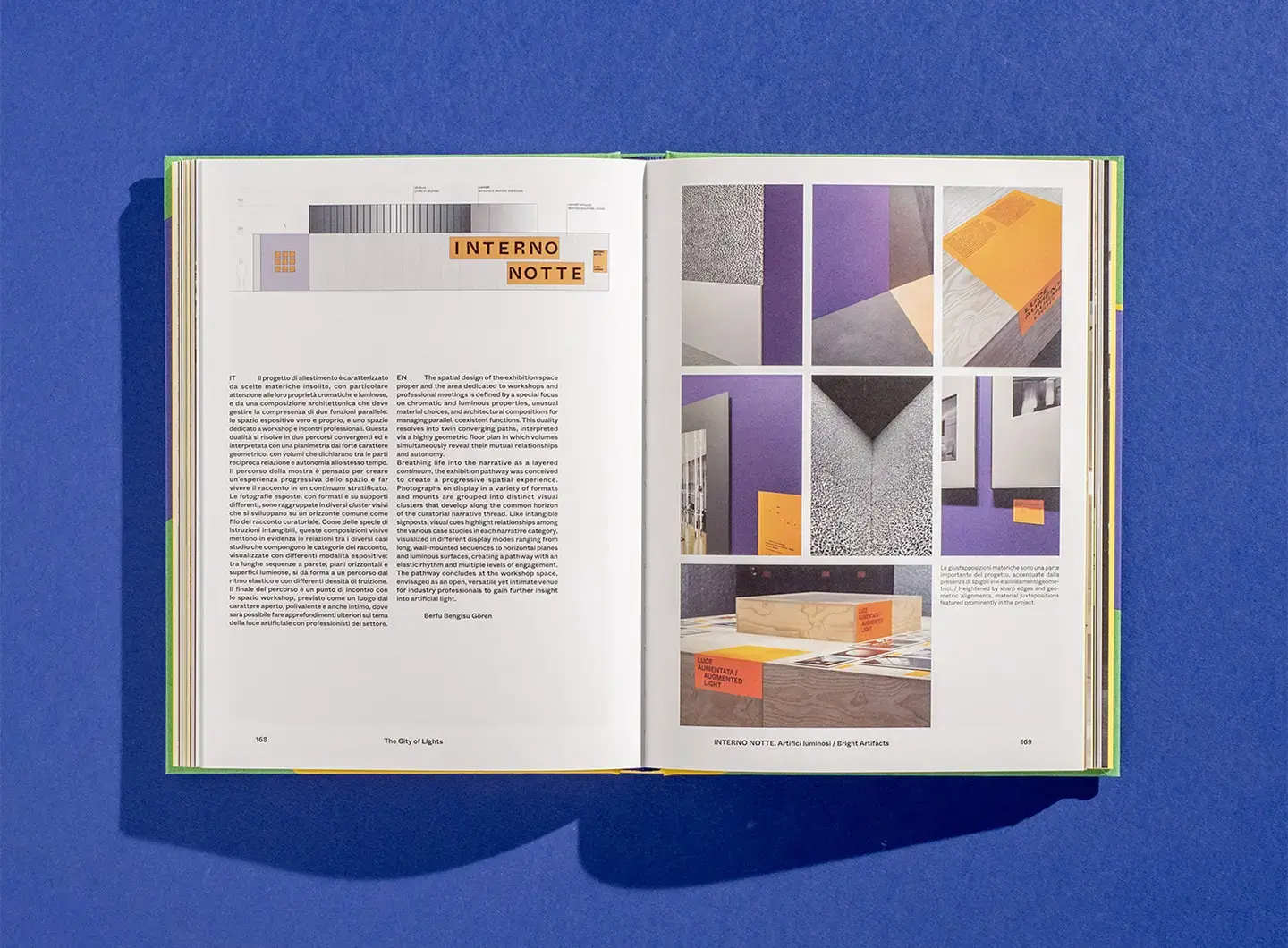
The volume ‘The City of Lights’ — a cultural project for Euroluce 2023 designed by Beppe Finessi, Lombardini22, Formafantasma and Leftloft, which received an Honourable Mention at the ADI Compasso d’Oro awards
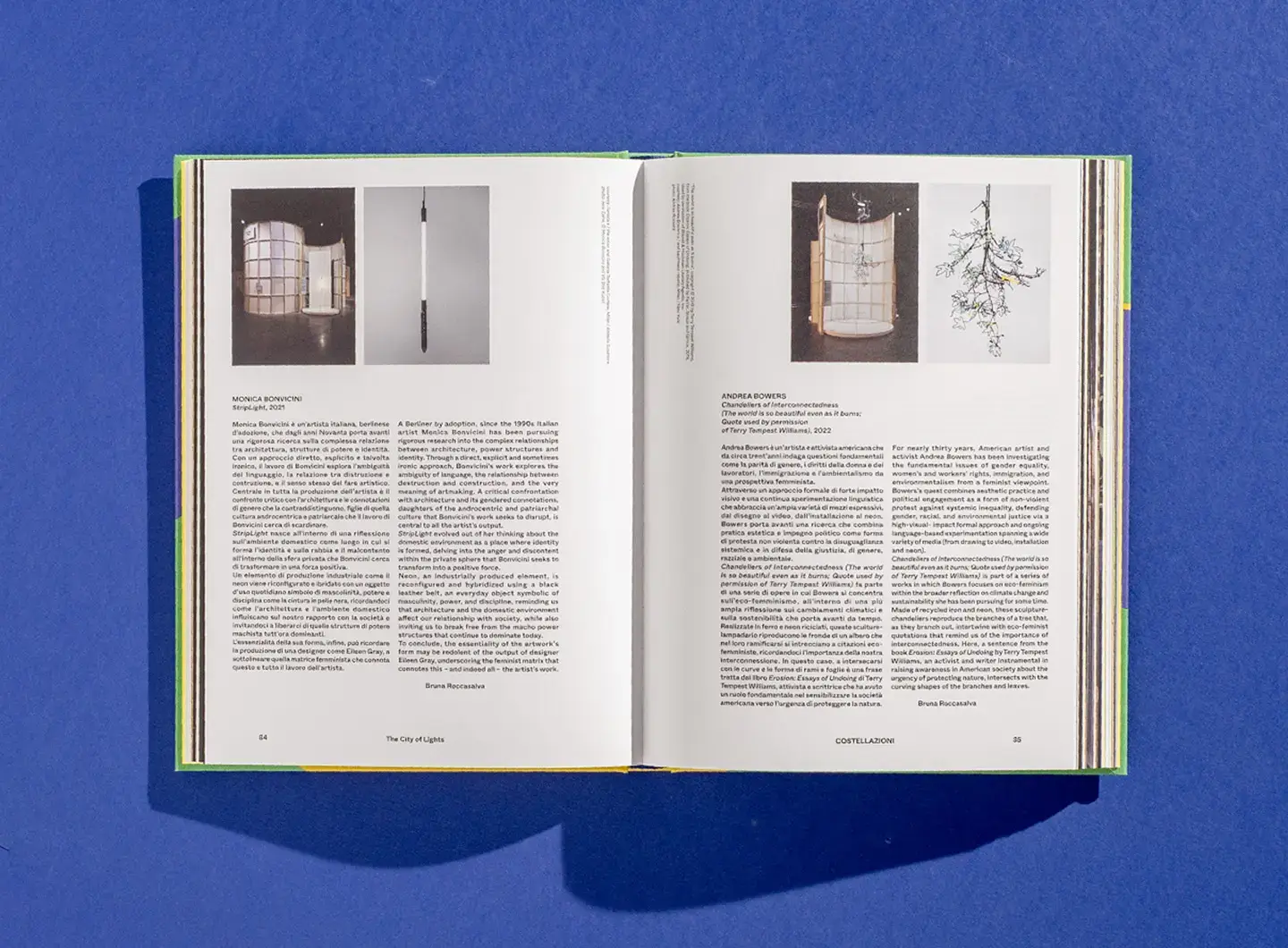
The volume ‘The City of Lights’ — a cultural project for Euroluce 2023 designed by Beppe Finessi, Lombardini22, Formafantasma and Leftloft, which received an Honourable Mention at the ADI Compasso d’Oro awards
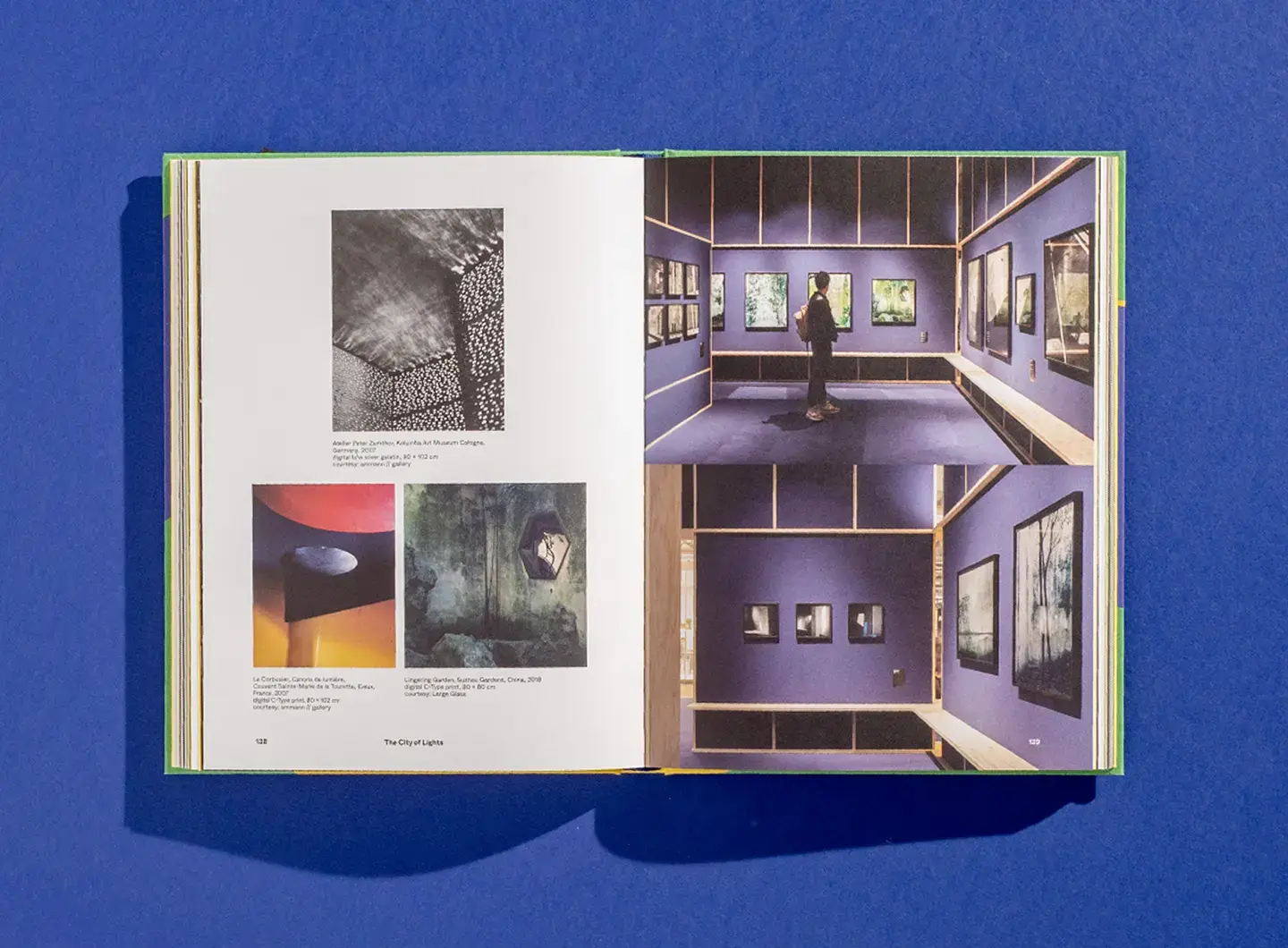
The volume ‘The City of Lights’ — a cultural project for Euroluce 2023 designed by Beppe Finessi, Lombardini22, Formafantasma and Leftloft, which received an Honourable Mention at the ADI Compasso d’Oro awards
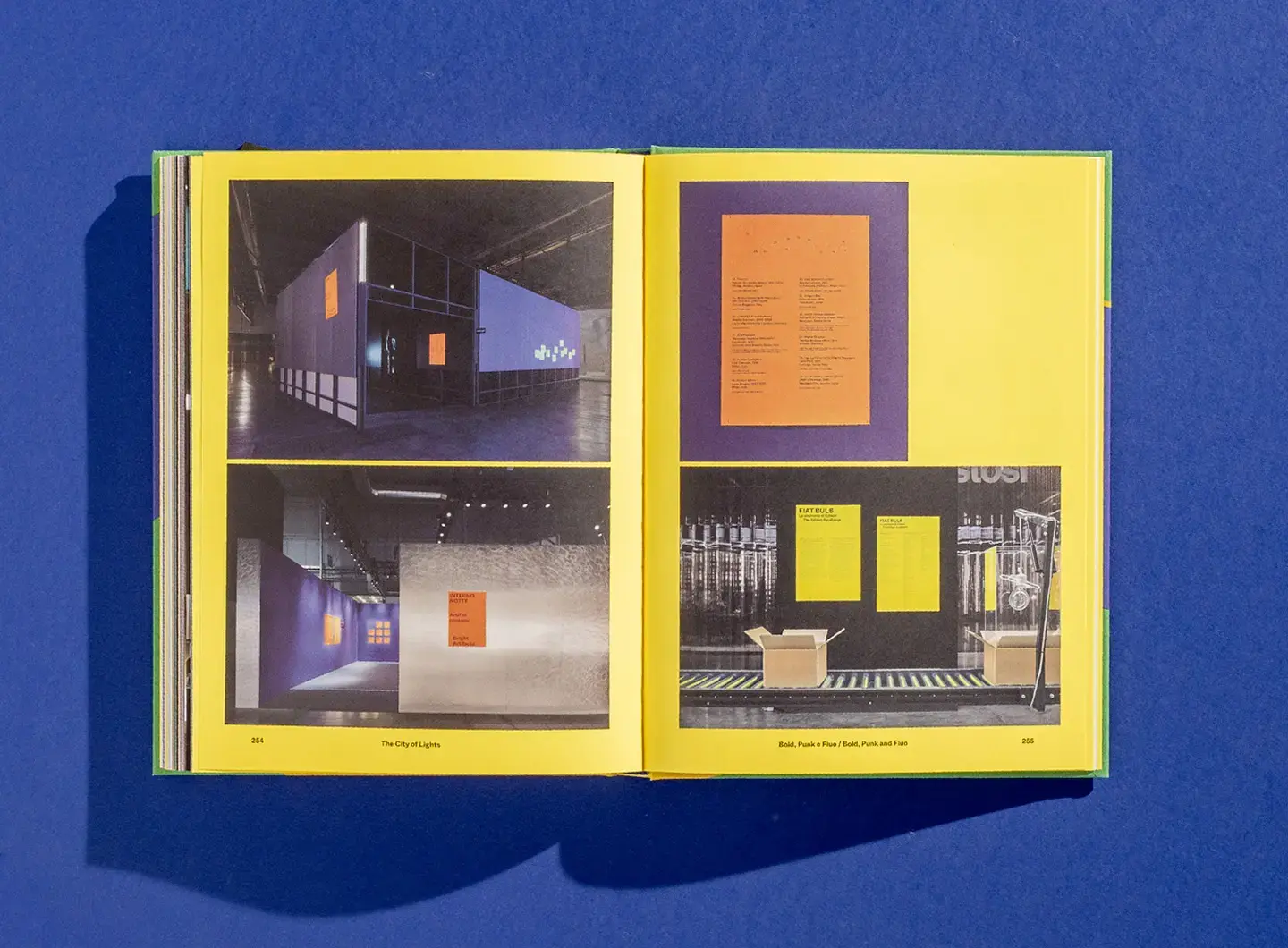
The volume ‘The City of Lights’ — a cultural project for Euroluce 2023 designed by Beppe Finessi, Lombardini22, Formafantasma and Leftloft, which received an Honourable Mention at the ADI Compasso d’Oro awards
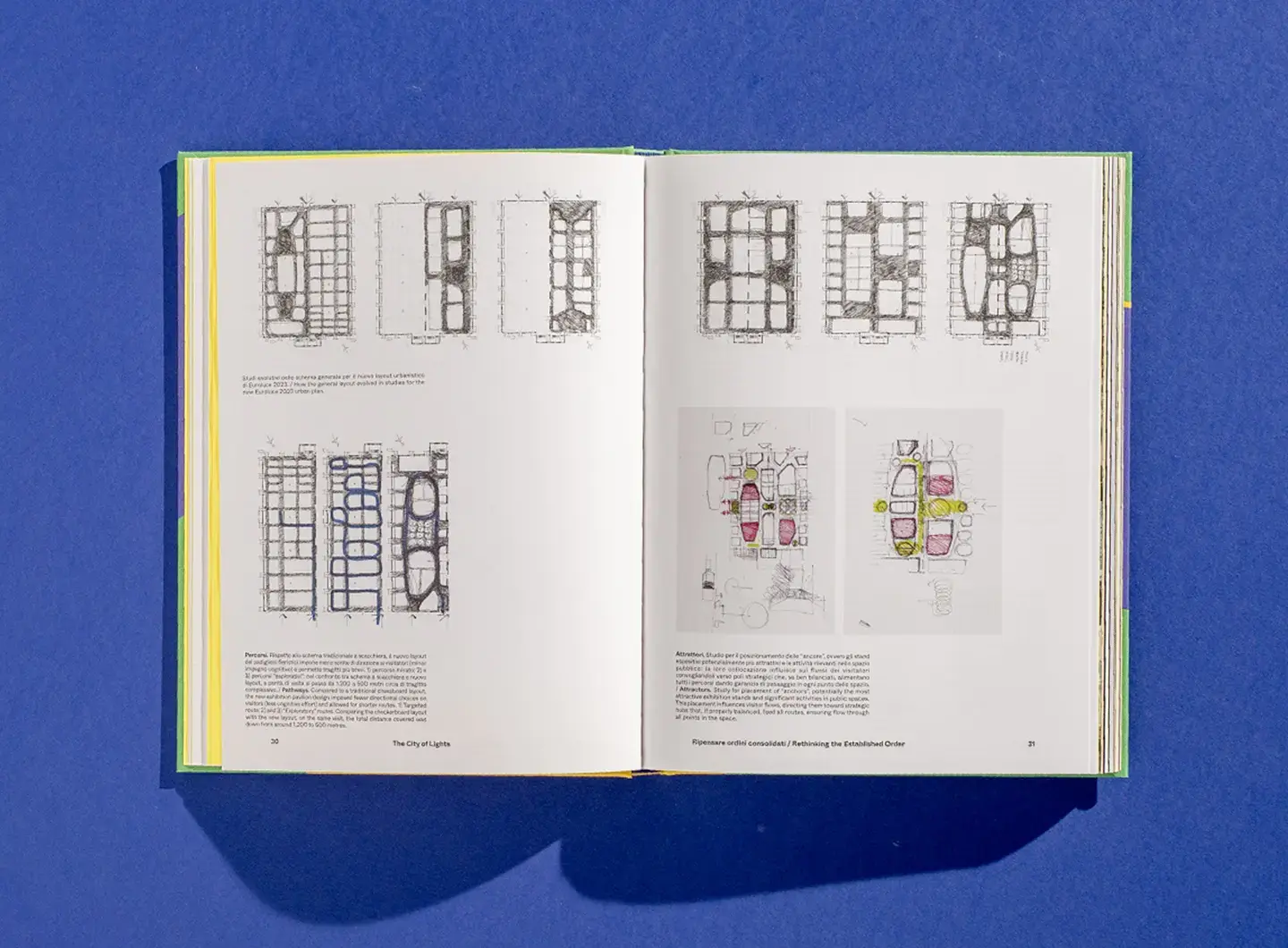
The volume ‘The City of Lights’ — a cultural project for Euroluce 2023 designed by Beppe Finessi, Lombardini22, Formafantasma and Leftloft, which received an Honourable Mention at the ADI Compasso d’Oro awards
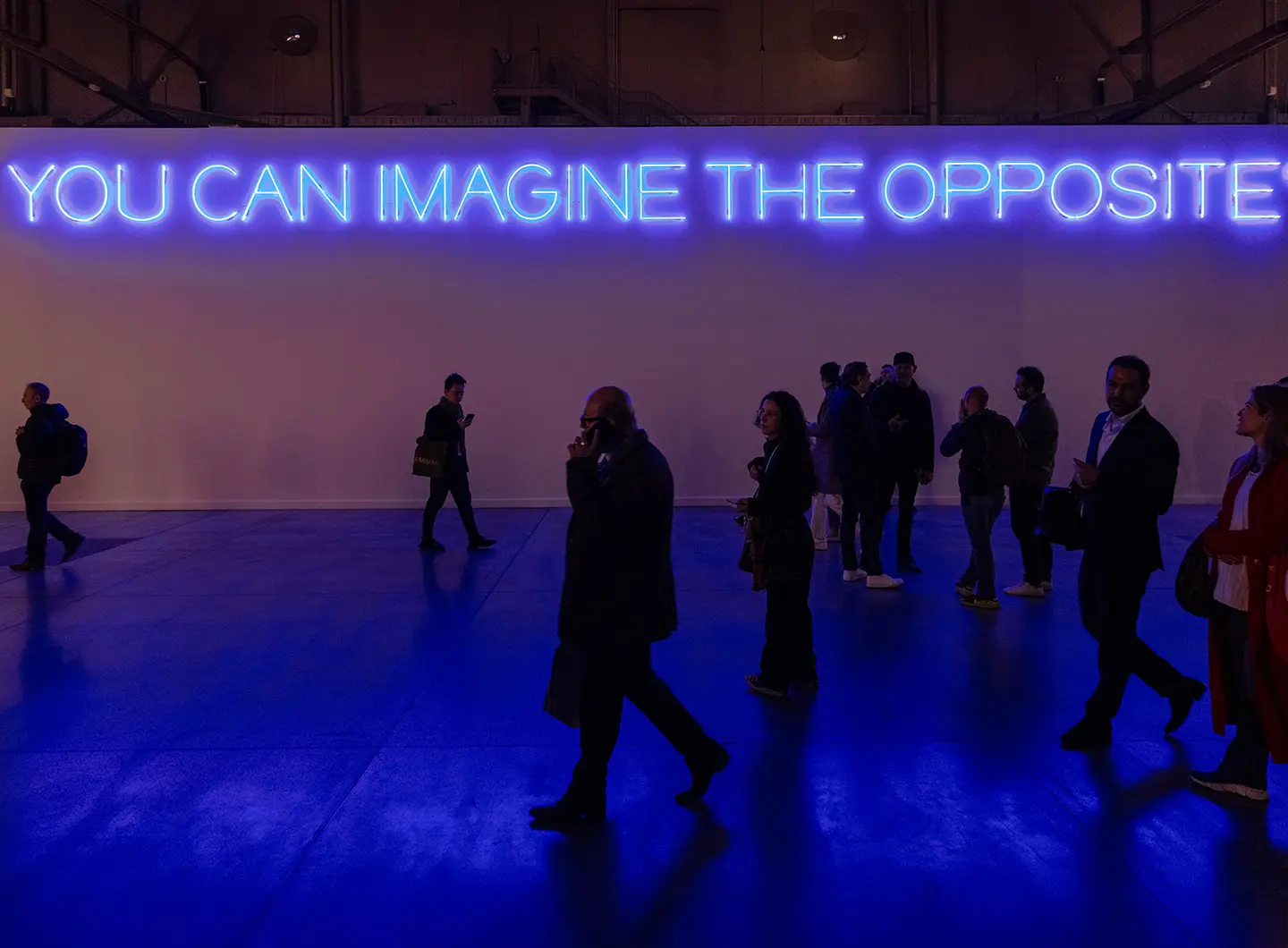
Installation "You can imagine the opposite", Maurizio Nannucci - Euroluce 2023
22 May 2026
Share