

 Stories





Why darkness is a natural resource that must be protected against waste and light pollution
Fuelled by bread and design. A tour of the world of contemporary bakeries
Text by
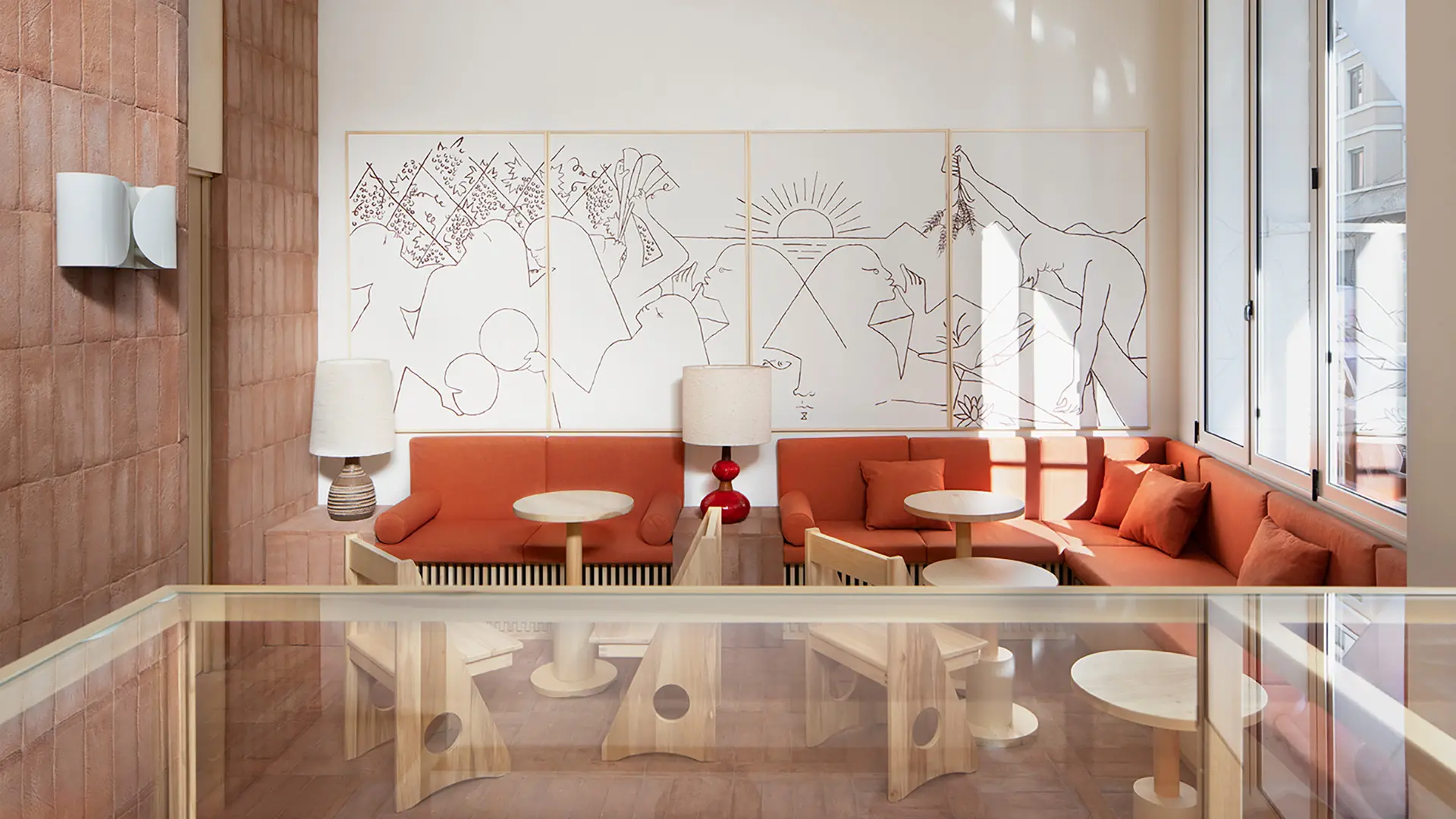
Signor Lievito, Hannes Peer, Via Maestri Campionesi, 26, Milan - Ph. Helenio Barbetta
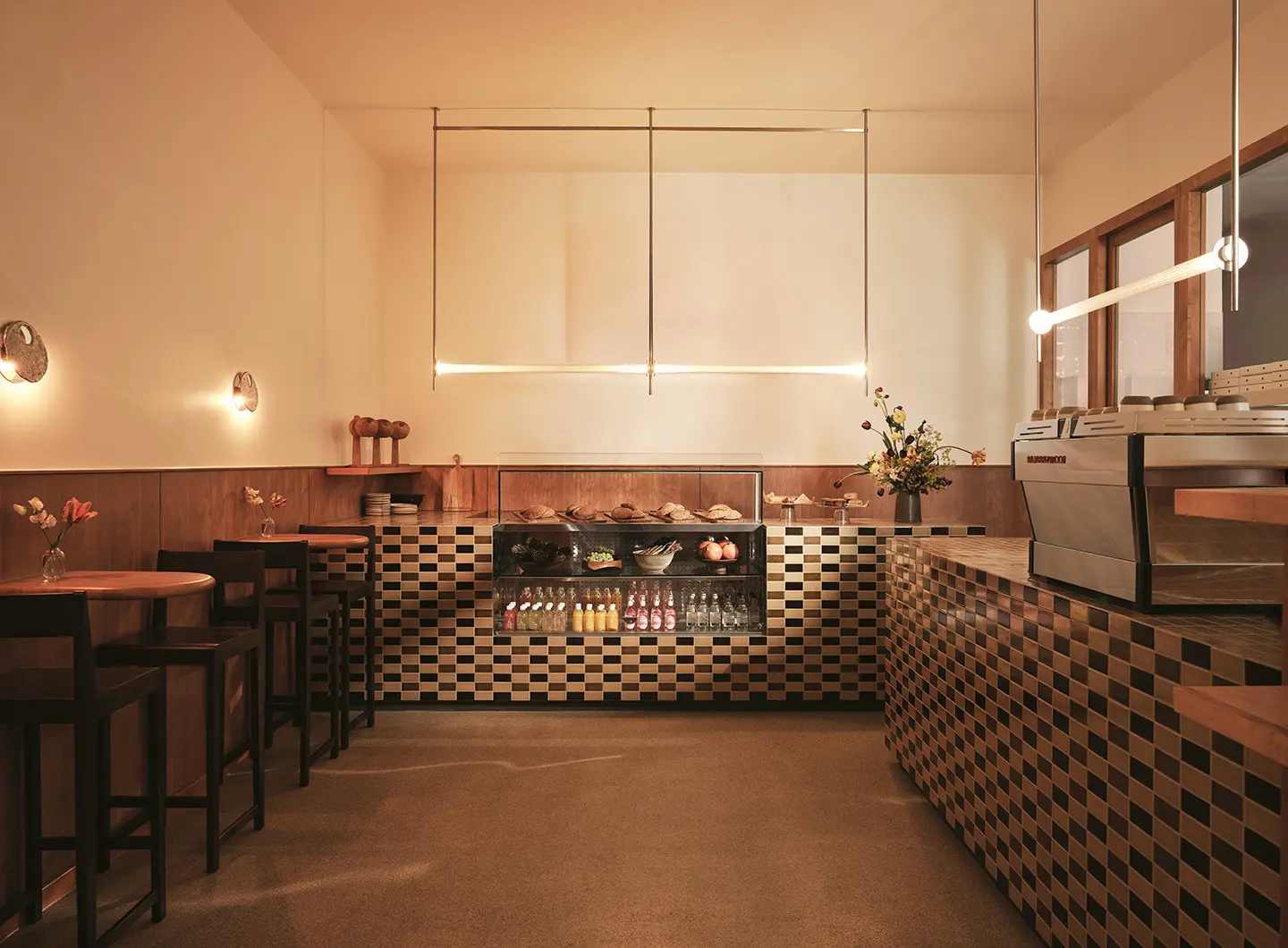
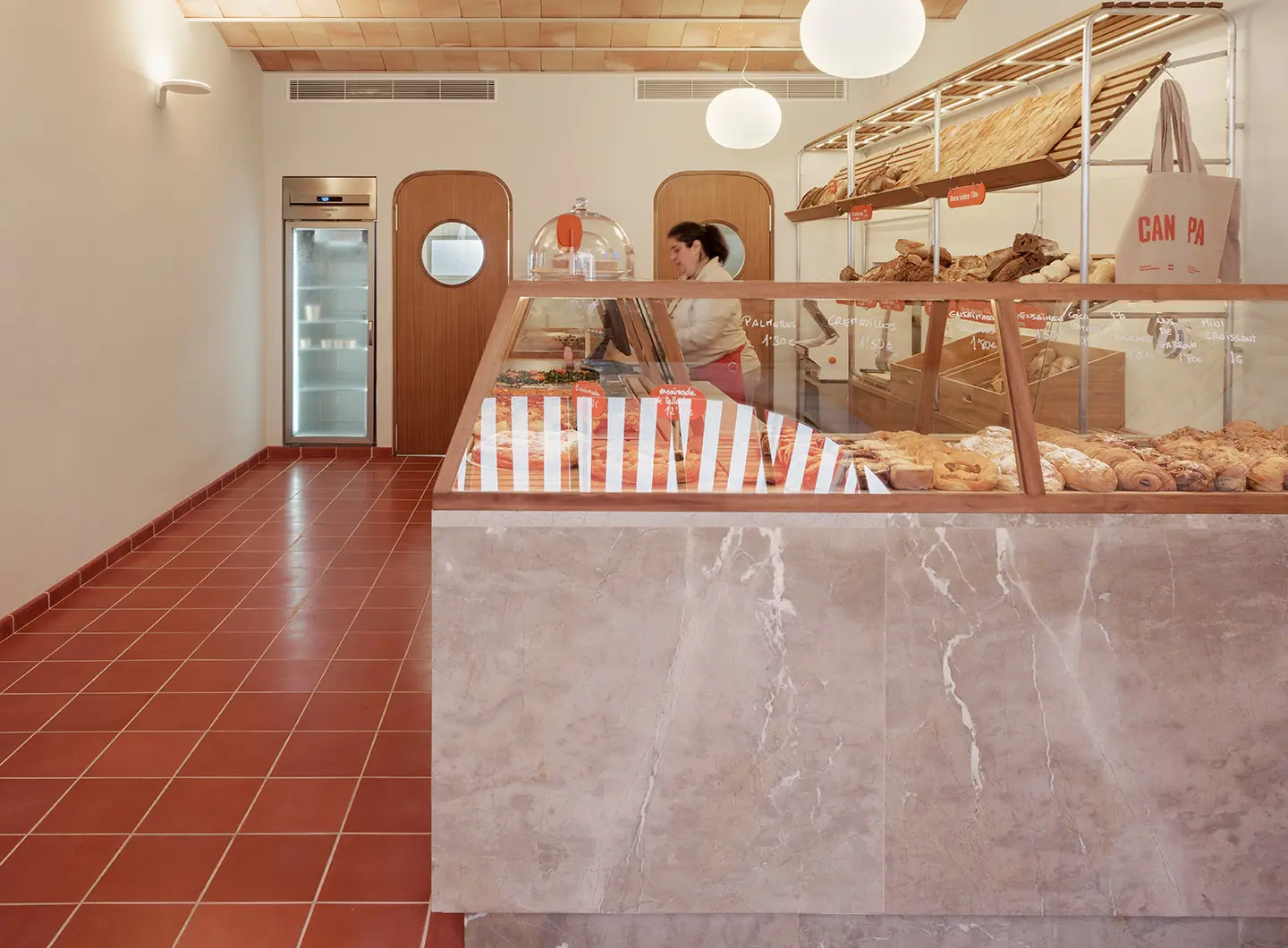
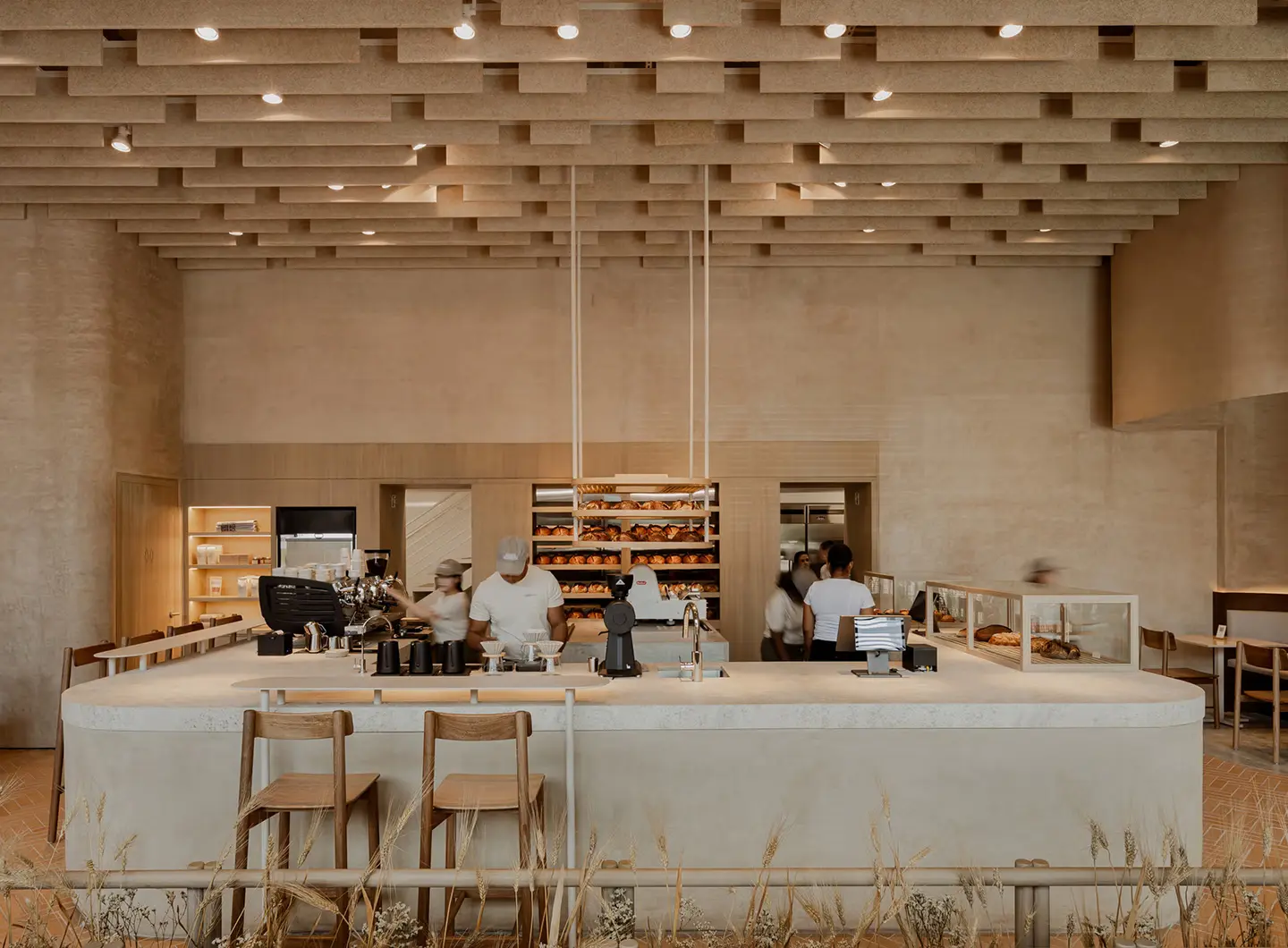
From the centre of Milan to Australia, via the capitals of Northern Europe and sun-drenched Panama and Mallorca: here is a selection of interior design projects in which visionary thinking is combined with a respect for values such as naturalness and conviviality
Made from a mixture of water, flour and yeast, bread is the simplest food in the world, one that needs no storytelling. Its fragrance alone is enough to tantalise the taste buds, capable of awakening emotions and childhood memories. Yet, the places where rolls, loaves and baguettes are made and sold are constantly reinventing themselves, focusing not only on product excellence but also on creating their own unique atmosphere thanks to the work of internationally renowned architects and designers. We have selected a few recent projects in which the setting is equally worthy of attention as the contents.
Pan, designed by Studio Wok, Milan
Recreating a corner of Japan just a stone’s throw from Piazzale Susa, and doing so in the least predictable way possible, eschewing literal references in favour of creating a refined and contemporary atmosphere: these are the guiding principles underpinning Studio Wok’s architectural project for Pan. The décor of the Japanese-inspired bakery (though not exclusively so, as it is also a wine bar and restaurant), established in 2023 through a collaboration between chef Yoji Tokuyoshi and Alice Yamada, is entirely based on natural tones and the green of matcha tea, used, for example, for the cascade of noren, the traditional curtains used as room dividers in homes in Tokyo and the surrounding area, suspended from the ceiling, and for the counter made from fibreglass mesh panels. The highlight of the menu is the shokupan, a loaf of bread as soft as a cloud.
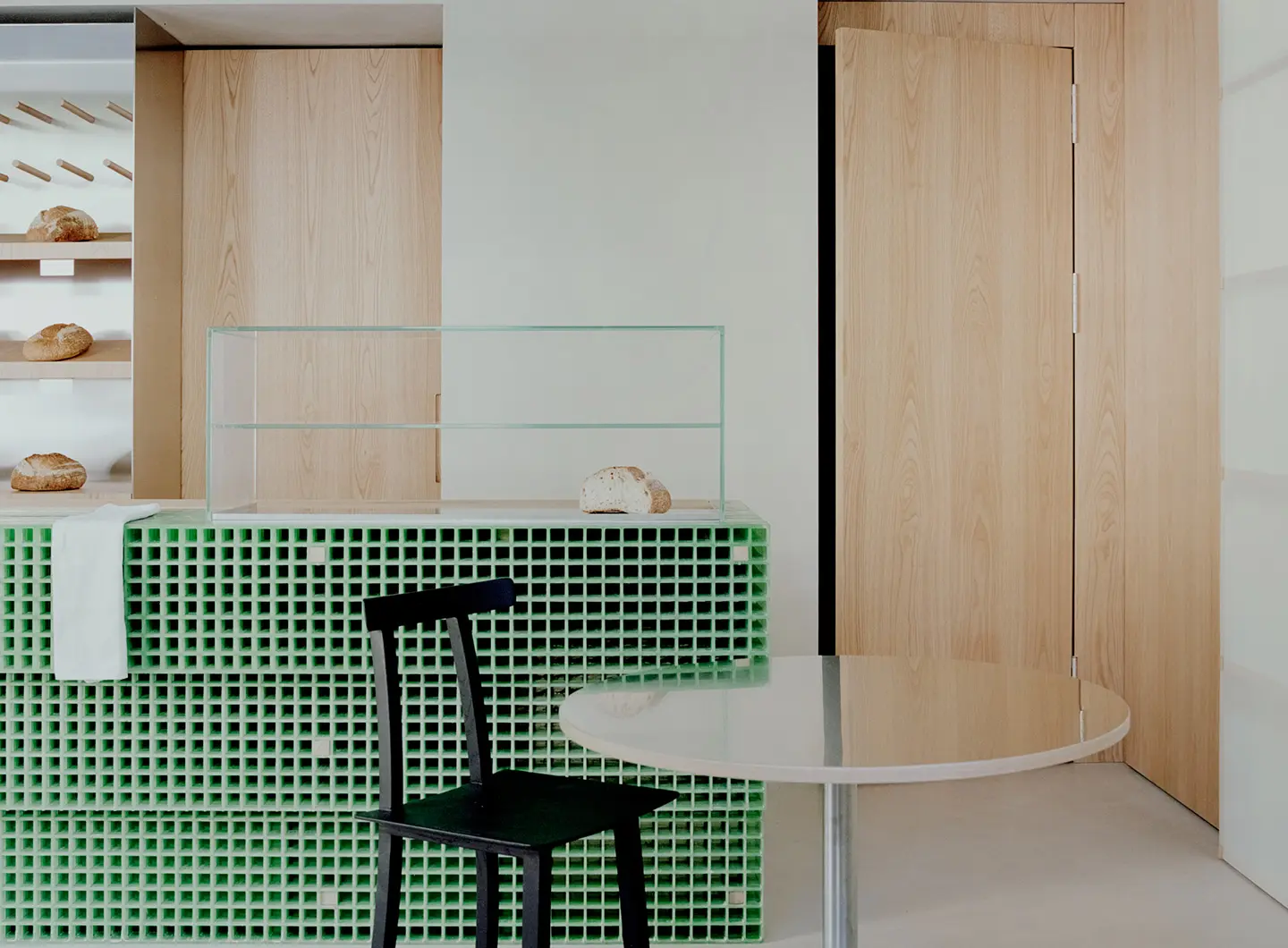
Pan, Studio Work, Via Leopoldo Cicognara, 19, Milan - Ph. Simone Rossi
Signor Lievito, designed by Hannes Peer, Milan
The ‘signore’ (gentleman) alluded to in the name of this bakery on Via Maestri Campionesi is 120 years old. It is not, however, a man but a sourdough starter passed down from generation to generation by a dynasty of bakers from Campania and now in the hands of a former Latvian model, Natalija Nikitina. Hannes Peer has designed a space around this ancient ingredient, focusing particularly on the theme of naturalness. Dominating the bespoke furnishings and the external façade are the orange-red of terracotta and the golden hue of birchwood. “We started with Natalija’s home; there’s a large terracotta fireplace in the living room, and she asked me to recreate that same material feel here. I found the decision to bring a piece of one’s own hearth to the workplace particularly meaningful,” explained the South Tyrolean architect and designer.”
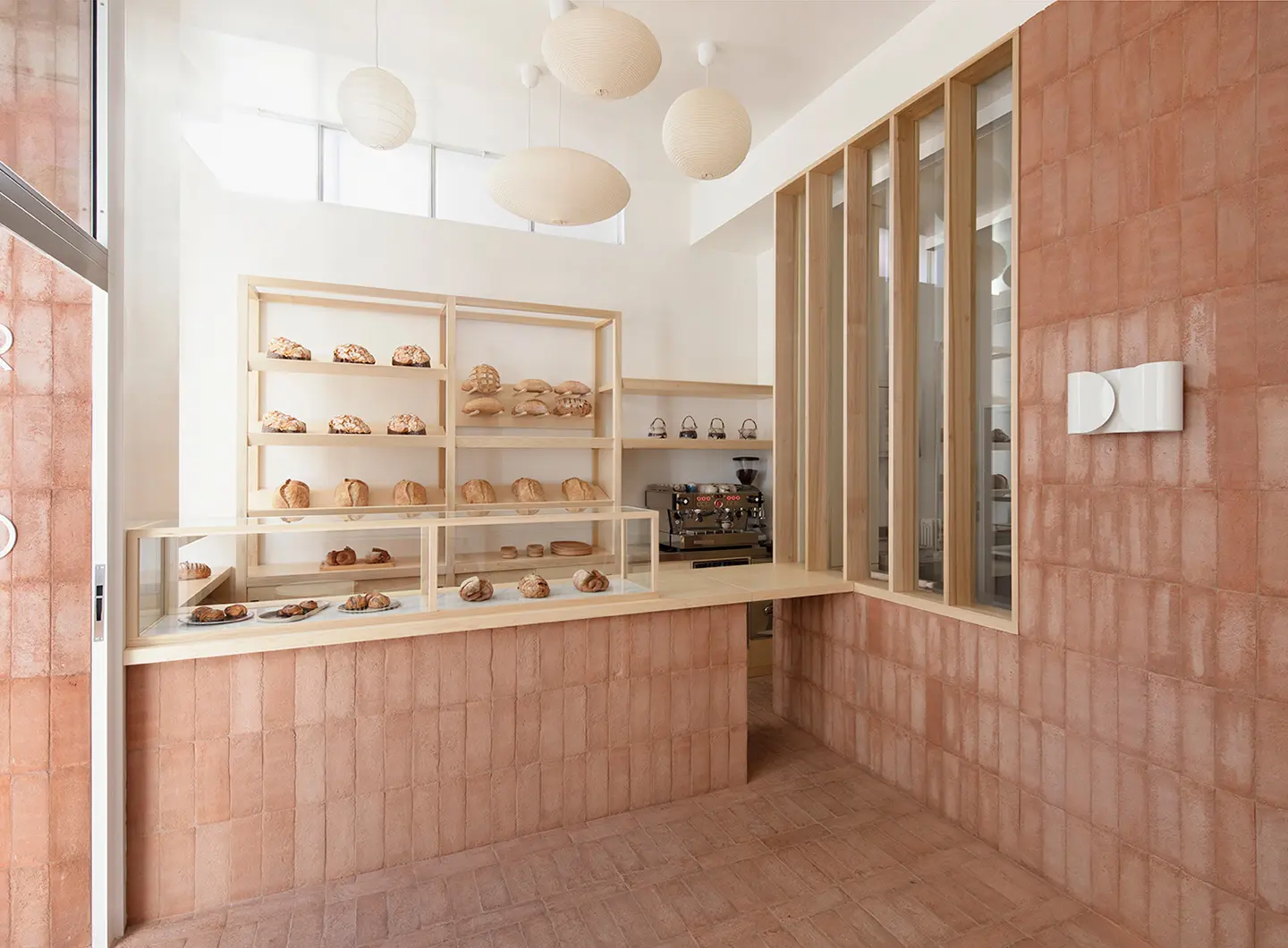
Signor Lievito, Hannes Peer, Via Maestri Campionesi, 26, Milan - Ph. Helenio Barbetta
FU.BA. (Future Bakery), designed by Studio Isern Serra, Madrid
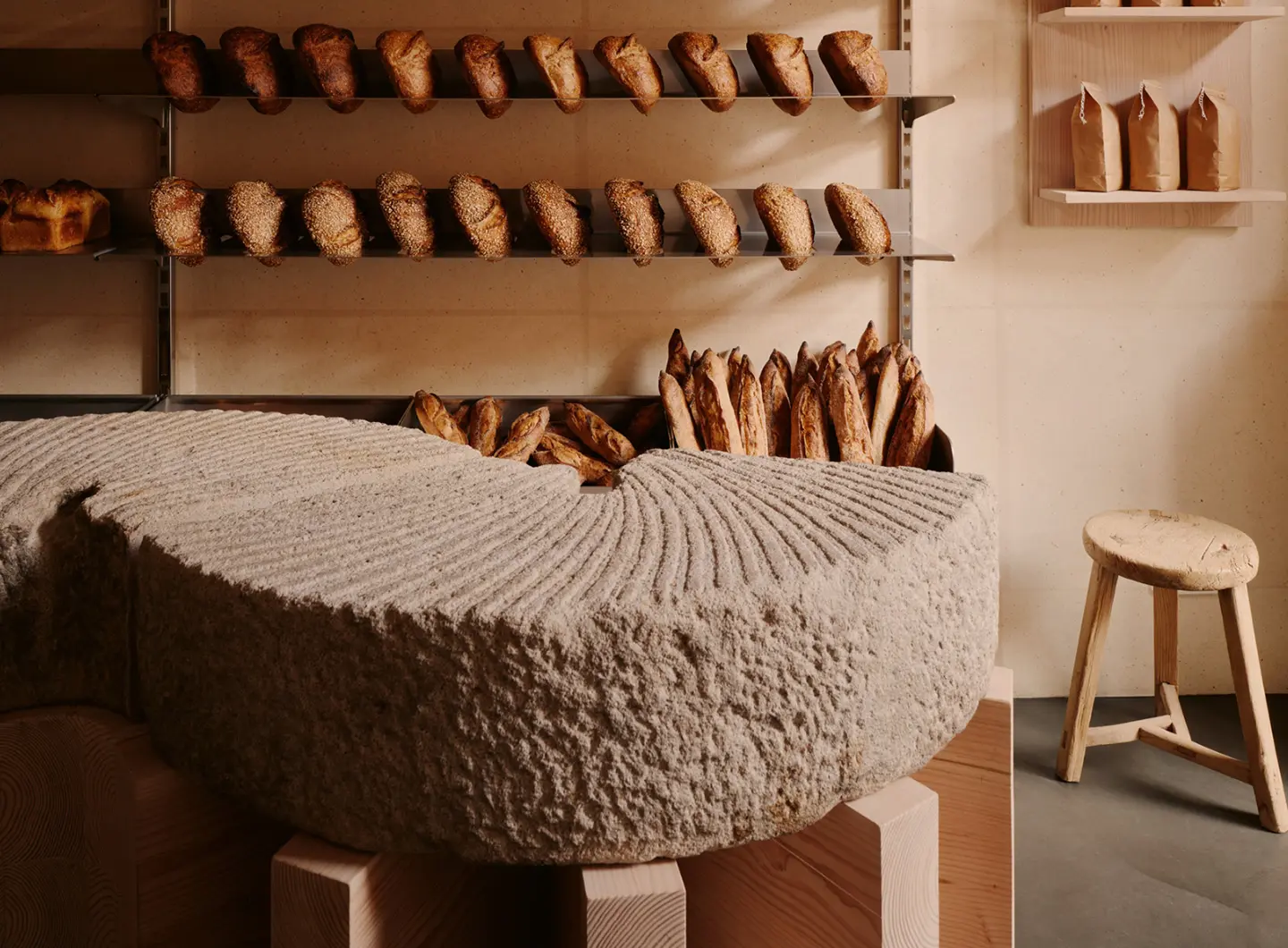
Catalan architect Isern Serra has designed a bakery that looks like a futuristic version of a cave, with its rounded, lime-plastered walls. It is located in the residential district of Chamberí, just outside the centre of Madrid, and its interior design is as radical as its range of breads and pastries, all healthy and free from refined sugars, ultra-processed flours and artificial additives. Visually, the furnishings convey the idea of a coming together of past and future: the recesses in the walls house stainless steel shelves, the same material used for the curved table that draws the eye to the centre of the room. Supporting it, besides the legs, is a large, rough-hewn rock that looks like an asteroid that has fallen from space.
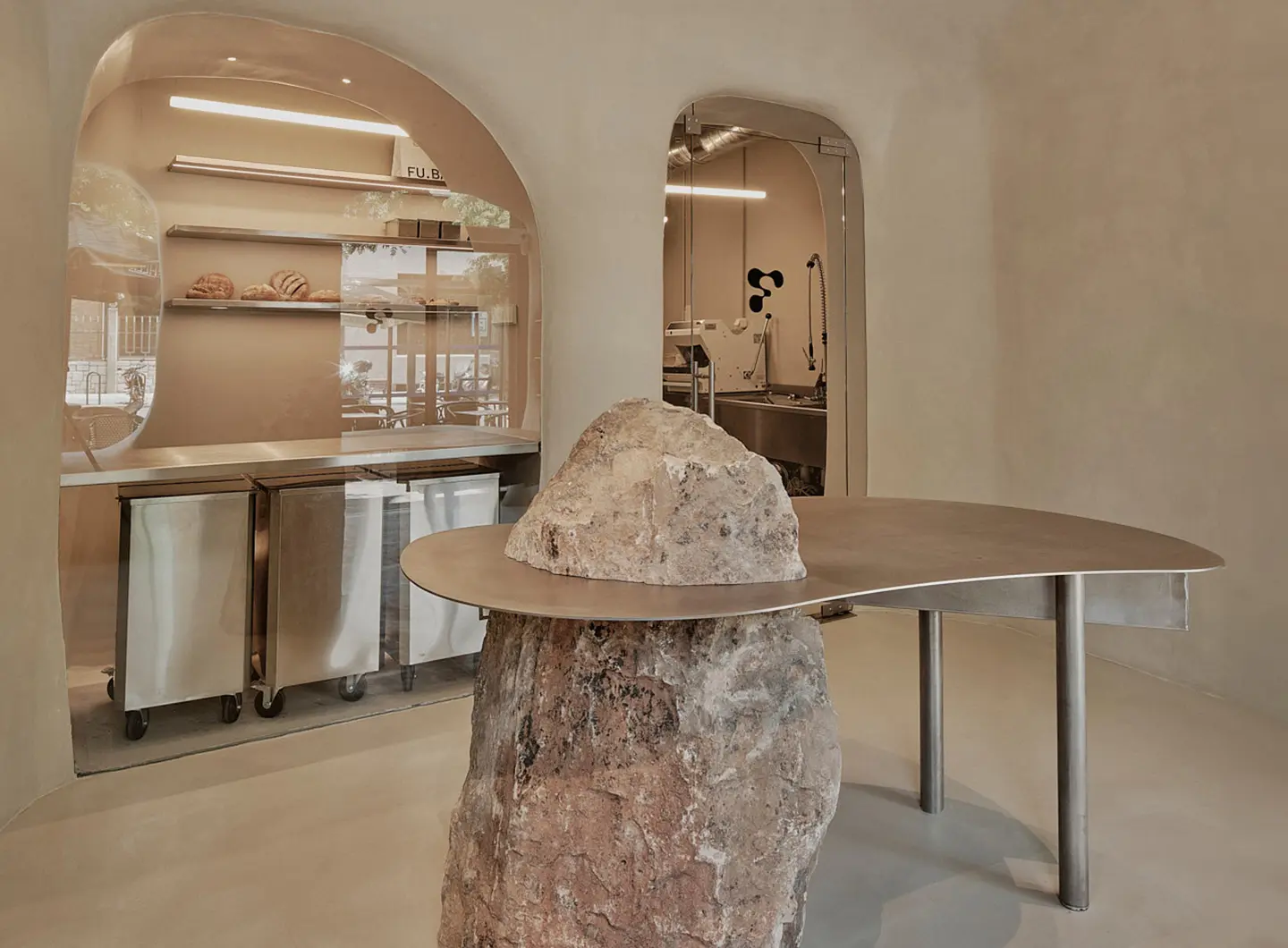
FU.BA. (Future Bakery), Studio Isern Serra, Calle de Sta Engracia, 112, Chamberì, Madrid (Spain) - Ph. David Zarzoso
Baker Bleu Cremorne, designed by IF Architecture, Cremorne
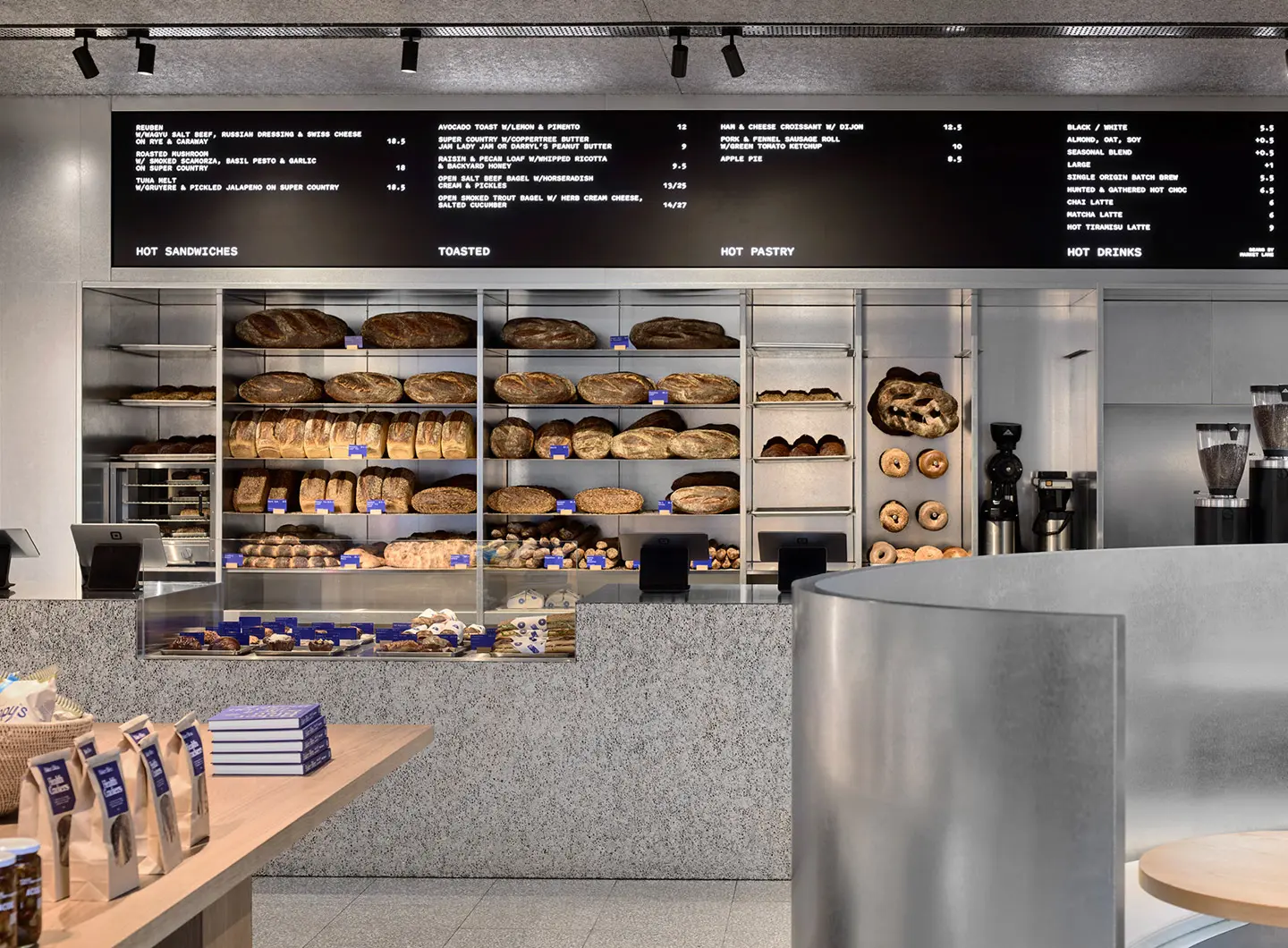
Here too, in Cremorne, a suburb four kilometres from the centre of Melbourne, metallic finishes mix with the aroma of bread. The material in this case is recycled aluminium, chosen by the architects at the Australian firm IF Architecture for the latest outlet of the French-inspired Baker Bleu chain. The dominance of this material is balanced by the grey terrazzo floor, which extends onto the counter, and the honey-coloured wooden furniture – tables, chairs and stools.