

 Stories

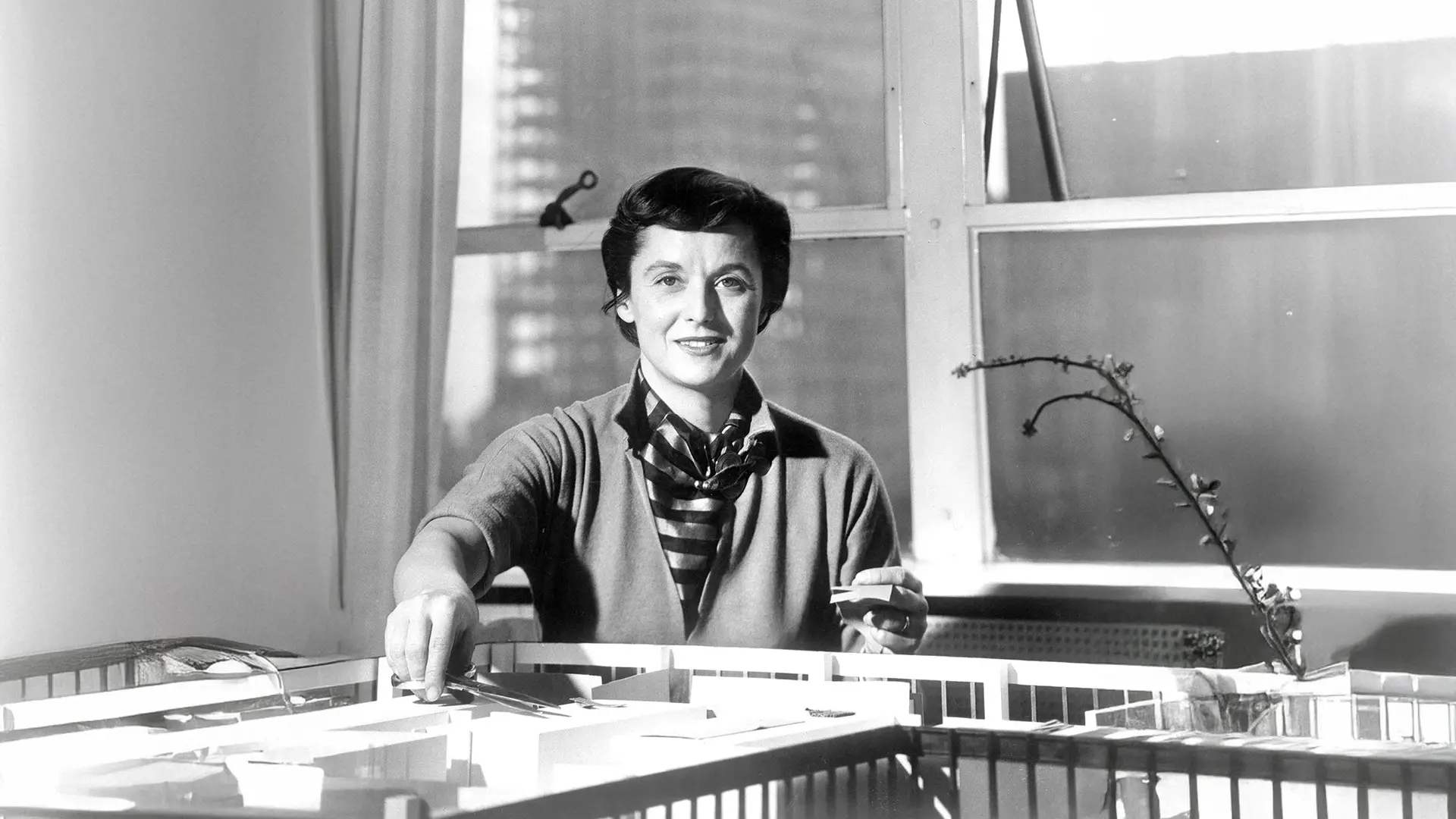
The Planning Unit, the collective catalogue of Mies, Saarinen and Bertoia and “meat and potatoes” furniture: how Florence Knoll invented the modern office whilst opting to stay out of the limelight.
The upcoming Salone: a conversation with President Maria Porro
Text by

Maria Porro, President of Salone del Mobile.Milano - Ph. Guido Stazzoni
A brief history of the 64th edition, which focuses on the dialogue between memory and the present to tackle the challenges of the future
The Gulf crisis, the Common Archives project presented at Triennale Milano, the debut of Salone Raritas and the ongoing evolution of the Contract sector: the insights shared by President of Salone del Mobile, Maria Porro in a brief interview shortly before the press conference presenting the programme for Salone del Mobile.Milano 2026 offer a long-exposure snapshot. It covers the key points of the 64th edition (21st–26th April) and broadens the perspective on the role played by the Milan ecosystem both at home and on the international stage: a cultural, economic and social infrastructure capable of reading and interpreting contemporary transformations. Let’s begin.
“The Gulf markets undoubtedly represent a strategic area for Italian companies, which in recent months have invested significant resources and consolidated important results,” said Ms Porro. “At this stage, the effects of the conflict, even in the event of a possible truce, are still manageable, but the prospect of it dragging on opens up critical scenarios: the point [again from a strategic perspective] is not to quantify visitor numbers at the trade fair — which, flights permitting, might even hold steady, given the Salone’s importance as a forum for international dialogue — but rather the repercussions on logistics, costs and the stability of commercial relations”. The real question is: are we a healthy system capable of withstanding the shock?
“Yes,” said Ms Porro:, who has been committed since the start of her term to building a policy to consolidate the Salone’s image and identity: “If we look closely at the collapse of the Stockholm and Cologne fairs and the fragility of New York, Milan is holding its own and making a comeback: it is recognised as a stable and reliable platform that stands the test of time. Our aim is to act increasingly as a ‘free zone,’ a space for intercultural dialogue, capable of supporting companies in their internationalisation processes.” Achieving this means working on a version of the exhibition format that is constantly being updated: “holding together the economic and cultural aspects, adding functions rather than offerings”. Educating rather than entertaining to provide the entire system, both during and outside the fair: Drafting Futures and Design Kiosk are two of the tools chosen to tackle the complexities, “opportunities for interface from a long-term perspective, open to the world and with a greater drive towards regeneration.”
The Porro presidency is all about challenging tradition to promote initiatives aimed at redefining the relationship between memory and the contemporary world and is supported by a second-generation management team, whose outlook is very much in tune with that of Millennials. “Common Archives is the latest challenge,” said Ms Porro, her voice betraying a hint of emotion: “curated by Susanna Legrenzi, and in collaboration with the City Council, the Region and a close-knit network of Milanese museums and foundations, on 24th April over one hundred and fifty design and graphic archives will be opened to the public.” From 6pm to 11pm anyone can have access to a heritage that is normally kept hidden. This is not just an opportunity to make the most of Milan’s first White Night of Design - not a self-congratulatory gesture, but an act of sharing to make a heritage that is normally hidden accessible to everyone.”
“From locked rooms to living organisms: archives are a resource for those who care about the common good. They preserve not only objects and documents, but also stories of life and everyday existence to which good design bears witness,” Maria Porro pointed out. At a time when the rhetoric surrounding Made in Italy risks slipping into nostalgic storytelling, a perspective more deeply rooted in the ever-contemporary vision of figures such as Gio Ponti, Vico Magistretti, Gae Aulenti and Franco Albini is an insight that sows the seeds of culture. “Lectures and guided tours are opportunities for the public to explore the origins of Italian design and nourish their knowledge with awareness and a sense of responsibility.” The archive thus becomes a tool for questioning the present: what does being heirs to that history mean today? Are we still capable of embracing a concept of design that is attentive to widespread needs and the dimension of collective living?
In this sense, Common Archive lays us bare before the mirror of history: it is a critical device that eschews all linguistic and intellectual speculation to invite us not so much to re-establish the discipline of design, but to act.
Helping the Salone evolve into an increasingly fluid form of architecture: “If design were merely about having a showroom in the world’s ten most important cities, then imagination would be an overrated talent. Never before has it been so necessary to stimulate creativity: filling an empty pavilion with meaning is, in itself, design”, but there is more to it than that. The Salone is no longer a localised event, rather “an infrastructure of economic and cultural value that operates all year round, not just in Italy.” a concrete example of this is the Road to Salone 2026: the tour designed by the board with stopovers in major European and international cities. “The Salone is a highly adaptable ecosystem: it takes root abroad too, building networks and nurturing relationships that are renewed with every edition.”
Just like the content, which arrives at the Salone to make an impact on a cultural level: Raritas fits within this framework, a bridge-project between past and present, between industry and craftsmanship, between uniqueness and mass production. “Curated by Annalisa Rosso, the initiative aims to restore space and visibility to a world of ancient knowledge, sophisticated decoration and experimental languages not explicitly linked to the codes of contemporary design,” yet which continues to represent a fundamental component of Italian furniture. “Raritas reinterprets ‘the classic’ in dialogue with the output of galleries and publishers, to revitalise a sector severely affected by the collapse of the Russian market,” explained Ms Porro. Not a discordant venture with regard to the Salone, rather an update of the exhibition format. “The most significant domestic interiors have always been worlds in which mass-produced furniture and unique pieces coexist, following a logic of cross-pollination and compositional freedom: juxtaposing heterogeneous elements and creating layered, increasingly bespoke environments is a sign of a virtuous dialogue, one that has already been experimented with in the world of contemporary art.” In this sense, the new concept acts as a tool for ‘hacking’ the total look.
Another evolutionary step is the Contract project: creating the first curatorial masterplan dedicated to the subject. “Here the focus shifts definitively from the product to the project, understood as a complex system of relationships. The contract sector is difficult to define precisely because it involves a multitude of players and skills,” explains Ms Porro. “Manufacturers, architectural firms, investors, general contractors, consultants: another layer of complexity that OMA is helping us to unravel. The pavilion we have envisioned is not simply an exhibition space, but a narrative device that puts the relationships between the various players at the centre, highlighting the interconnections between the design, economic and operational dimensions.” The forum’s task is to bring this polyphony of voices into dialogue, offering a platform for discussion on the sector’s dynamics. “Contract is thus portrayed in its systemic nature, as a field in which design intertwines with investment, scalability and the management of complex projects.”
There is also reflection in this context on the role of social design, one of the most significant challenges for the future. “The willingness to tackle sensitive issues such as social housing and reception is there,” but these are areas that require an interdisciplinary approach and a capacity for dialogue with the political and regulatory spheres that is not yet fully developed. “The common goal is to maintain a high level of attentiveness in order to initiate a debate as soon as possible among the potential stakeholders to be involved”: against a backdrop of increasing social fragility, the right to housing and forms of reception are decisive issues for the furniture sector too. Design, and Made in Italy in particular, can play an important role. “It is precisely by drawing on its nature as a cultural and economic infrastructure that the Salone can spark new visions by bringing together different skills.” concluded Maria Porro. And definitively turn itself into a research laboratory that promotes rights and generates value for society as a whole.
9 April 2026
Share