

 Stories





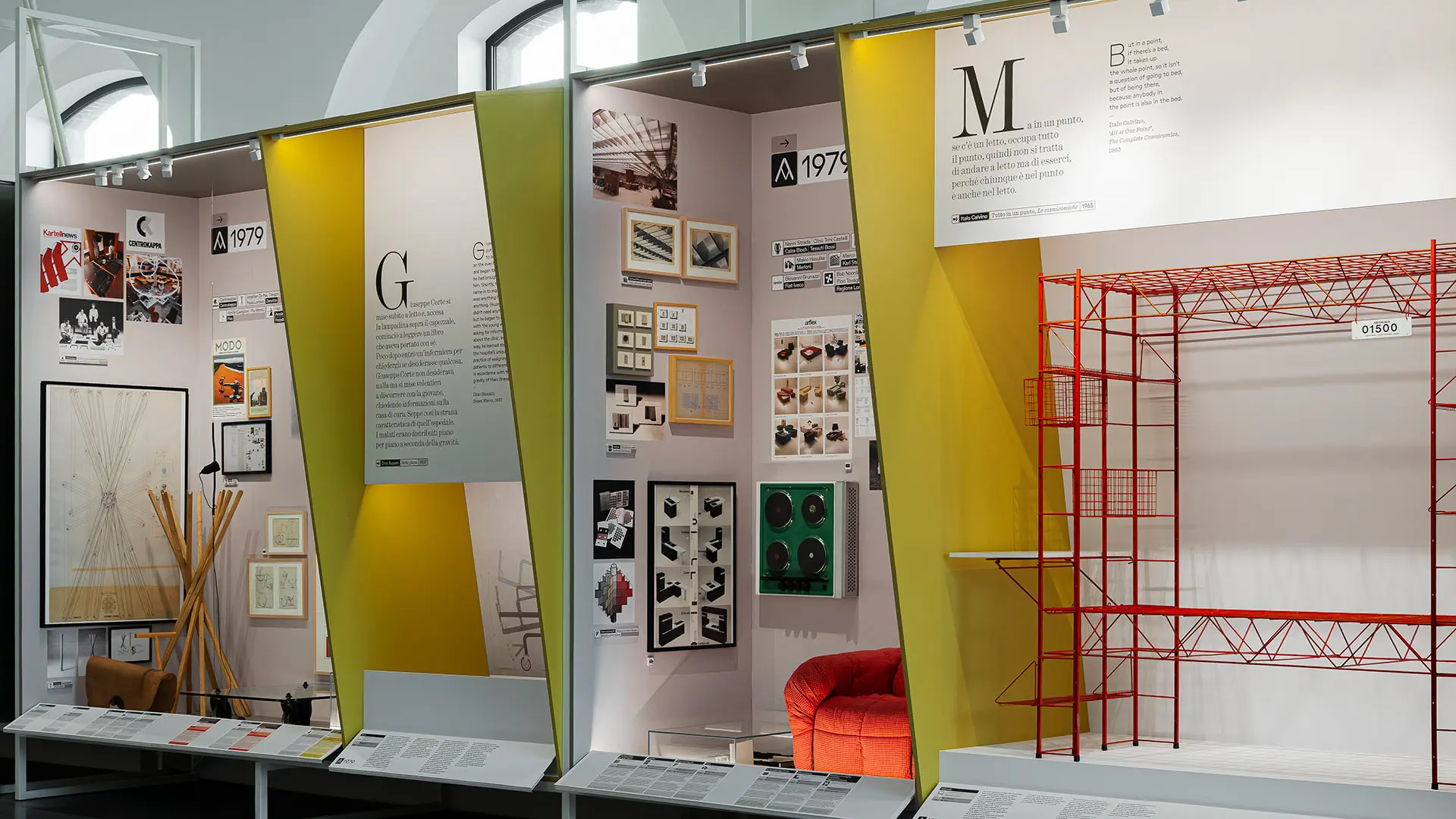
Five years since it opened, the museum in Milan presents the first new scientific reordering of its Historical Collection. Curator Maite García Sanchis relates how the way of interpreting over seventy years of design is changing, while Domitilla Dardi explains why the “Anthological” study enables the award-winning objects to dialogue with literature
Gae Aulenti: architecture and design as a unitary practice
Text by
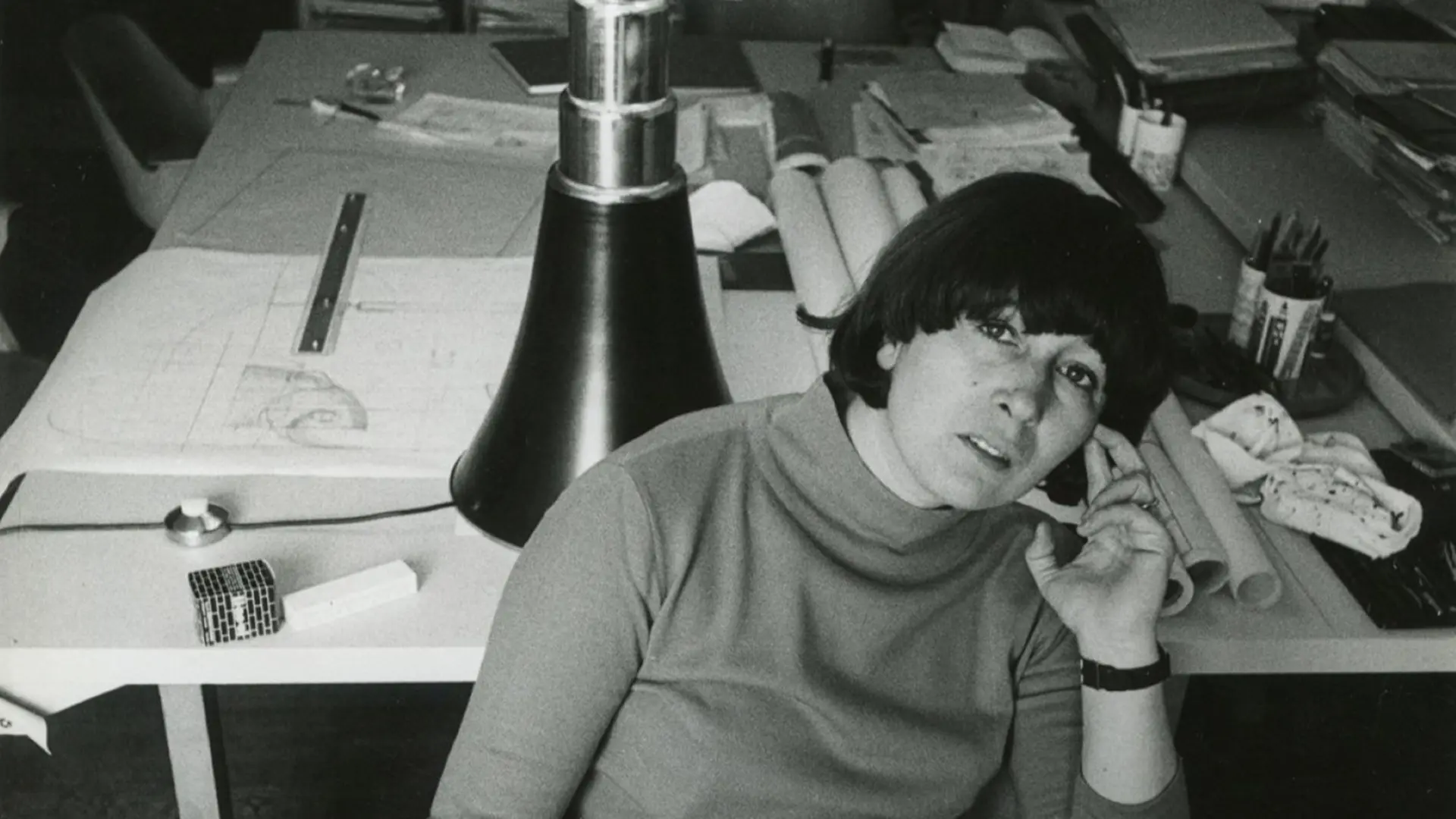
Gaetana Emilia Aulenti, designer and architect
The Italian architect Gae Aulenti’s practice was built on an ongoing dialogue between architecture, design, installations and interiors, eschewing disciplinary separations
The Italian designer and architect Gaetana Emilia Aulenti (1927–2012), better known as Gae Aulenti, was born in Palazzolo dello Stella, a small village near Trieste. In search of independence, and going against her parents’ wishes, she studied architecture at the Politecnico di Milano, where she gained her degree. She was one of just two women to qualify that year out of a class of twenty students, in an academic milieu that was still overwhelmingly male.
After graduating, she joined the editorial team at Casabella-Continuità, run by the architect Ernesto Nathan Rogers, where she worked until 1965, whilst also working as an assistant to Rogers at the Politecnico di Milano and, prior to that, to Giuseppe Samonà at IUAV in Venice. During this time, she became an active exponent of the Neo Liberty movement, which rejected the dogma of post-WW2 Rationalism, geared towards a universal architectural language and devoid of historical memory. Rogers’ theoretical stance viewed the existing built environment as an essential point of reference for architecture and advocated a critical re-engagement with tradition, particularly that of the nineteenth and early twentieth centuries (Liberty, Art Nouveau, Eclecticism), which modernists had regarded as marginal or regressive until then. The architectural historian Marco Biraghi said: “The Neo-Liberty period was in fact an attempt to find alternative paths to a modern repertoire that has become increasingly frozen in repetitive and predictable forms.”
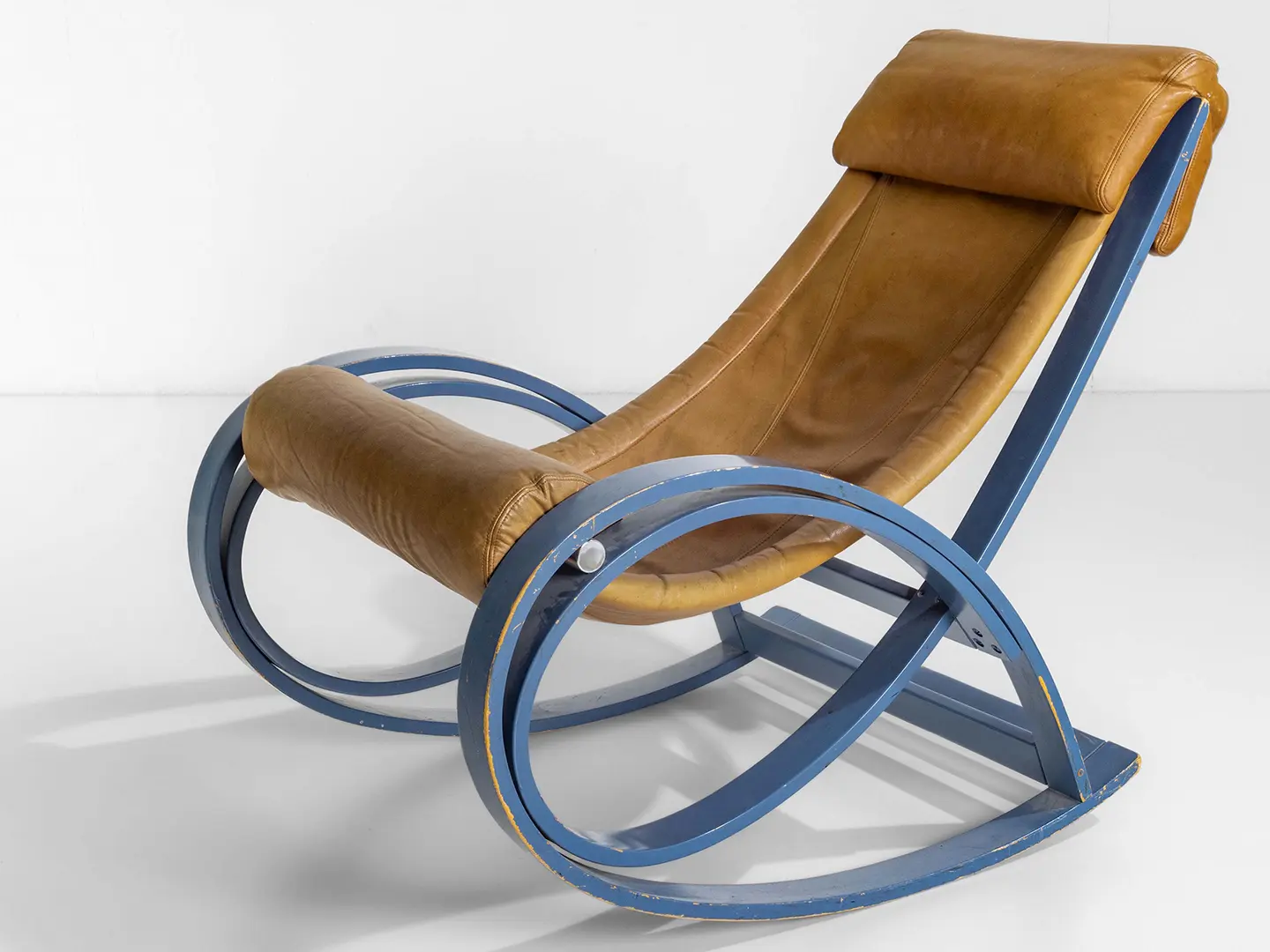
The Sgarsul rocking chair, produced by Poltronova, marked Gae Aulenti's debut as a designer and her adherence to the (fleeting) Neo-Liberty architectural movement
The death of Ernesto Nathan Rogers in 1969 proved pivotal for Gae Aulenti, spurring her to go completely freelance. Defying the conventions of the time, she refused to collaborate with male colleagues, claiming full ownership of her projects and asserting her independence - a rare stance for a female architect at the time. Gae Aulenti thus distinguished herself by building her reputation in design and exhibition design, having initially made her name in the field of architecture. The Italian architect always stressed, however, that architecture, design, exhibition design and interiors should build an ongoing dialogue, as interdependent parts of a unified practice.
“Now, when I go back and look at the lamps I made, they are never merely mechanisms for creating light – they are forms, inspired by the work I was doing at the time for a particular space, so that’s where they went and then they went into production, heading towards a wholly different destiny. […)] There has to be a functional aspect to it, because there has to be a wire, a plug, a light bulb and the electricity has to go there. But in a sense, these things are the tools for starting a project,” Gae said when questioned by the architect Franco Raggi.
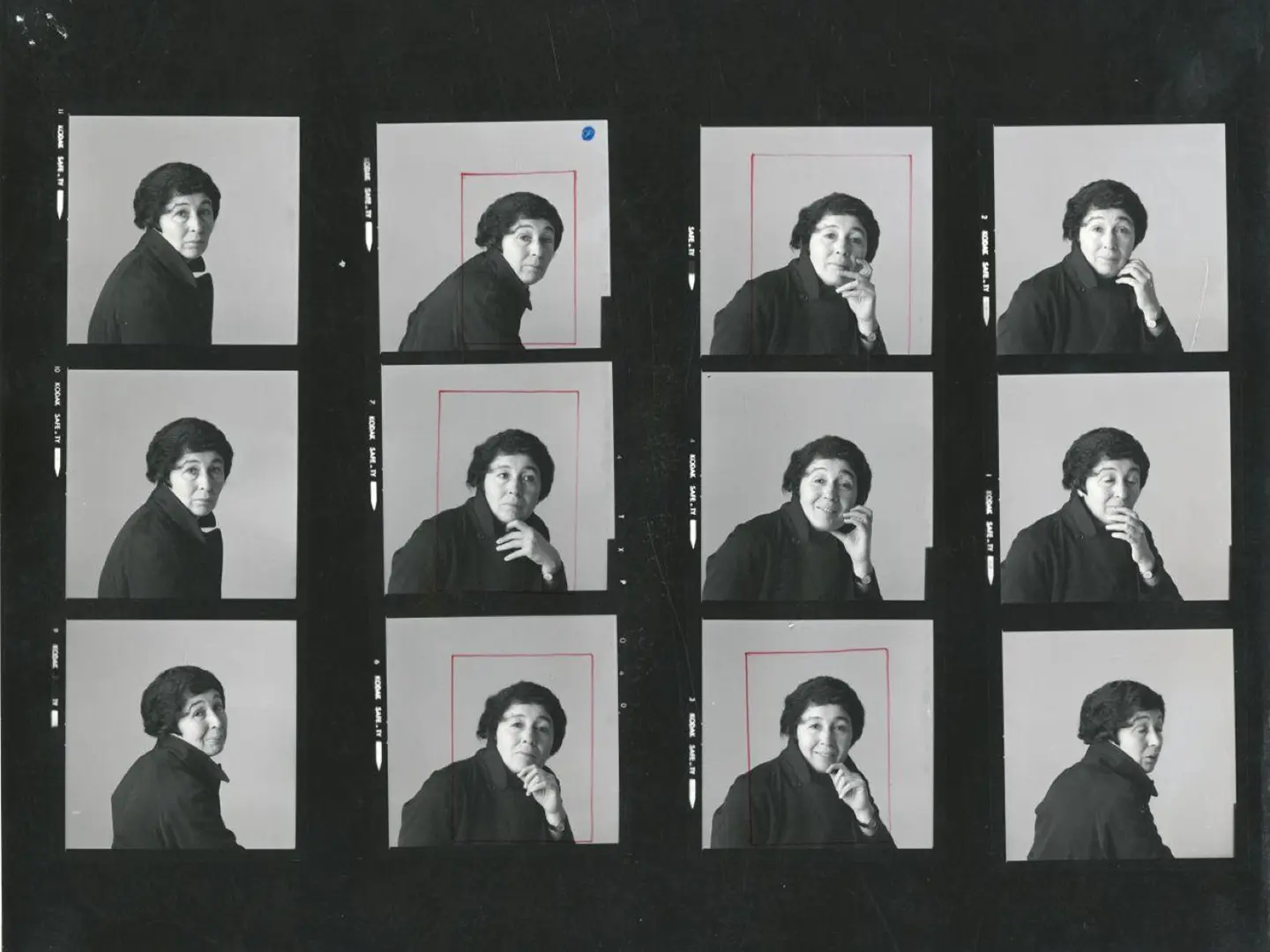
Studio Ballo&Ballo, portrait of Gae Aulenti, 1974. Sforzesco Castle Graphic and Photographic Collections. Civic Photographic Archive, Studio Ballo+Ballo
This approach was also neatly summed up by another great master of Italian design, Andrea Branzi, who wrote: “From the second half of the 1960s onwards, Gae established herself as an extraordinary creator of environmental icons, that is, a designer of settings with great visual power. This kind of energy stems from Gae’s unique perspective, which causes her to view design as a ‘sign’ that finds the deepest reasons for its existence solely in its capacity to circulate. This means that the truest root of this designer is to be found not so much in reformist elements, but rather in her ability to resolve these in a communicative form; to resolve the internal contradictions of the design by producing signs of great charm and extraordinary visibility.”
Read also: Gio Ponti, architect, industrial designer and “Mediterranean Master”
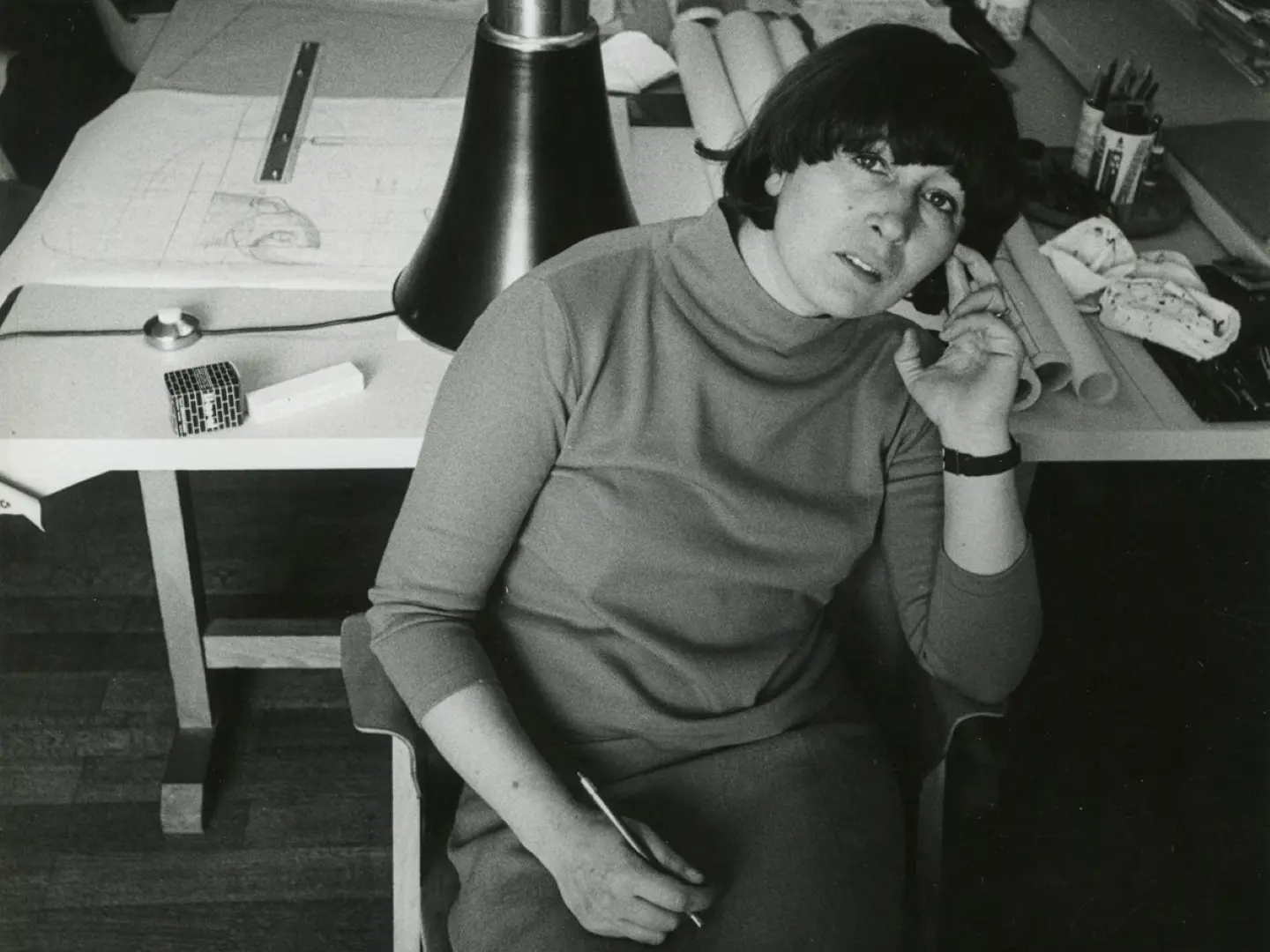
Gae Aulenti in front of the legendary Pipistrello lamp. Photo Ugo Mulas
One example of this approach is the Pipistrello lamp, designed onsite at the Olivetti shop in Paris in the late seventies and which is still being produced for Martinelli Luce. Light takes on a central role in defining the ambiance of the showroom, by means of a lighting system featuring concealed light sources and slits of light that form an integral part of the interior design, within which the Pipistrello lamp acts as a complementary element of a sophisticated and cohesive interior design scheme that transforms the public space into an almost domestic setting.
Aside from the diffuser with its unmistakable shape, made from opalescent white methacrylate, a key part of the lamp’s recognisability is the stainless steel telescopic arm, which allows the lamp to extend and vary in height, expanding its use from a table lamp to a floor lamp (with an adjustable height of 66 to 86 cm). The composition of the iconic Pipistrello lamp is then rounded off by its slender, tapered base.
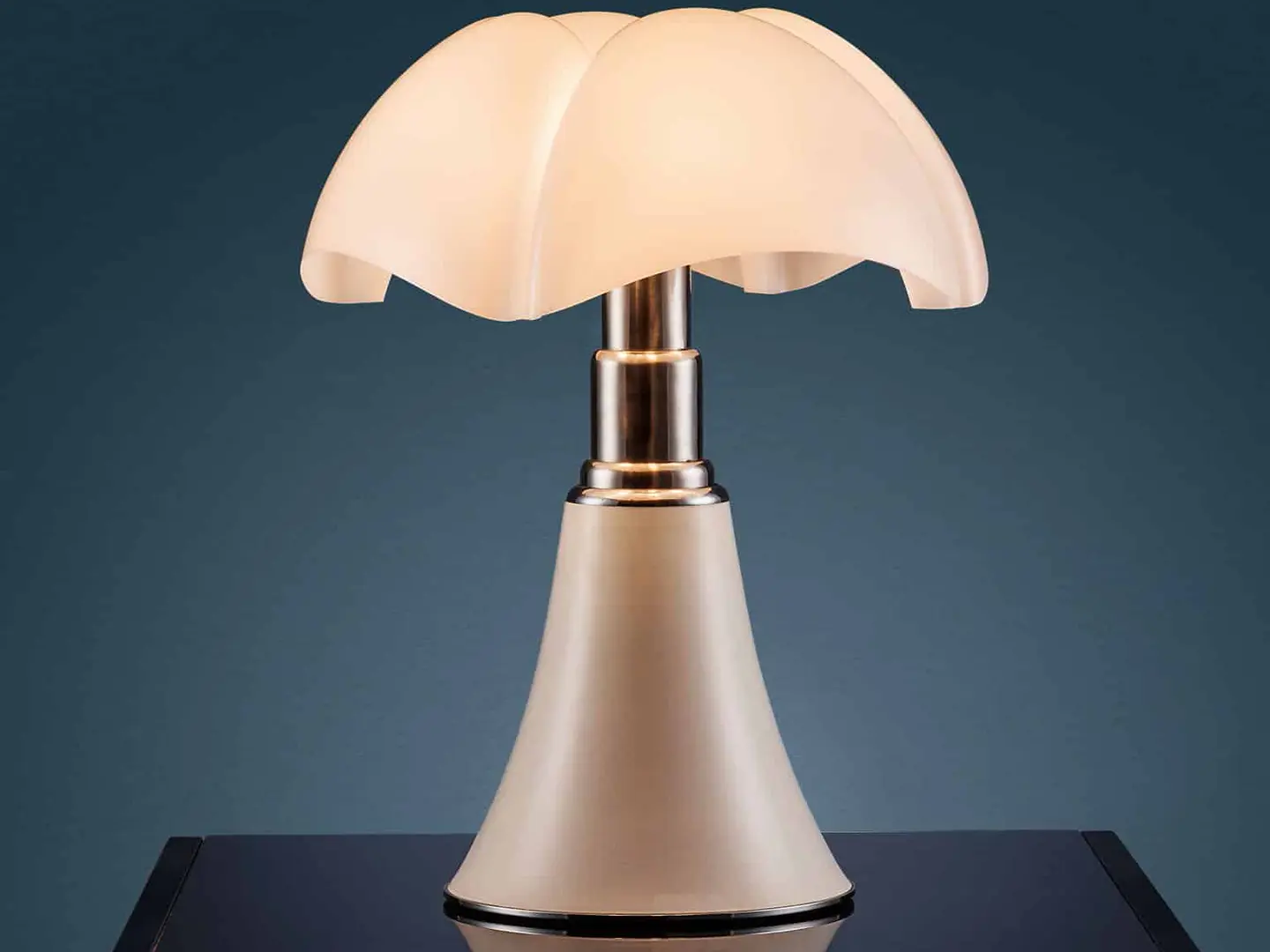
Gae Aulenti’s Pipistrello lamp, produced by Martinelli Luce
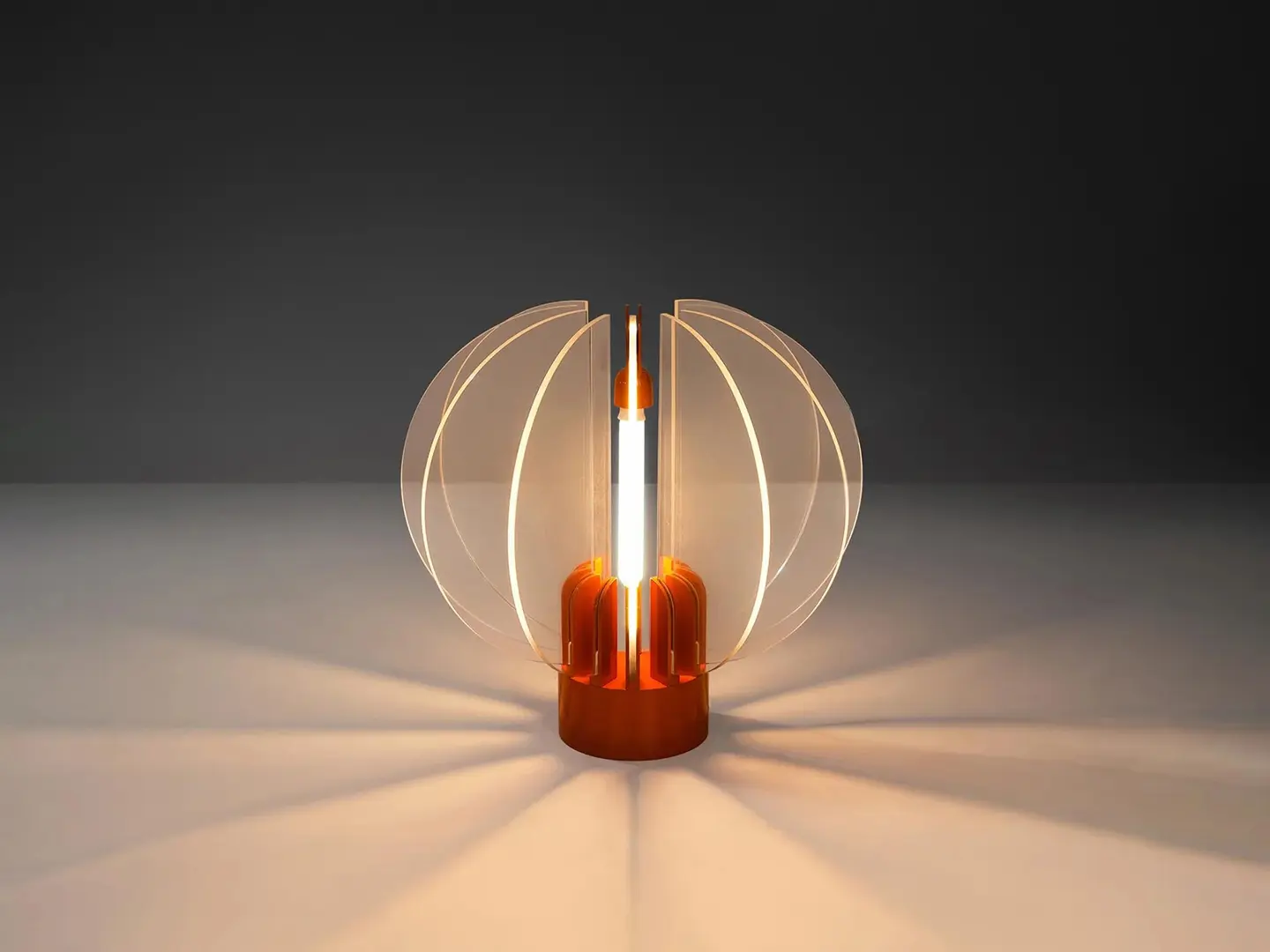
A fairly similar story lies behind the King Sun lamp (also known as the Re Sole lamp), presented by Kartell at the 1967 Salone del Mobile but initially conceived for the Olivetti shop in Buenos Aires. The lamp, the composition of which evokes an abstract representation of the sun, is characterised by an orangey-red base into which semi-circular transparent acrylic sheets have been inserted. The flaps serve to enclose the central light bulb, while the light is filtered through the fins, highlighting the outer edges.