

 Stories





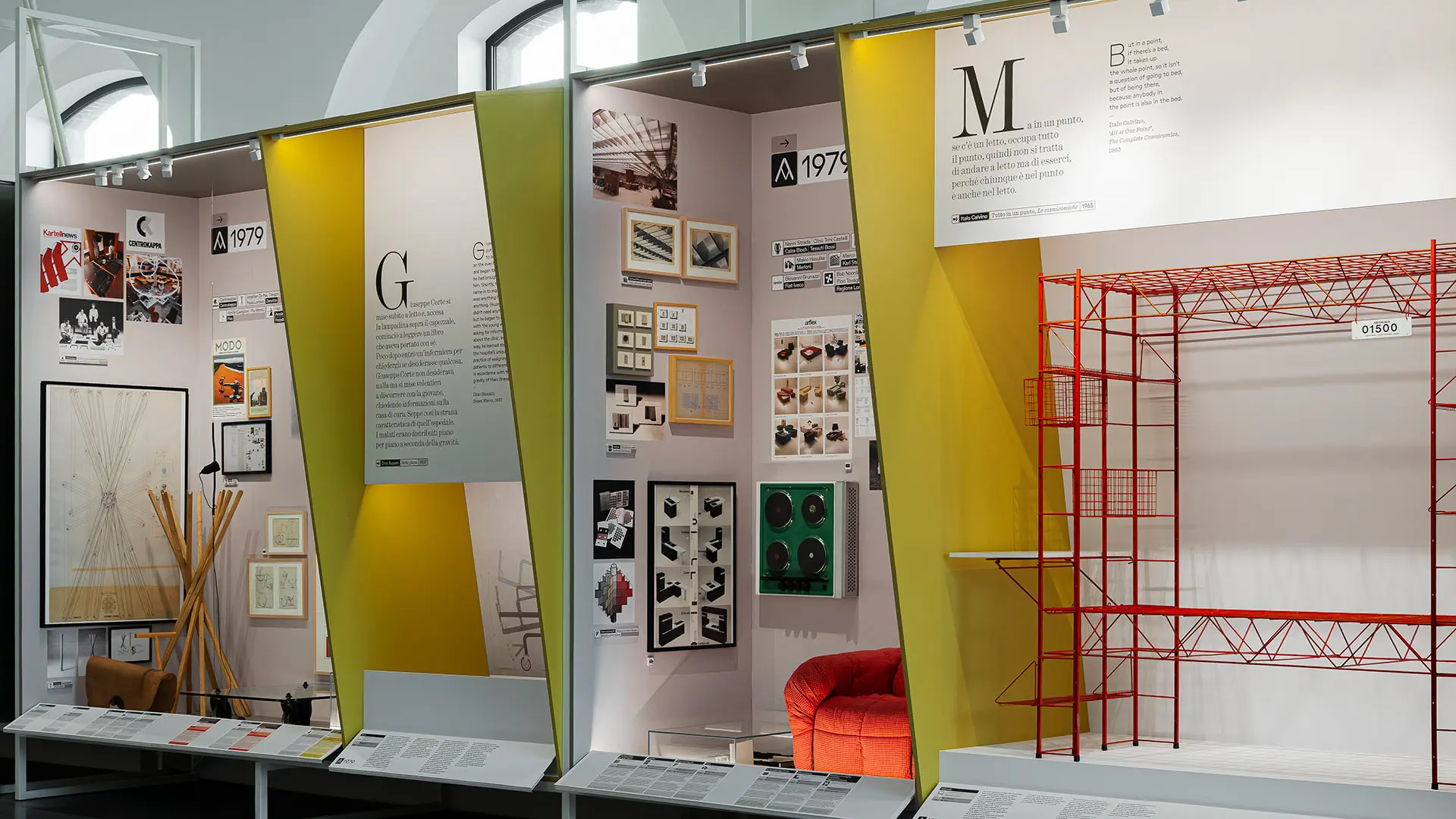
Five years since it opened, the museum in Milan presents the first new scientific reordering of its Historical Collection. Curator Maite García Sanchis relates how the way of interpreting over seventy years of design is changing, while Domitilla Dardi explains why the “Anthological” study enables the award-winning objects to dialogue with literature
Gio Ponti, architect, industrial designer and “Mediterranean Master”
Text by
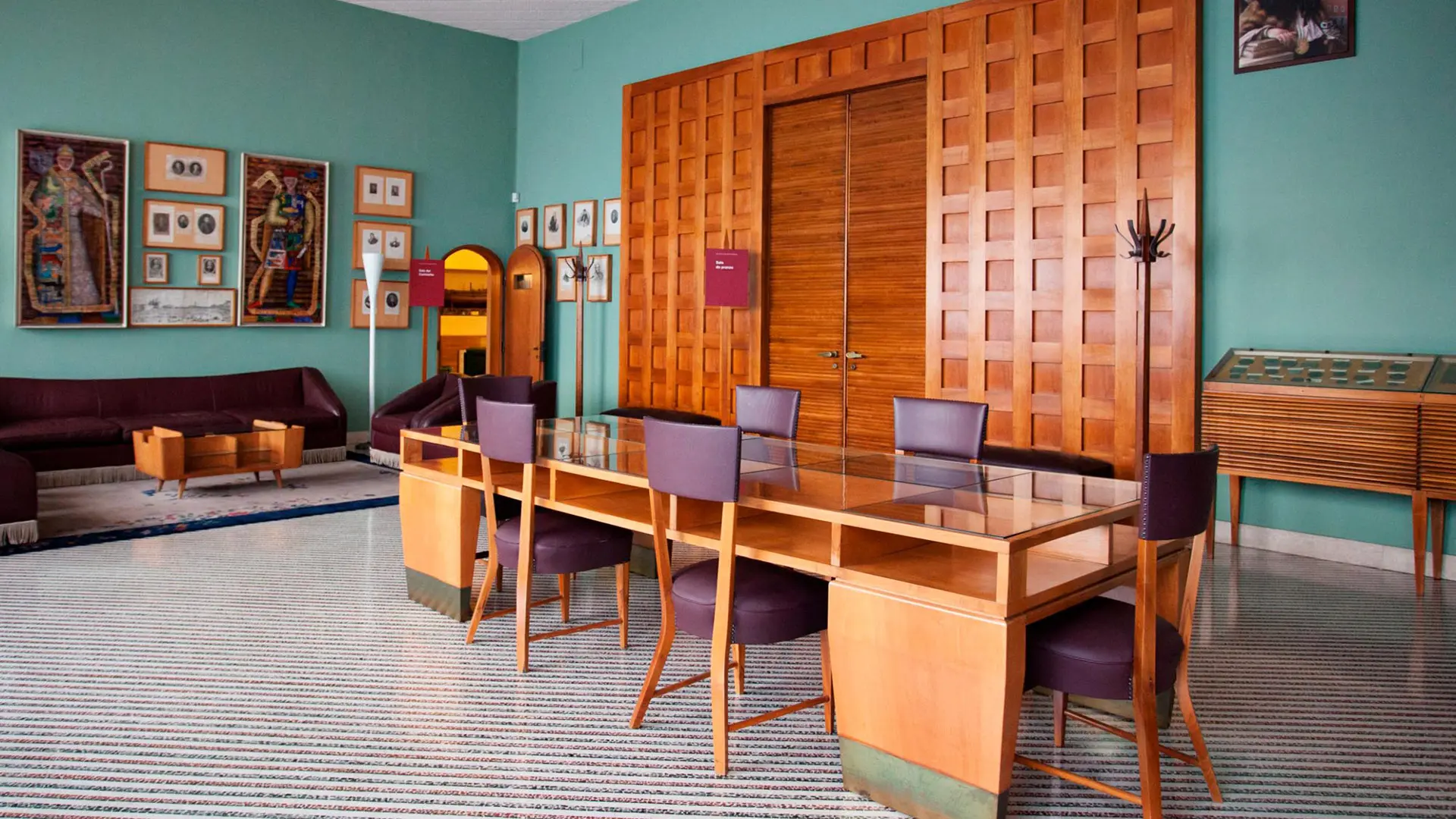
Gio Ponti, Interiors of Palazzo Bo, home to the University of Padua, ph. Massimo Pistore
Gio Ponti amid architecture, design and industry: from the Pirelli skyscraper to Domus, to furnishings reinterpreted through archival work
Giovanni Ponti, known as Gio Ponti (Milan, 1891–1979), is considered one of the masters of Italian architecture, but his achievement goes far beyond this definition. Ponti moved with the greatest of ease between different disciplines – painting, graphics, industrial design, arts and crafts, publishing, applied arts – creating a transversal practice that is hard to classify. He has always been hard to pigeonhole, because of the ease and passion of his approach to design: a free spirit, capable of fitting naturally into the practical and concrete world of industry and entrepreneurship.
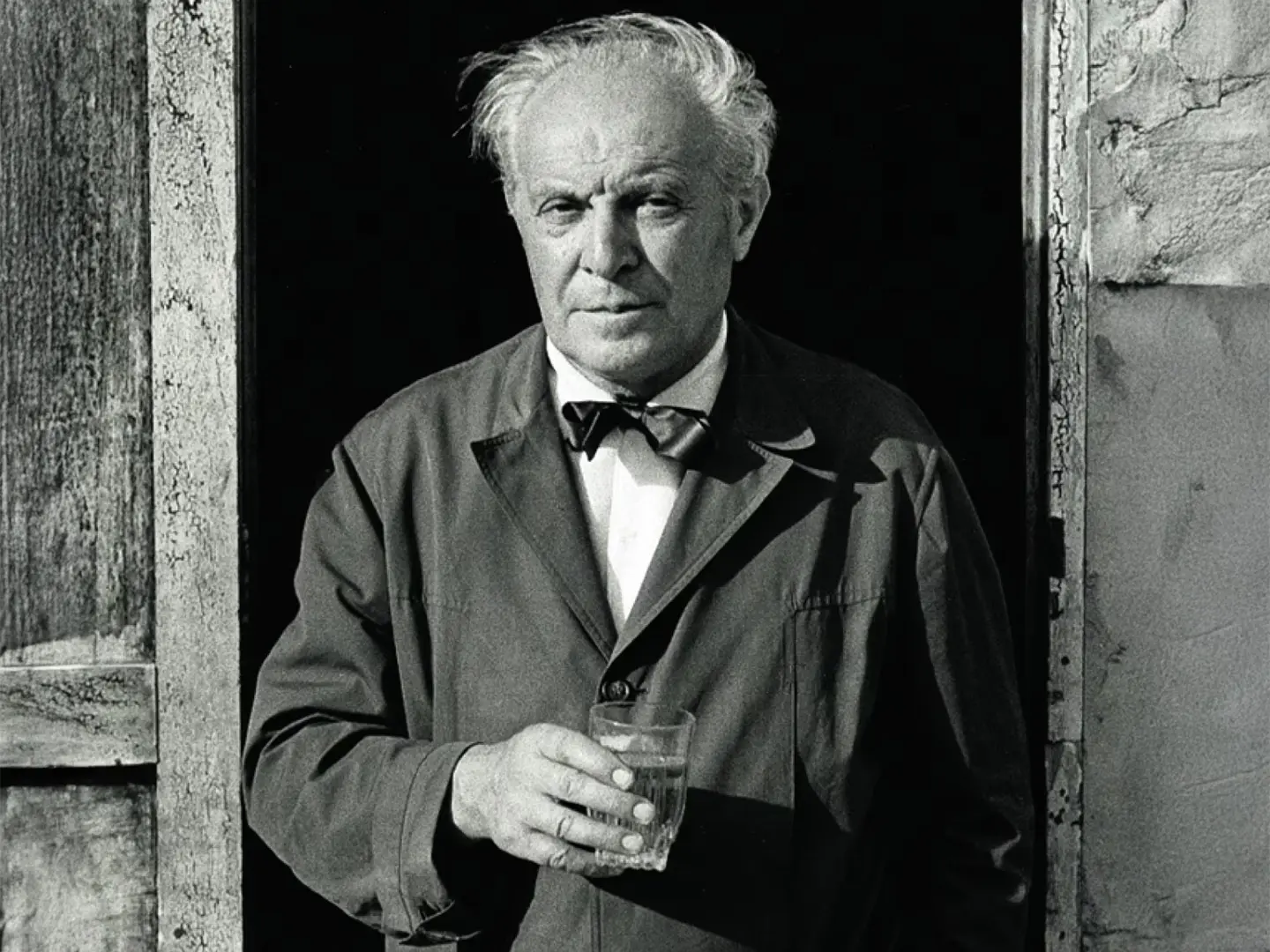
Gio Ponti, portrait, ph. Ugo Mulas, courtesy Archivio Gio Ponti
Gio Ponti: a “failed architect and failed painter”
Gio Ponti liked to describe himself as a “failed architect and failed painter”, lamenting his inability to fulfil his purest artistic vocation. To make up for it, he has left an infinite number of works, colonizing architecture and much else: designs for ceramics, glass, enamels, frescoes, tapestries, costumes, as well as illustrations for books, articles and even screenplays. In this way drawing became Ponti’s primary tool of thought, ranging across different scales, materials and functions and maintaining a constant poetic intensity within the project.
Alessandro Mendini, another leading figure of twentieth-century design, has provided a particularly effective definition of his status: “I associate the idea of Ponti with the poetic concept of the Mediterranean Master. He was a great master, not because he passed on a style or a method to us – there is no school of Gio Ponti – but because he was the magnetic fluid through which the generations of all Italian architects of the forties, fifties and sixties were formed”.
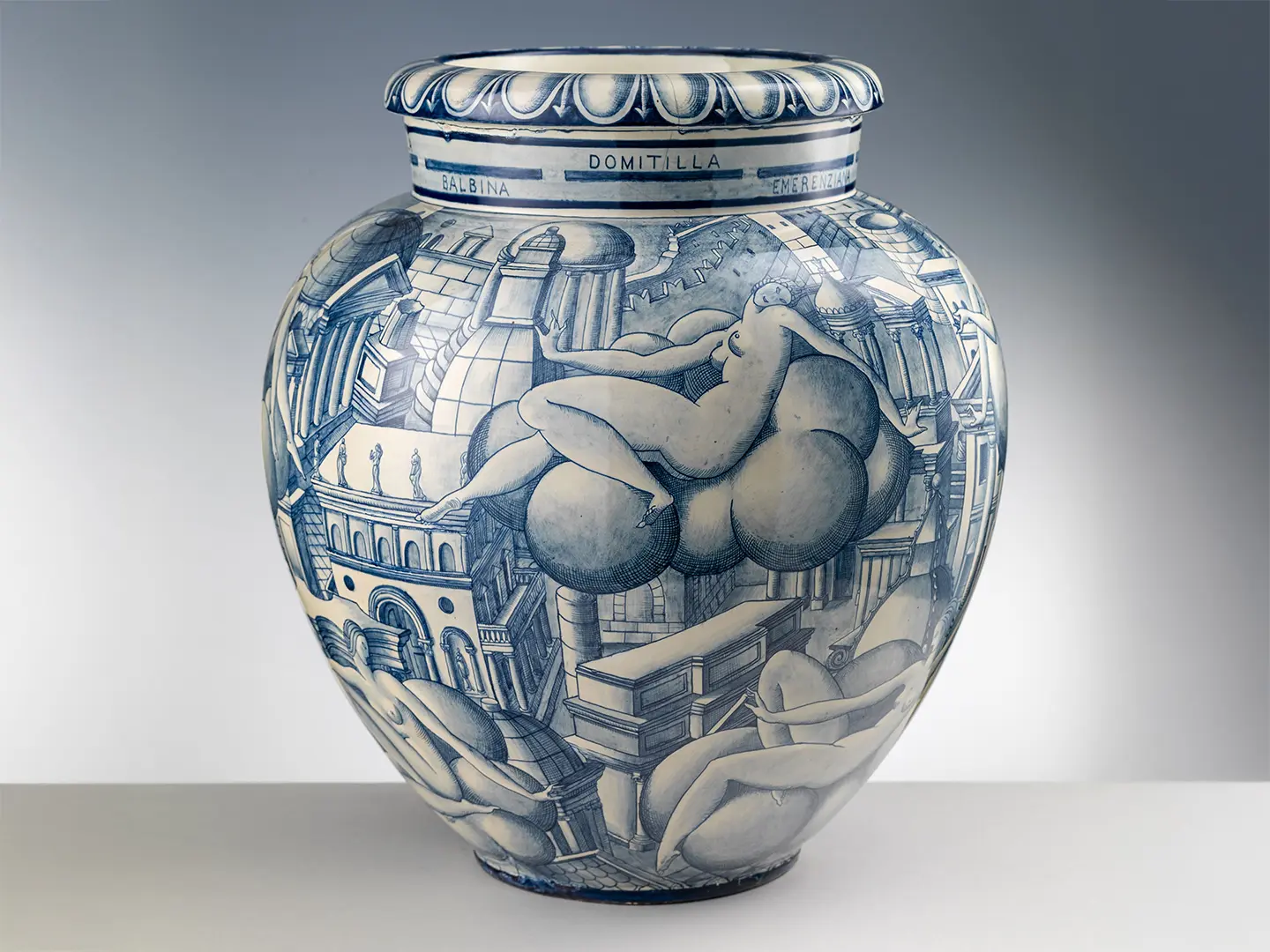
Gio Ponti, Vase of Women and Architecture, Richard Ginori, 1924. Courtesy Museo Ginori
Domus and the invention of fine Italian design
Mendini referred in particular to the magazine Domus, founded by Gio Ponti in 1928 together with the publisher Gianni Mazzocchi, which Ponti then edited, in two separate phases, for a total of about 45 years. “It is thanks to Domus”, says Mendini, “that Ponti launched fine Italian design, which also has a great following abroad”. Through Domus, Ponti built a cultural platform capable of connecting architecture, industry, the applied arts and society, anticipating an editorial vision that is still relevant today.
Amate l’architettura: a declaration of love
To fully understand Ponti’s aptitude and passion for architecture, it is inevitable to mention Amate l’architettura, his most famous book: a collection of ideas lightly and boldly recounting his design and personal experiences: “not a book for architects, but for those enchanted by architecture”. One of the most famous passages reads: “Love all architecture, the ancient, the modern; love architecture for whatever it has created that is fantastic, adventurous and solemn”.
Ponti gave concrete form to this vision in some emblematic architectural works: the Pirelli Skyscraper in Milan, an icon of structural lightness and a symbol of Italy’s boom years; the Villa Planchart in Caracas, a manifesto of Ponti’s idea of the home as a “poetic machine for living in”; the Montecatini Building, the Co-Cathedral of Taranto, and the Parco dei Principi Hotels in Rome and Sorrento, where architecture, interiors and applied arts are united in a single vision of design.
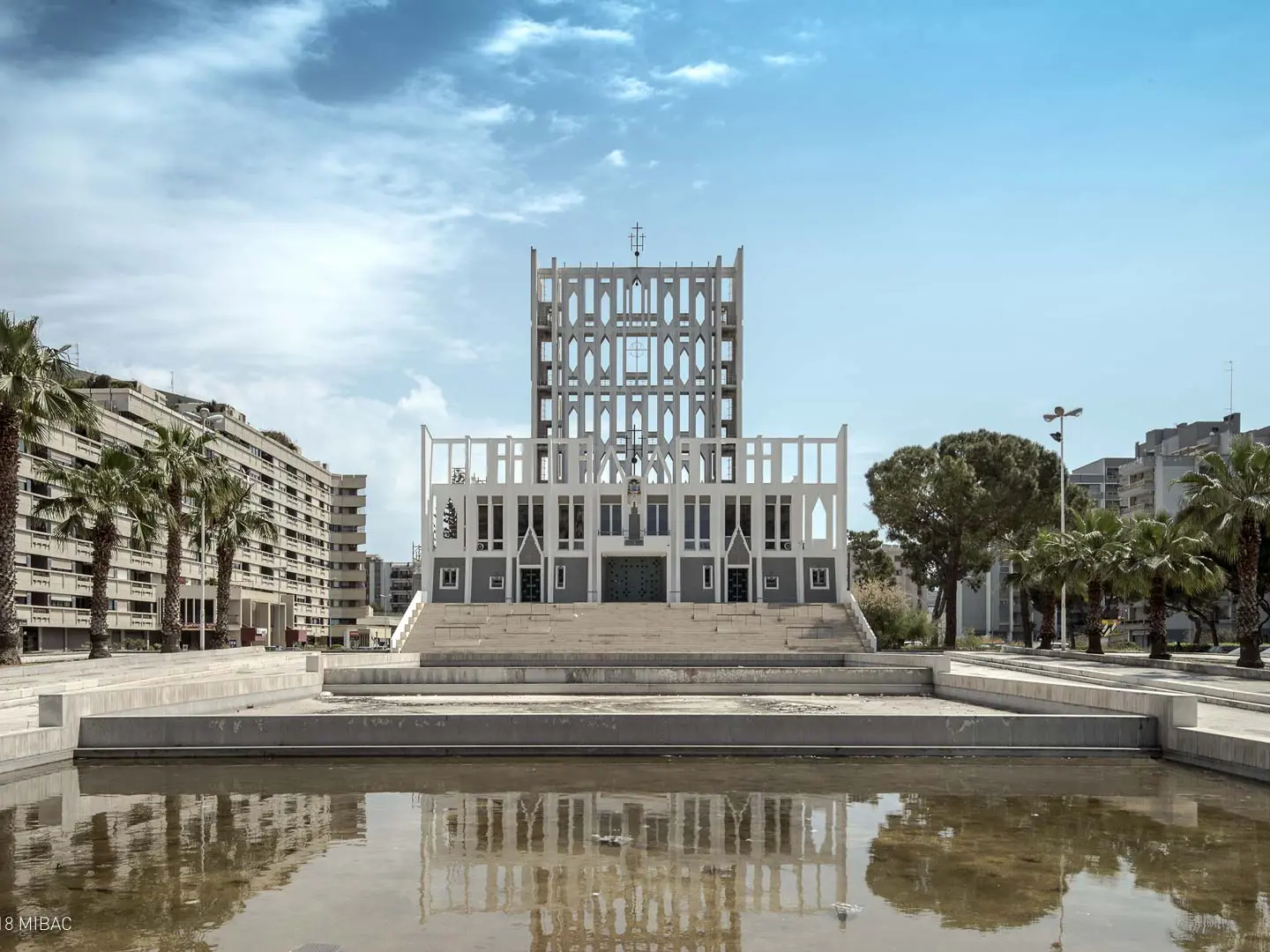
Gio Ponti, Co-Cathedral Grande Madre di Dio, Taranto, 1964-1970, ph. Alessandro Lanzetta – MIBAC
Objects, industry and project responsibilities
Also in the production of objects and furnishings, Gio Ponti’s research was never limited to a simple adherence to the idea of modernity, nor did he follow the dominant taste or trends. On the contrary, the project became a critical instrument for him, capable of questioning in depth the relationship between an object’s form, function and cultural responsibility. Commenting on one of his sanitaryware collections, Ponti enunciates principles that are valid for the entire span of his production – from flatware to sewing machines – and also applicable to his architectural works, whether small or large: “Hence reconstructing the original purity of the relationship between form and function derives not from functionality, but from a real need for aesthetic criticism, intellectual civilization and, I might almost say, morality.” From this viewpoint, form is never reducible to a technical or stylistic fact, but takes on an ethical and civil value.
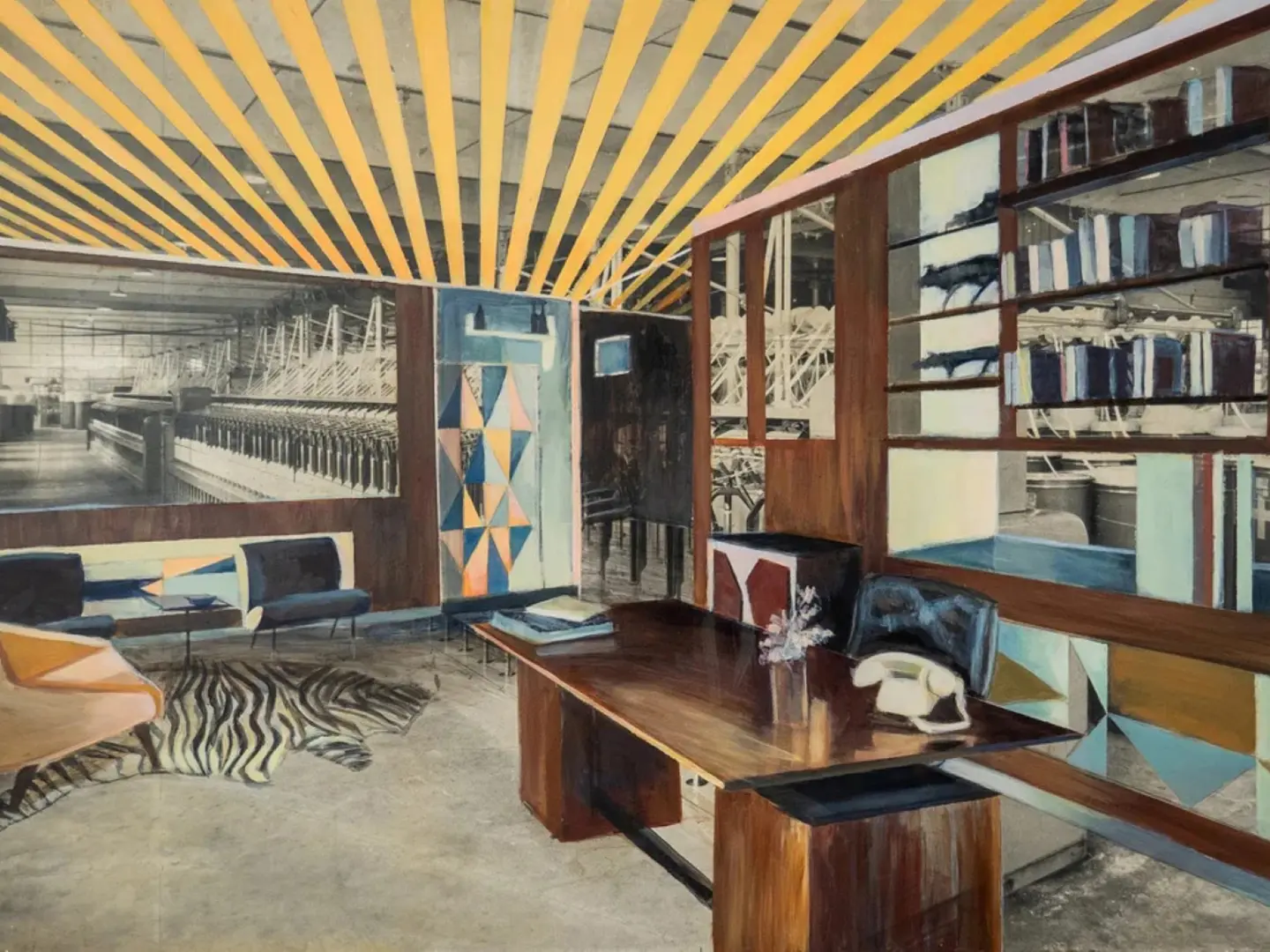
Bea Sarrias, The Bureau Gio Ponti Villa Planchart, acrylic on vintage photograph on wood, 2024, ph. Michèle Schoonjans Gallery
Gio Ponti’s contemporaneity
The enduring relevance of Gio Ponti’s work is confirmed by the continuous reinterpretation of his designs, particularly in the field of furnishing, made possible thanks to the work of the Gio Ponti Archive and Ponti heirs. Direct comparison with the original drawings, archive materials and projects developed for specific contexts – private homes, installations or limited productions – now makes it possible to bring these objects into the present, relating Gio Ponti’s design vision to contemporary forms of living.
In this process, the reissue does not take on a nostalgic value, but becomes a critical tool: a way of questioning modern design in the light of current needs, reaffirming the continuity between architecture, industry and poetic vision that runs through all of Gio Ponti’s work.