

 Stories


China accounts for 72% of the Asia-Pacific contract market potential
Living at the seaside: 13 architectural designs that have shaped the Italian summer
Text by
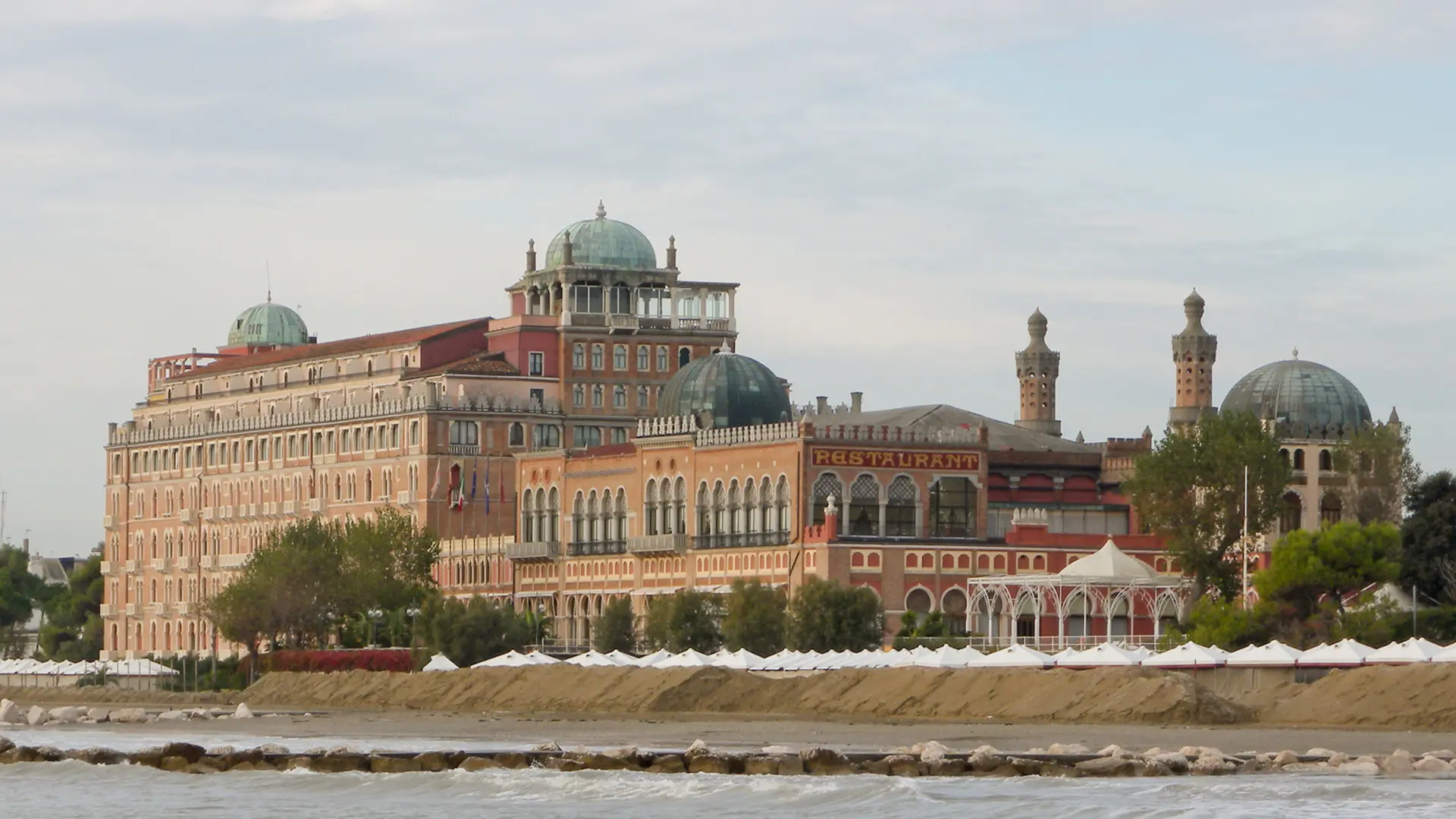
Excelsior, designed by Giovanni Sardi, Venice Lido - Ph. Florian Fuchs
From the first 19th-century bathing establishment to Aldo Rossi’s unrealized visions, the Italian coasts preserve an architectural heritage that recounts the development of tourism, taste and the relations between people and the landscape
Pavilions suspended above the water, modernist colonies, monumental promenades and hotels facing the sea have transformed the simple holiday experience into a cultural project. Through thirteen iconic architectures, here is a journey around the peninsula to discover places where the sea has become built space, collective imagination and a laboratory for experimentation.
Stabilimento de’ Bagni in Viareggio
1828, designer unknown
The history of Italian seaside architecture begins in Viareggio. Inaugurated in 1828, the Stabilimento de’ Bagni was the first structure to embody the desire to enjoy sea bathing in a specially designed space. This wooden facility on the water ensured the comfort and privacy of bathers. Resting on stilts and joined to the land by walkways, it presented the sea as a regulated and accessible space. Here bathing became an organized social practice, anticipating the birth of future seaside towns throughout the peninsula.
Excelsior
Giovanni Sardi, Venice Lido, 1908
If Viareggio marks the start of seaside tourism, Venice Lido represents its international consecration. Opened in 1908, the Hotel Excelsior introduced the cosmopolitan elegance of the Belle Époque to the Italian coast. Its eclectic architecture overlooking the Adriatic transformed a beach holiday into an exclusive experience, anticipating the link between hospitality, spectacle and landscape. Designed by Giovanni Sardi in Moorish style, with domes and oriental decorations, it became the symbolic venue of the Film Festival, confirming the ties between the sea, entertainment and social life.
Stabilimento Blue Moon
Giancarlo De Carlo, Venice Lido, 2002
Overlooking the long beach of the Lido of Venice, the Blue Moon reinterprets the tradition of Italian bathing establishments in a contemporary key. Designed by Giancarlo De Carlo and inaugurated in 2002, the complex is conceived as a sequence of paths, terraces and light pavilions that accompany the transition from the city to the sea. More than a single building, it is an urban device that alternates pavilions, walkways and public spaces along the Lido beach, relating architecture, landscape and public life.
Colonia Marina AGIP
Giuseppe Vaccaro, Ignazio Gardella, Cesenatico, 1937-1938
In the 1930s the seaside became a testbed for the Modern Movement. Designed by Giuseppe Vaccaro and Ignazio Gardella, the Colonia AGIP translated the principles of rationalism into a building open to the light and sea breeze. Understated volumes, terraces and collective paths convey a new vision of architecture as an educational and social tool. One of the manifestos of Italian Rationalism by the sea, the Colonia AGIP (a holiday complex for its employees) develops as a long horizontal volume overlooking the beach. Architecture becomes an educational and collective machine, with light and air as essential parts of the project.
Colonie di Calambrone
1930s–’40s, collective project (the architects included Ugo Giovannozzi, Angiolo Mazzoni, Roberto Narducci)
Between Pisa and Livorno, one of the most extraordinary architectural landscapes of the Italian twentieth century arose. The Colonie di Calambrone (the “colonie” provided holiday accommodation for children) stretch along the coastline like a modern city on the Tyrrhenian Sea. Each building offers a distinct interpretation of its relationship with the sea, creating an open-air laboratory that explores the connections between health, education, and leisure to construct a true linear holiday city.
Le Navi
Cattolica, 1930s, seaside complex
Few buildings express the link between architecture and maritime imagery as much as Le Navi. Built in the 1930s as seaside accommodation for children, the structure reproduces a real fleet of ships with hulls and decks ready to set sail to the horizon. A scenic and visionary architecture that testifies to the ability of the project to be transformed into story and symbol.
Read also: A (summer) journey through the beach clubs that have made Italy’s history
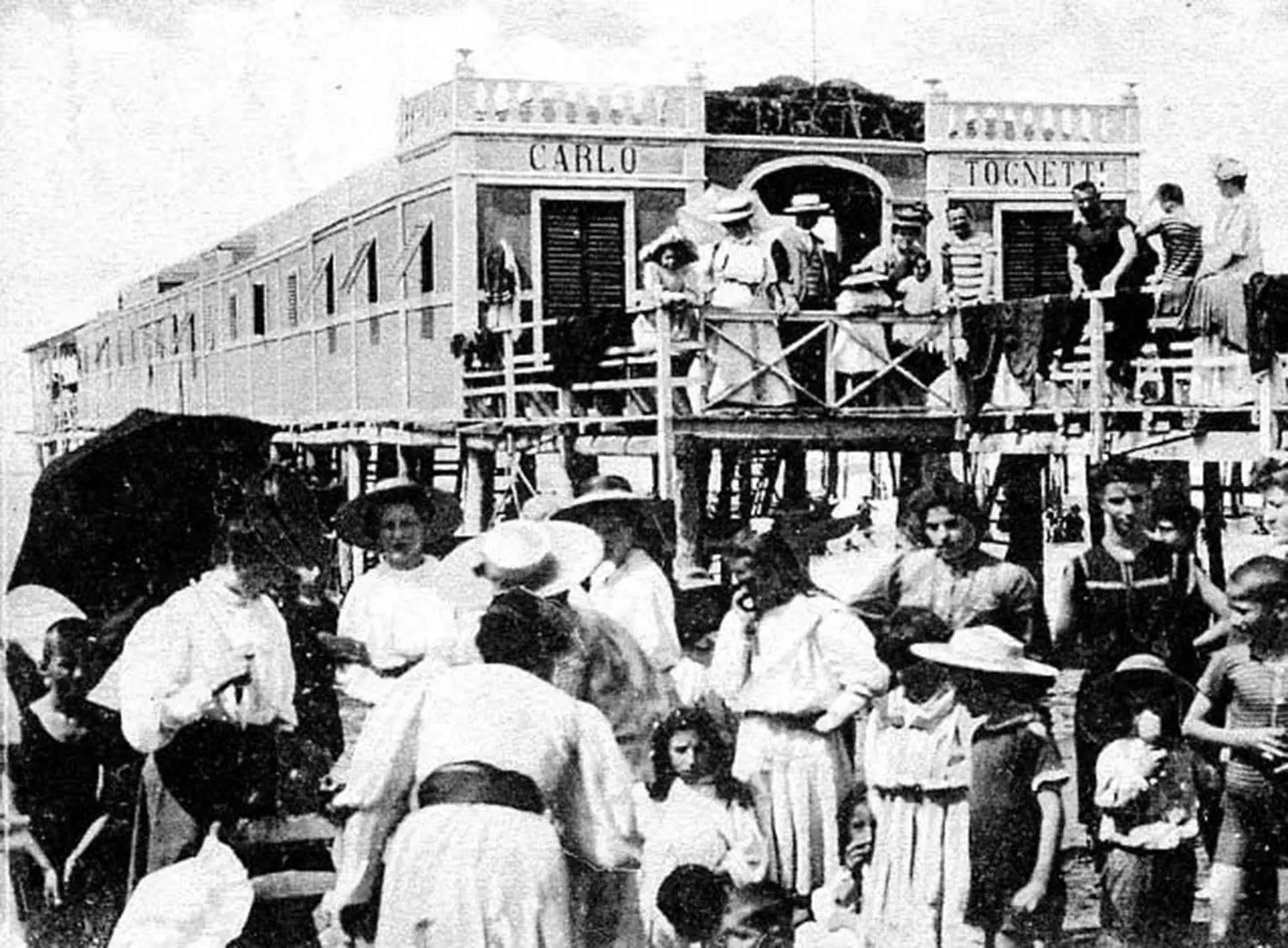
Stabilimento de’ Bagni, Viareggio - Courtesy of the Viareggio Municipal Archives
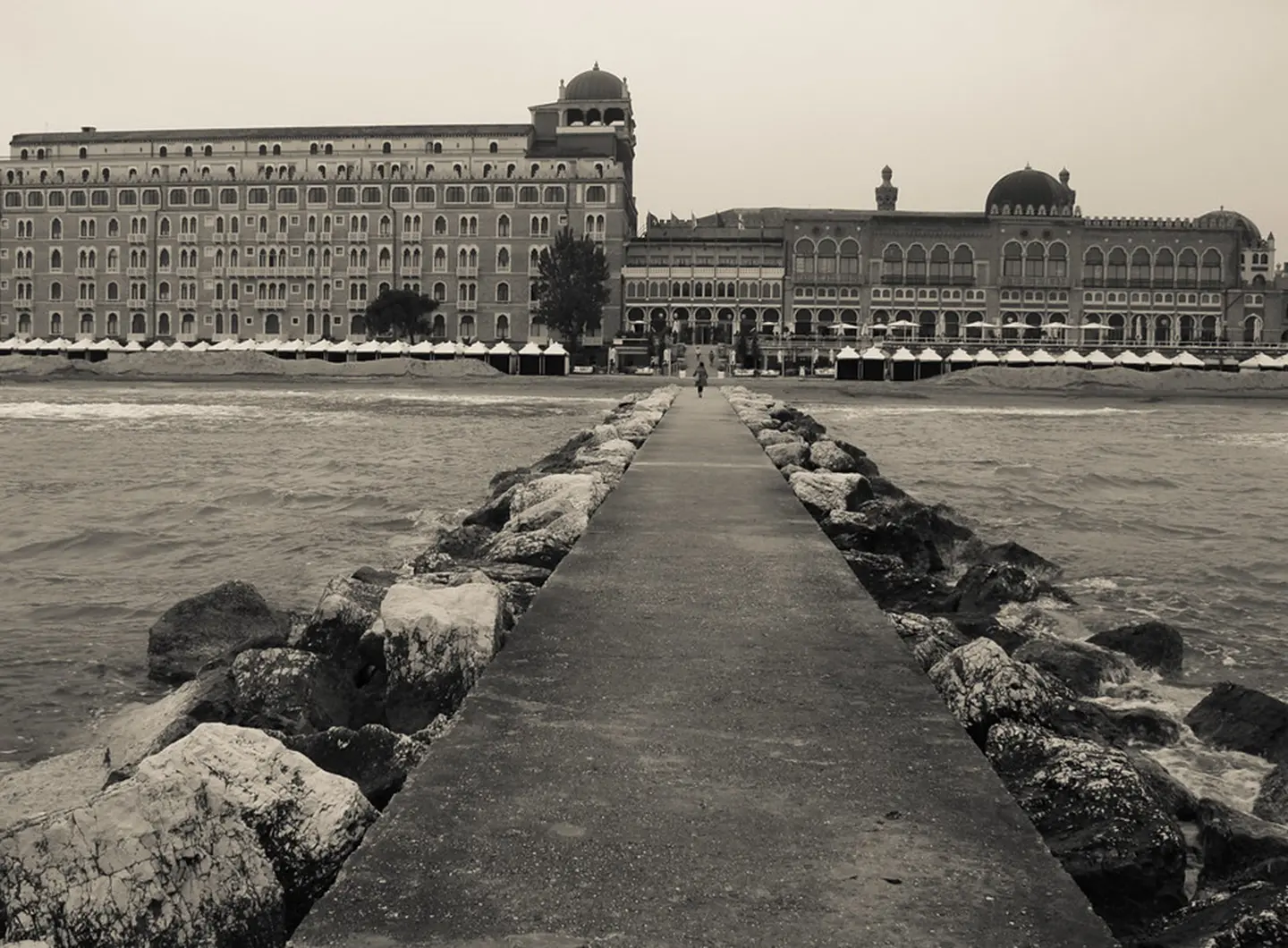
Excelsior, designed by Giovanni Sardi, Venice Lido - Ph. Marco Usan
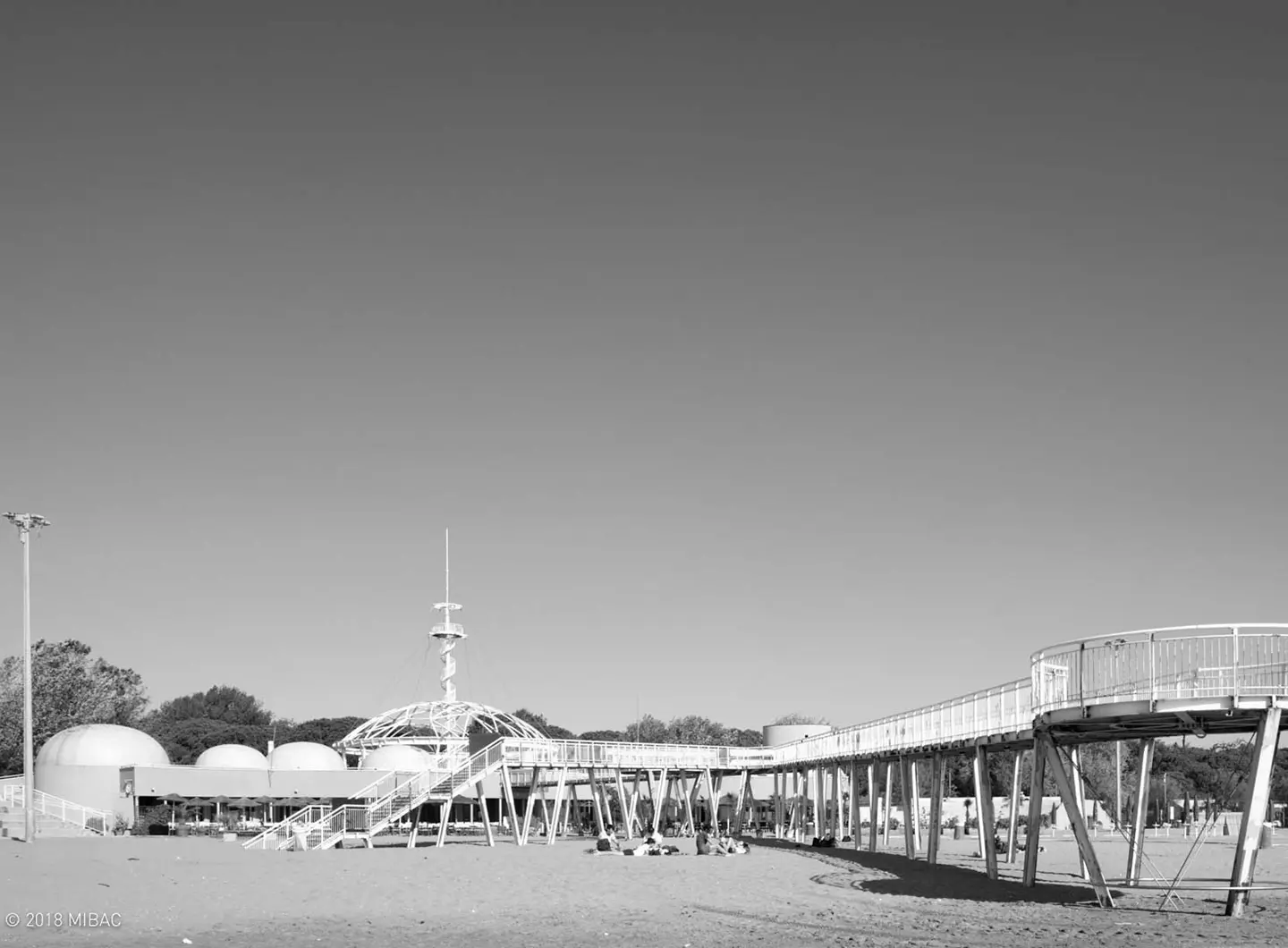
Stabilimento Blue Moon, designed by Giancarlo De Carlo, Venice Lido - Ph. Marco Introini, courtesy of MIBAC 2018
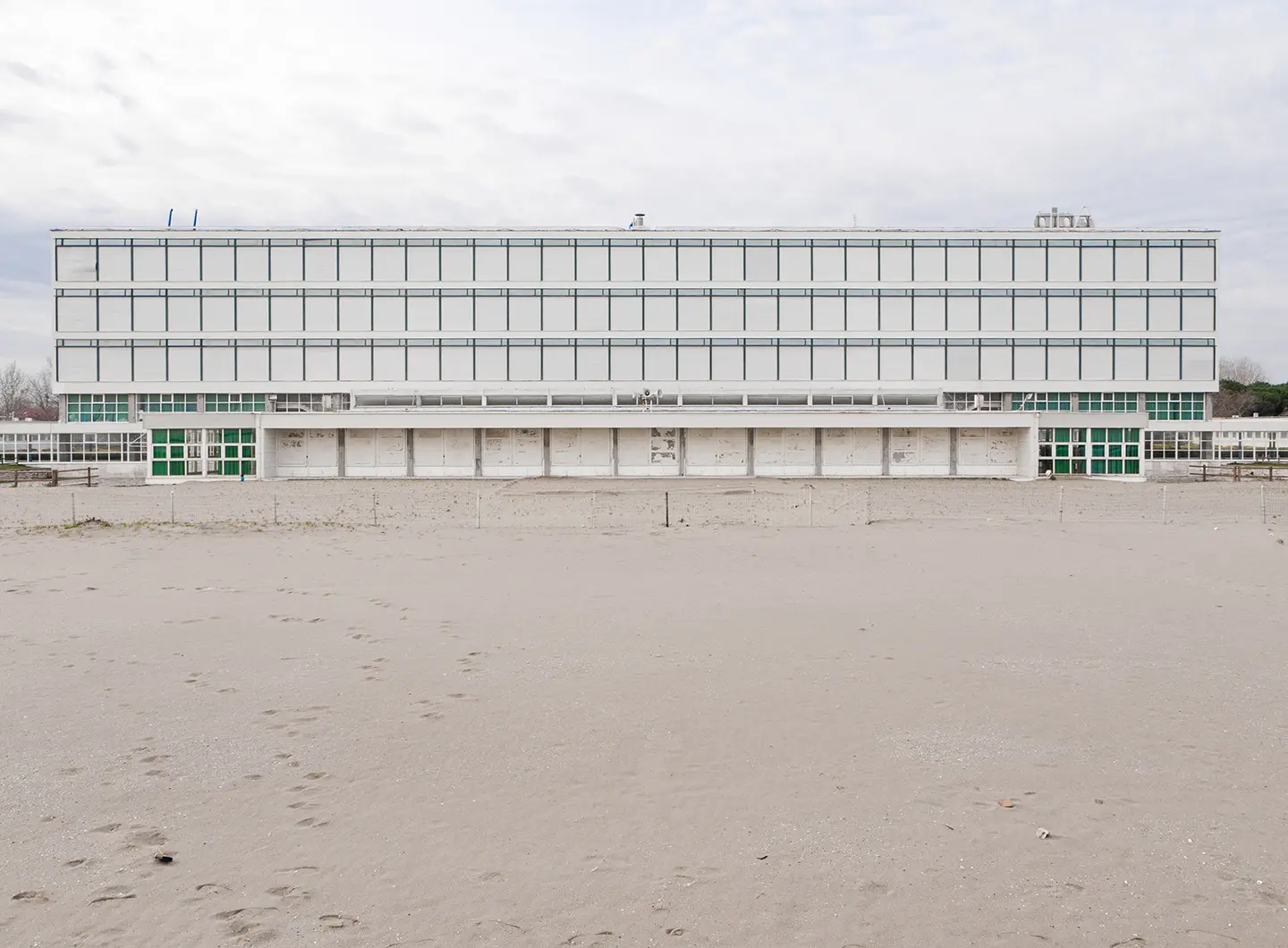
Colonia Marina AGIP, designed by Giuseppe Vaccaro and Ignazio Gardella, Cesenatico - Ph. Alessandro Costa, courtesy of spaziindecisi
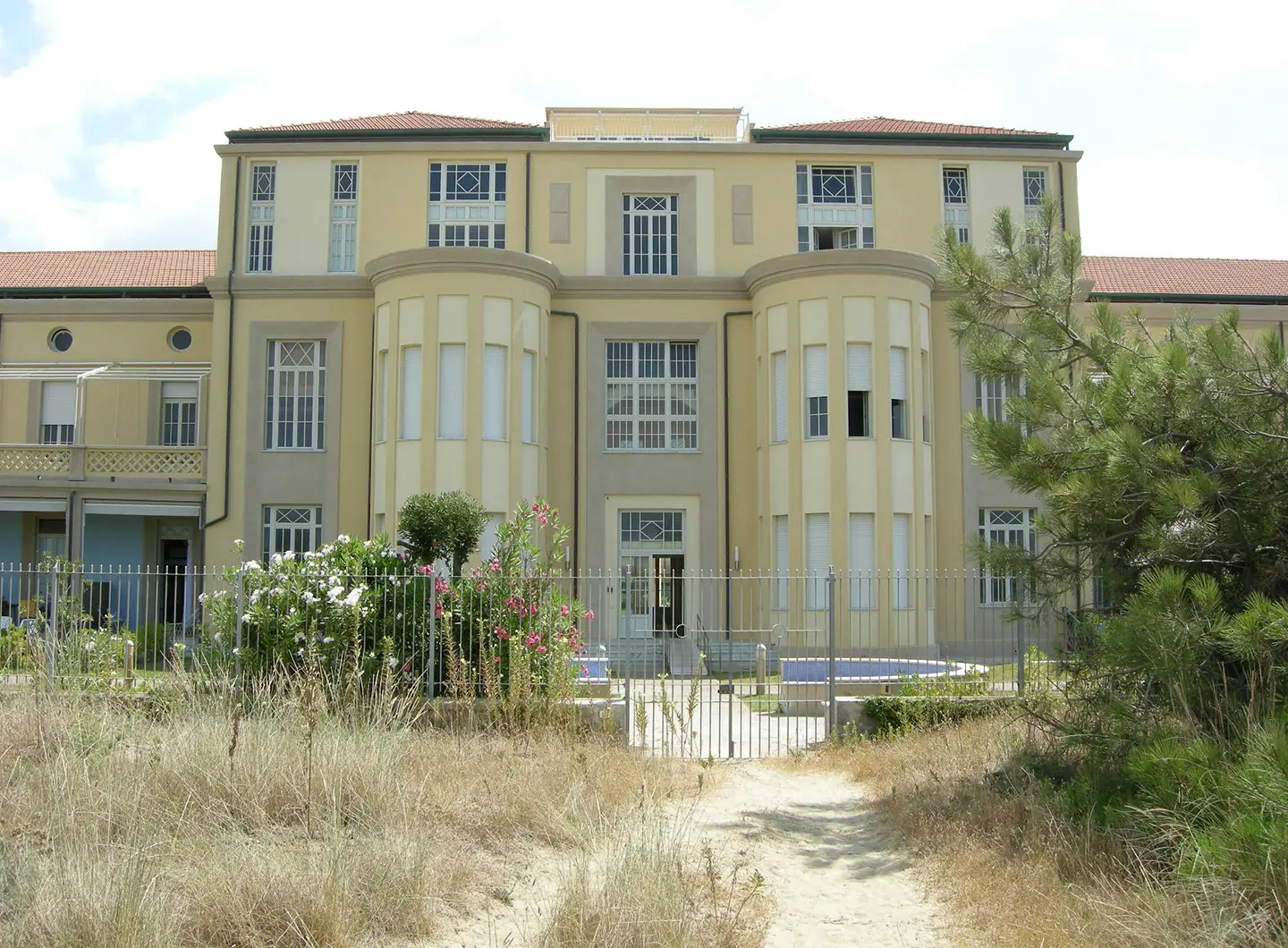
Colonie di Calambrone, collective project (the architects included Ugo Giovannozzi, Angiolo Mazzoni, Roberto Narducci) - Ph. Sailko
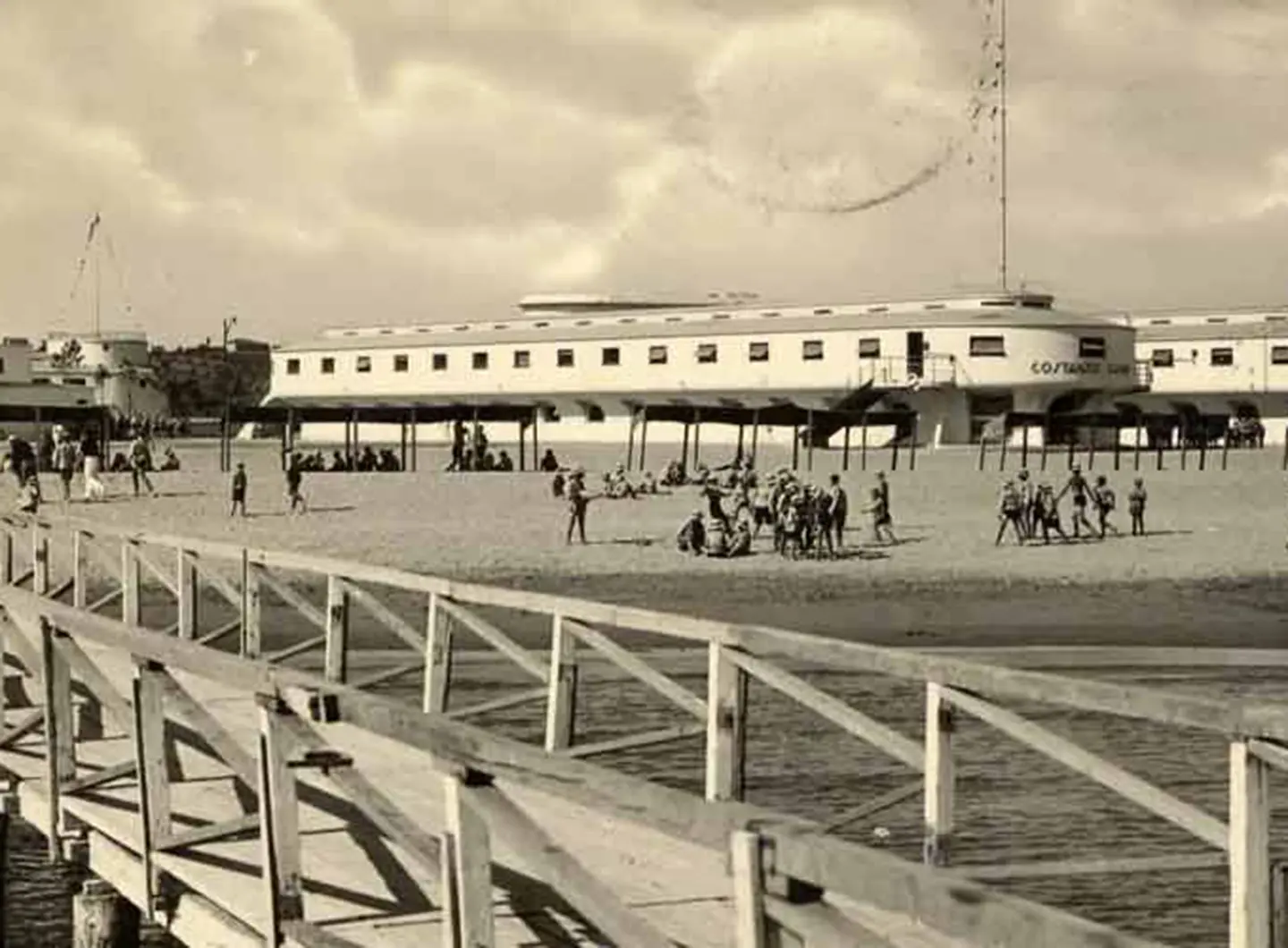
Le Navi, Cattolica, seaside complex - Courtesy of IAT Municipality of Cattolica
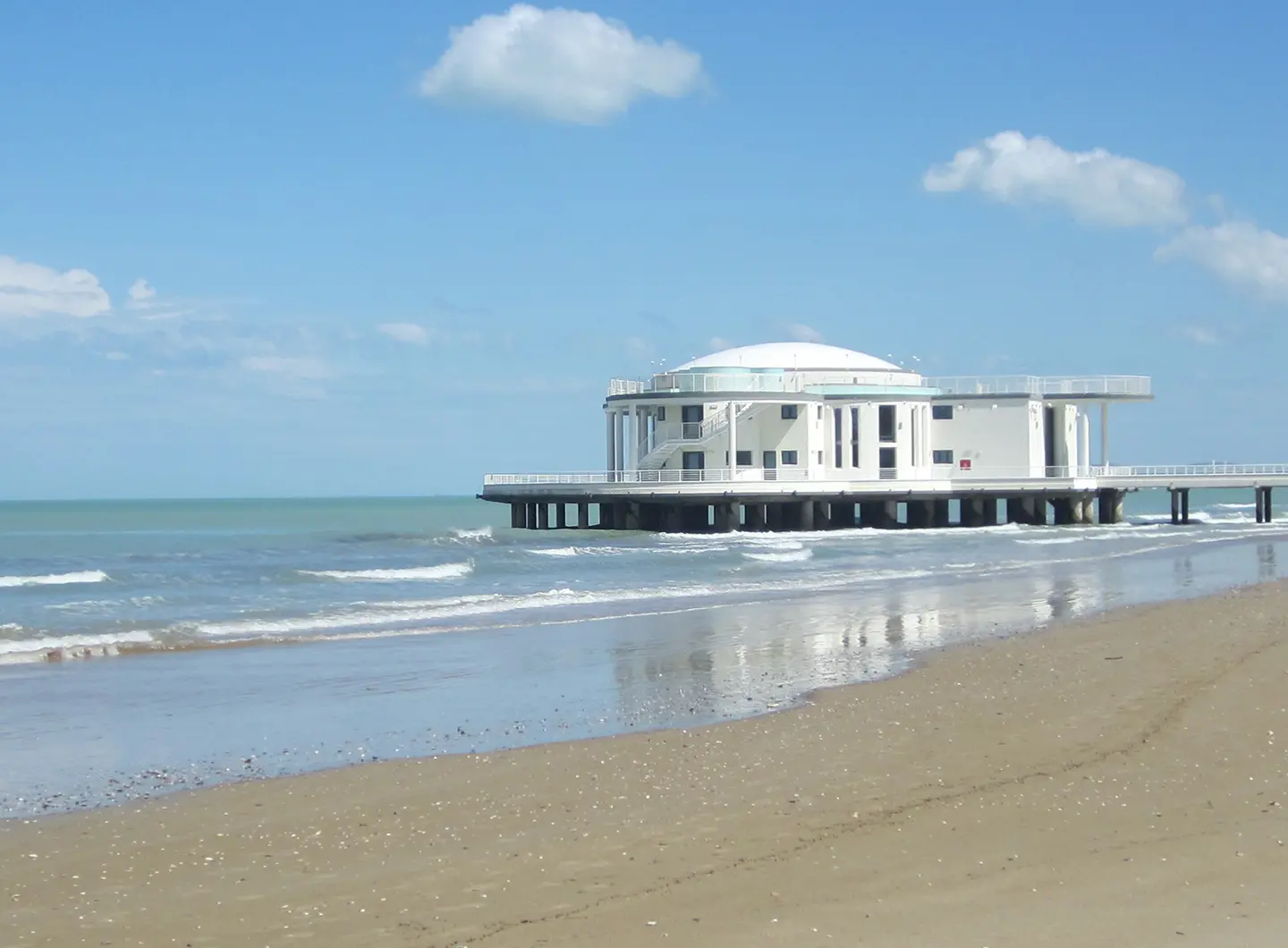
Rotonda a Mare, designed by Enrico Cardelli and Piercarlo Ceccarelli, Senigallia - Ph. Garassino
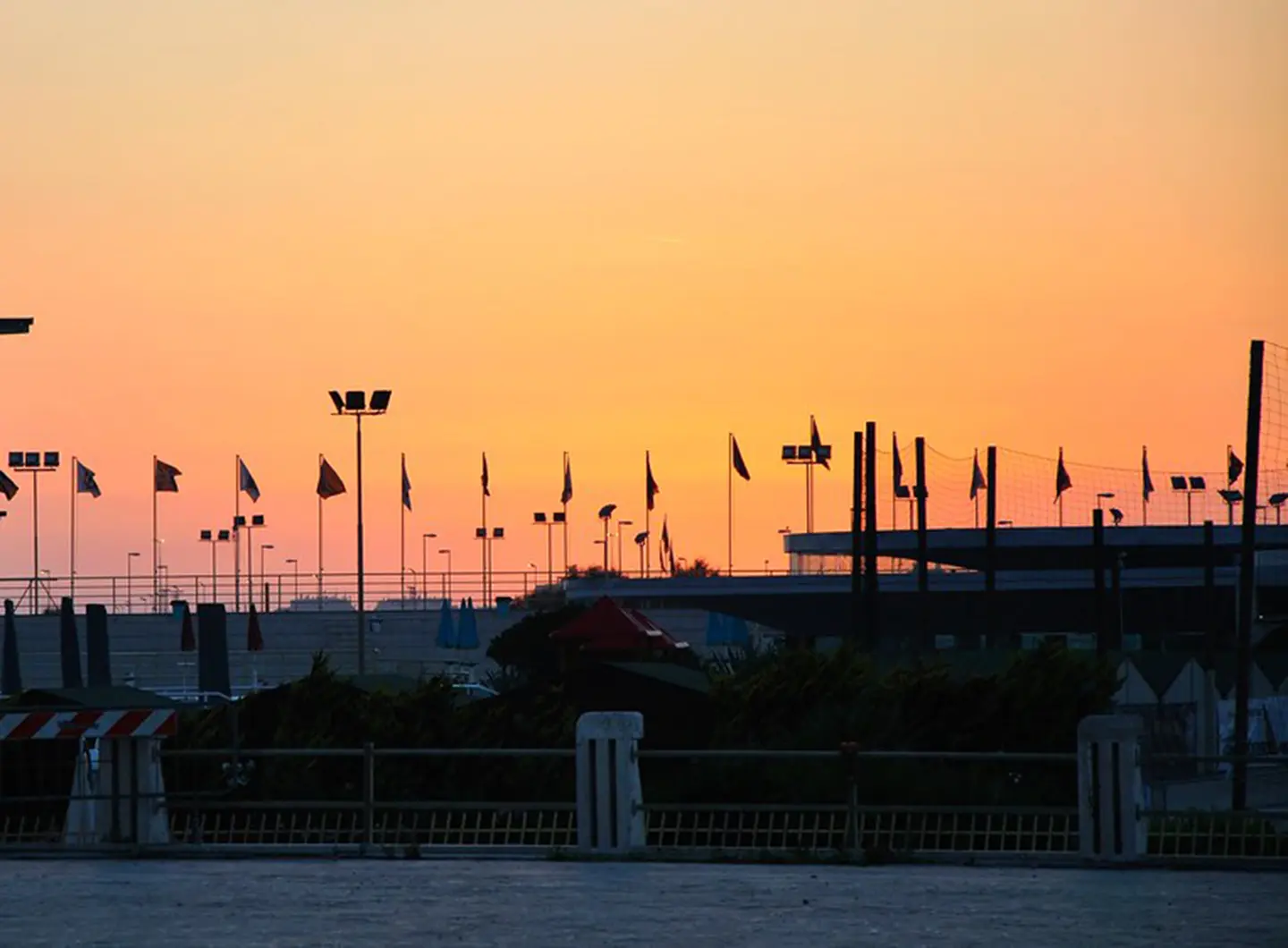
Kursaal, designed by Attilio Lapadula with Pier Luigi Nervi, Ostia - Ph. Paolo Mori
Terrazza Mascagni, designed by Giovanni Paciarelli, Livorno
Grand Hotel dei Castelli, Sestri Levante
Da Luigi ai Faraglioni, Capri, a progressive structure without a single architect - Courtesy of Luigi ai Faraglioni
Student House, designed by Aldo Rossi, unbuilt project - Courtesy of Mutual Art


Rotonda a Mare
Enrico Cardelli and Piercarlo Ceccarelli, Senigallia, 1933
The Rotonda a Mare is one of the absolute icons of the Adriatic. Built in the 1930s and joined to the land by a pier, the circular structure seems to float on the sea. Its minimalist, suspended image has made it one of the most recognizable architectures of the Italian seaside landscape.
Kursaal
Attilio Lapadula with Pier Luigi Nervi, Ostia, 1950
After World War II, the sea became the stage for modern optimism. The Kursaal in Ostia, designed by Attilio Lapadula with the collaboration of Pier Luigi Nervi, combines structural innovation with a recreational purpose. The famous diving tower and the suspended restaurant tell the story of a period when technology and experimentation were placed in the service of the culture of leisure. Nervi’s famous pavilion and reinforced concrete structures transformed the waterfront into a modern space, in an optimistic vision of reconstruction.
Terrazza Mascagni
Giovanni Paciarelli, Livorno, early 1900s
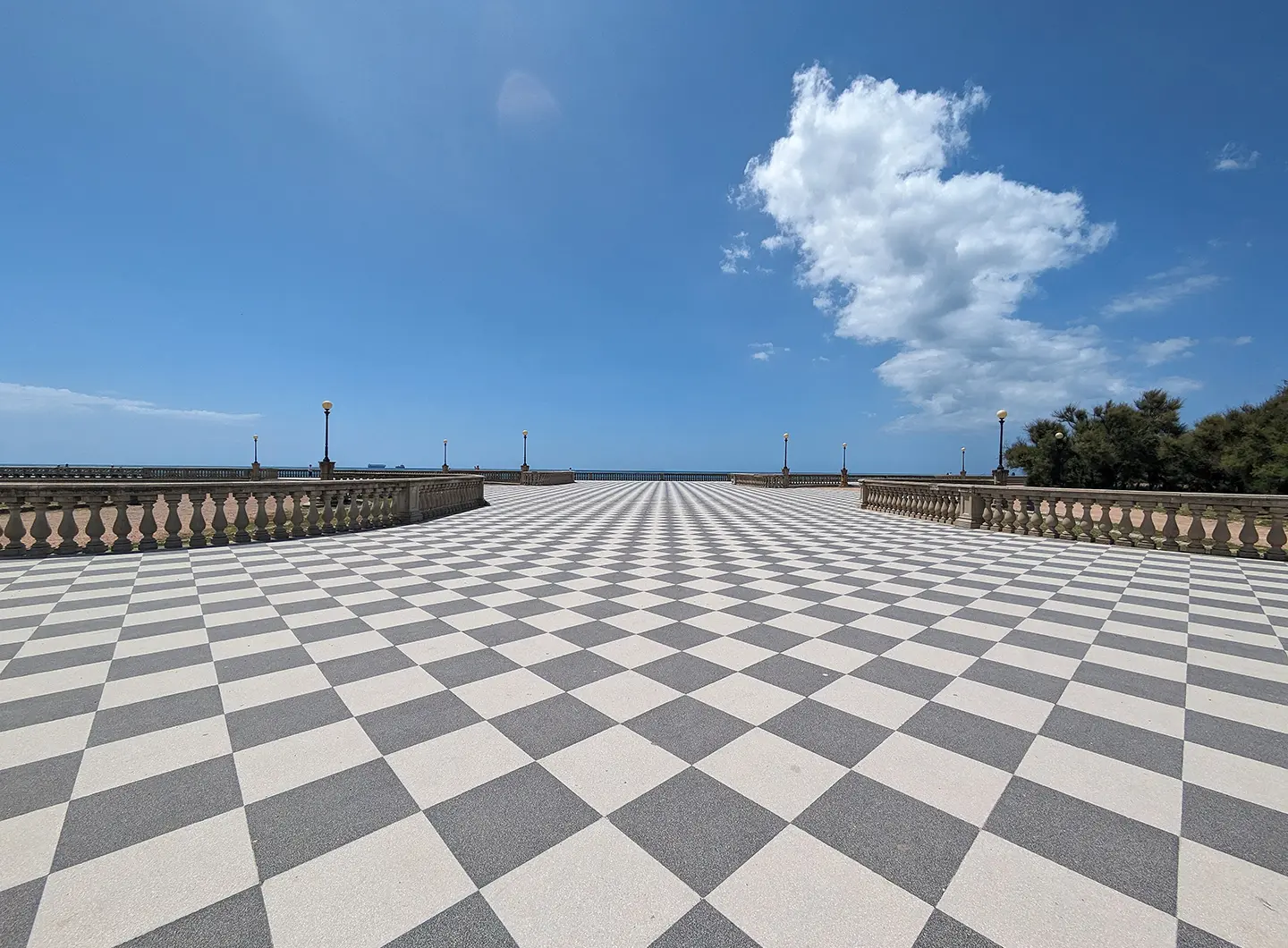
More than a bathing establishment, the Terrazza Mascagni is a large public space overlooking the sea. The famous checkerboard pavement and the balustrade jutting toward the horizon transform the promenade into an urban device capable of staging the landscape. A place where architecture becomes collective experience and the boundary between city and the horizon dissolves completely.
Grand Hotel dei Castelli
Sestri Levante, 60s, adaptations on a pre-existing historic structure
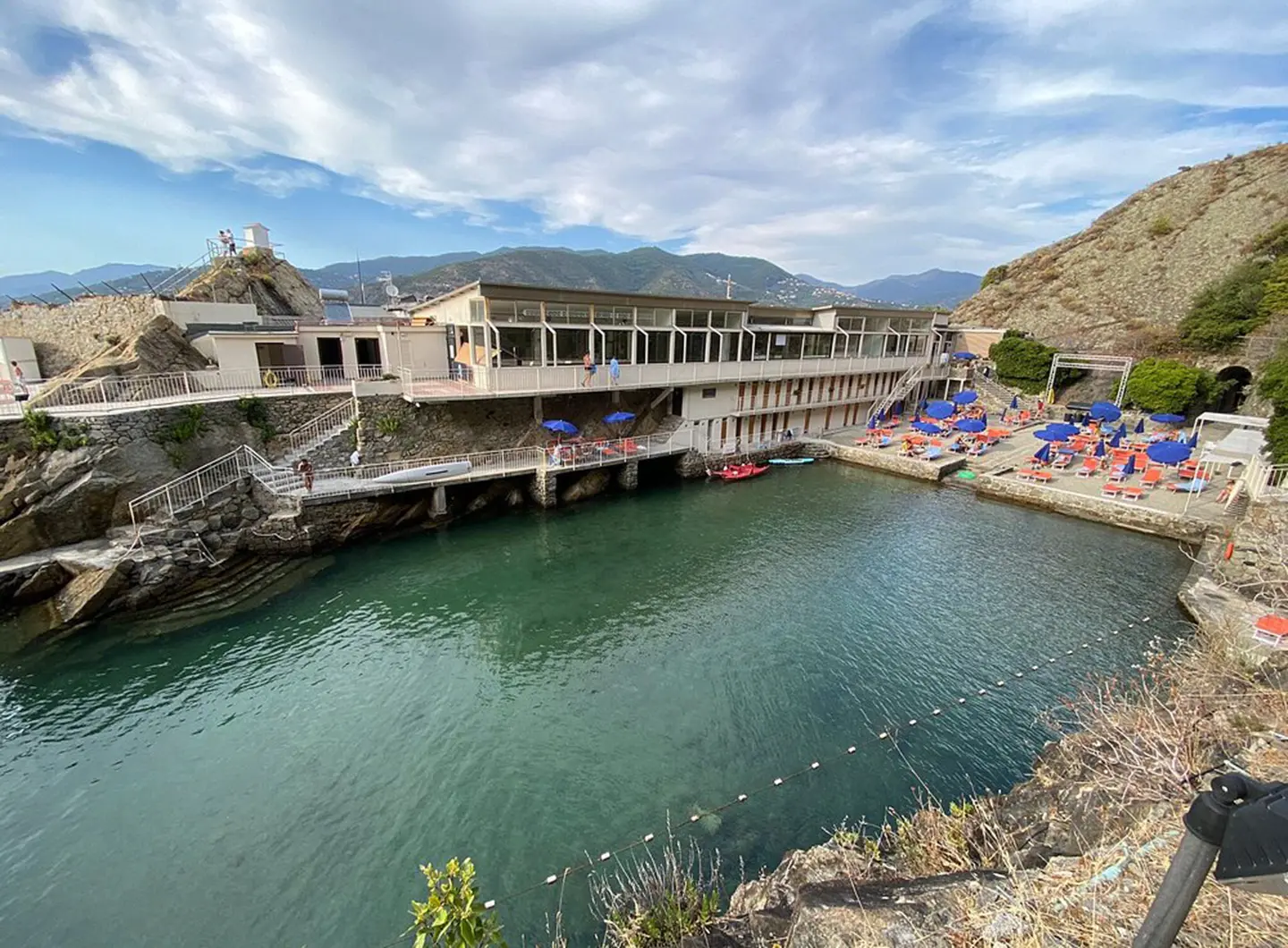
On the Ligurian coast, the relationship with the sea takes different forms. Here it is not the beaches that define the landscape, but headlands, terraces and platforms hewn out of the rock. The Grand Hotel dei Castelli interprets these vertical, fragmented landforms by blending architecture and nature in a balance that characterizes much of the Riviera. Converting an ancient fortified system into a panoramic hotel, here the views and paths build a sort of “architecture of emptiness” with the landscape dominant.
Colonia Olivetti
Annibale Fiocchi, Marina di Massa, 1948
Between the pine forest and the coast, the Colonia Olivetti in Marina di Massa offers a more human and measured vision of holidays. Built in the post-war period for the children of the company’s employees, it reflects the social culture promoted by Adriano Olivetti: pavilions immersed in the pine forest alternating with open spaces, concern for the landscape and quality of living become tools for growth and sharing. This is the expression of Olivetti’s industrial culture applied to leisure.
Da Luigi ai Faraglioni
Capri, 1936, a progressive structure without a single architect
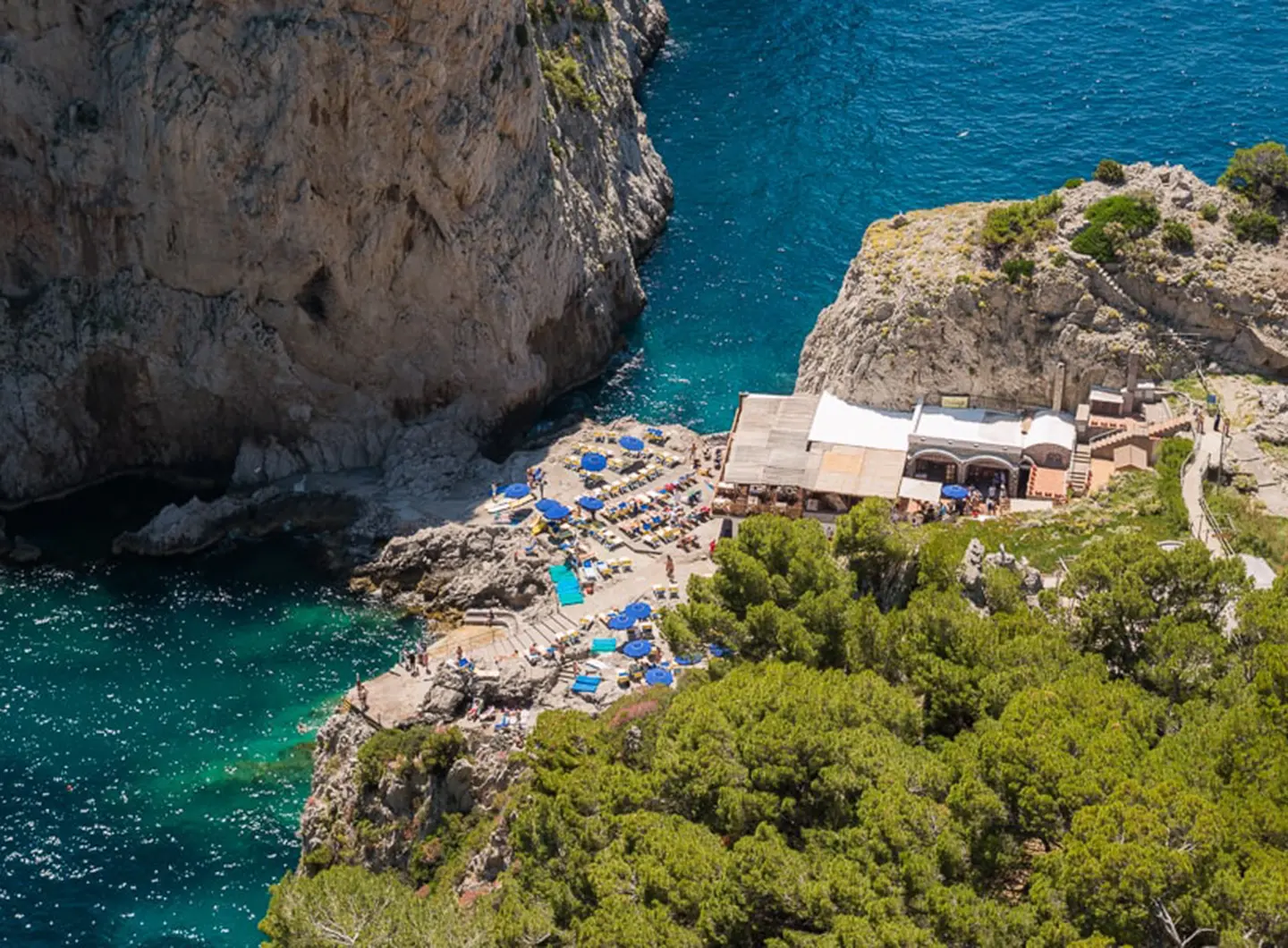
At the foot of the sea stacks of Capri, the complex is divided into platforms and terraces carved into the rock. Founded in 1936 and developed by successive additions, it is one of the most recognizable versions of Italian seaside architecture. More than a building, it is a lightweight system adapted to the island’s extreme geography, where the project coincides with the use of the landscape. It has become an integral part of the Mediterranean imagery of leisure. Here the project coincides with the landscape, and bathing becomes an almost primordial experience of the Mediterranean.
Seaside Buildings/ Aldo Rossi’s Student House
1980-83, unbuilt project
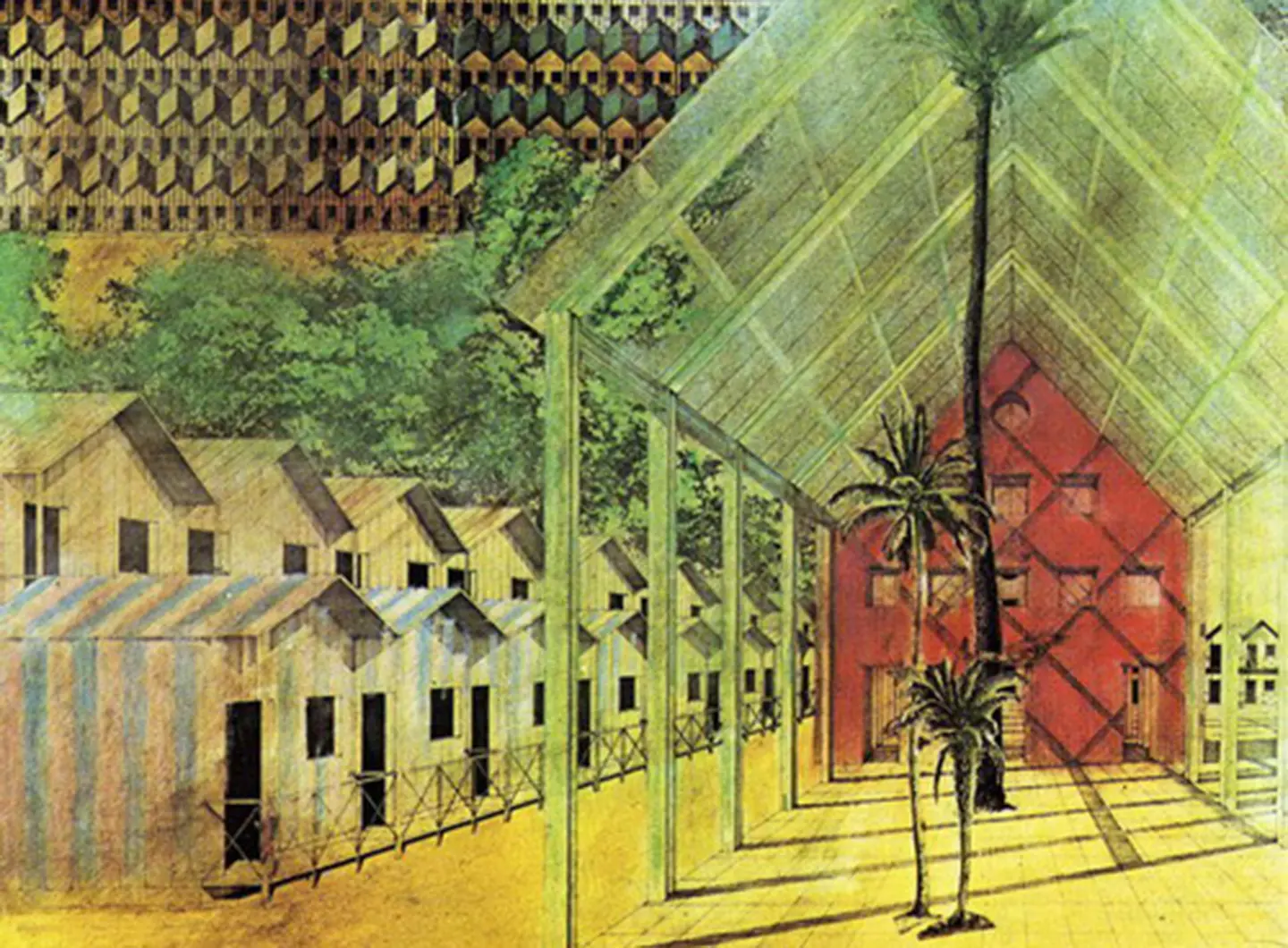
We conclude this journey with Aldo Rossi’s research into the theme of the city and memory. In the early 1980s, these led to a series of projects reinterpreting the imagery of seaside architecture. They included the Student House for Venice and the so-called “Seaside Buildings”: abstract structures consisting of towers, piers and primary volumes that recall the structures on Elba, lighthouses and coastal infrastructure. Not functional buildings, but archetypes that condense the mental form of the seaside as a collective and theatrical place.
15 June 2026
Share