

 Stories





From Luigi Moretti at the 1960 Triennale to Patrik Schumacher’s manifesto and the works of Zaha Hadid: a history of architecture that entrusts form to algorithms, and which seeks to evolve from a method into a style
Parasite architecture: occupying the interstices of the metropolis
Text by
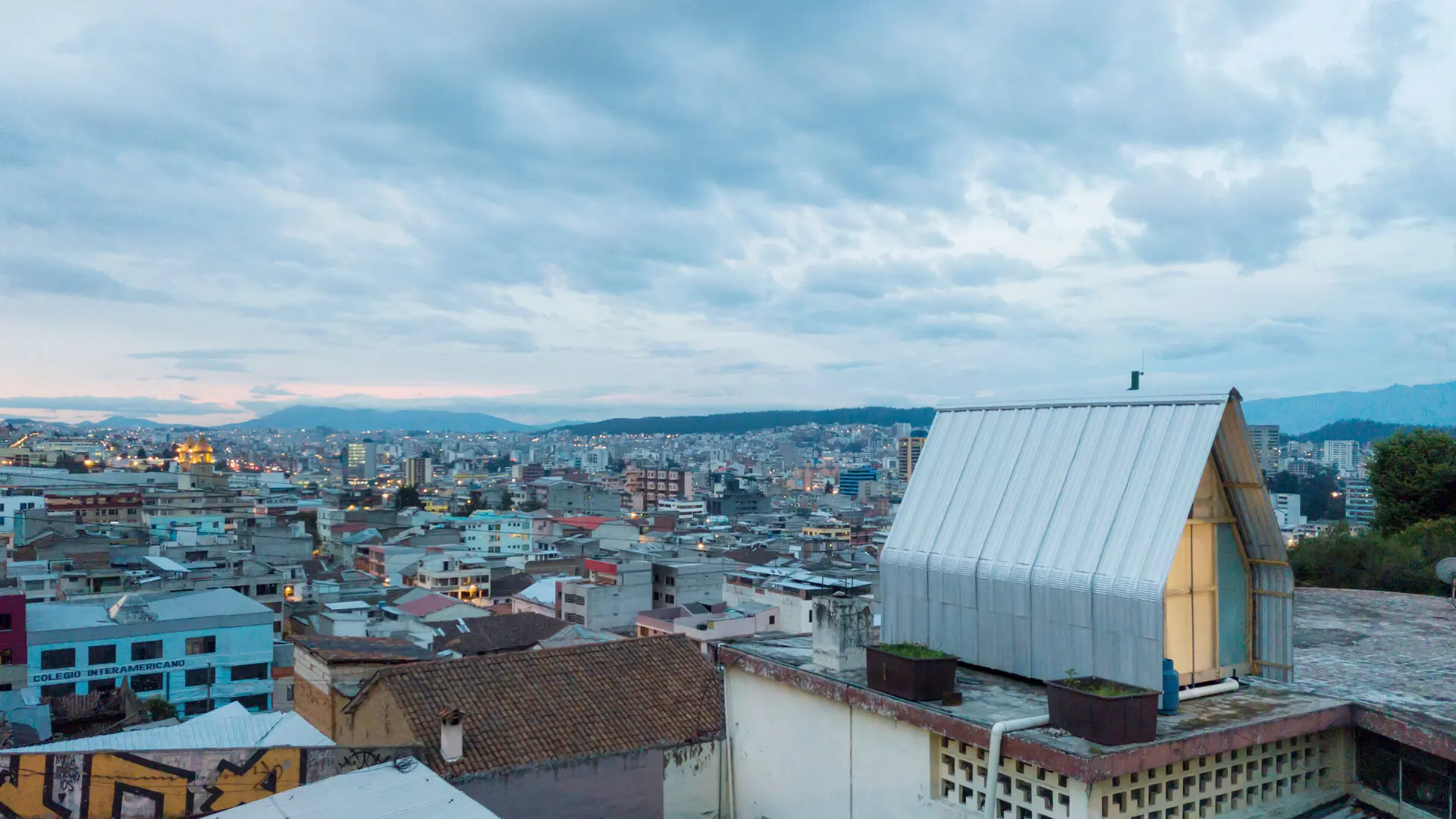
Casa Parásito by El Sindicato Arquitectura in Quito (2019): a 12 m² micro-home on the roof of an existing building, connected to its water and electricity supplies – Ph. Andrés Villota
What is meant by parasite architecture, where does the term come from, and how has a practice that began as a radical utopia become a concrete strategy for the contemporary city?
Superfetations, bubbles, capsules, grafts, excrescences: the term ‘parasite architecture’ encompasses everything that hangs from, nests in or is attached to. Not a movement or a style, but a broad, cross-cutting category, encompassing structures that are not dependent on vacant plots, but on already occupied spaces to cling to: an existing building or infrastructure that acts as a ‘host.’
The term derives from biology: just as in nature a parasite is an organism that freeloads off another, so in architecture it depends on the host for its existence, borrowing surfaces, systems and resources.
The characteristics of parasite architecture
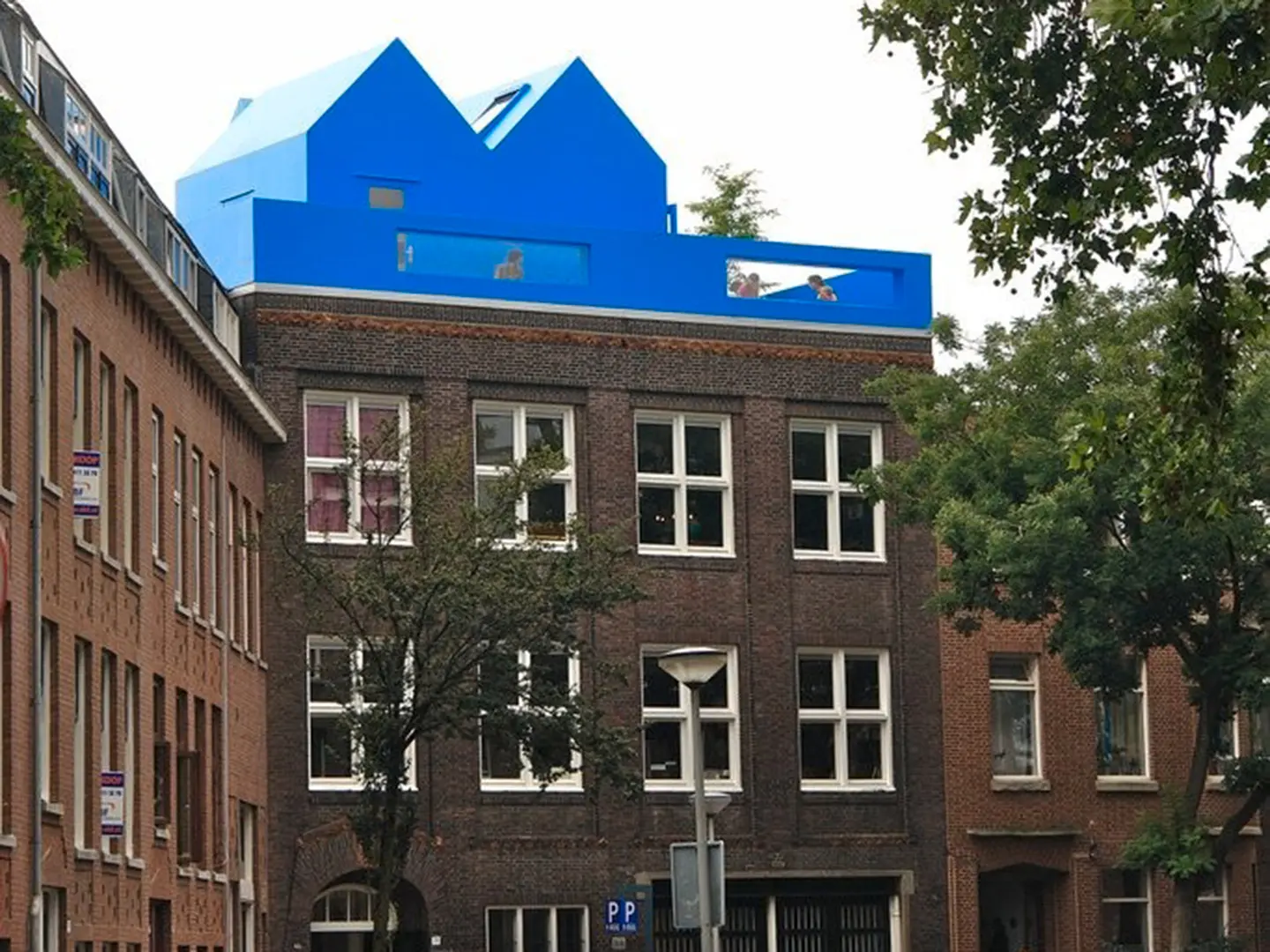
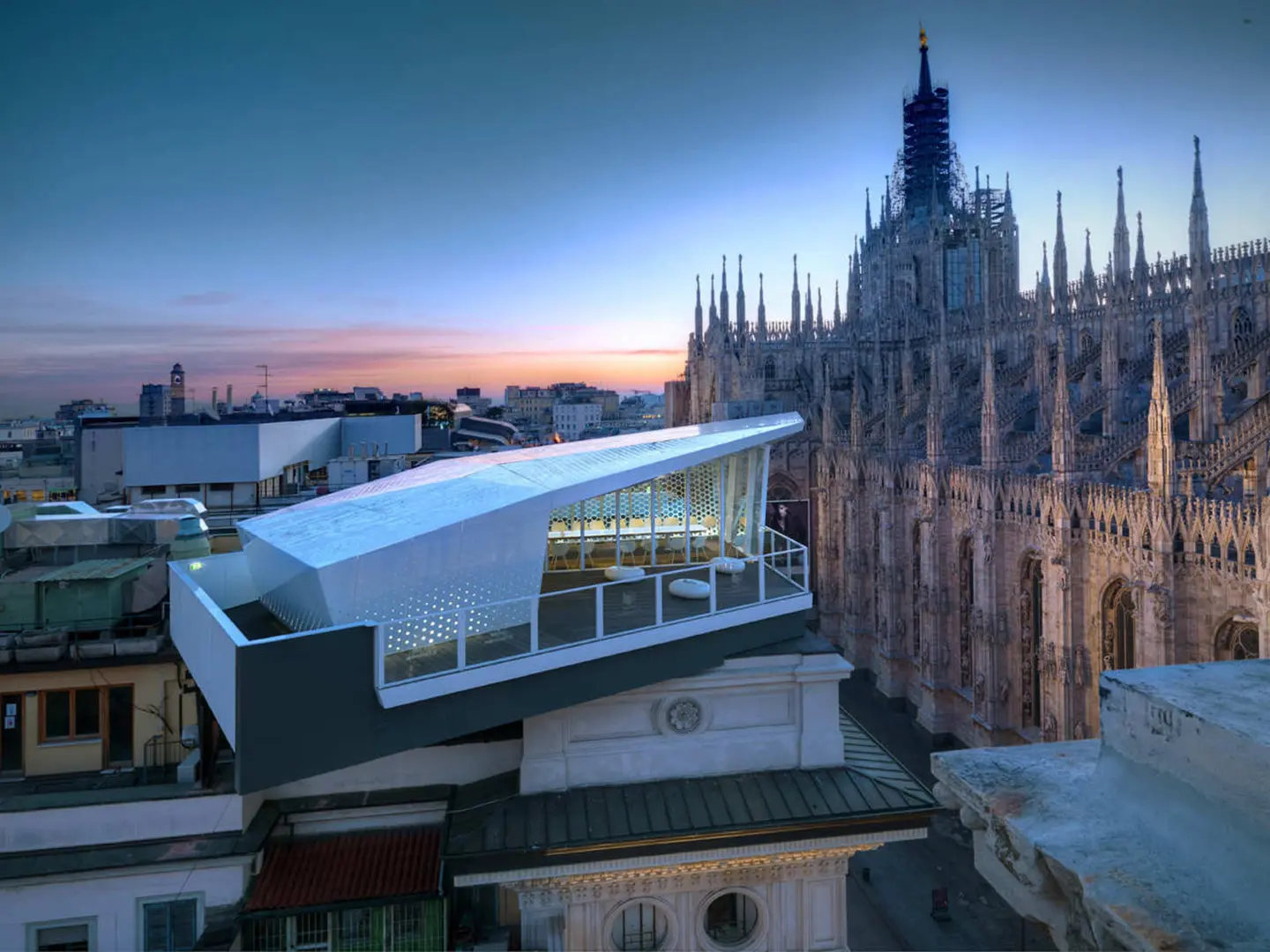
Two formal traits make it recognisable. The first is the clear distinction from its host: the parasite stands out from the building to which it is attached in terms of form, colour and material; the parasite must make itself noticed. The second is its positioning in unusual spaces, the exploitation of interstices: these organisms settle in confined and undefined areas – on rooftops, in narrow passageways between two buildings, directly on façades - often perceived as an intrusion into public space.
These characteristics bear out its aims. Parasite architecture is first and foremost a tool for urban densification and recycling: rather than consuming new land, it optimises and reuses ‘what is already there.’ It is also a response to concrete social and economic problems, from unaffordable rents to a lack of shelter. And finally, it is a critical act: it tangibly denounces the privatisation of land, the scarcity of services and the speculative transformations of the city.
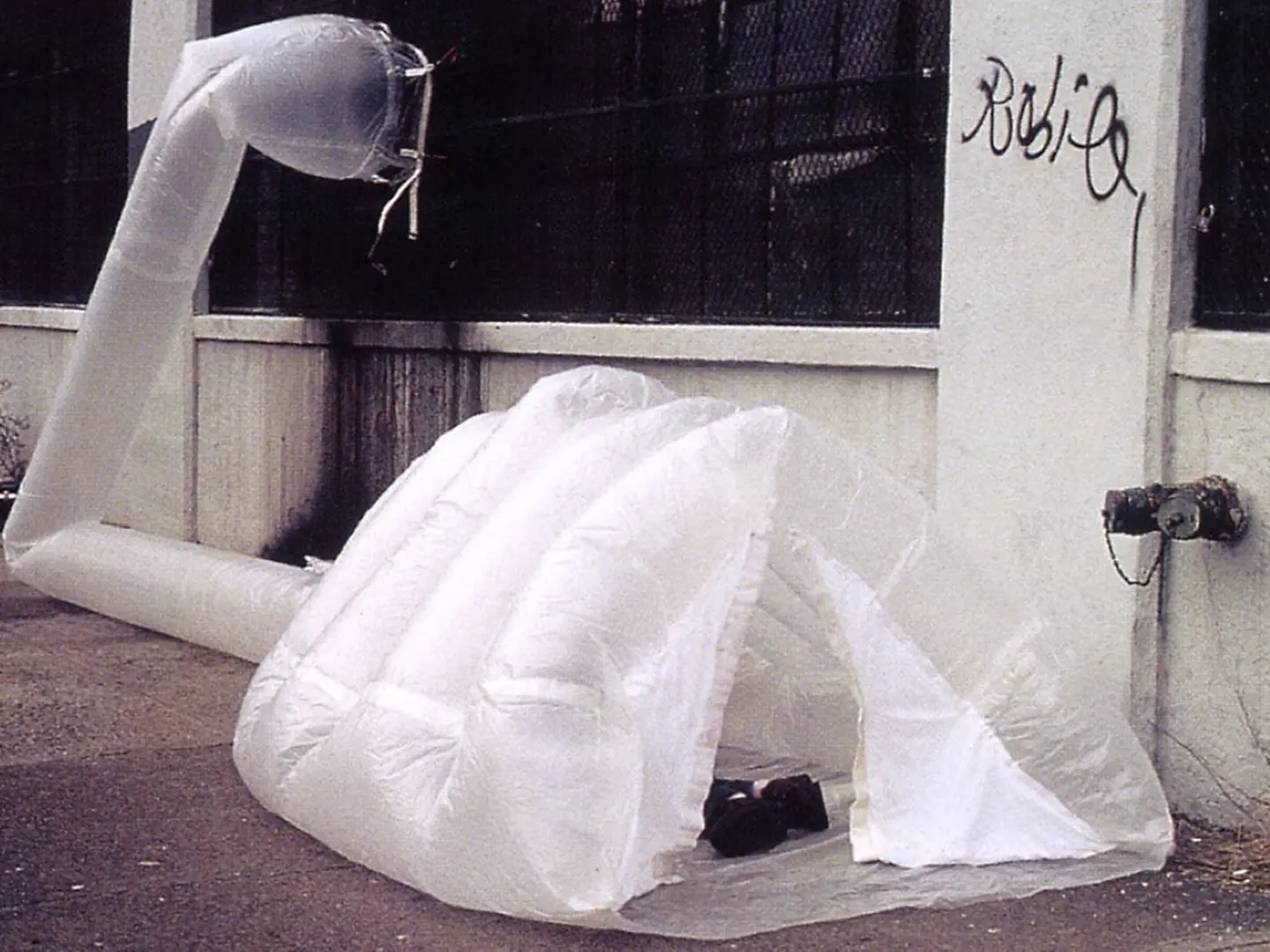
paraSITE, Michael Rakowitz’s inflatable shelters for the homeless, attached to the ventilation shafts of buildings - Ph. Michael Rakowitz
The origins: the radical utopias of the 1960s
In architectural discourse, the idea of parasite architecture took shape in the post-war period, when - as a critique of architectural functionalism - a number of utopian architects began to theorise about mobile units, nomadic buildings and capsules.
Way back in the early 1960s, Pascal Häusermann envisioned modular housing units anchored to the surfaces of buildings, in stark formal contrast to the built environment. In his 1968 Manifesto of Insurrectionary Architecture, the French architect Jean-Louis Chanéac was probably the first to use the term Parasite Cells, mass-producible plastic volumes to be attached to the façades of large residential complexes. Chanéac describes them as “acts of anarcho-architecture,” “pirate” architecture that gives residents back the freedom to adapt their own homes. The response was immediate - in 1970, Marcel Lachat attached a “pirate bubble” to the façade of a council block in Geneva.
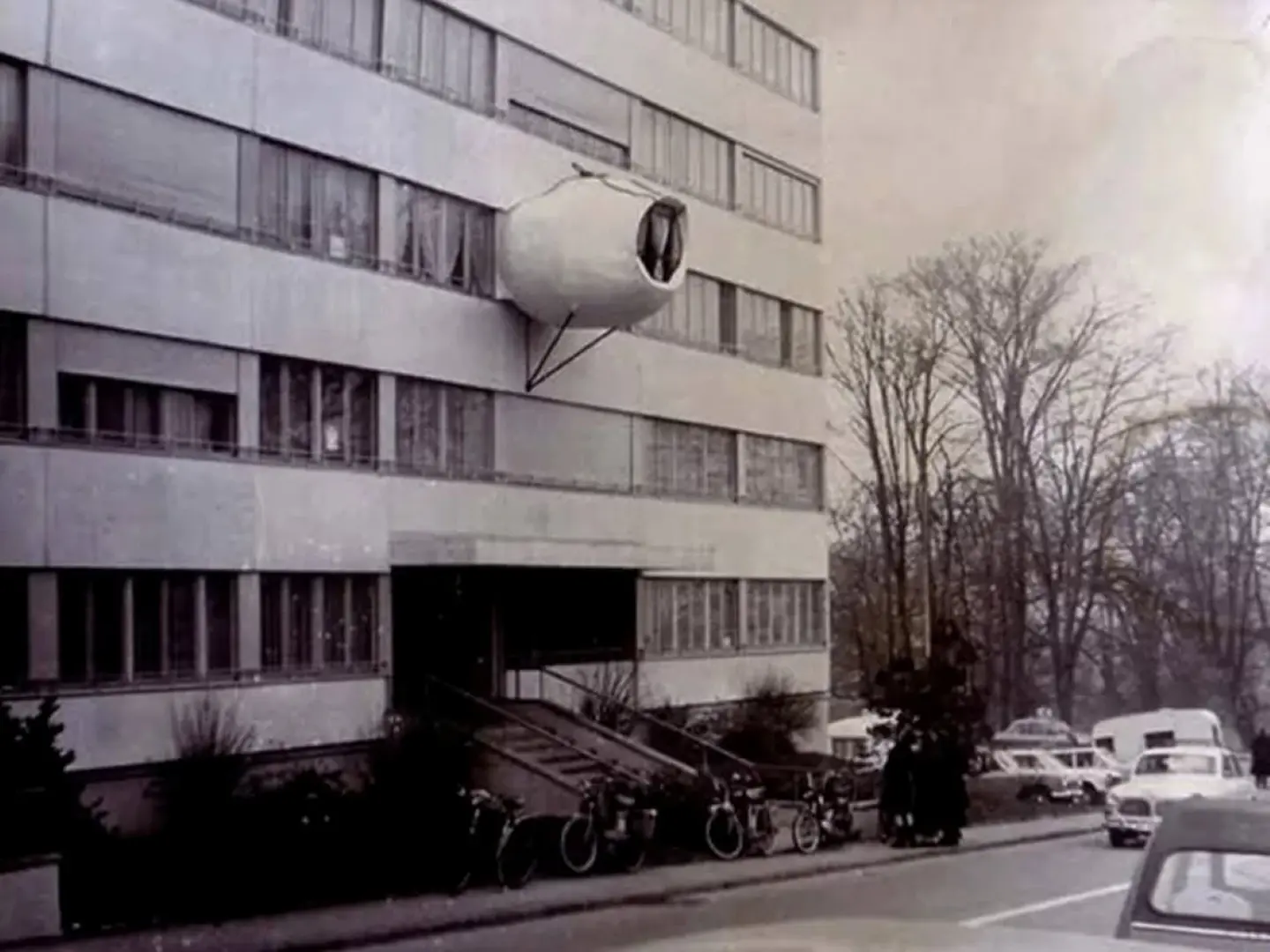
Jean-Louis Chanéac’s “Cellules Parasites”, 1968: plastic structures attached to the façades of buildings - Ph. Jean-Louis Chanéac
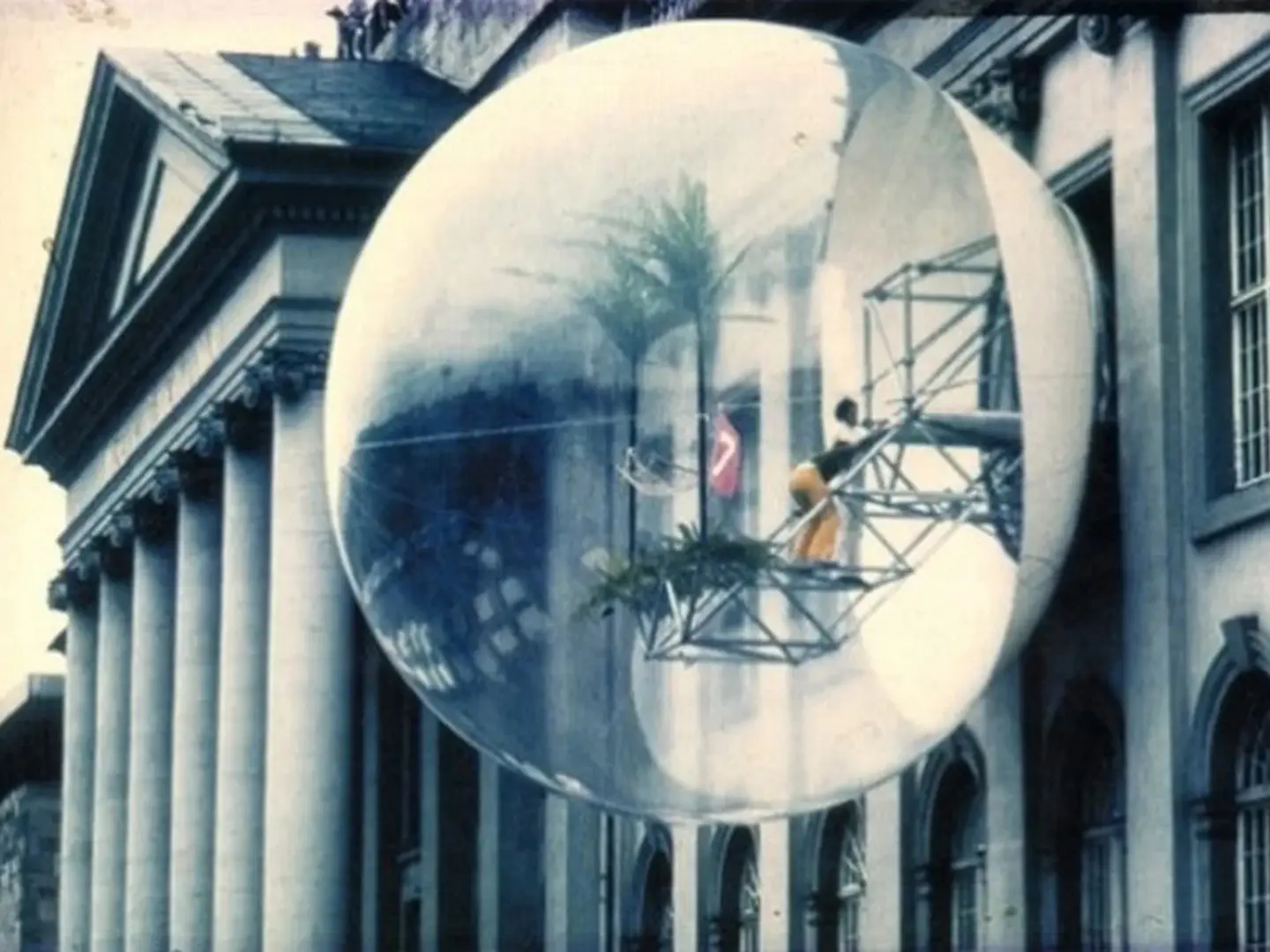
The visual manifesto of this trend, however, is a work by the Viennese collective Haus-Rucker-Co: Oase No. 7, created in 1972 for Documenta 5 in Kassel. A large transparent PVC sphere, eight metres in diameter, inflated with air and supported by a steel ring, protruded from the neoclassical façade of the Fridericianum Museum; it was accessed via a ramp leading directly from a window, propelling the visitor into a bubble suspended in mid-air, furnished like an artificial oasis with plastic palm trees and a hammock. Conceived as “an emergency exit to another world,” the work is a textbook example: it clings to a pre-existing institution, exploiting its access and structure, yet stands out completely in terms of form and material, becoming a critique of the closed and confined spaces of bourgeois life.
Read also: Hostile architecture: problem or solution?
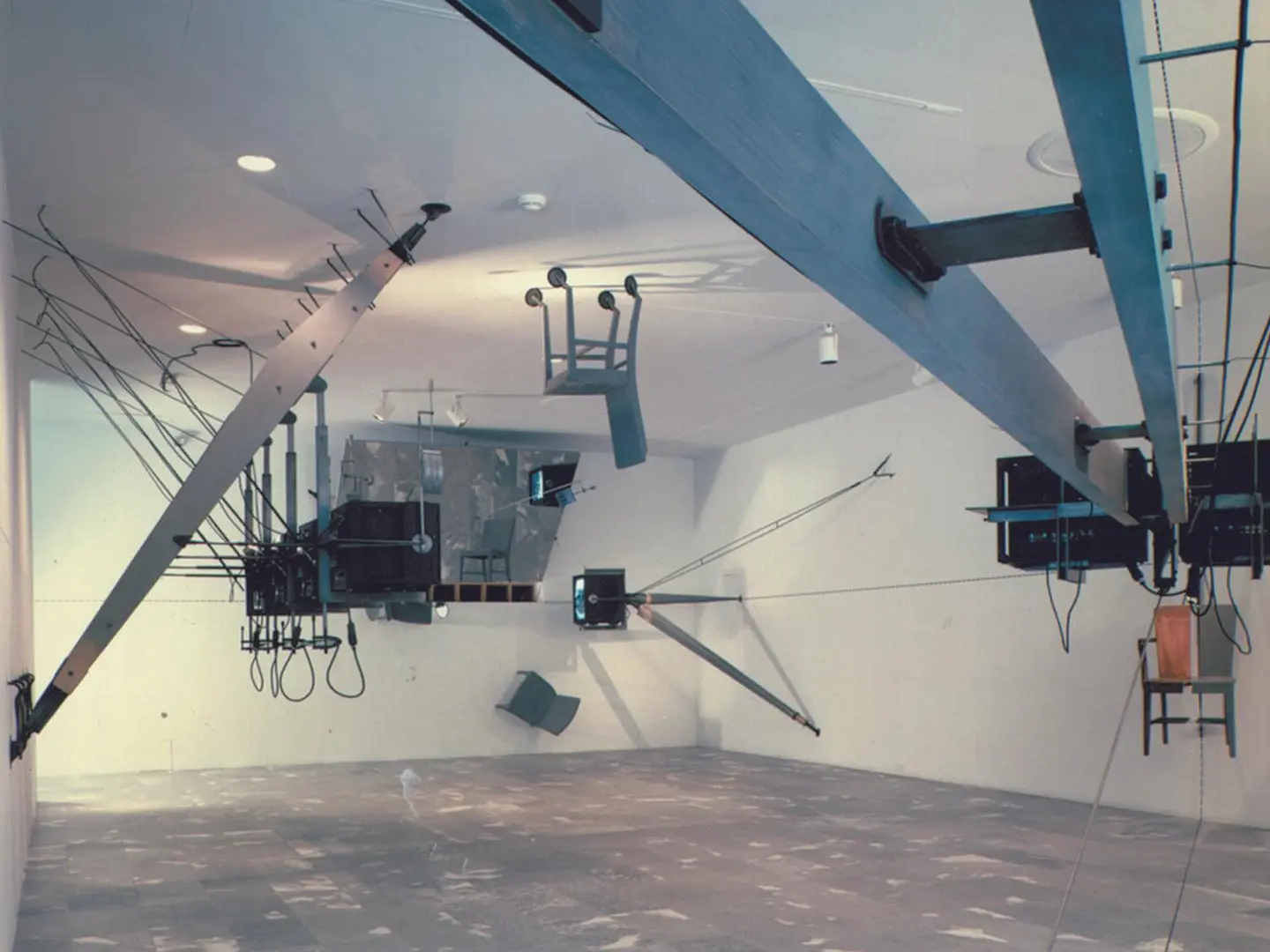
Para-Site by Diller + Scofidio, MoMA, New York, 1989: monitors broadcast live footage of the flow of visitors through the museum – Credits Diller Scofidio + Renfro (DS+R)
From term to concept: Serres and Diller + Scofidio
Whilst the 1960s established the practice, the 1980s defined the concept. The turning point was Michel Serres’s essay Le Parasite (1980), which established the parasite as a fully-fledged theoretical figure. It was this text that inspired the installation Para-Site, presented by Diller + Scofidio at MoMA in New York in the summer of 1989, as part of the Projects 17 series.
Oase No. 7 by Haus-Rucker-Co, Documenta 5, Kassel, 1972: the inflatable sphere protrudes from the façade of the Fridericianum Museum – Courtesy of Haus-Rucker-Co
The work explores the three meanings of ‘parasite’ theorised by Serres. The biological form: rather than using walls and floors, the structures physically cling to the building – hanging off it, wedging themselves in, attaching themselves to the glass with suction cups – drawing structural and electrical sustenance from it. The social form: like a sycophant flattering its host, the work ‘flatters’ the museum by literally putting it on display. Lastly, the technological form, understood as interference: a series of cameras filmed the building’s key points live – the revolving doors at the entrance, the escalators, the Sculpture Garden – relaying the images onto monitors wedged into the gallery. The result is a reversal: the museum, from a neutral container that directs the gaze, becomes the observed object itself. The parasite thus establishes itself as a critical entity in relation to its host.