

 Exhibitions






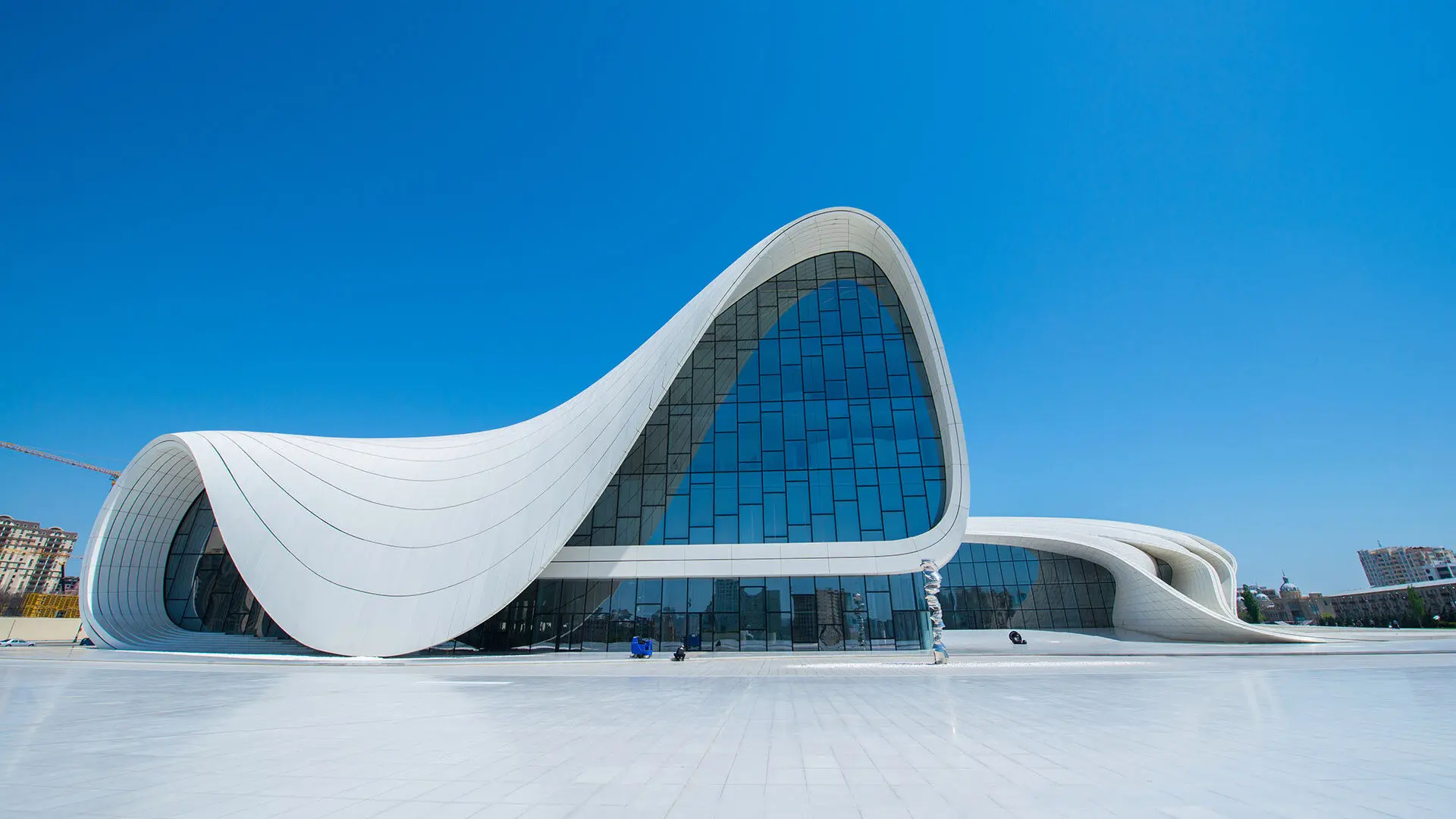
From Luigi Moretti at the 1960 Triennale to Patrik Schumacher’s manifesto and the works of Zaha Hadid: a history of architecture that entrusts form to algorithms, and which seeks to evolve from a method into a style
Milan Design (Eco) System Annual Report, Salone del Mobile.Milano
Data, analyses, and economic, urban, and cultural impacts. The second edition of Salone del Mobile’s “Milan Design (Eco) System” Annual Report takes stock of a unique event and consolidates the fair’s role as the driving force behind Milan as the international capital of design
320 pages, 87 charts and figures, contributions from 31 experts, 22 public and private data holders and 861 field observations carried out during the week of design. The second “Milan Design (Eco) System” Annual Report updates the analysis of the impact Salone del Mobile.Milano and the week of design have on the city, on the occasion of the 2025 edition of the event – the first to promote a permanent scientific observatory.
Among the most outstanding figures, the value of the event and connected activities hit €278 million (+15% compared to 2023, year of the Euroluce Biennale), digital spending saw a record annual increase (+18%), the share of international visitors was at an all-time high, the subway system reached the year’s peak use (+39.6% above average), and accommodation rates recorded a marked increase. Impact was driven by the 2025 edition of Salone, which attracted 302,786 attendees from 160 countries to the event’s exhibition centre. Meanwhile, in the city, the week of design programme saw a 25.7% increase in initiatives compared to 2024, totalling 1,667 events, as recorded in the City of Milan’s MDW 2025 survey.
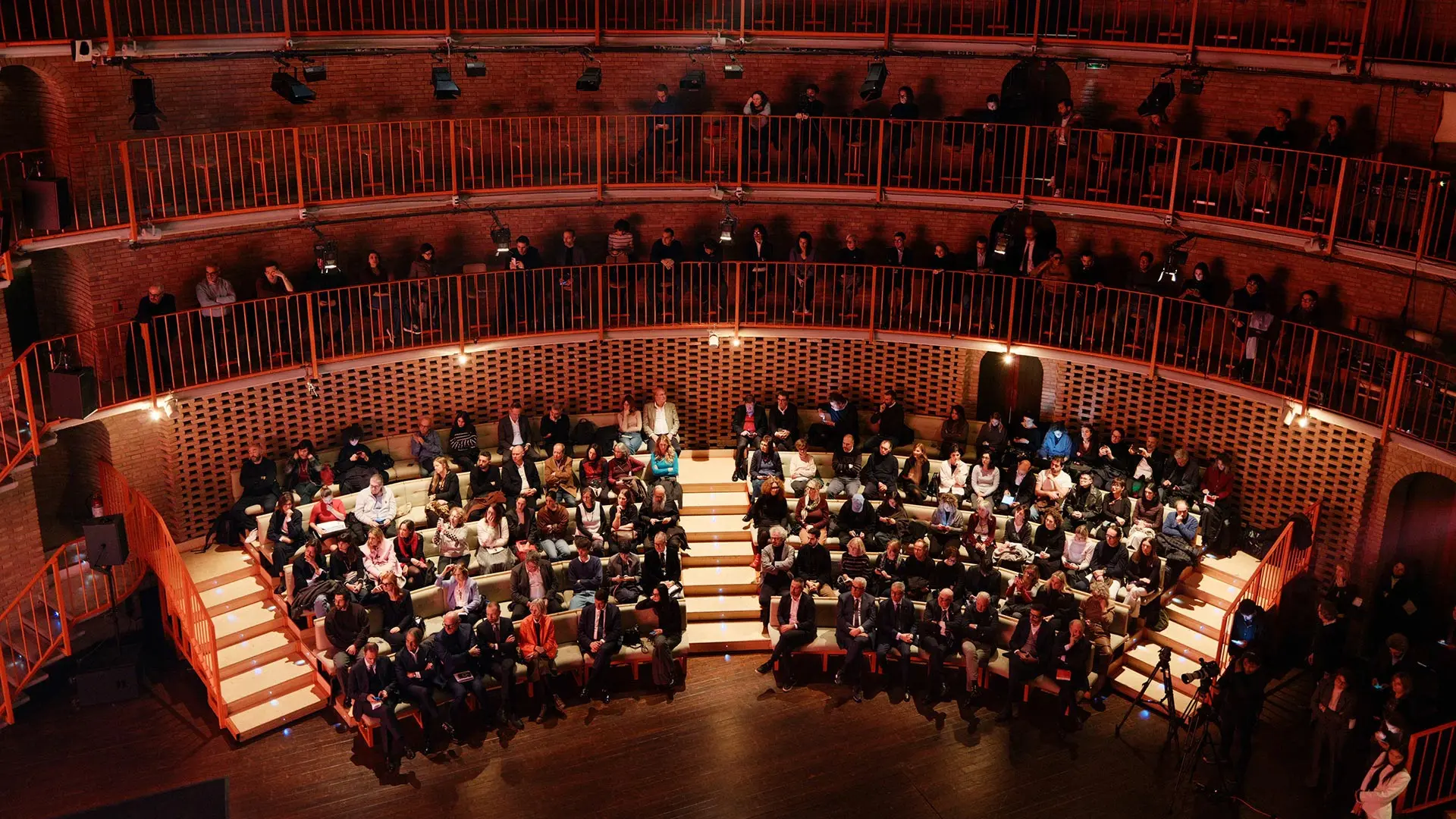
Presented at the Piccolo Teatro Melato in Milan, Milan Design (Eco) System 2025 – in six sections alternating data and reflections – explores six key themes: from the Salone model to the Milan Design System, to the impact on the territory of a unique event. This second year of research features two main innovations. The first is the integration of mobile network data, developed thanks to the scientific partnership between Salone and Fastweb + Vodafone, which for the first time allowed for an objective and comparative analysis of urban flows during the week of design. The second is the structured focus on design’s cultural production: a network of 533 organisations including museums, archives, galleries, publishers, universities, and schools – painting the picture of a widespread cultural infrastructure represented systematically for the first time. Again this year, the research benefits from the scientific contribution of the Design Department at the Politecnico di Milano, to which Salone entrusted the interpretation of the urban dimension, curated by Susanna Legrenzi, Press & Communication Strategy Advisor, Salone del Mobile.Milano.
“We have chosen to transform Salone into a permanent observatory”, says Maria Porro, President of Salone del Mobile.Milano, “because reading and interpreting data is the only way we can govern the economic, cultural, and urban impact of a phenomenon that reshapes Milan every April. The figures recorded in 2025 confirm that Salone is a major international attraction for a growing ecosystem – becoming more international, more complex, and increasingly intertwined with the local area, its resources, and its services. For Salone, this commitment has a single goal: to provide the city with a tool for awareness and collaboration for the future. From this perspective, the Annual Report is a shared laboratory that, each year, provides an increasingly accurate document of how Milan changes when the culture of design becomes an economic, urban, and cultural infrastructure. But, above all, it reminds us that managing this complexity requires shared responsibility between institutions, businesses, districts, universities and design schools, professional communities, and citizens”.
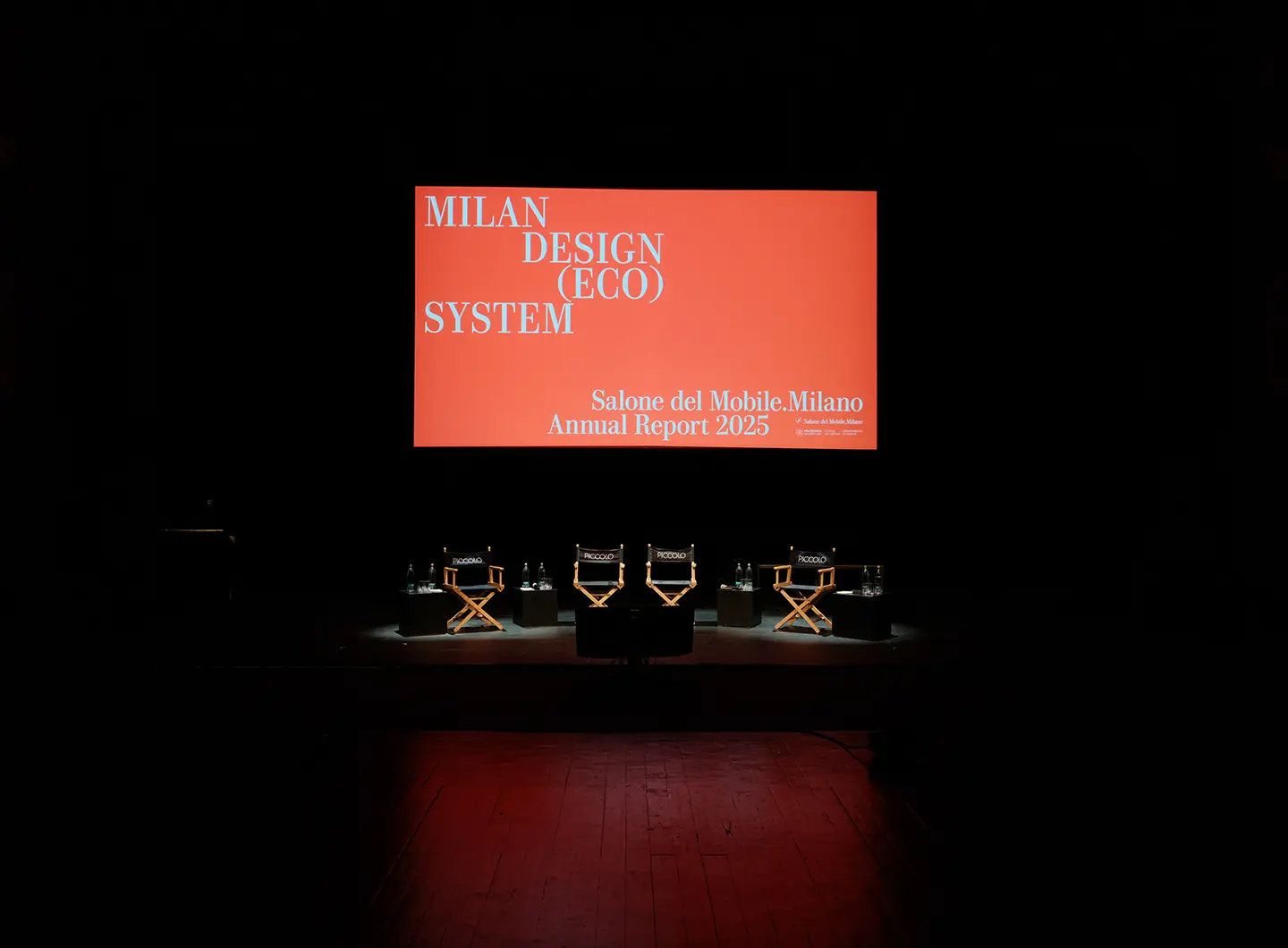
Milan Design (Eco) System Presentation of Annual Report 2025, Piccolo Teatro Studio Melato, Milan, Theater stage
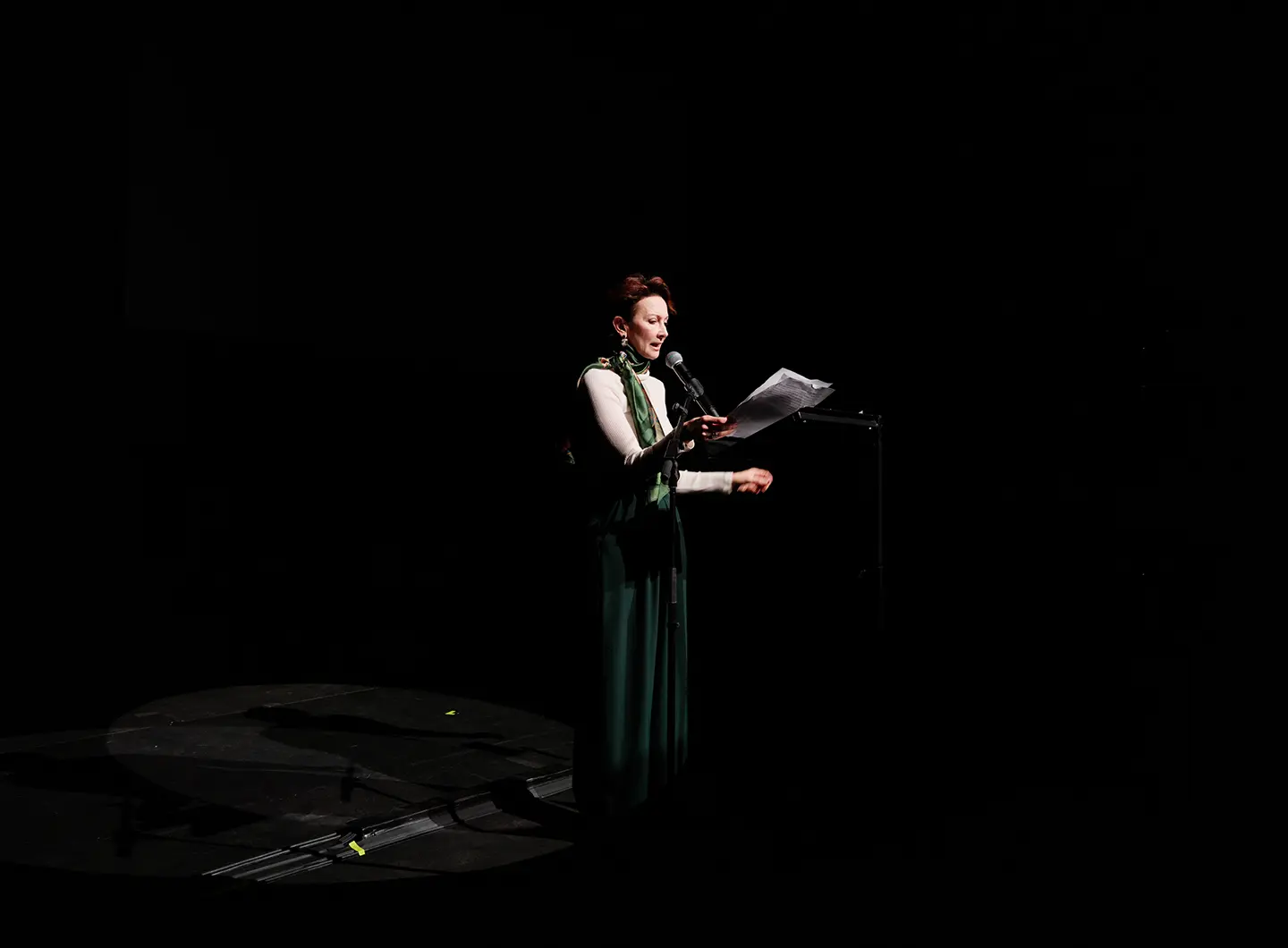
Milan Design (Eco) System Presentation of Annual Report 2025, Pia Lanciotti's reading of Tomás Maldonado, Arte e artefatti, intervista Hans Ulrich Obrist, Feltrinelli 2010, curated by the Piccolo Teatro

Milan Design (Eco) System Presentation of Annual Report 2025, Massimiliano Tarantino, Director, Fondazione Giangiacomo Feltrinelli

Milan Design (Eco) System Presentation of Annual Report 2025. From left: Francesco Zurlo, Full Professor, Politecnico di Milano; Alessia Cappello, Councillor for Economic Development and Labour Policies, with responsibility for Fashion and Design, Municipality of Milan; Maria Porro, President, Salone del Mobile.Milano; Gianpiero Carocci Silvagni, Head of Innovative Solutions Marketing, Vodafone Business
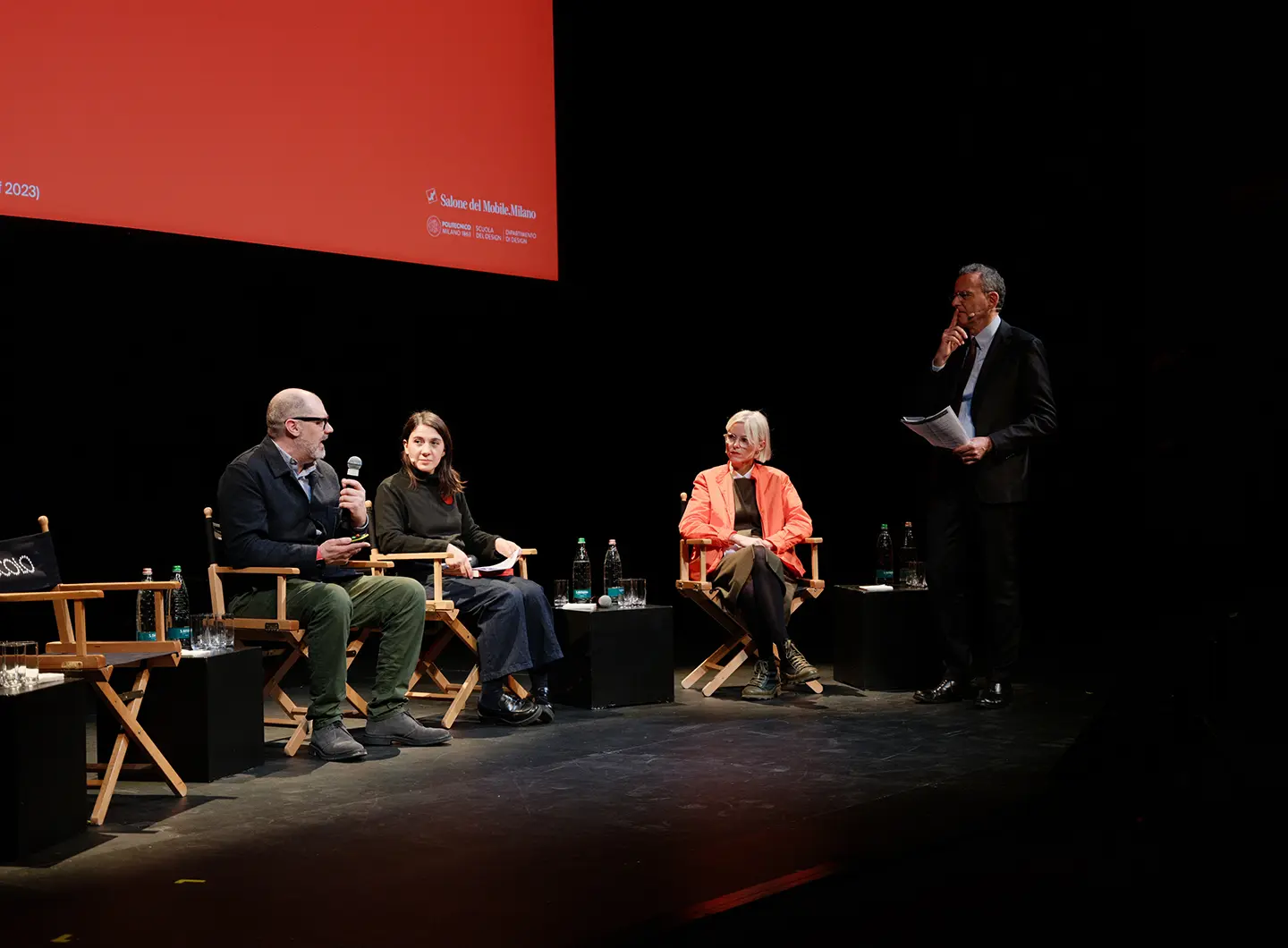
Milan Design (Eco) System Presentation of Annual Report 2025. From left: Massimo Bianchini, Associate Professor, Politecnico di Milano; Maria Porro, President, Salone del Mobile.Milano; Angela Rui, Curator, Researcher, Head of Master of Arts, IED Milano; Andrea Cabrini, Editor-in-chief Class CNBC
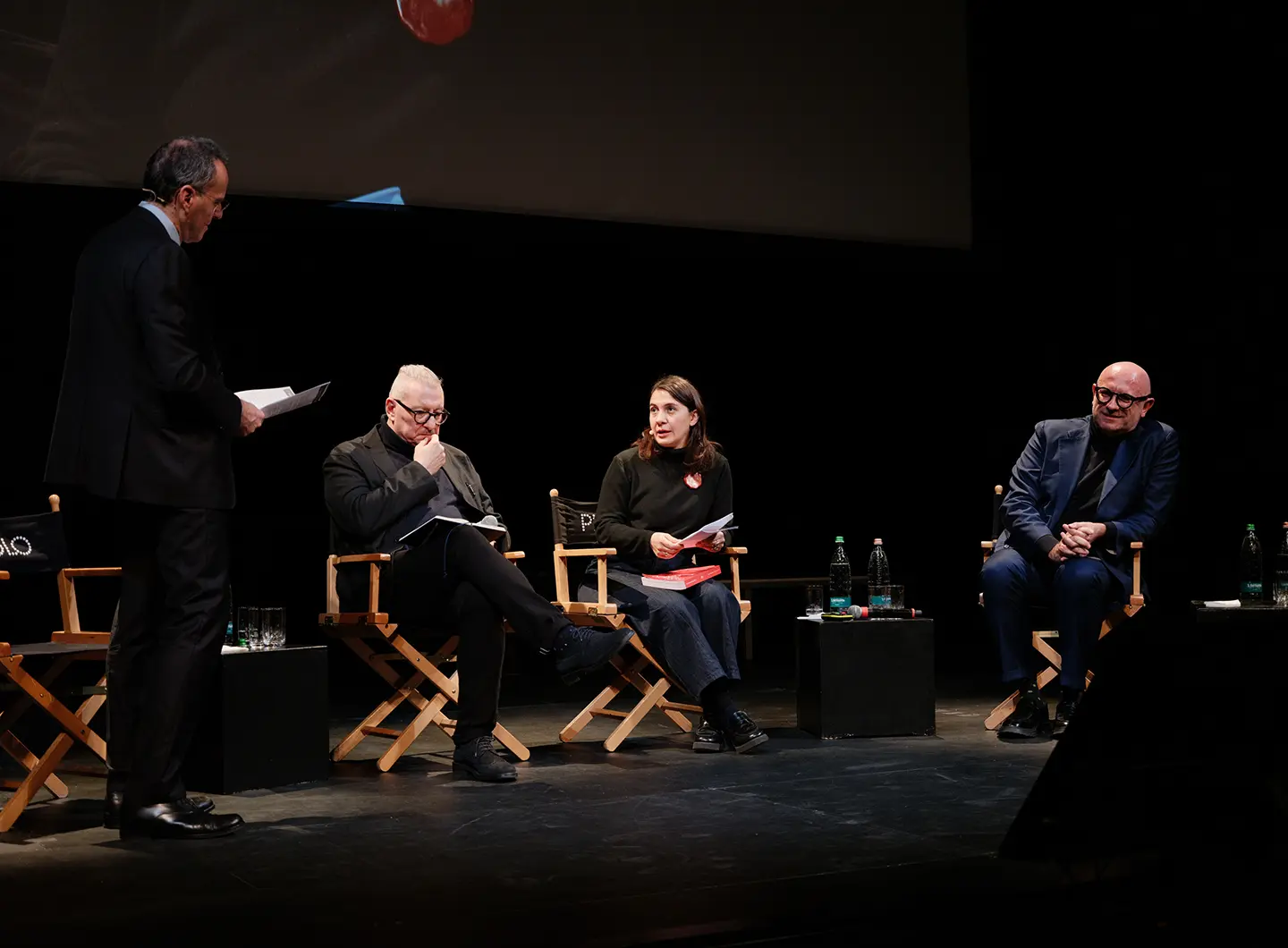
Milan Design (Eco) System Presentation of Annual Report 2025. From left: Andrea Cabrini, Editor-in-chief Class CNBC; Stefano Maffei, Full Professor, Politecnico di Milano; Maria Porro, President, Salone del Mobile.Milano; Andrea Rurale, Director of the Intensive Program of Arts Market and Finance and Monitor Art Market, Bocconi University
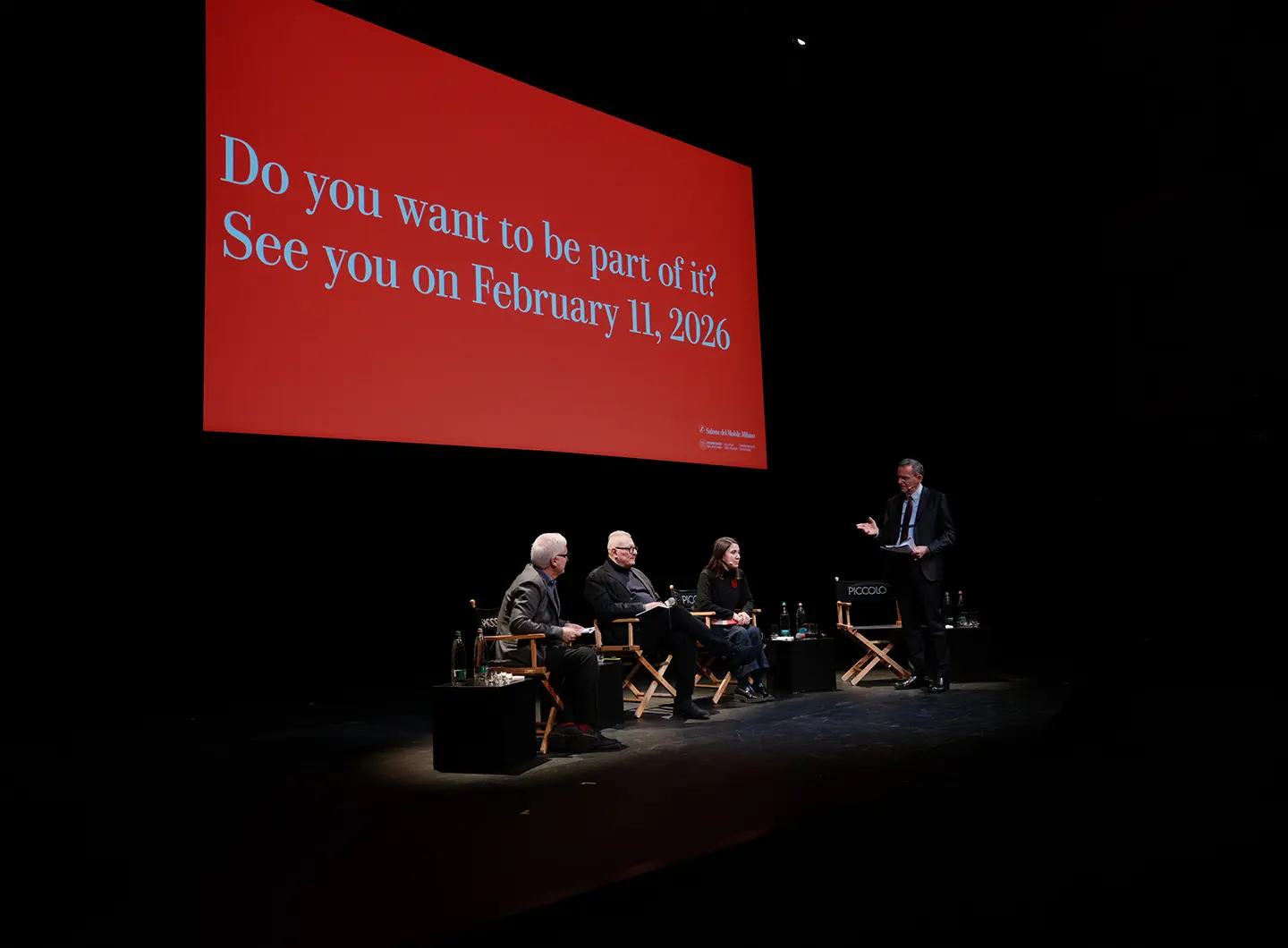
Milan Design (Eco) System Presentation of Annual Report 2025. From left: Francesco Zurlo, Full Professor, Politecnico di Milano; Stefano Maffei, Full Professor, Politecnico di Milano; Maria Porro, President, Salone del Mobile.Milano; Andrea Cabrini, Editor-in-chief Class CNBC
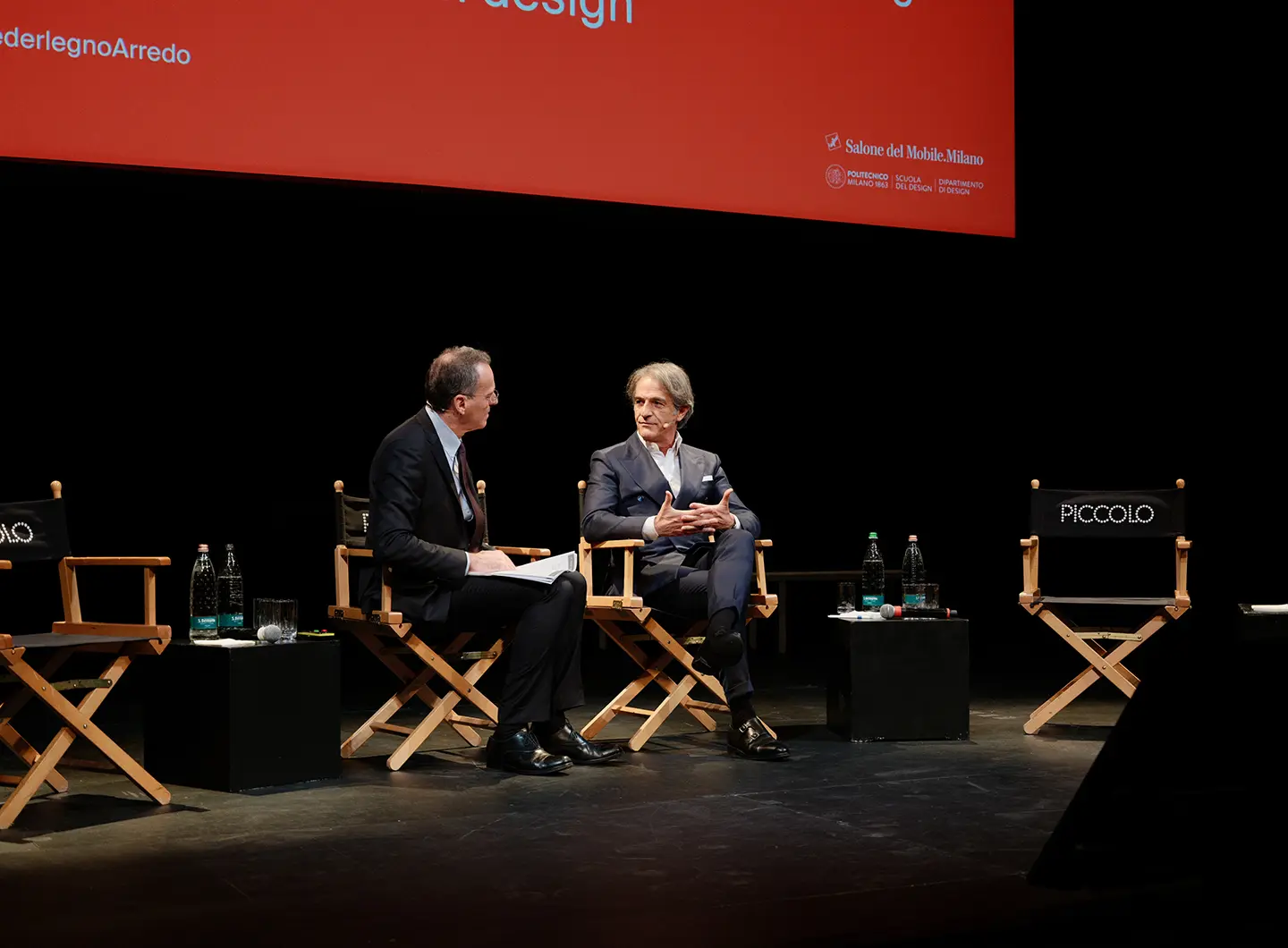
Milan Design (Eco) System Presentation of Annual Report 2025. From left: Andrea Cabrini, Editor-in-chief Class CNBC and Co-editor-in-chief MF; Claudio Feltrin, President, FederlegnoArredo
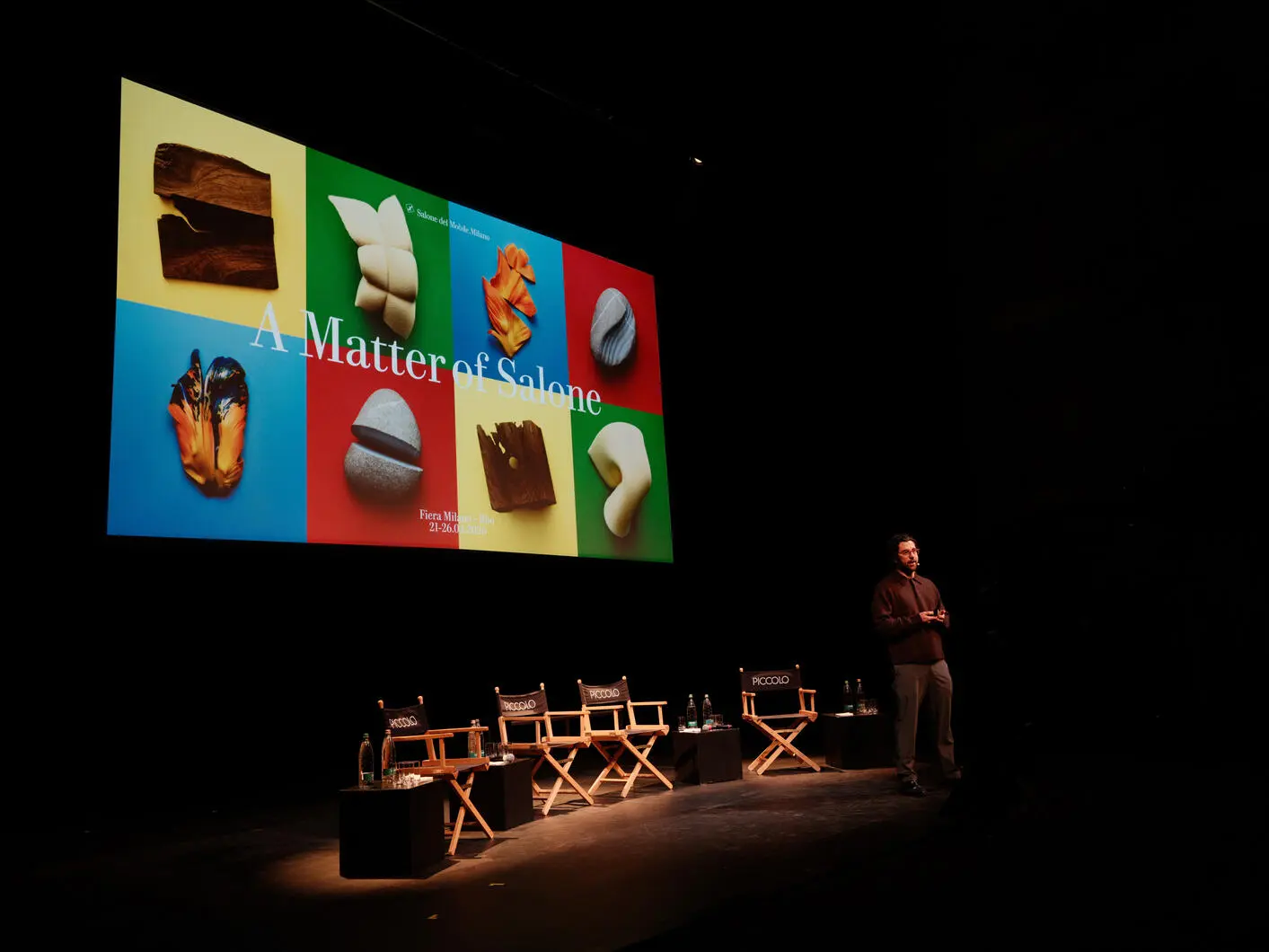
Presentation Communication Campaign Salone del Mobile.Milano 2026, Federico Grassi, Co-Founder and Creative Director, Motel409


Alongside the economic and urban dimensions, this edition of the Report also devotes considerable space to the Salone model as a permanent infrastructure serving the design industry, with 2,103 exhibitors from 37 countries, over 1.3 million matchmaking interactions, a 93% intention to return among exhibitors, and significant growth in student attendance over the past two years (+32.4%). The 2025 Cultural Programme has further strengthened this model, with four major exhibition projects conceived as design-intensive cultural devices, capable of blending economics and imagination, research and business. These events were joined by the Drafting Futures talks and roundtables, and by the first edition of The Euroluce International Lighting Forum – led by Annalisa Rosso, Editorial Director & Cultural Events Advisor of Salone del Mobile.Milano – which strengthened Salone’s role as an international platform for dialogue and for building professional communities around the themes of the future.
“In Milan”, says Mayor Giuseppe Sala, “design is the nerve centre of a strategically important productive, economic, social, and cultural ecosystem that, year after year, thanks to the stimuli provided by Salone del Mobile, becomes increasingly aware of its own potential and explores new ones. The Design (Eco) System 2025 Report presents this with its signature seriousness, analysing the impact the world of design has on our city, starting with the factors and initiatives that animate Milan during Salone Week”.
Attilio Fontana, President of the Lombardy Region, comments: “The second Design (Eco) System 2025 Annual Report marks a new phase of collaboration between the Design Department of Politecnico di Milano, Salone del Mobile di Milano, and the Lombardy Region. The Report draws on data and the ongoing dialogue between those who foster design culture and Lombardy’s manufacturing capacity. It is precisely in these connections that we recognise the strength of our ecosystem, as a solid network that generates innovation. Presenting, studying, and monitoring this system means supporting a path of constant improvement. We embrace this Report as a tool that guides new development and consolidates an internationally recognised model of excellence. A model that proudly belongs to the entire Lombardy community”.
For the second edition of the Report, Salone del Mobile.Milano – following its collaboration on Es Devlin’s Library of Light – returned to Giangiacomo Feltrinelli Editore, choosing as the introduction to the second edition of Milan Design (Eco) System an excerpt from Tomás Maldonado’s interview with Hans Ulrich Obrist, published in 2010 in the volume Arte & Artefatti. A tribute to a free and radical thinker, to the value of the crossover between disciplines and languages, and to the deeper, still relevant, meaning of design culture.
The 2025 edition of the Report brings together institutional remarks by Giuseppe Sala, Mayor of Milan, and Attilio Fontana, President of The Lombardy Region as well as contributions by: Alessia Cappello, Councillor for Economic Development and Labour Policies, with responsibility for Fashion and Design, Municipality of Milan; Tommaso Sacchi, Councillor for Culture, Municipality of Milan; Debora Massari, Councillor for Tourism, Territorial Marketing and Fashion, Lombardy Region; and the Regional Observatory of Tourism and Attractiveness of the Lombardy Region. It includes an essay by Giampiero Bosoni, design historian and professor at the Politecnico di Milano, and reflections by the ten content leaders who led the 2025 “Milan Design Ecosystem” Roundtables: Annibale D’Elia, Director of Urban Economy, Fashion and Design, Department of Economic Development and Labour Policies, Municipality of Milan; Chiara Rostagno, Deputy Director General of the Pinacoteca di Brera and Braidense National Library; Marco Sammicheli, Curator of Design, Fashion, and Crafts at Triennale Milano – Director, Museum of Italian Design; Isabella Inti, Founder of Temporiuso.net – Co-Director of M-US-T Master Temporary Uses, Politecnico di Milano; Domenico Sturabotti, Director, Symbola Foundation; Angela Rui, Curator, Researcher, Head of MA Programmes at IED Milano; Stefano Micelli, Professor, Ca’ Foscari University of Venice; Walter Mariotti, Editorial Director, Domus; Andrea Rurale, Director of the Intensive Program of Arts Market and Finance and Monitor Art Market, Bocconi University; Luciano Galimberti, President, ADI.
On the occasion of the public presentation of the second edition, the meeting was opened by a reading of a Maldonado excerpt by Pia Lanciotti, curated by the Piccolo Teatro, and a conversation with Massimiliano Tarantino, director of the Giangiacomo Feltrinelli Foundation, which preserves the Maldonado Fund.