10 pieces revive 70s design. Boasting new comfort and creative freedom

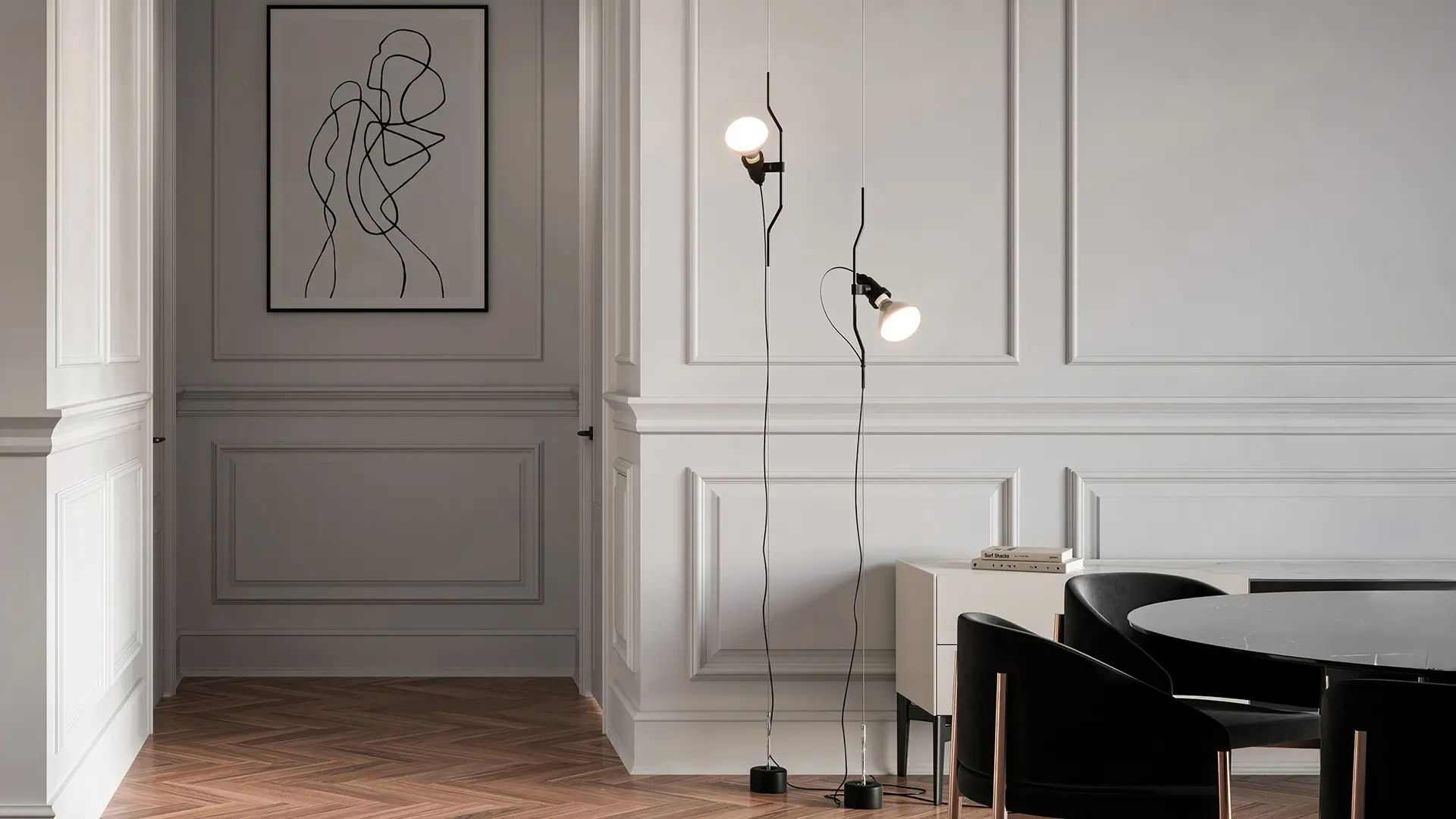
Parentesi lamp, designed by Achille Castiglioni and Pio Manzù, Flos

Parentesi lamp, designed by Achille Castiglioni and Pio Manzù, Flos

The Parentesi and Boalum lamps, the Camaleonda and Strips sofas, the Joe armchair and other furnishing pieces. All revolutionary, channelling functionality and freedom and engendering infinite combinations for a new collective imagination

Boalum lamp, designed by Livio Castiglioni and Gianfranco Frattini, Artemide, 1970 

Described in Domus as “a serpent of infinite light” when it first appeared, it has bewitched generations ever since with its timeless design and sinuous diffused light effects. It works as a floor lamp, table lamp or wall lamp, thanks to the sinuousness that renders its shape unique, lending itself to any and every sort of environment. Made from translucid flexible PVC, reinforced with resin end caps, it contains small torpedo-shaped bulbs connected to one another in series and separated by an insulating sphere. The various elements can be connected together in sets of up to four, for a total length of approximately 8 metres, and can be rolled up and twisted as desired without fear of breakage. Produced until 1983, and slightly modified in 1999, it now comes in a high-efficiency LED version. It is conserved in numerous design museum collections, including the Italian Design Museum at Triennale Milano. 
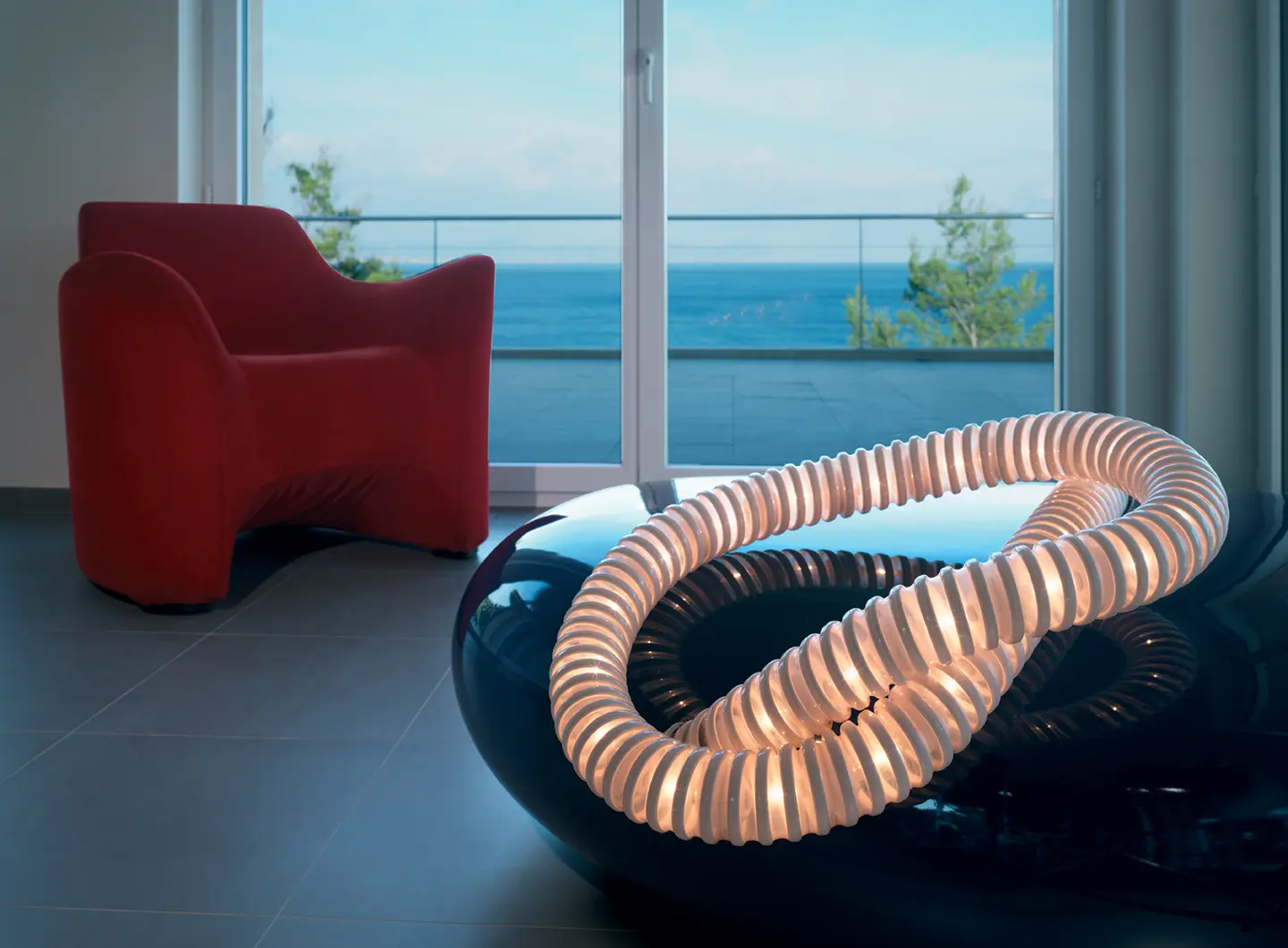
Boalum lamp, designed by Livio Castiglioni and Gianfranco Frattini, Artemide

Boalum lamp, designed by Livio Castiglioni and Gianfranco Frattini, Artemide

Camaleonda sofa, designed by Mario Bellini, B&B Italia, 1970 

This sofa encapsulates the notion of change and transformation, starting with its name. “Camaleonda is a neologism I invented in 1970 by combining two words: the name of that extraordinary animal, the chameleon, capable of adapting to its surroundings, and the word ‘wave’, which evokes the curves of the sea and the desert. Both these words describe the form and function of this piece of furniture,” said Bellini. With its striking geometric character, the huge success of this piece - re-edited with new materials in 2020 to mark its 50th anniversary - unquestionably defined the aesthetics of interior design. The ability to detach and recombine the large seating modules as desired is guaranteed by an innovative system of cables, tie rods and rings, allowing it to be adapted to different needs. "Of all the objects I have designed, it represents perhaps the sense of freedom best of all. The configurations that can be created are endless," added Bellini. It is also a constant feature of leading international design museum collections, as well as many film sets that have defined the collective imagination thanks to the perfect balance between the rigorous geometry of the square and the welcoming roundedness of the padding.   
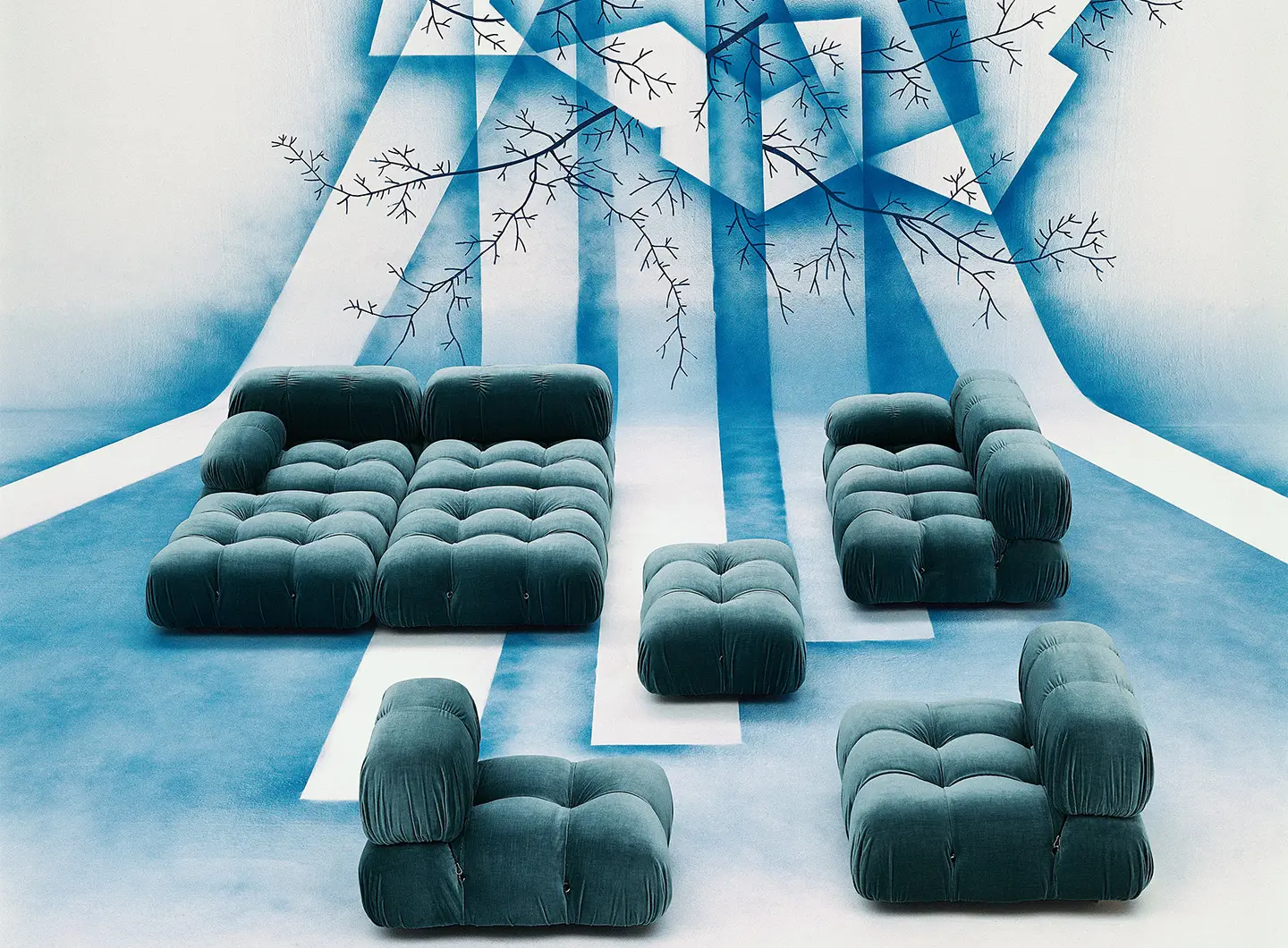
Camaleonda sofa, designed by Mario Bellini, B&B Italia - B&B Italia Archive

Camaleonda sofa, designed by Mario Bellini, B&B Italia - B&B Italia Archive

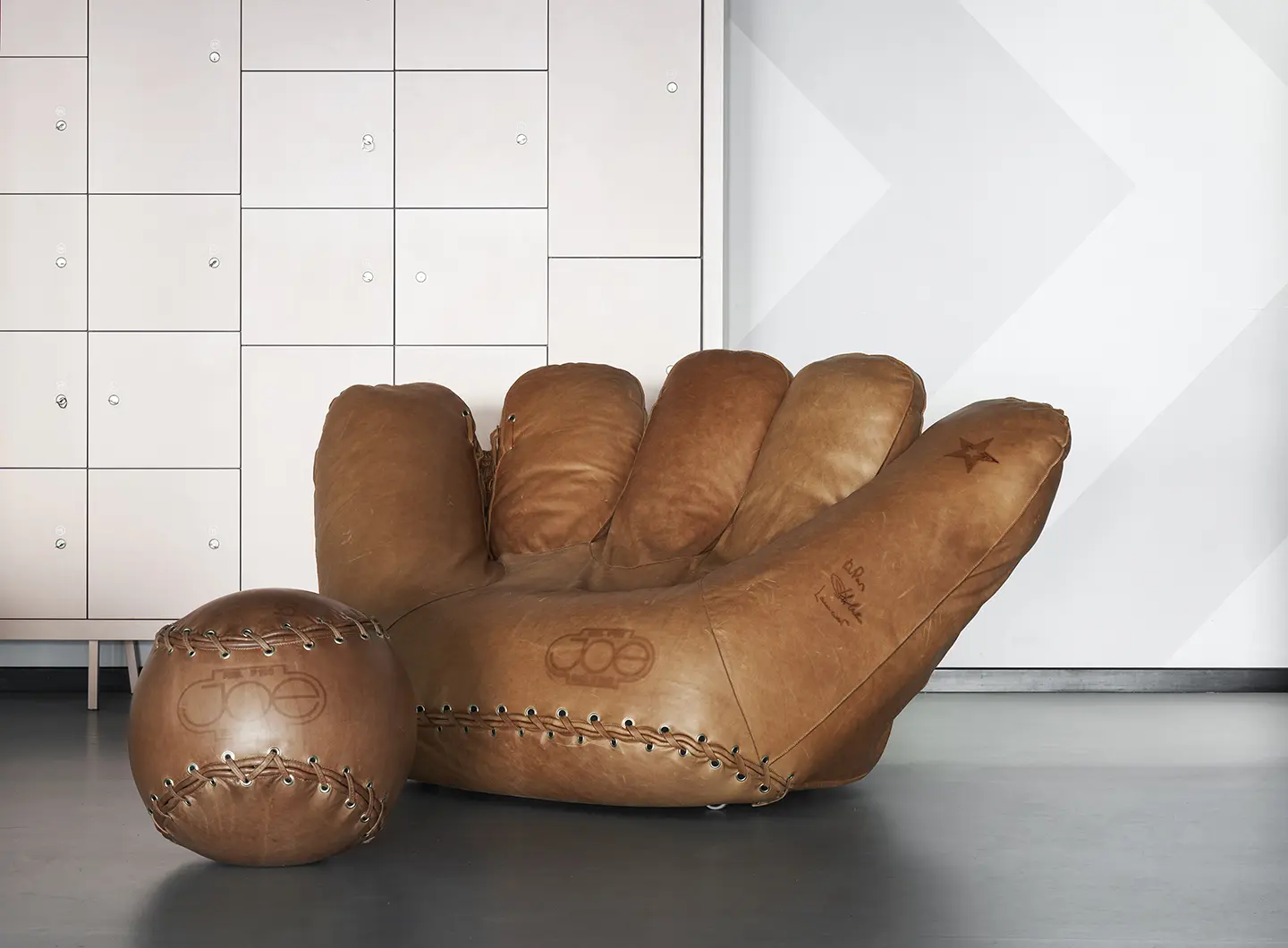
Joe armchair, designed by De Pas, D’Urbino, Lomazzi, Poltronova, 1970 

From baseball glove to comfy armchair, via the aesthetics of Pop Art. With its striking change of scale, it brings an everyday object into the home with its meticulous craftsmanship, perfectly replicating the stitching, reinforcements, laces and eyelets of the sports accessory. The result is 175 cm wide, 54 kg, with a metal frame, pre-formed polyurethane foam padding and 10 m² of leather cut with scissors with extreme precision to ensure that the cut remains visible. Despite its unsettling and ironic appearance - the name is a tribute to baseball champion Joe DiMaggio - the armchair, mounted on invisible castors, is ergonomic and spacious and can comfortably seat two people. A symbol of rebellious and unconventional design, it overcomes the rigour of rationalism with great lightness and humour, even spawning four special editions to mark its fiftieth anniversary: Joe Gold, Joe Jeans, Joe Plush and Joe Whip

Poltrona Joe, design De Pas, D’Urbino, Lomazzi, Centro Studi Poltronova - Ph. Pietro Savorelli

Joe armchair, designed by De Pas, D’Urbino, Lomazzi, Centro Studi Poltronova - Ph. Pietro Savorelli

Parentesi lamp, designed by Achille Castiglioni and Pio Manzù, Flos, 1971 

One of the great classics, it occupies a special place not only for its formal innovation, but also for its history – the result of a unique collaboration between two designers who never met. After the untimely death of Manzù, author of such revolutionary projects as the FIAT 127, Castiglioni had access to his sketches, and was struck by an idea that was as simple as it was brilliant: a cylindrical light source mounted on a rod between floor and ceiling, capable of moving and stopping at will. By replacing the rod with a metal cable and leveraging the friction created by the shaped tubing, Castiglioni enabled the lamp to slide and stop freely without screws or complex mechanisms. The upshot was functionality, technical experimentation and visual immediacy. Aside from these characteristics, its greatest value lies in Castiglioni's generosity in acknowledging its paternity, including that of the packaging: two transparent plastic shells obtained from a single mould, leaving the components visible because the idea behind it was to buy it and assemble it oneself.  
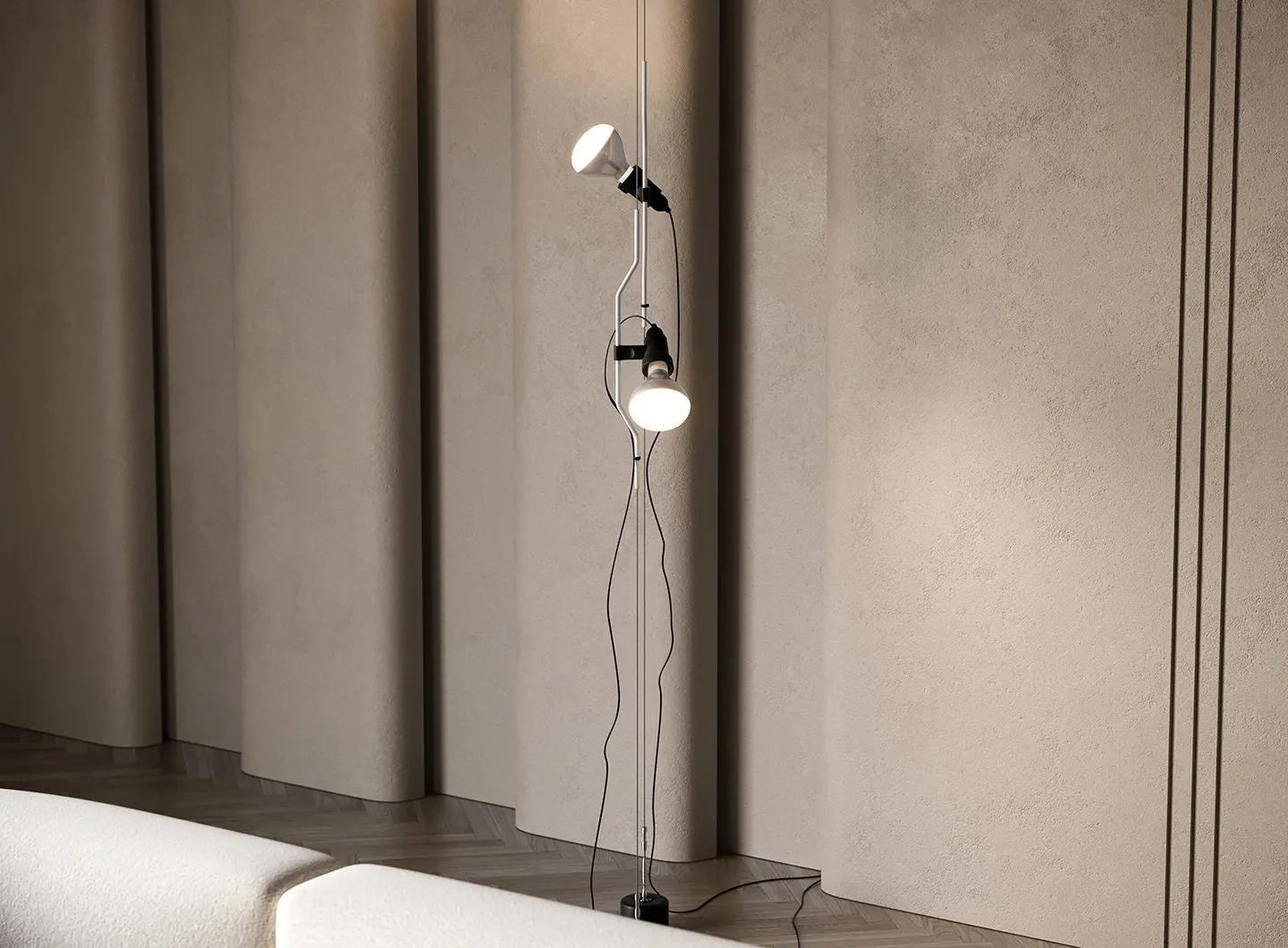
Parentesi lamp, designed by Achille Castiglioni and Pio Manzù, Flos

Parentesi lamp, designed by Achille Castiglioni and Pio Manzù, Flos

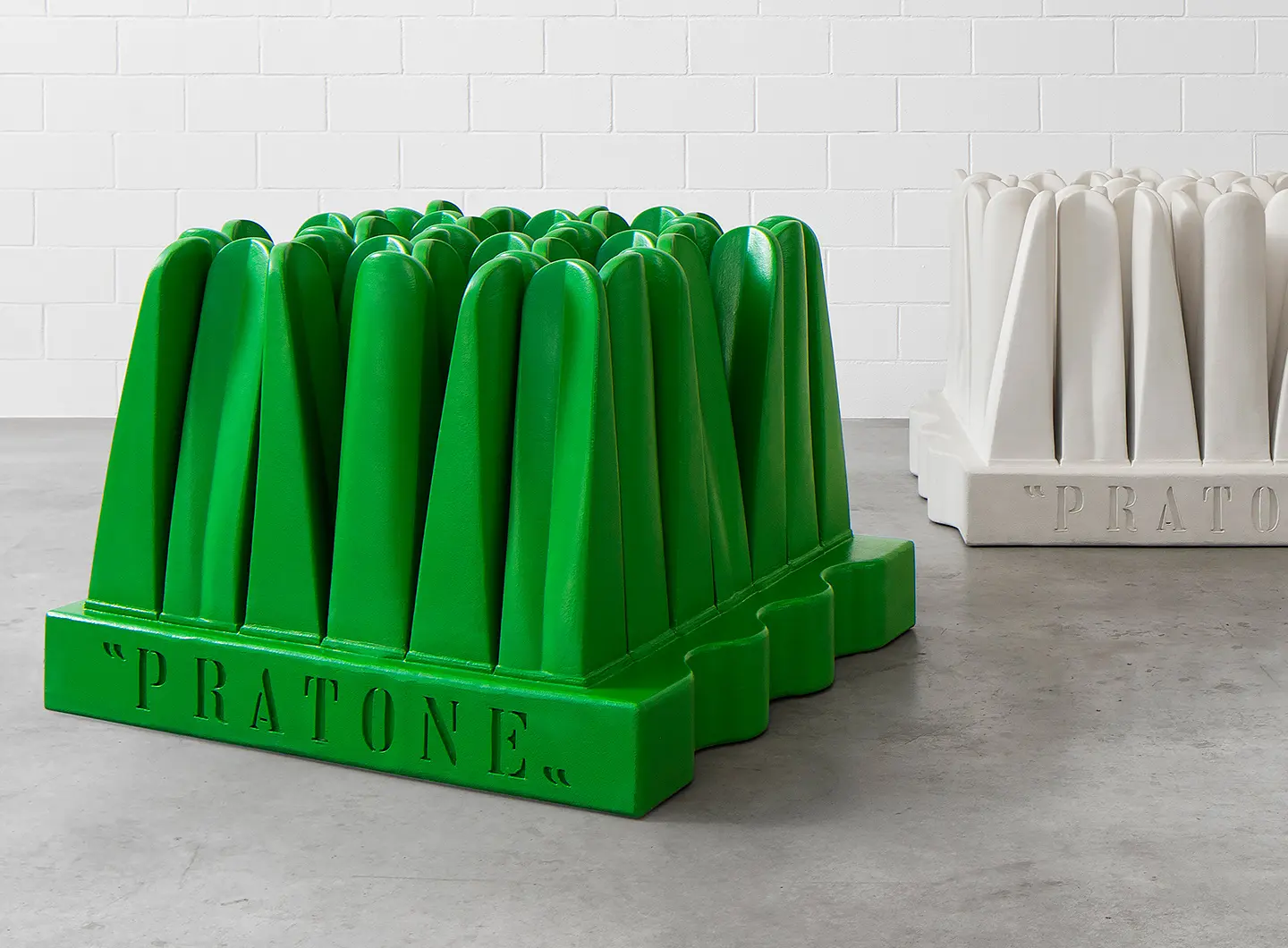
Pratone® sofa, designed by Ceretti, Derossi, Rosso, Gufram, 1971 

One of the icons of Italian radical design. More than just a seat, it is an experience: a surreal lawn composed of 42 enormous blades of grass in soft polyurethane foam, hand-finished in Guflac®, making relaxation into a free and unconventional experience. With its bright green colour and outsize forms, it breaks the rules of traditional design, in a mix of irony, art and social criticism. Over the years, this “green cradle” has continued to reinvent itself, in the name of design freedom, intelligent comfort and playfulness. To mark its 50th anniversary in 2021, it was reimagined as the colossal Superpratone - an inflatable sculpture over five metres tall - and the Pratone® Forever - a reinterpretation of the classic lounge chair in stretch bouclé wool fabric. Whatever its form, however, it invites anyone who sits on it to experience a world of abstraction, continuous play and a new concept of everyday space. 

Pratone® sofa, designed by Ceretti, Derossi, Rosso, Gufram - Courtesy of Gufram

Pratone® sofa, designed by Ceretti, Derossi, Rosso, Gufram - Courtesy of Gufram

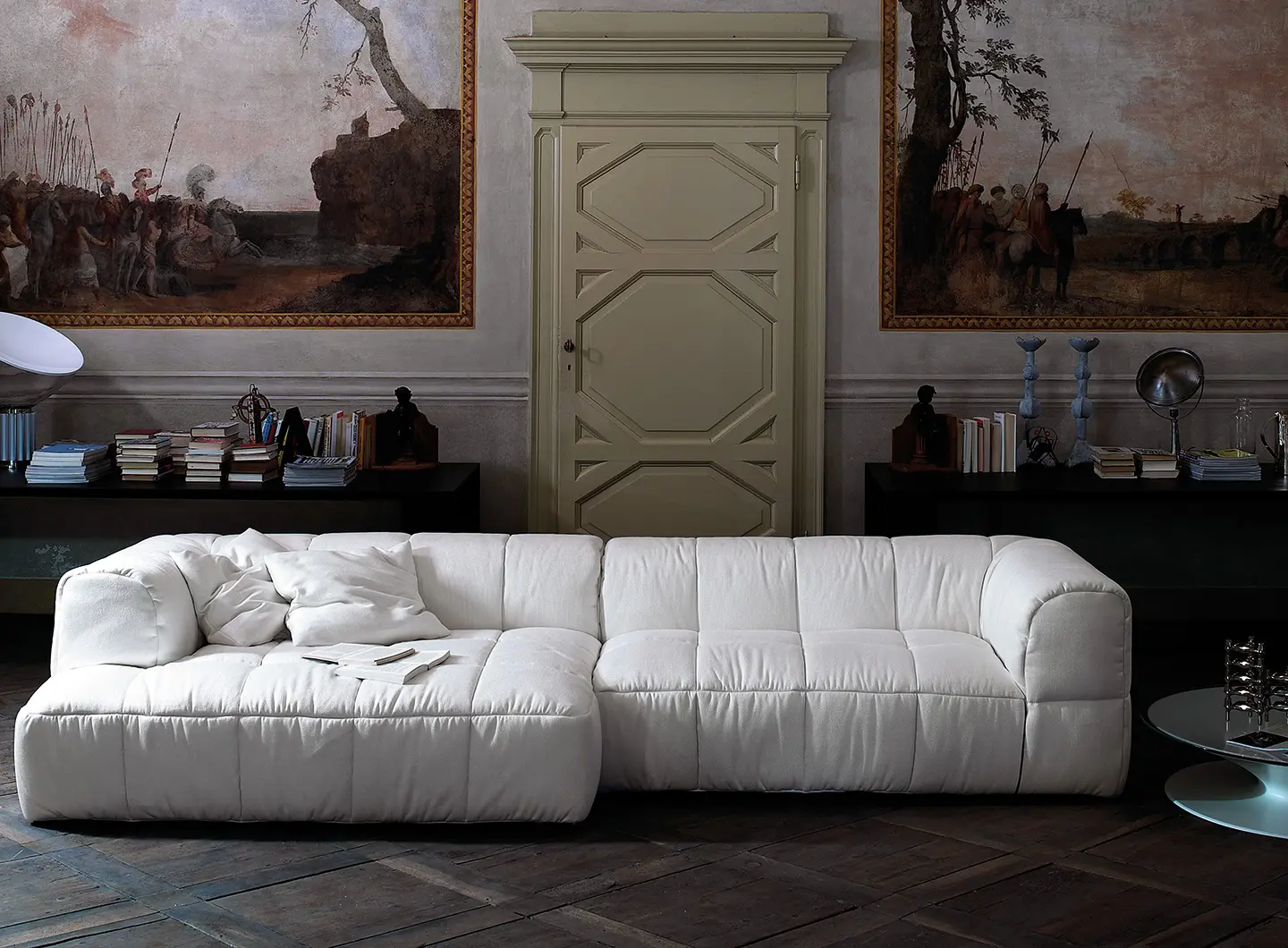
Strips sofa, designed by Cini Boeri, Arflex, 1972 

Essentially, so much more than just a sofa. A true revolution in the concept of upholstered furniture, conceived with the intention of "demythologising" the classic symbols of bourgeois design. A soft, modular system with a removable cover, designed by a pioneering architect who has reimagined the way we live, allowing for total freedom. It is precisely the removable quilted cover and the moulded polyurethane padding of varying densities, which is both non-deformable and comfortable, that have made this piece so groundbreaking, both aesthetically and functionally. It was inspired by Christo and Jeanne-Claude’s ‘wrapping’ of various Milanese monuments, which had profoundly captured the designer’s imagination during a stroll through the streets of the city. It is a project that remains a best-seller to this day thanks to its highly contemporary powers of expression and total comfort, masterfully interpreting design as a gesture of disruption, transformation and everyday simplicity.

Strips sofa, designed by Cini Boeri, Arflex

Strips sofa, designed by Cini Boeri, Arflex, 1972 

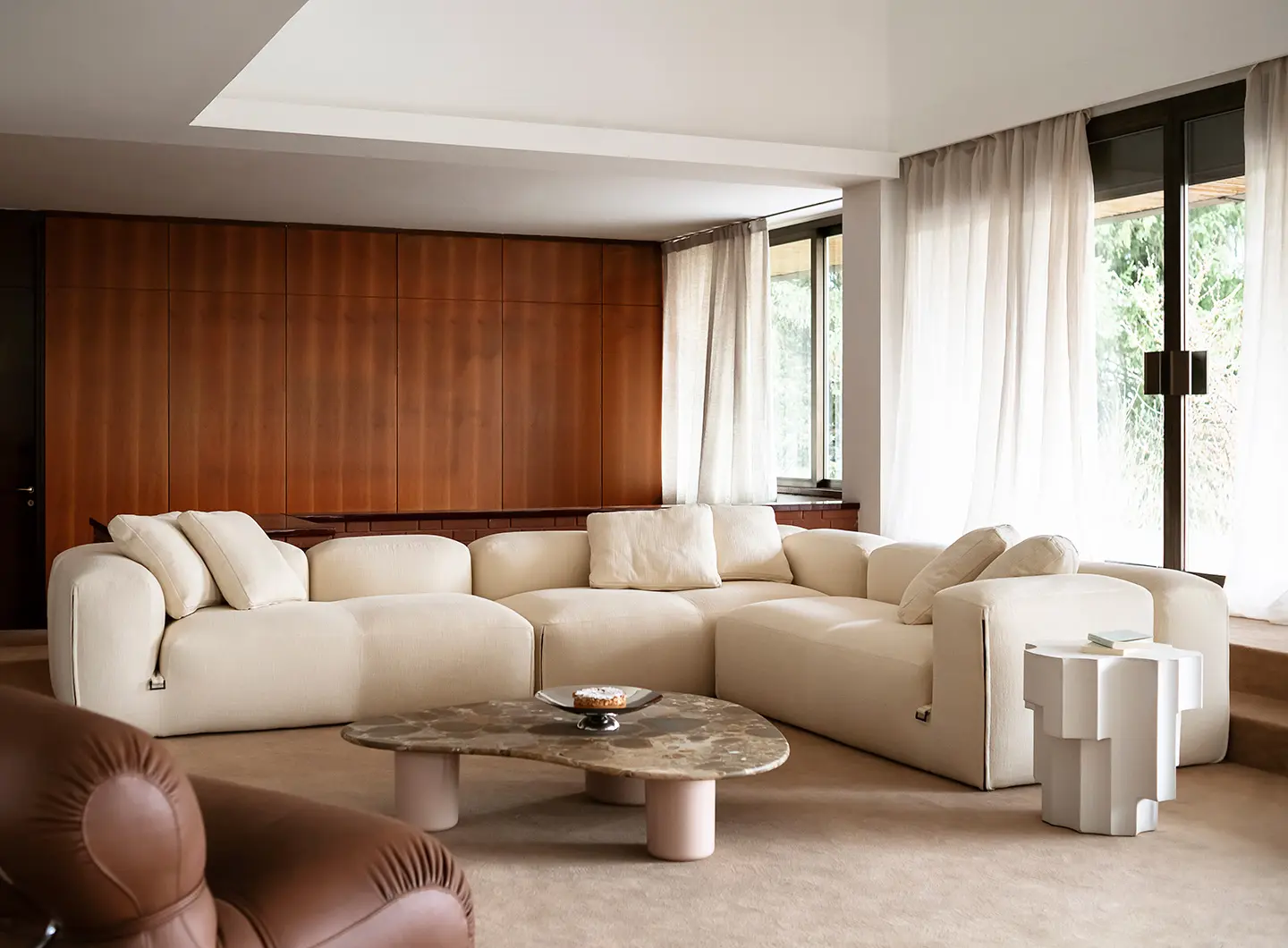
Le Mura sofa, designed by Mario Bellini, Tacchini Italia Forniture, 1972 

Presented at the 1972 Salone del Mobile, it was the Milanese architect and designer’s first venture into furnishing. A reflection on proportions and ergonomics  that took shape through expanded polyurethane modules, covered in fabric or leather and fastened at the base with straps. The name itself references its distinctive character: modularity. The seating elements - featuring one, two or no armrests - can be put together in an infinity of combinations and lend themselves to a variety of spaces, evoking the boulders of imposing ancient city walls. Re-edited to mark its 50th anniversary, in a revisitation devised in tandem with Bellini, its original vocation for comfort and durability is enhanced thanks to new materials and upholstery, designed to improve its comfort and augment its statuesque beauty. A contemporary cult object, defined by small but significant details, such as the buckles and visible zips, in copper and nickel. 

Le Mura XL sofa, designed by Mario Bellini, Tacchini Italia Forniture - Ph. Andrea ferrari

Le Mura XL sofa, designed by Mario Bellini, Tacchini Italia Forniture - Ph. Andrea ferrari

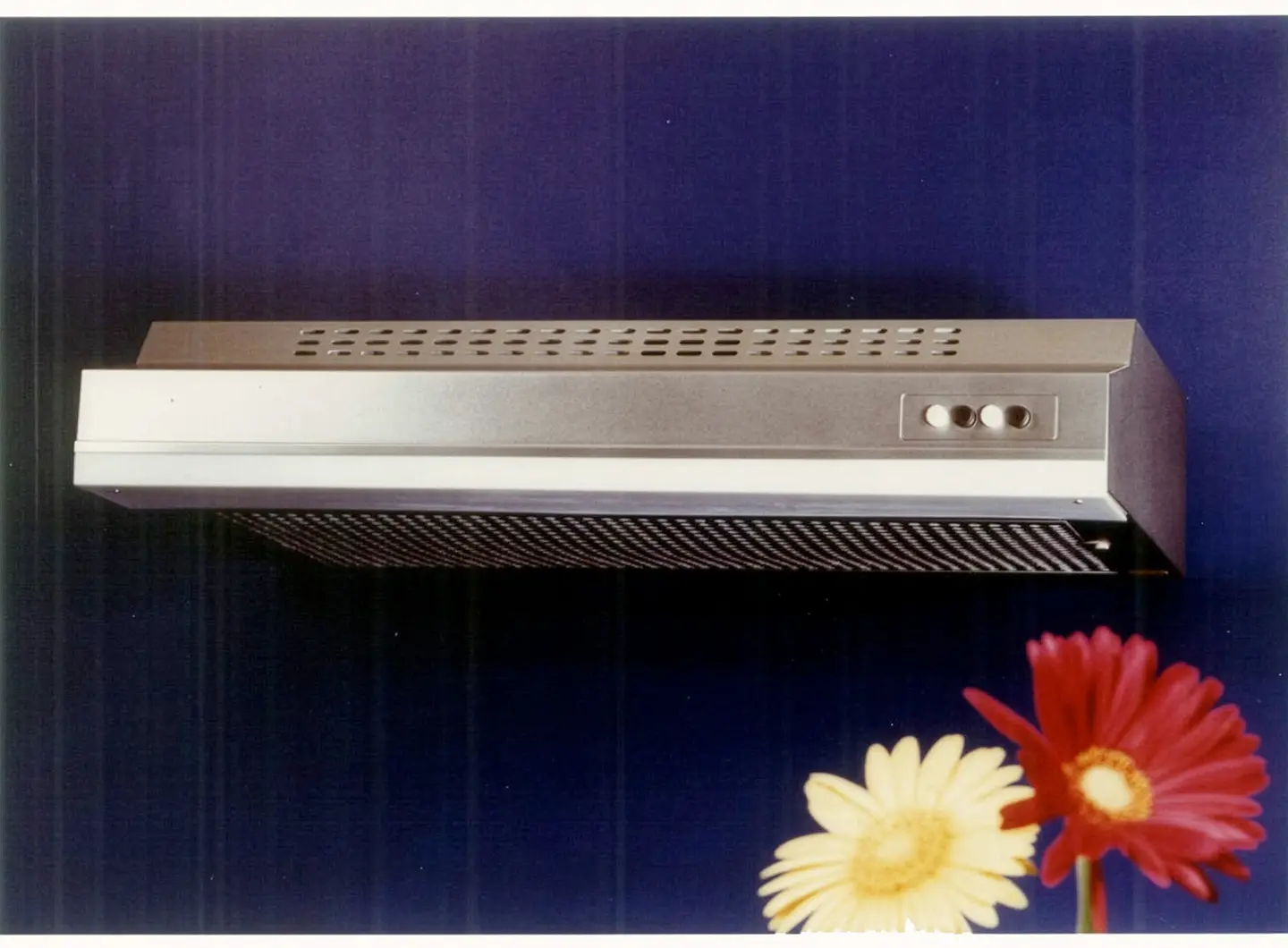
Hood, designed by Ermanno Casoli, Elica, 1972 

In 1970 Ermanno Casoli, a vet from Fabriano in the Marche region with a visionary soul, revolutionised the world of cooking forever by setting up a company that would redefine the world of extractor hoods and, more recently, the entire kitchen ecosystem. Two years later, he presented the first under-cabinet hood in Paris: an innovative product for its time, with a modern and minimalist design, which transformed an element previously considered purely functional and utilitarian - and kept as far out of sight as possible -into the true star of the space, without compromising on comfort or functionality. A technical solution, but also, and above all, a statement of style that enhances the space with elegance. In short, an immediate success that reflected the company’s philosophy ahead of its time, built on the ability to combine technology and design culture, industry and artistic sensibility, whilst maintaining a vision deeply rooted in Italian craftsmanship.

Hood, designed by Ermanno Casoli, Elica

Hood, designed by Ermanno Casoli, Elica

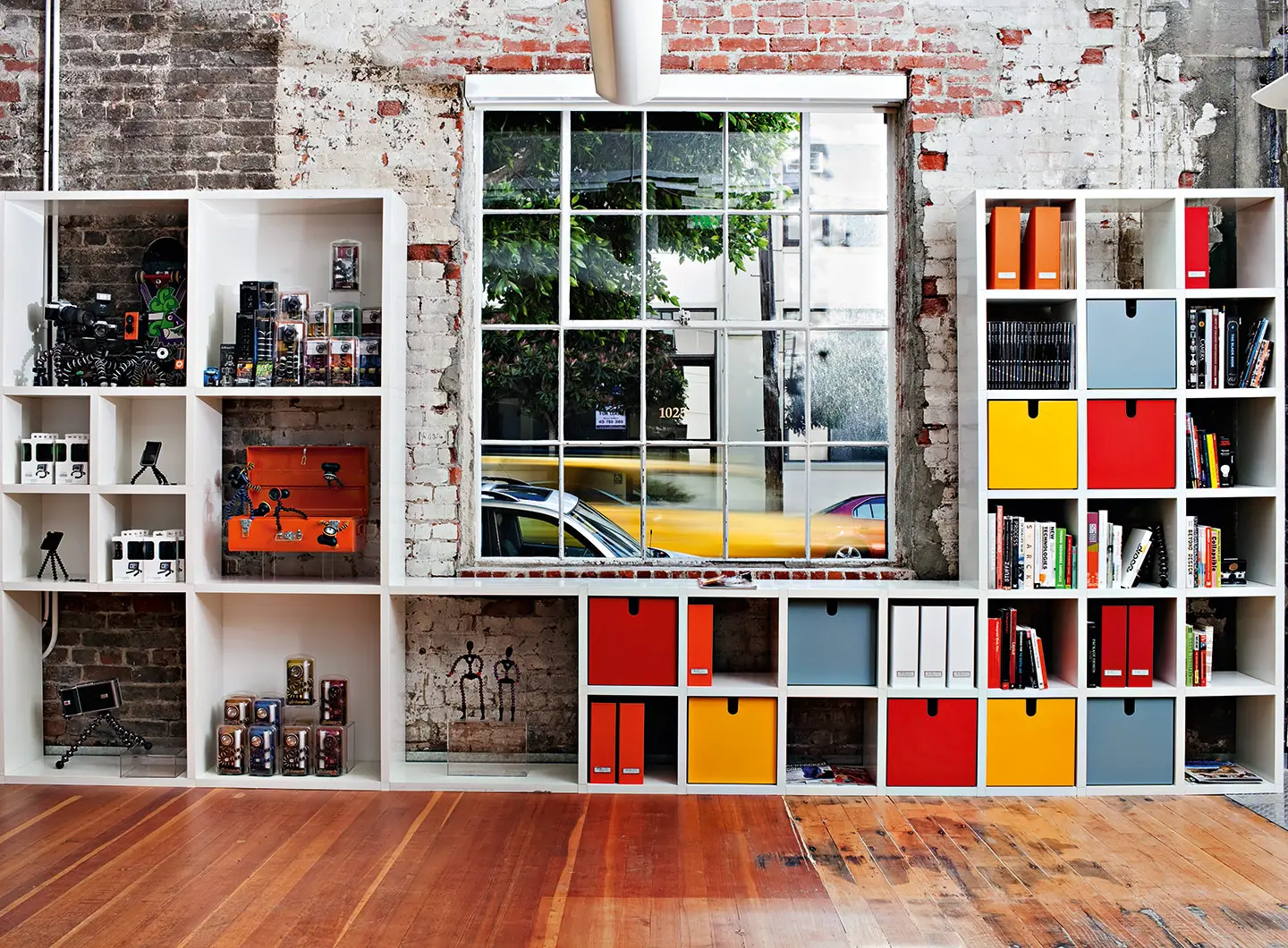
4760/65 modular bookcase, designed by Giulio Polvara, Kartell, 1975 

This is one of the most successful examples of the innovative Seventies approach to design - modularity. The interplay of juxtaposed and overlapping elements made it possible to keep production costs down and create flexible systems that were easy to transport and assemble. Made from plastic, this bookcase is suitable for both domestic and workplace environments and, thanks to its stability, can also be used as a freestanding partition. An ‘Egyptian’ bookcase, as its designer described it, because the Egyptians were in the habit of burying their masterpieces. And, hidden from view as if they were buried, the masterpieces of this unmistakable bookcase are the joints inserted within the shelves: three joints and three panels interlock thanks to the snap-fit connection of the elements, doing away with the need for tools, and allowing for a variety of configurations. It is complemented by the drawer cubes designed by Centrokappa, which can also be used individually, and come with or without wheels. Their primary colours are reminiscent – as the advertising slogan put it – of “a three-dimensional Mondrian.” 

4760/65 modular bookcase, designed by Giulio Polvara, Kartell, 1975

4760/65 modular bookcase, designed by Giulio Polvara, Kartell, 1975 

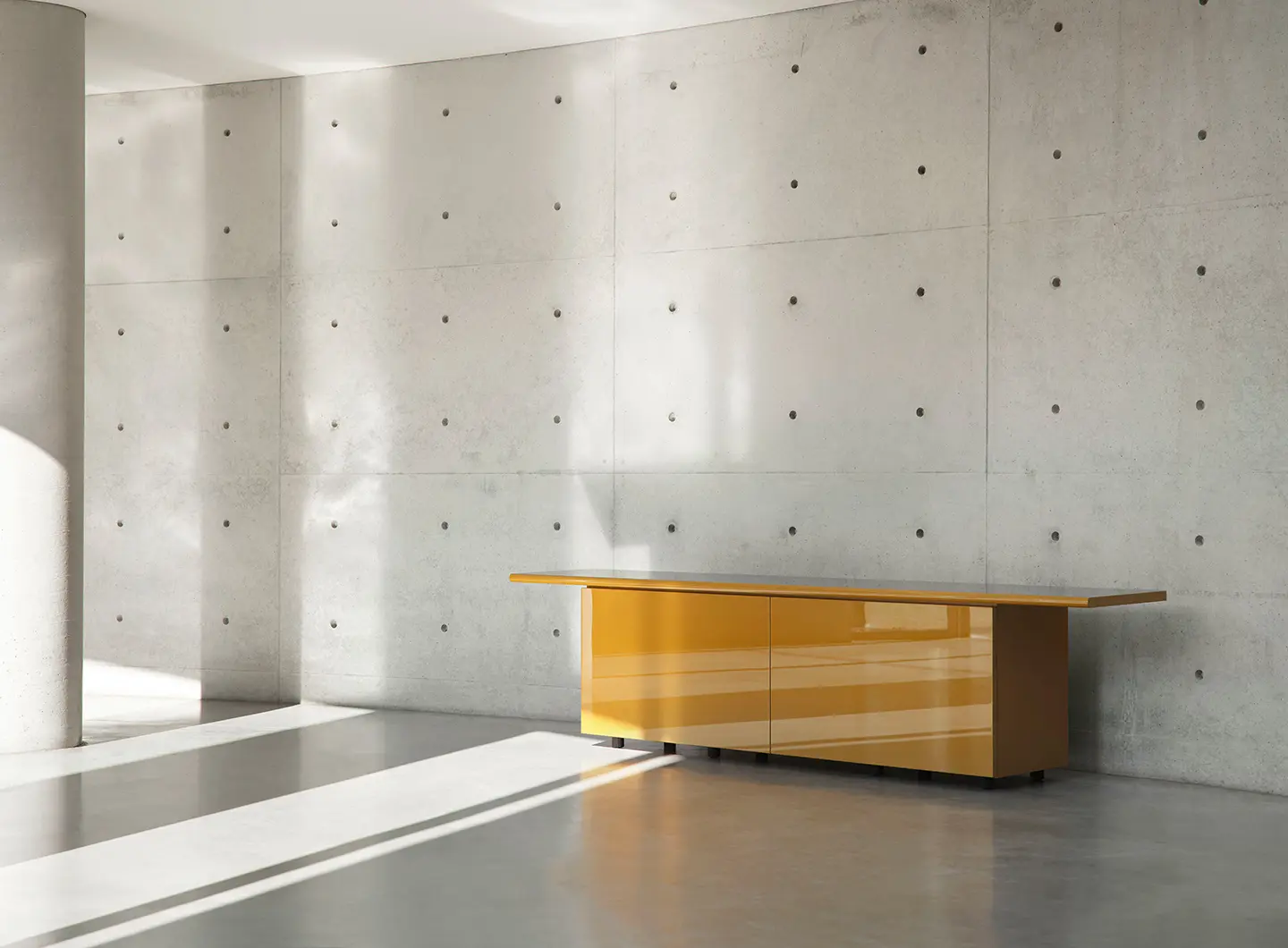
Sheraton sideboard, designed by Giotto Stoppino and Lodovico Acerbis, Acerbis, 1977 

It netted the 1979 Compasso d’Oro award for its innovative  “sliding/rotating” opening system, a mechanism that makes for both a sliding and a hinged opening, which enables the doors to open completely with compromising the formal purity of the piece. Regarded as one of the icons of Italian design, it is held in the permanent collection of London’s Victoria and Albert Museum, and introduced a new relationship between a closed, extremely simple and formally pure piece and an open-plan unit offering complete accessibility, despite its sliding, flush-fitting doors, combining design, craftsmanship and style. Available in 180 and 280 cm lengths, it features glossy lacquered surfaces in a wide range of colours - from black and white to linen, sand, clay, burgundy, pink, dark green, mustard yellow, brick red and navy blue -and remains surprisingly contemporary in both aesthetics and functionality to this day.

Sheraton sideboard, designed by Giotto Stoppino and Lodovico Acerbis, Acerbis - Ph. Alberto Strada

Sheraton sideboard, designed by Giotto Stoppino and Lodovico Acerbis, Acerbis - Ph. Alberto Strada

17 June 2026
See Also
Other Articles