

 Exhibitions


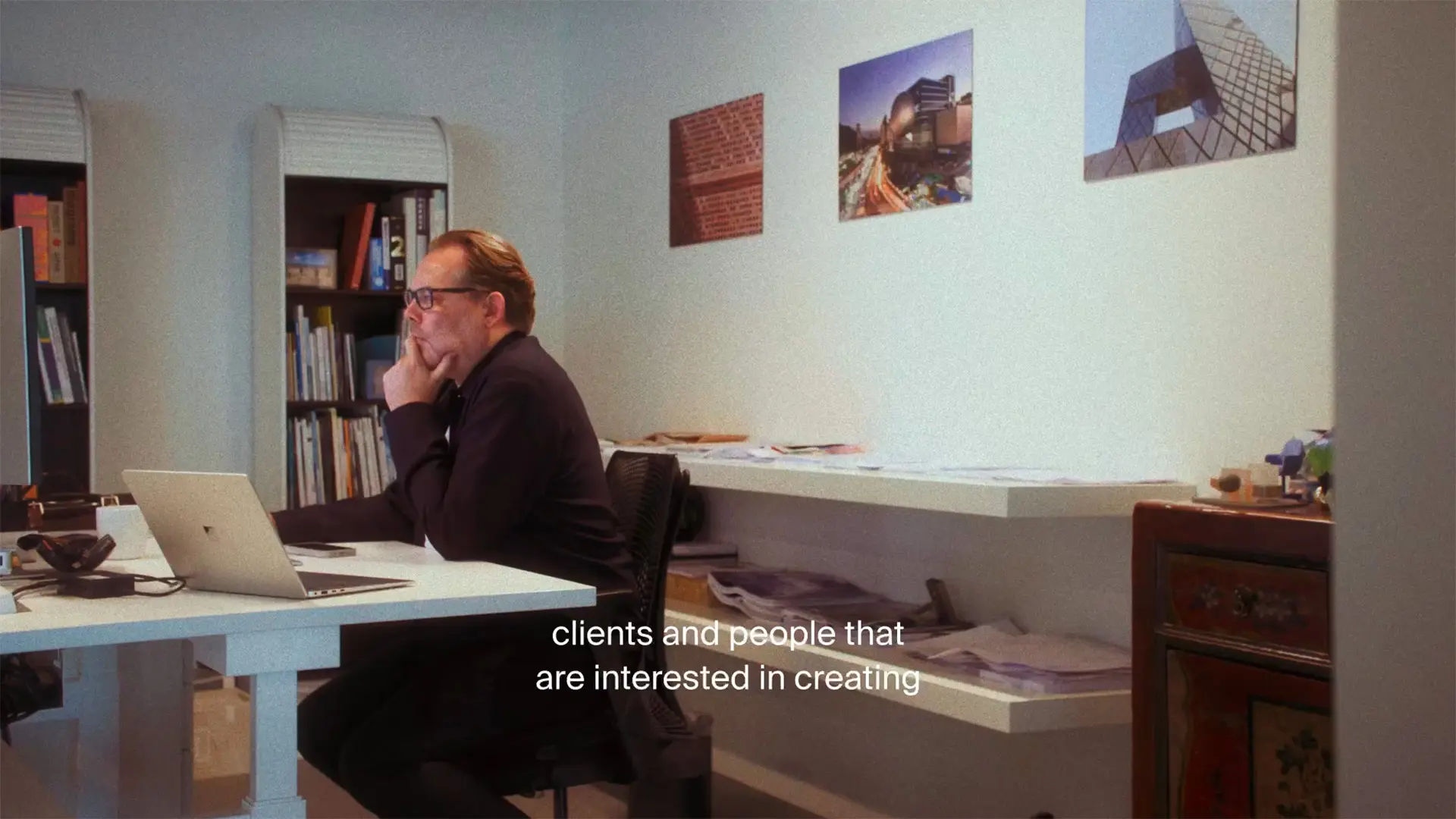
At the OMA studios in Rotterdam, we met David Gianotten to explore the vision behind the Salone Contract masterplan. A project that redefines the boundaries between architecture, integrated systems and major international flows
Marine inspiration and new craftsmanship. The latest in outdoor furnishing straight from the Salone del Mobile 2026
Text by
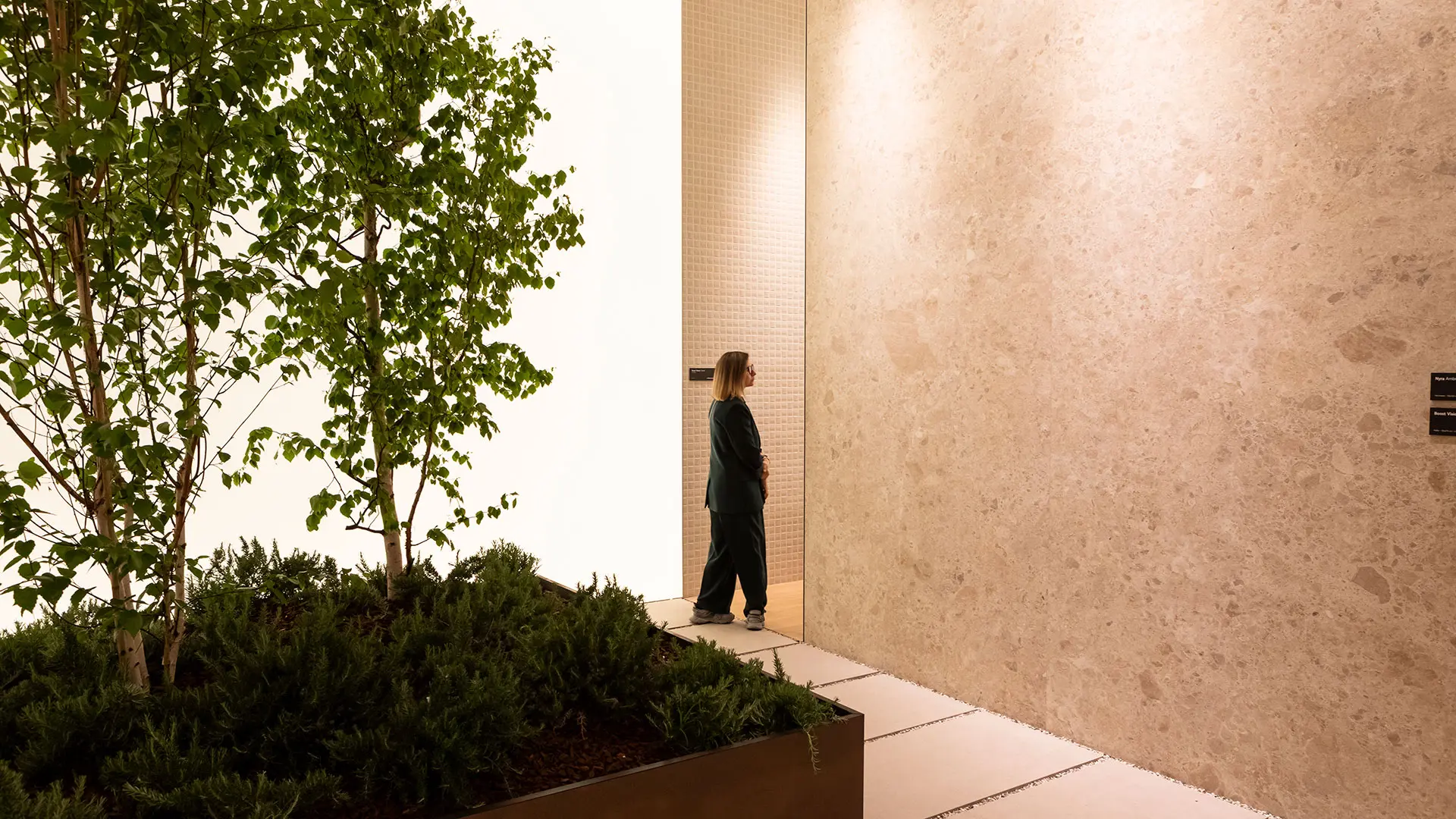
Atlas, 64th edition of Salone del Mobile.Milano
We have scoped some recurring trends among the stands of the sector’s leading companies at the trade fair. The sea has proved an almost ubiquitous inspiration, whether through bringing typical nautical elements onto terra firma or by playing with the stylistic features of Mediterranean architecture, while weaving and craftsmanship still reign supreme
Natural materials, organic forms and generous volumes inviting relaxation, sophisticated details that delicately enrich the designs - the garden and outdoor furnishing seen at the Salone del Mobile.Milano speak for themselves, but don’t scream out. Mediterranean atmospheres and references to the sea, with its sunny islands and slow-paced life and its typical architecture, which some of the collections draw on explicitly, while others allude to them more subtly through a play of references and quotations. The ancient art of weaving, previously hugely popular at the 2025 edition, is reproposed in a large number of different variations, from the most traditional to highly technical reinterpretations. The distinction between indoor and outdoor continues to be blurred, with gardens, patios, swimming pools and terraces seen as a natural extension of the living room, continuing the discourse begun there and rounding it off.
In this context, the well-known Lago brand has extended beyond the home to take its first steps into outdoor furnishing, with a range specially designed for outside space. Some products, such as the Air Outdoor table and the Mezz’aria Outdoor table, revisit indoor icons with different materials and techniques. The Air Stone sofa is an entirely new project, however, with bases resembling stones washed smooth by the sea and designed to allow rain to run off without pooling, and backrests that can be positioned at will. An integrated lighting system underneath the seats helps to create the impression of a hanging structure, along with the visual lightness of the glass legs.
At Emu, the Antigua collection designed by Federica Biasi, with its distinctive hallmark weave, has expanded to include a recliner and a table seating up to eight people, along with chairs and armchairs. Like the sofa presented last year, the new seats also feature a light new generation synthetic rope weave that doesn’t conceal the aluminium frame, but caresses and enhances it. The shapes are soft and enveloping, inspired by the movement of ocean waves.
The London studio Barber Osgerby, currently the focus of a 30-year retrospective at Triennale Milano, has designed a collection for Dedon in which the art of weaving is central, even as far as its name goes - Tricot, a word used in both French and English to describe knitting. The modules that make it up are hand-woven using a special circular-section fibre that lends itself to bold, continuous curves, in a blend of craftsmanship and technologically advanced industrial manufacturing.
“Over the course of history, the shape of the arch has defined many different architectural styles,” said José A. Gandía-Blasco Canales, inspiring structures such as the Roman aqueducts and bridges with semicircular spans since ancient times, and which still characterise the landscape of the countries overlooking the Mediterranean Sea. It was with these images in mind that he designed the Arco sofas and armchairs for the family firm, Gandiablasco, with perforated semicircular aluminium sheet backrests, revisiting the traditional grille pattern by placing it in a contemporary context.
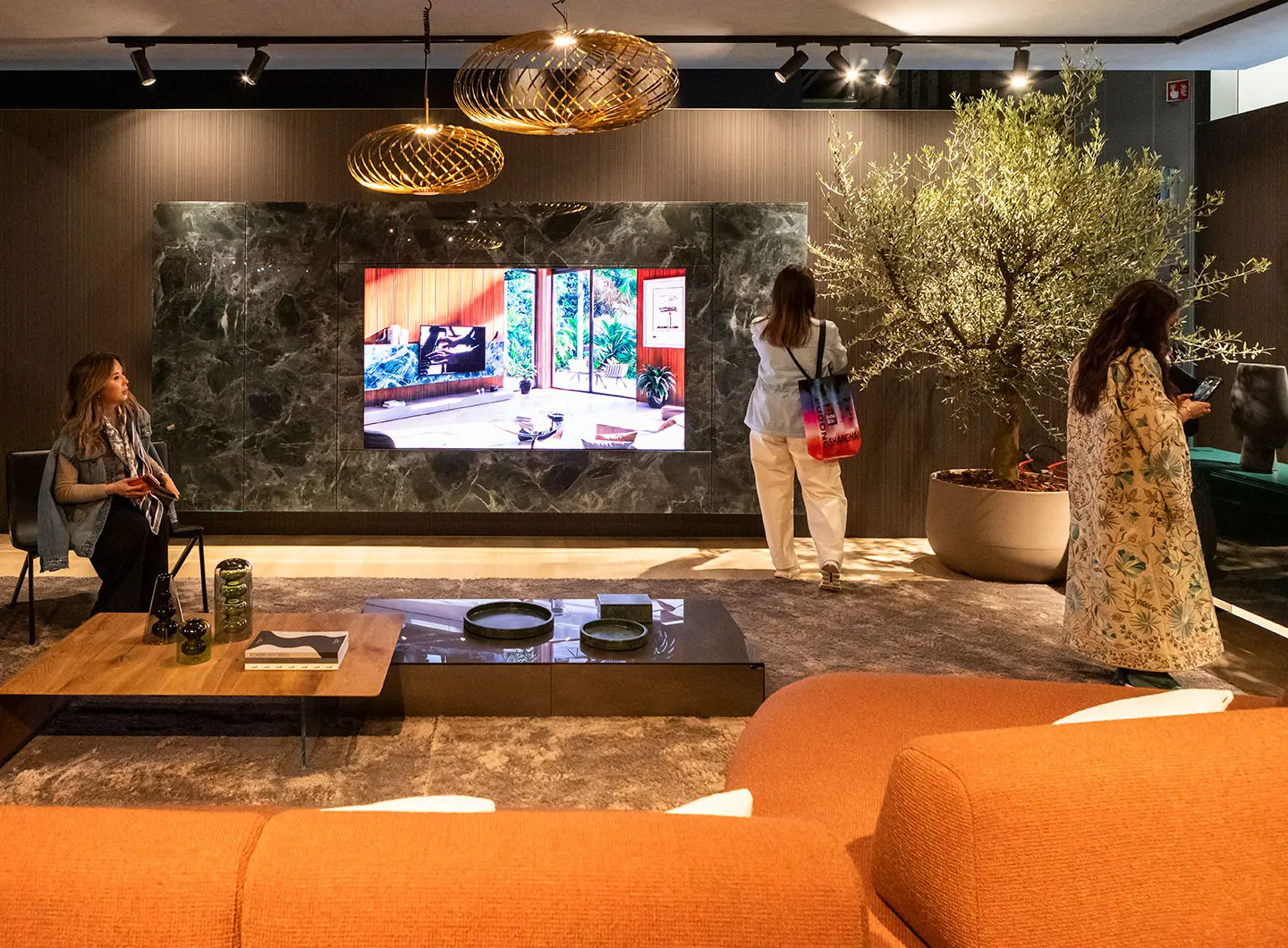
Lago, 64th edition of Salone del Mobile.Milano
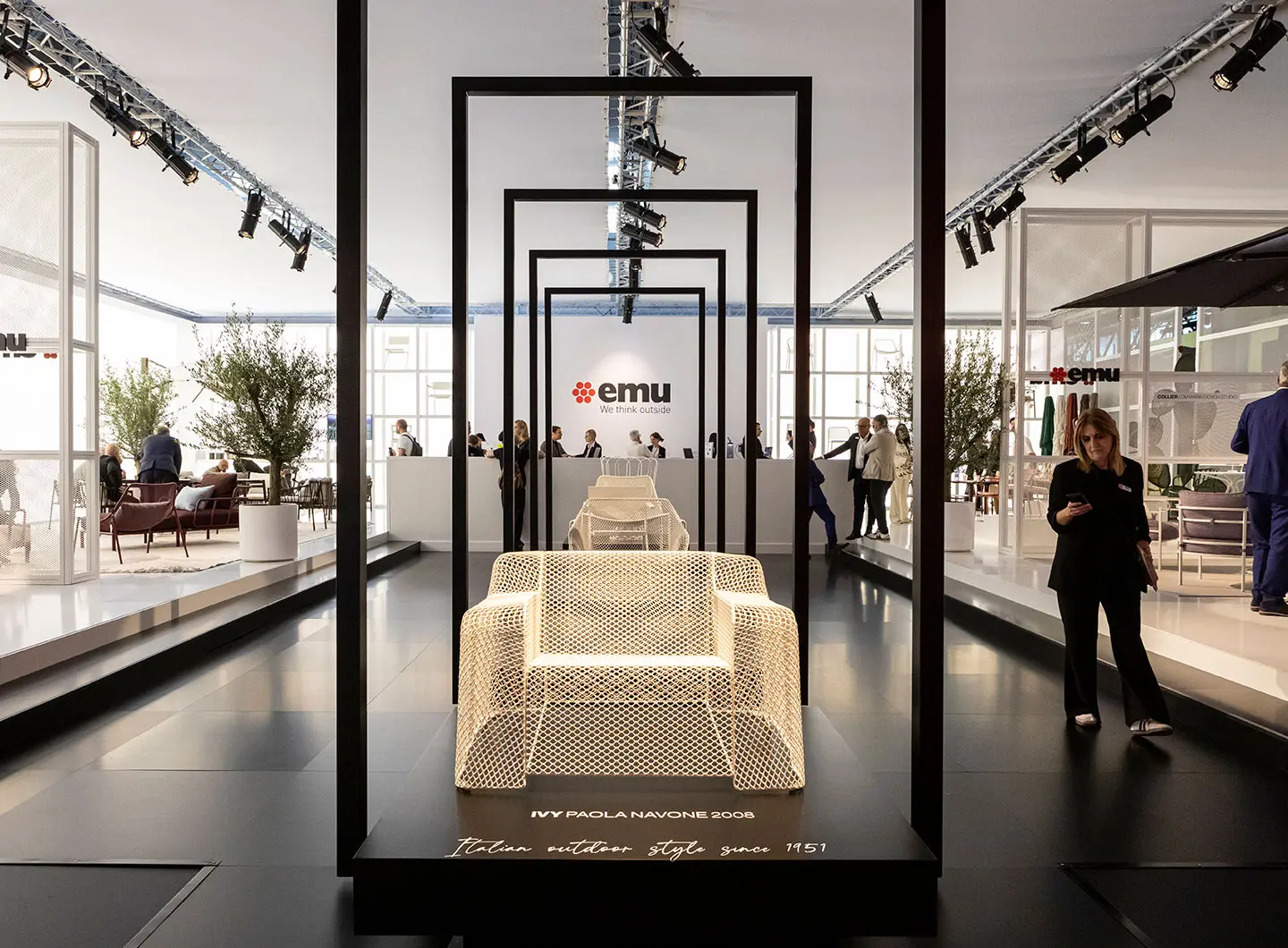
Emu, 64th edition of Salone del Mobile.Milano
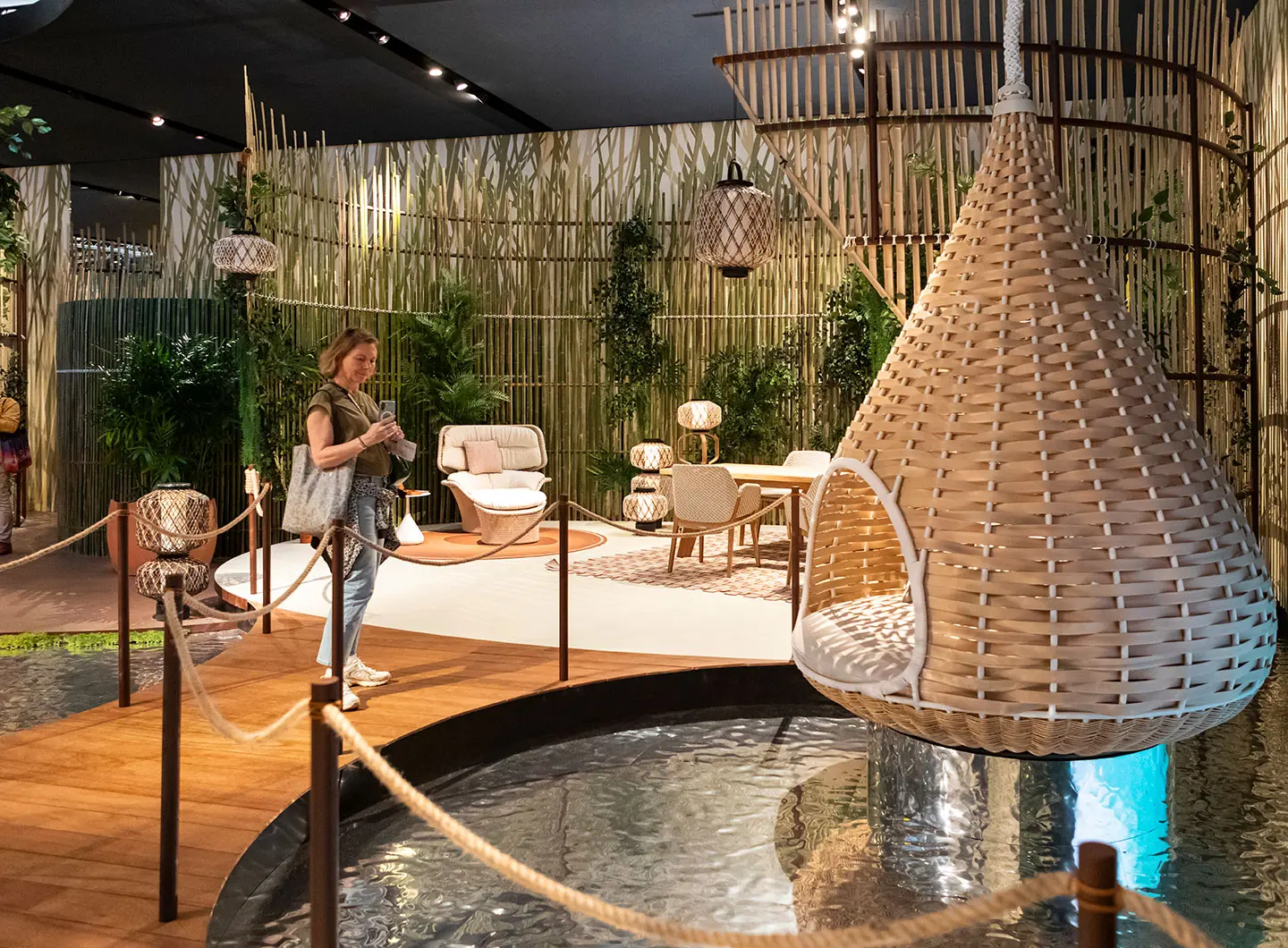
Dedon, 64th edition of Salone del Mobile.Milano
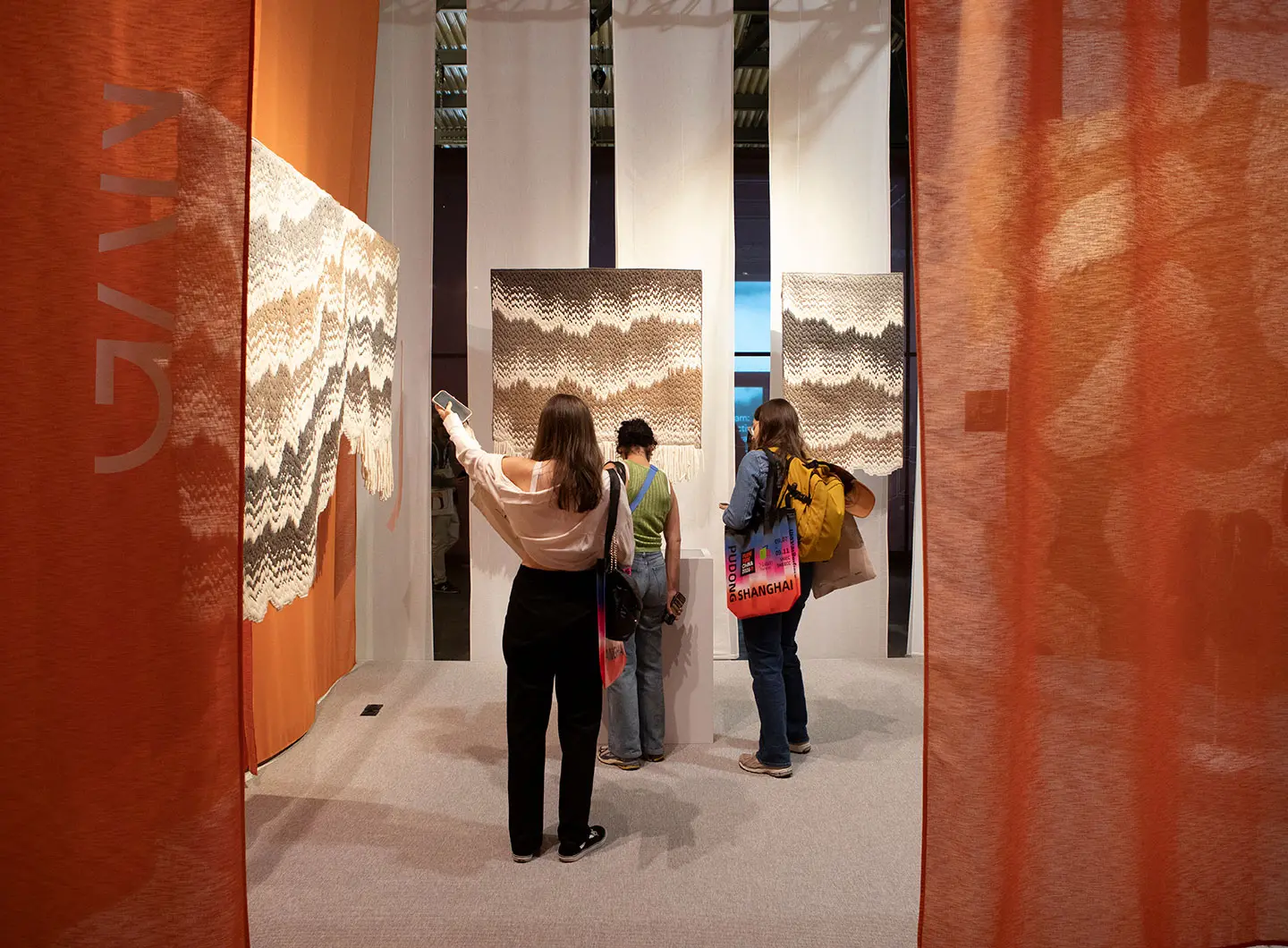
Gandia Blasco, 64th edition of Salone del Mobile.Milano
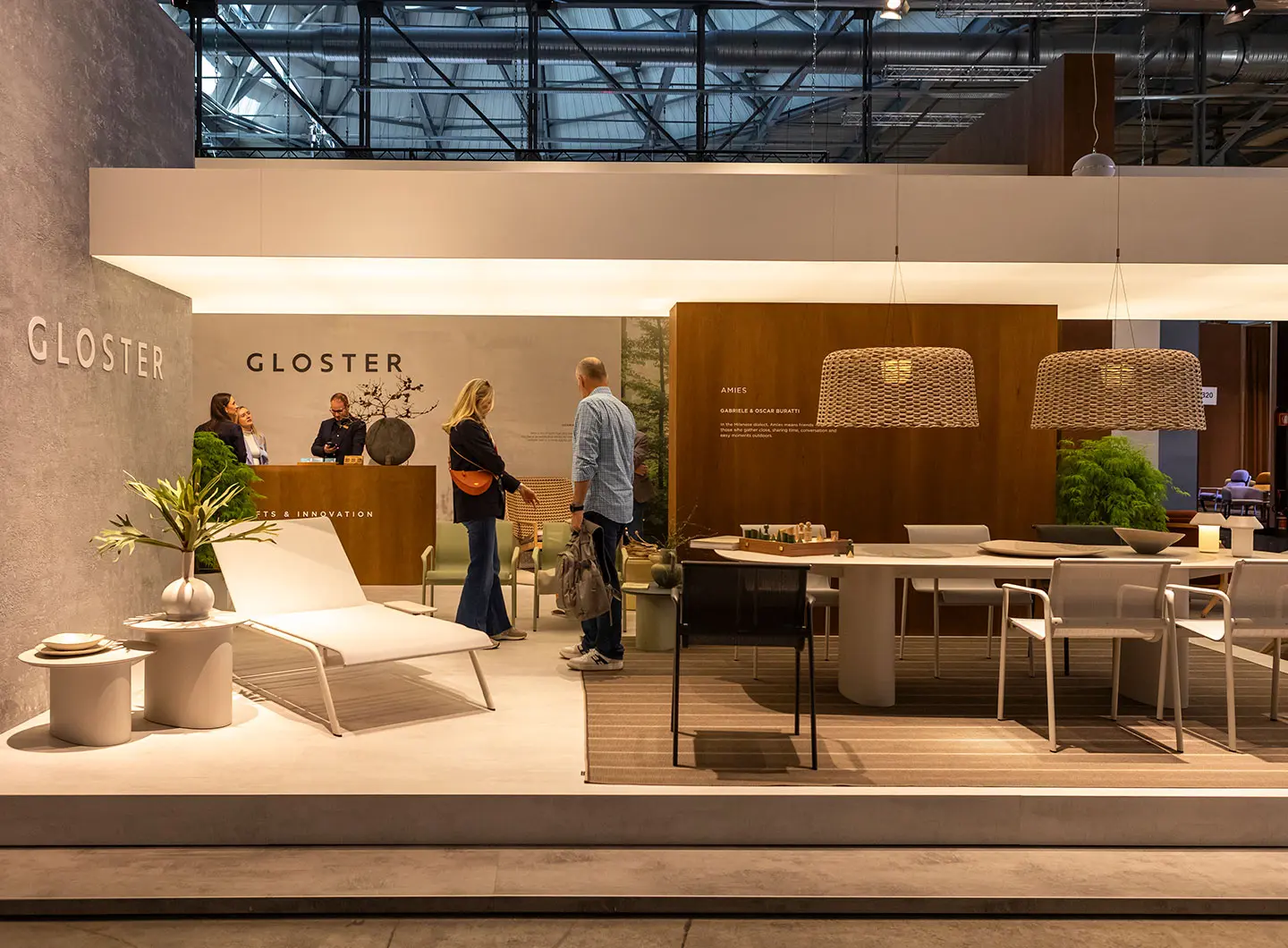
Gloster, 64th edition of Salone del Mobile.Milano
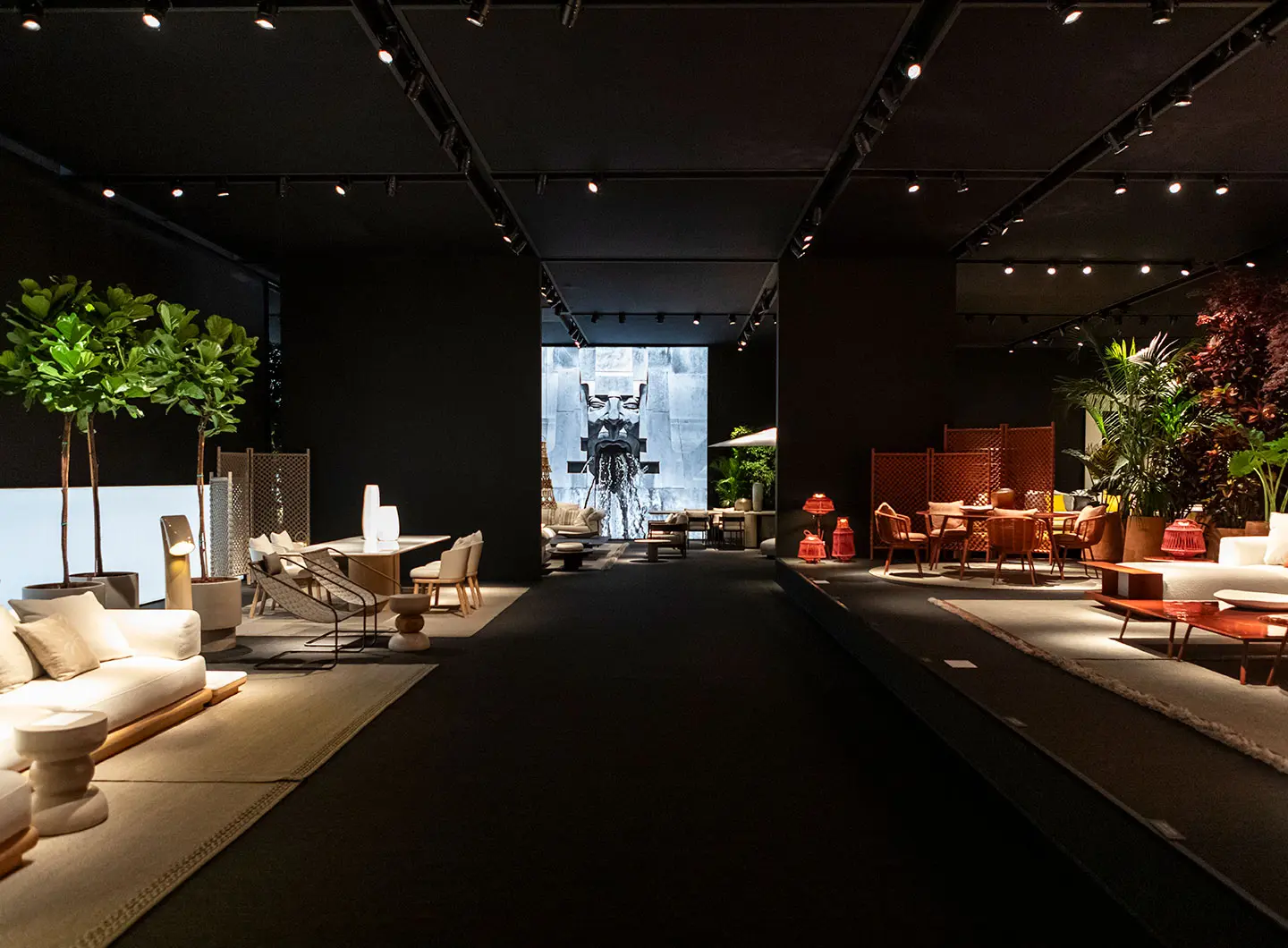
Talenti, 64th edition of Salone del Mobile.Milano
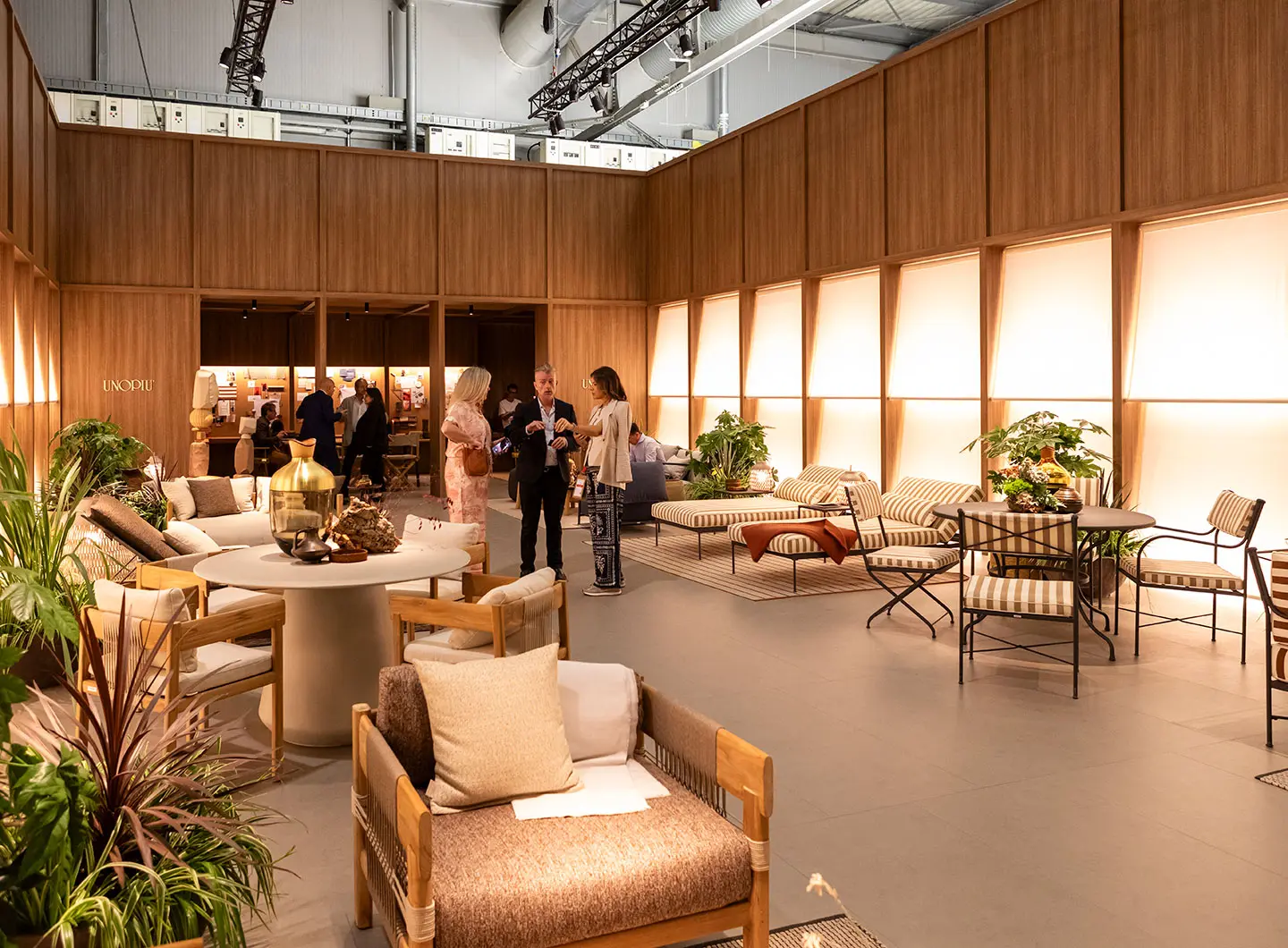
Unopiù, 64th edition of Salone del Mobile.Milano
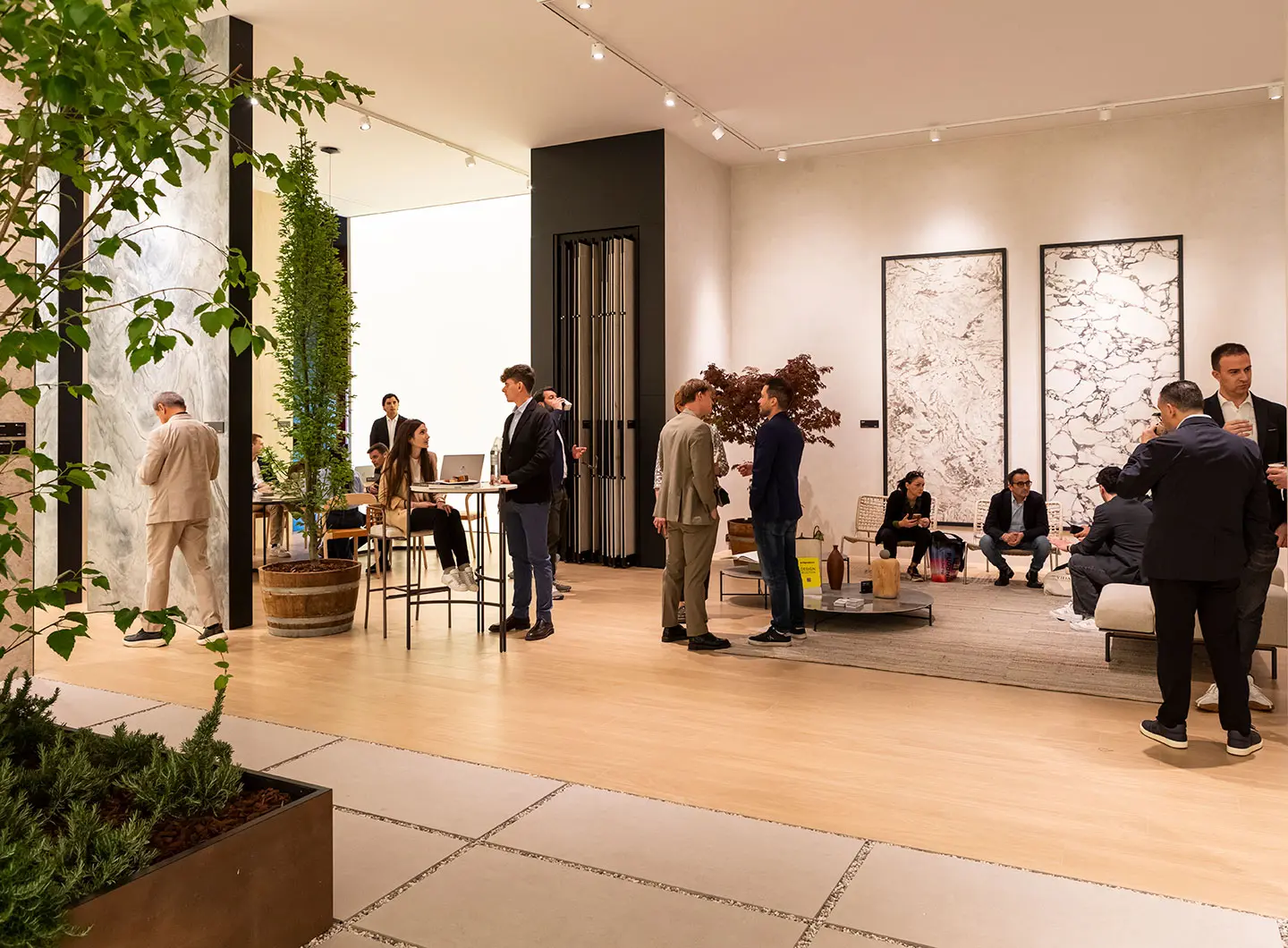
Atlas, 64th edition of Salone del Mobile.Milano


Wood is a material that has always particularly fascinated Michele De Lucchi and which, above all others, lends itself to experiments straddling the intersection between visual poetry and functionality. Ithaca, the new collection designed by his studio AMDL Circle for Gloster, explores the expressive and structural potential of solid teak: an exotic wood, now grown in responsibly managed plantations, on which the brand has concentrated since its beginnings in West Africa in the Sixties. The focal point of this project is a particular intersection of wooden diagonals developed by De Lucchi, used to support the table tops and seats in a way that is both firm and delicate.
References to Ulysses’ lengthy sea voyage to the edge of the known world also abound in the new modular outdoor furniture designed by Carlo Colombo for Talenti. As the designer explained, the Itaca range, naturally inspired by the legendary island in the Ionian Sea to which Homer’s hero desperately tried to return “stands out for the generosity of its radii, soft curves that confer lightness and fluidity to the shapes, inviting relaxation and comfort” and for the use of natural materials such as wood and marble. The modular sofa and the other pieces – daybeds, armchairs, coffee tables, tables and chairs – can be combined to form different configurations.
From the Mediterranean islands to Italy’s own seaside resorts: the collection designed by Studio Klass for the Turkish brand SNOC, which is taking part in the Salone del Mobile.Milano for the first time, is called Sestri. The inspiration comes from the world of sailing, where simplicity and minimalism are not so much the result of stylistic choice as a necessity, since there is no room for the superfluous in the confined spaces of a boat. The director’s chair, featuring an aluminium frame and teak detailing, the sun lounger and the coffee table all share the same geometric, rigorous design.
In a “contemporary square” lit by suffused lighting designed by Calvi Brambilla and styled by Studio Salaris, Unopiù is presenting Igea, a rereading of the classic Italianate garden with traditional wrought iron craftsmanship by Matteo Thun and Benedetto Fasciana. It takes its name from the Greek goddess Hygieia, the personification of health and well-being: under her auspices, the seats of the sofa and armchairs in graphite iron become large and comfortable and are completed by soft striped cushions.
When it comes to surfaces, the Nyra collection of stone-effect porcelain stoneware, conceived by Atlas Concorde in collaboration with the architect Alberto Apostoli, takes the principles of wellness architecture into the outdoors. This approach aims to improve people’s physical, mental and emotional health by designing welcoming spaces, along with strategic use of natural light and colour. Nyra is distinguished by its sophisticated aesthetic, with textures, veins and decorative reliefs that do not seek to copy its reference material, stone in this case, but to build a version richer in sensory stimuli, that does not exist in nature.
26 April 2026
Share