

 Stories





Maritime culture and the furniture industry are evolving alongside the market and business needs. A look at the 66th International Boat Show in Genoa, October 1-6
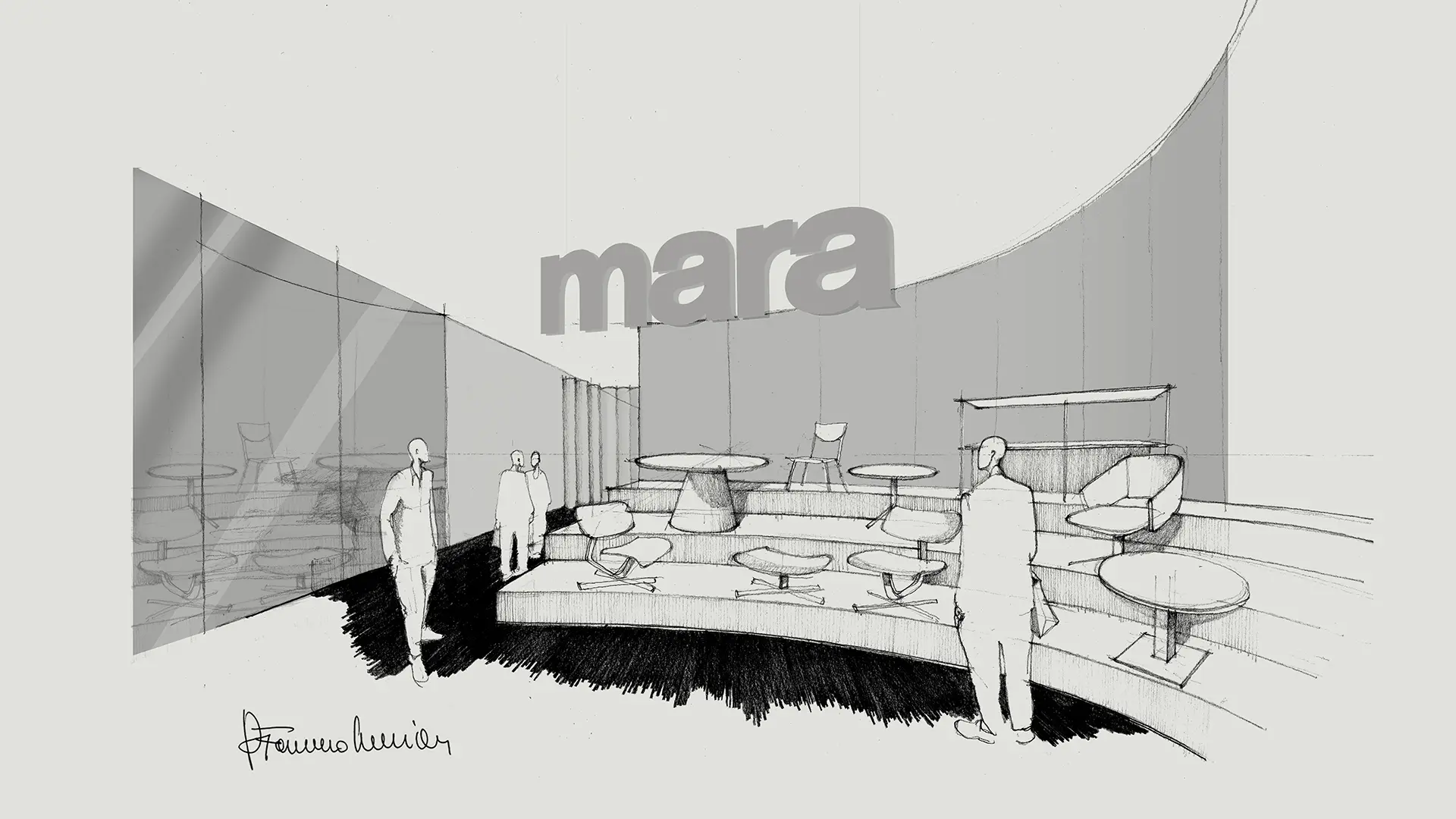
Mara Arena, designed by Ferruccio Laviani, Mara
At the Salone del Mobile 2026, the Mara stand will function as a contemporary piazza. Designed by Ferruccio Laviani, the exhibition space will translate a precise idea into architecture: the product can only be understood within a series of relationships
In ancient Greek, the agora did not indicate the space alone, but also the act of gathering: the physical space coincided with the social action of inhabiting it. It is no coincidence that Mara (Hall 22 Stand A25), a Brescia-based company active since 1960 in the production of furnishing systems for the office, contract sector and home, has chosen precisely this archetypal image as the generative element of its stand at the Salone del Mobile 2026.
The project is by Ferruccio Laviani, one of the most important figures in Italian design, with over thirty years of experience in product design, artistic direction and exhibition installations. His collaboration with Mara has been strengthened in recent years by the design of new products – such as the Elle modular bookcase, completely in metal – and by curating the company's exhibition stands. For the Salone 2026, Laviani has conceived an architectural device that does not confine itself to displaying products but orchestrates the ways visitors encounter them.
Giving shape to the whole project is a large hemicycle called Mara Arena: the tiered arrangement, reinterpreted in a design key, is given a dual function, serving as both seating and the display surfaces for the company's iconic products. It is a gesture that transforms the stand into a permeable, almost informal space, where the public is invited to linger and relate to the furnishings in a spontaneous and collective way. Here the product is not glorified on a pedestal but available for use, contact and conversation.
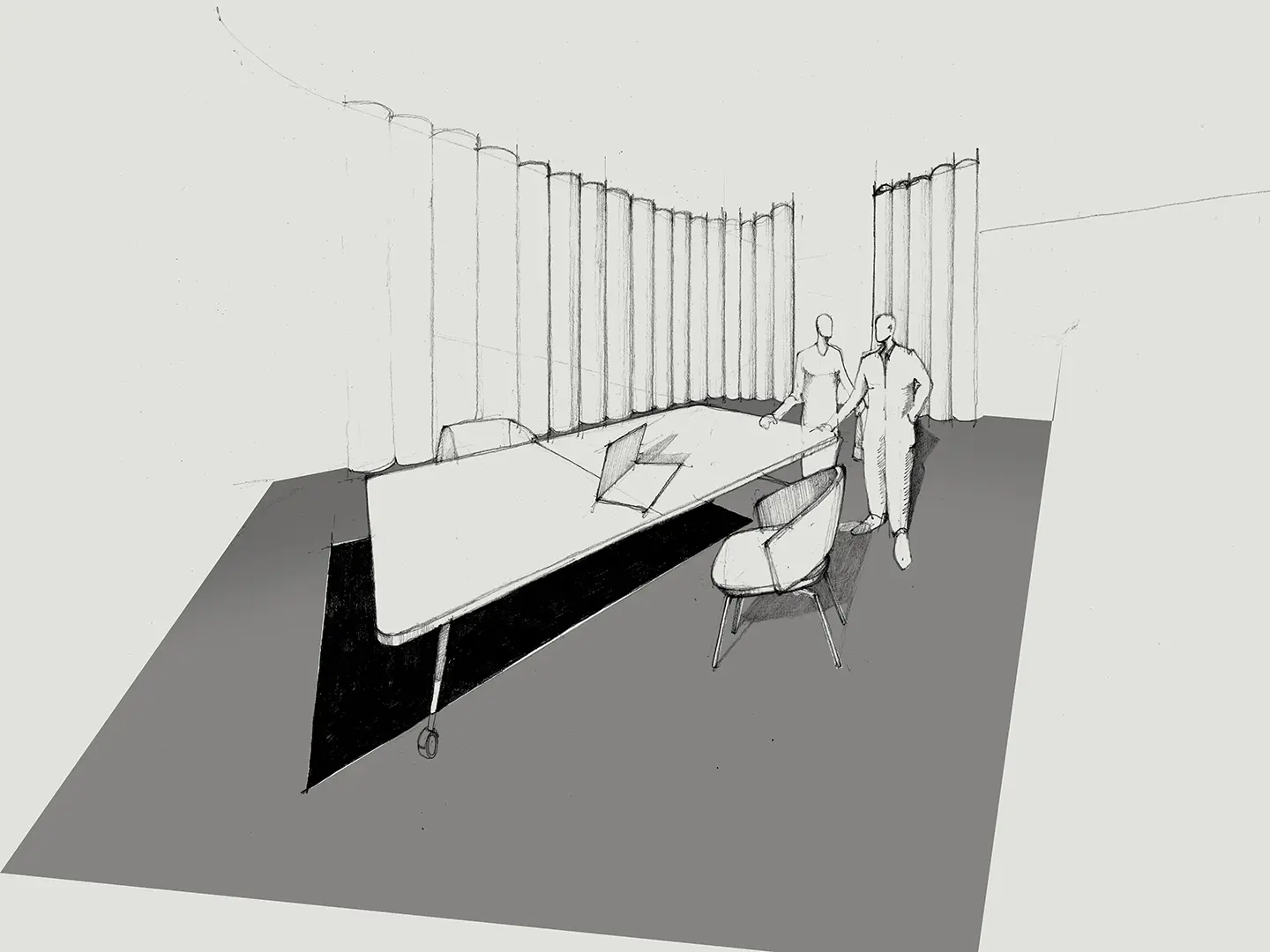
Mara Arena, designed by Ferruccio Laviani, Mara
After passing this threshold, the project changes register. The opening of the piazza gives way to a more intimate, almost introspective space, where the architecture becomes more intimate and measured. Natural materials, warm surfaces and material tones define a sensory landscape in which light and colour dialogue with the furnishings, in a subtle balance between space and object, in which neither prevails, but both help build a coherent experience. The display accompanies the visitor through different scenarios of living – from the office to the workplace, from hospitality to residential – in a path that works by elimination and precision.
“A well-designed space shows more than just a product: it creates the conditions for that product to be understood, experienced and remembered,” they say at Mara. It is a declaration of intent that reflects the development of the company, which in over sixty years has grown from fabricating furnishing components to a broader vision of contemporary home living, in which the manufacturing quality of metalworking is entwined with a growing design ambition. In recent years, Mara has built a roster of collaborations that reflects its ambitions: in addition to Laviani, the company works with Christophe Pillet, Marcello Ziliani and AMDL CIRCLE, the studio founded by architect Michele De Lucchi, whose products will be featured within the stand.
The innovations to be presented at the Salone include: a new collection of seating designed to span different contexts – from the office to the contract sector, from hospitality to residential – a new series of tables and a limited edition that celebrates the ten years of Argo Libro, one of the company’s best sellers.
This new phase also extends beyond the physical space. At the Salone, Mara is presenting its new website, the expression of a renewed digital identity designed to translate online the same concern for experience and relationships typical of the design of its stand. Laviani's stand translates the company’s trajectory into a spatial experience: an architectural story that develops through thresholds, passages and changes of atmosphere, revealing that the way a piece of furniture is presented is already, in itself, a project.
Highlight content