

 Stories





China accounts for 72% of the Asia-Pacific contract market potential
Landscape architecture: history, theories and examples
Text by
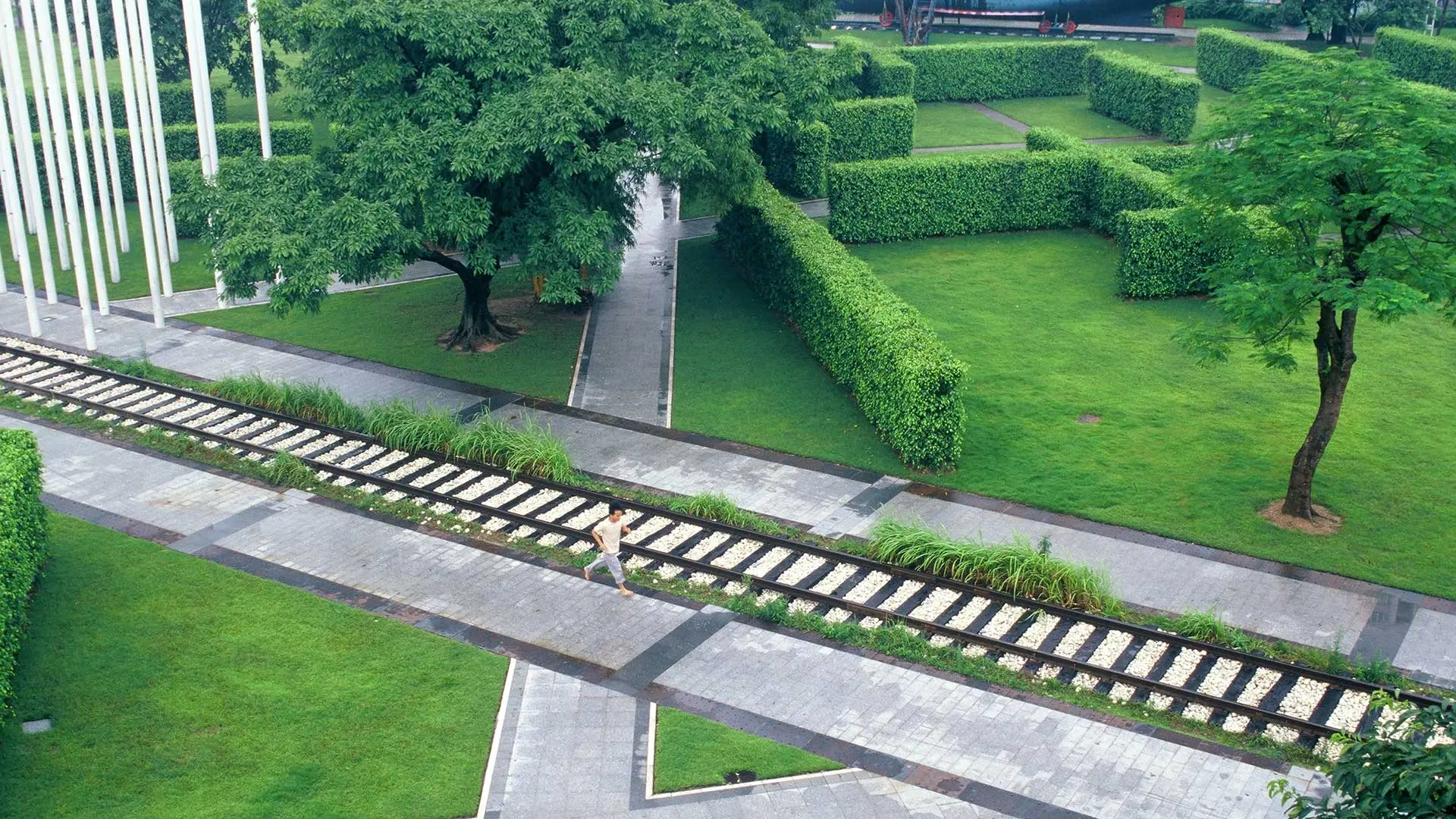
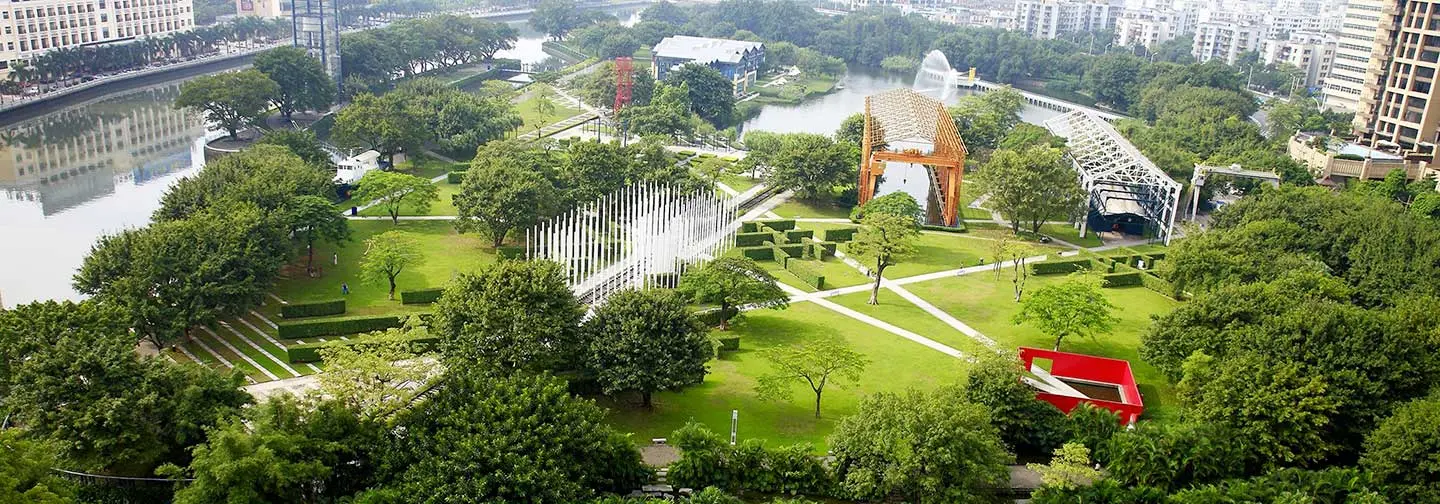
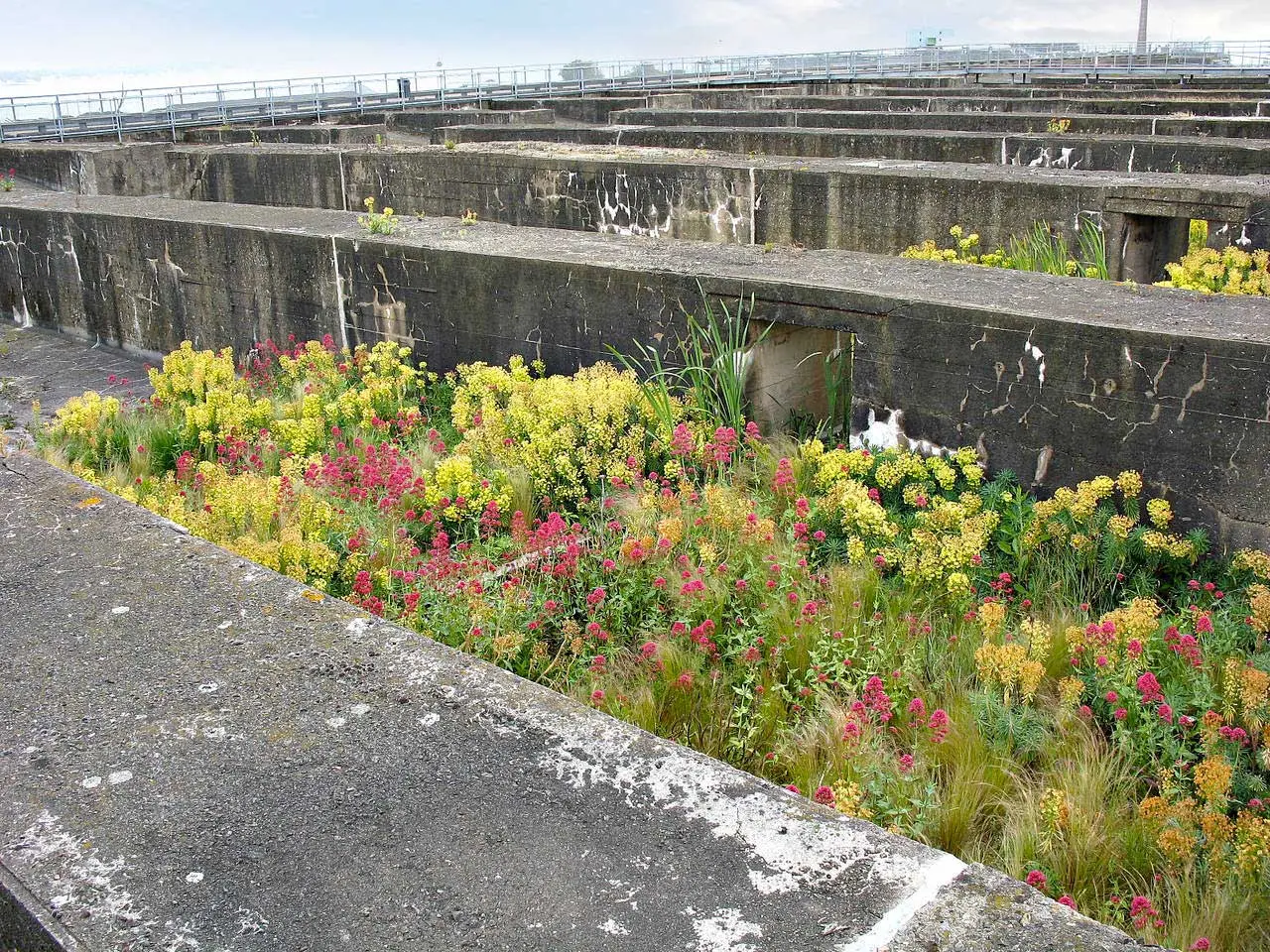
Zhongshan Shipyard Park
From Central Park to Landschaftspark Duisburg-Nord, Gilles Clément’s Third Landscape and sponge cities: what landscape architecture is, and how a discipline developed to make the industrial city habitable now helps it withstand climate change
Soils, water, topographies, vegetation, time: the term landscape architecture encompasses everything that is designed without building a volume. It’s not an architectural style or a movement, but an independent discipline whose design material is the land: its slope, its permeability, what grows above it and what flows below it.
The term landscape architecture itself conveys a fertile ambiguity. It combines a word evoking a formal conception of space — architecture — with one that speaks of processes, seasons and growth. The discipline still works within this tension today. It is the only form of design whose material is alive and keeps changing after the project is complete.
The origins: a response to the sick city
The garden imagery is misleading. Landscape architecture grew out of the industrial city. In the mid-nineteenth century, European and American metropolises were congested, with poor or non-existent sanitation. New resources were needed to make life in them worth living. In 1858 the title “Landscape Architect” was assigned for the first time in a public commission to Frederick Law Olmsted and Calvert Vaux: the commission was the celebrated Central Park in New York. Here, green space was conceived as sanitary and social infrastructure even more than a leisure facility or urban ornament.
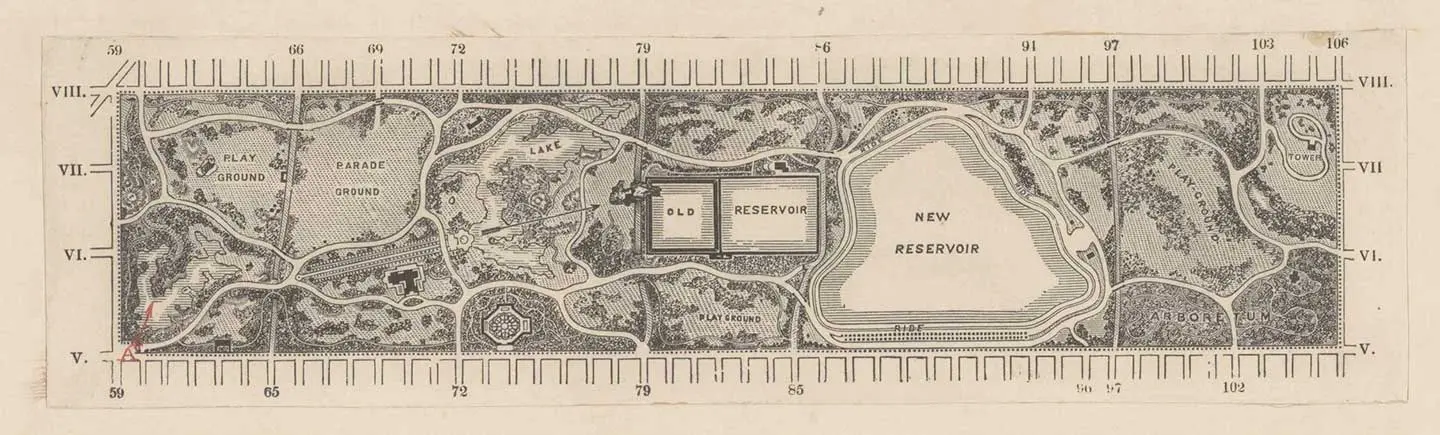
Courtesy NYC Municipal Archives
Olmsted made a founding gesture. He synthesised into a single discipline fields of knowledge that had previously remained separate, such as horticulture, botany, hydraulic and civil engineering and architecture. In 1900 the first academic course in Landscape Architecture was established at Harvard, and it was his son, Frederick Law Olmsted Jr., who combined it with urban planning. Central Park looks natural, but in reality it is wholly constructed and artificial. The site was drained, excavated, reshaped and filled with imported soil. The discipline was born by pretending to be nature.
From drawing to process
For a century the landscape architect designed forms. Then the cracks appeared. One of the projects marking this turning point was Landschaftspark Duisburg-Nord by Peter Latz(1991), a disused steelworks in the Ruhr turned into a park. Latz left the blast furnaces, gasometers and casting basins standing, and let natural vegetation grow over them. As the theorist James Corner would later recognise, Latz did not impose his own signature on the site. He cultivated processes already inscribed there, in a profoundly temporal work that generates a new reality out of an old foundation.
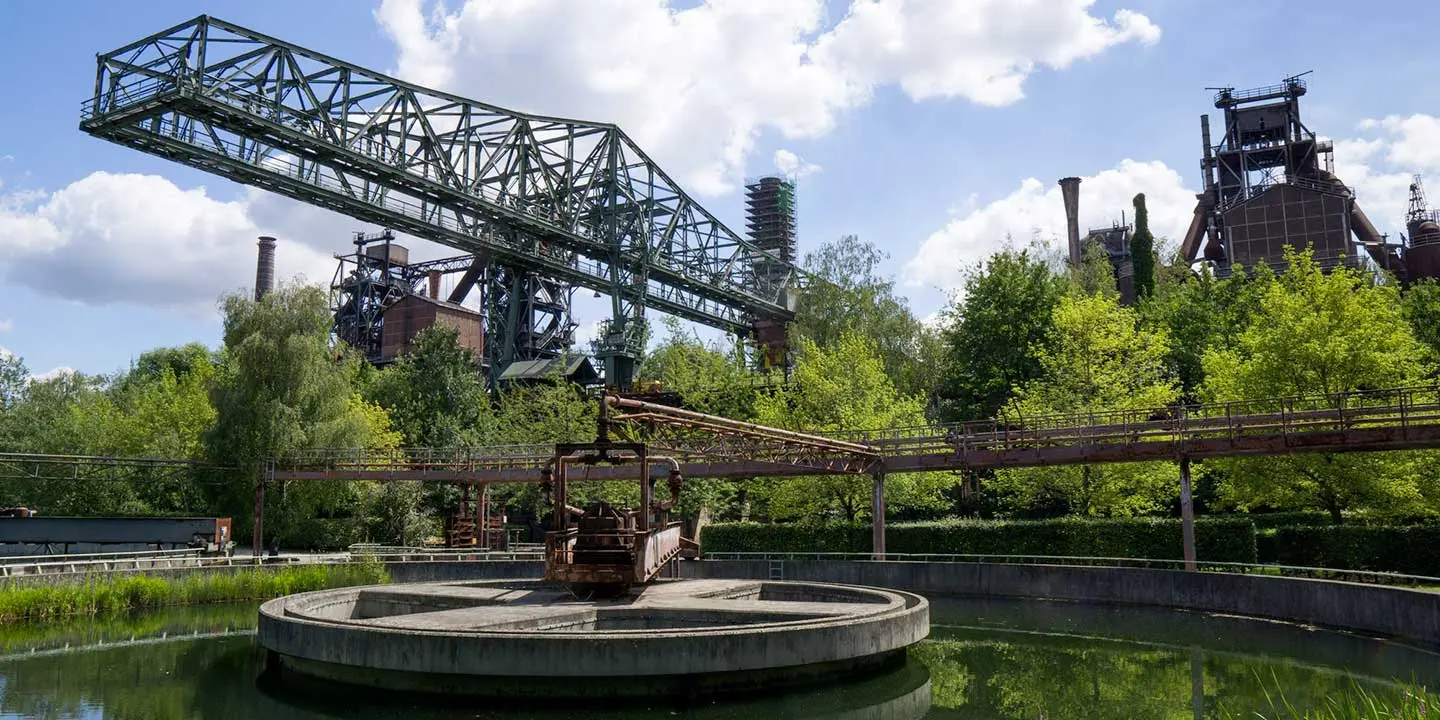
Ph. Nikolay Dimitrov
This was the decisive shift. The landscape architect stopped designing the outcome and began to favour the conditions. In the same years, architectural theory noticed this and coined a term — landscape urbanism — to describe how the city had ceased to be a collection of objects and become a field of horizontal forces.
Gilles Clément and the Third Landscape
Gilles Clément took this reasoning to its extreme. Trained as a landscape architect, he describes himself as a “gardener”, not a designer. Clément published the Manifesto of the Third Landscape in 2004, a booklet only a few pages long but very dense theoretically. The Third Landscape is the set of places abandoned by humans: the planet’s vast uninhabited areas, and above all small and almost invisible spaces — disused industrial areas where brambles and scrub grow, weeds in the middle of a traffic island, the roadsides. Clément calls them délaissés, remnants. They are undecided spaces: no designated use, no form, no project. Precisely for this reason, taken together, they are the principal refuges of biological diversity.
Ph. Gilles Clément
The title is a political argument. “The Third Landscape” refers to the Third Estate, the 1789 pamphlet by the Abbé Emmanuel-Joseph Sieyès claiming a role for the most numerous and least represented part of France: What is the Third Estate? Everything. — What has it been hitherto in the political order? Nothing. — What does it desire to be? Something.
The most radical work to follow these principles is Île Derborence, in Parc Matisse in Lille: a platform resting on a concrete base, inaccessible to visitors, left to evolve for decades without intervention. A project whose essence is that no one sets foot on it.

Ph. Velvet / Wikimedia Commons
It would be a mistake to take this as praise for abandonment. Acting on the Third Landscape means going with nature and not against it: observing, accommodating, intervening as little as possible. Leaving things as they are does not evade decision-making. The paradox is this: the uncultivated, by definition, excludes humans, and it is humans who decide to let it do so.
The art of survival
Meanwhile, the climate has changed the questions. The city is no longer just a place to be made habitable: it is an organism that consumes land, heats the air and seals the ground. The landscape architect is tasked with mediating those consequences and alleviating their effects.
The designer who best represents this position is Kongjian Yu, founder of Turenscape, who died in September 2025. Raised in a farming family and educated at Harvard, Yu built his theory against aesthetics. He called his rejection of ornamental landscape the Big Feet Revolution — the city that has bound its feet to be beautiful and can no longer walk — and termed landscape design the art of survival.