

 Stories

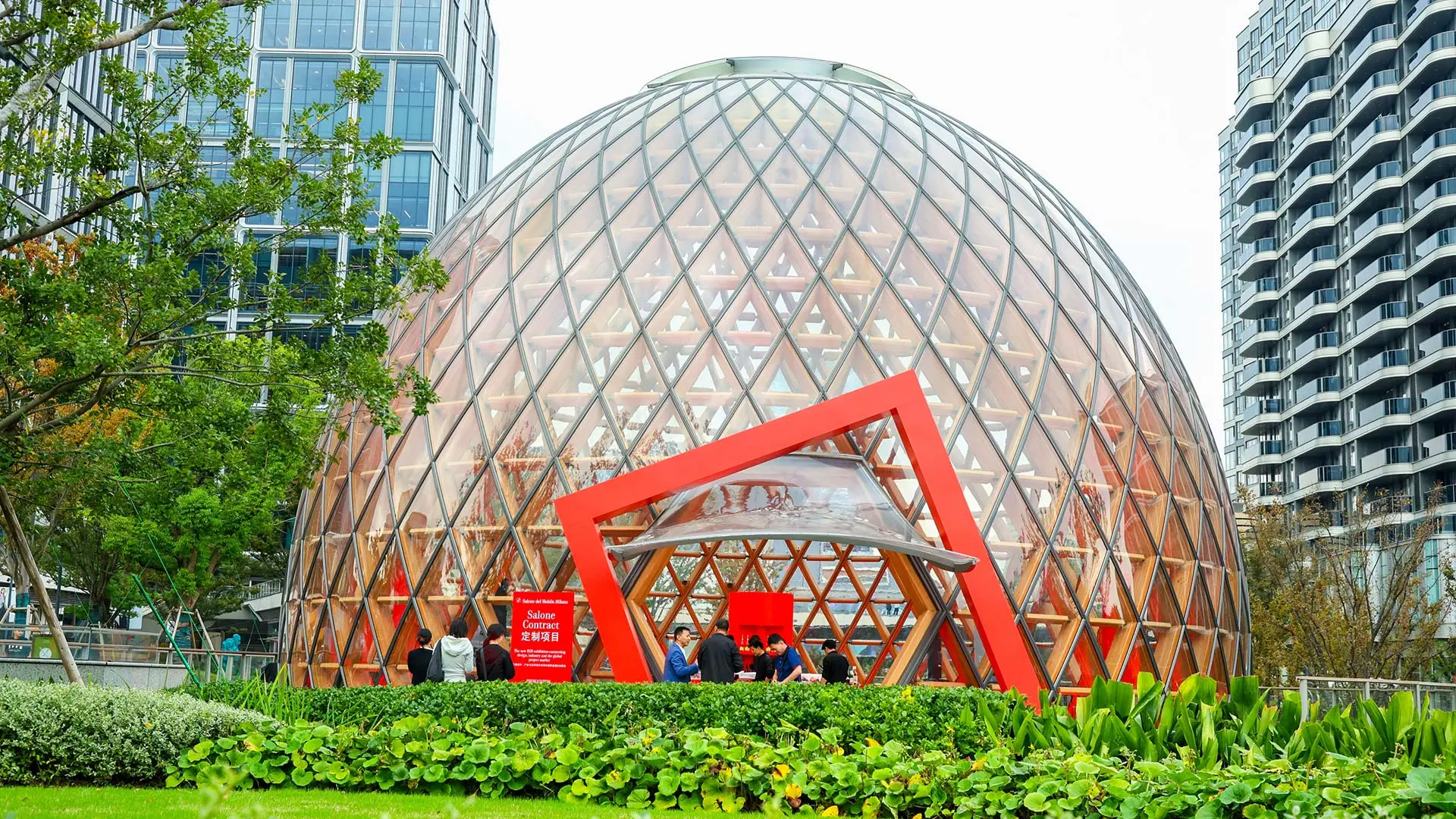
China accounts for 72% of the Asia-Pacific contract market potential
Konstantin Grcic: “For me, the Salone is still the heart of the industry I love”
Text by
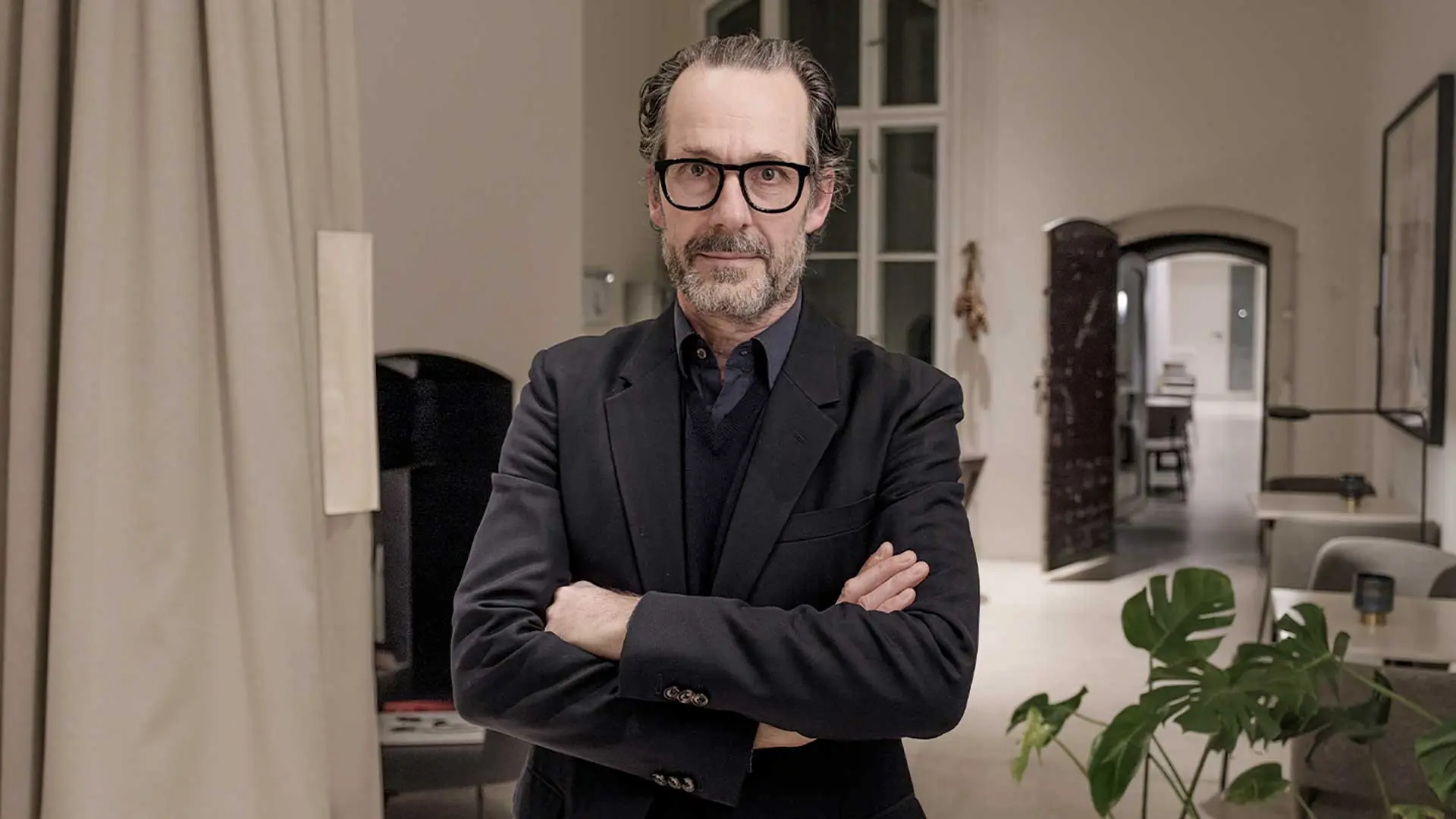
Konstantin Grcic - Ph. Davide Colombino
The German designer talks about his career spanning several decades, covering long-standing collaborations, spin-offs and reflections on how design can help to reveal the world
Among the great designers of our time, Konstantin Grcic has never regarded prolific output as an end in itself. Rather, and without contrivance, he is a designer capable of reconciling opposites: captivated by detail whilst remaining sensitive to context, bold in his reinterpretations whilst staying anchored to a sense of proportion and appropriateness.
From his studio in Berlin, where he moved a few years ago, the man who began his career as a cabinetmaker continues to treat industrial design as a field for human-scale, hands-on innovation. A practice that readily blends with curation and independent projects, fuelling an imagination that has never ceased to ask what design is for, and what it can still do for us.
Read also: Konstantin Grcic and the Bell Chair by Magis
Your career seems to be marked by long-standing collaborations. Do you think continuity is important to a good project?
Yes, absolutely. Some of the most important projects in my career have grown out of long-standing collaborations. Continuity creates trust, and trust allows you to take risks together. My relationships with Piero Gandini at Flos and Eugenio Perazza at Magis are very personal examples. We worked together for many years, through many different projects. Over time, you develop a shared understanding. You know each other’s strengths, but you can also disagree, challenge each other and sometimes fail together. You don’t have to start from zero every time. I think this kind of continuity gives a project depth. A single project is never isolated; it carries something from what came before and, hopefully, opens a door to what might come next. For me, that is one of the great pleasures of working in design.
Many of the Italian companies with which you have developed long-standing relationships are family-run businesses. Is there something particular you appreciate about this model?
Yes, very much. What I appreciate about family-run companies is the personal relationship that can develop. Decisions can be made much more quickly and directly because you are often speaking to the owner him- or herself. There are fewer layers between an idea and a decision, and this makes the whole process more personal. The person you are working with feels deeply connected to the company and its products, and also carries the responsibility for the decisions being made. Over time, this can create an enormous amount of trust and faith in each other, which becomes a very strong foundation for working together. At the same time, the family model also carries a certain risk when it comes to generational change. Over the past few decades, we have seen a number of Italian furniture companies where the next generation has struggled to match the entrepreneurial energy and creative vision of the founders. But I also think we have to be fair. The world these companies operate in has changed completely. The founders built their businesses under very different conditions. Today, the next generation has to deal with globalisation, changing markets, social media, new technologies and now AI. So perhaps it is not simply a question of continuing what the previous generation did. They have to find their own way of being entrepreneurial in a very different world.
Your work spans furniture, product design, curating and limited-edition collections. Unless I’m mistaken, you have never really ventured into interior design.
There are probably three reasons. The first has to do with the relationship to the client. When I work with a company or producer, I see them as a kind of partner in crime. We share the same goal and are driven by the same interest: to make the best possible product. With an interior project, the client is more clearly a client, and my role becomes one of serving their particular needs. I have always felt less comfortable with that relationship. The second reason is the process. I need the process of industry to develop my ideas. It is usually slow and involves many people – engineers, model makers, craftsmen and other specialists. You make prototypes, you test, you make mistakes, you learn and gradually make the idea better. I really depend on this process. An interior is much more of a one-off. In a way, the finished project is the prototype, so you have to get many things right the first time. And finally, it is simply a question of focus and scale. Interiors require you to think about many things at once. I prefer concentrating intensely on one object and working through it in great detail. The scale of a product has always felt more natural to me than the scale of a space.
You have been the creative director of Mattiazzi since 2021. What has this role taught you?
I found it really exciting to be on the other side of the table for once. As a designer, I am usually focused on my own project. As creative director, I had to think about the company as a whole. It was about the bigger picture and about connecting many different things: products, designers, communication, photography, exhibitions, the way the company presents itself and, of course, the business behind all of it. I learned how much these things depend on each other and how important it is to create coherence between them. I also enjoyed working with other designers from this different position – inviting them in, supporting their ideas and sometimes stepping back from my own instincts. It taught me that creative direction is less about imposing a vision and more about creating the conditions in which good things can happen. Perhaps most importantly, it gave me a much better understanding of what it means to run a design company: the decisions, compromises and risks involved, and the constant balance between creative ambition and commercial reality.
Sport was the subject of the exhibitions you curated around the Paris Olympics and the Milan Winter Olympics. Do you think sport offers an interesting lens through which to look at design?
Absolutely. I love sport, even though I have never been particularly competitive myself. In fact, I would say that sports equipment was one of my first design teachers. As a kid, I could spend hours looking through sports catalogues, completely absorbed by the equipment – its beauty, its technological logic, its efficiency. Everything had a reason. Materials, construction, weight and form were directly connected to performance. I think this had a strong influence on how I later came to understand design. Sports equipment is also a great ambassador for design because people are incredibly open to innovation in this field. They happily embrace the newest, strangest and most radical trainers, skis, bicycles or tennis rackets. The same people might never dare to buy a piece of furniture that is equally radical. I find that fascinating. Sport somehow gives design permission to be experimental. Performance becomes the argument for change, and people accept – even desire – something that looks completely new.
In 2025, you founded 25kg. Each new release presents a Thing. How would you describe the difference between a Thing and a product? And why do you think it is important to create open-ended projects rather than closed ones?
I call them Things because I like the openness of the word. A product usually comes with a clear definition: what it is, what it does, where it belongs and how it should be used. A Thing can be less specific. It is an object, but it leaves some room for interpretation. This is important to me with 25kg. The Things often start from quite raw or radical ideas that might be difficult to place within the conventional logic of a furniture company. I want to preserve some of that rawness rather than resolving everything into a perfectly defined product. Open-endedness also gives something back to the user. THING_02, for example, can be a seat, a small place to meet, or simply something to lean against. THING_04 can become part of a much larger structure. I provide the object and a certain logic, but I don’t want to prescribe everything that happens with it. Perhaps that is the difference: a product tries to answer a question, while a Thing can still contain a question. I find that much more interesting.
You have been a long-standing visitor to the Salone del Mobile. How does your view of design change when you encounter it on the exceptionally vast scale of the Rho fairgrounds?
First of all, I love the Salone del Mobile. I have been going every year since 1990, with the exception of the pandemic. I always go, and I still look forward to it. My favourite moment is early in the morning, entering with an exhibitor’s pass before the fair opens to the public. Some of the stands are already open, often with the lights still off. I love doing my rounds then, on my own and without distractions. Of course, I am looking for great products, but I am also interested in how everyone presents themselves. On this enormous scale, you can somehow read the state of the whole industry: what companies are thinking about, where they are investing, what is changing and what isn’t. For me, the Salone is still the heart of the industry I love. It is a huge marketplace where everyone puts themselves on display. I find that incredibly inspiring. And then, once the doors open and the pavilions fill up, it becomes something else: a meeting place and a place of exchange with so many of my closest friends, colleagues, producers and partners. That combination is what makes it so special to me.
The design world periodically debates the lack of criticism as well as the lack of truly cutting-edge products. Do you think the space for radical proposals is narrowing? And do you see younger designers pushing in the opposite direction?
Yes, I think in recent years there has been a very palpable sense of uncertainty, and one consequence is that we see fewer truly radical proposals. Everyone is watching what everyone else is doing, waiting to see what happens, and perhaps falling into line a little too easily. I don’t say this simply as a criticism. There are many serious and understandable reasons for this caution. The state of the world is uncertain, markets are difficult, and companies are under enormous pressure. But historically, moments of crisis have also created new freedoms and new niches. I think these exist today as well, and they are often where the most exciting things are happening: small companies, independent labels, initiatives and collectives. Younger designers are part of this. What worries me more is a certain fragmentation of the design world. Some important manufacturers have stopped exhibiting at the Salone, and this exodus has developed a risky momentum. At the same time, I hear younger designers saying they would rather stay in the city than make the journey out to Rho. I think that is a shame. For me, these two poles belong together. The fair and the city need each other, and each should make the other stronger. Milan itself has a responsibility here too. The Salone is an extraordinary asset for the city, but hotel prices have become astronomical and exhibiting at the fair is increasingly expensive. If we want the Salone to remain healthy, vibrant and unique, these realities have to be taken seriously. It needs to remain a place where the whole design community can participate – including the smaller, younger and more radical voices.
14 September 2026
Share