

 Sustainability





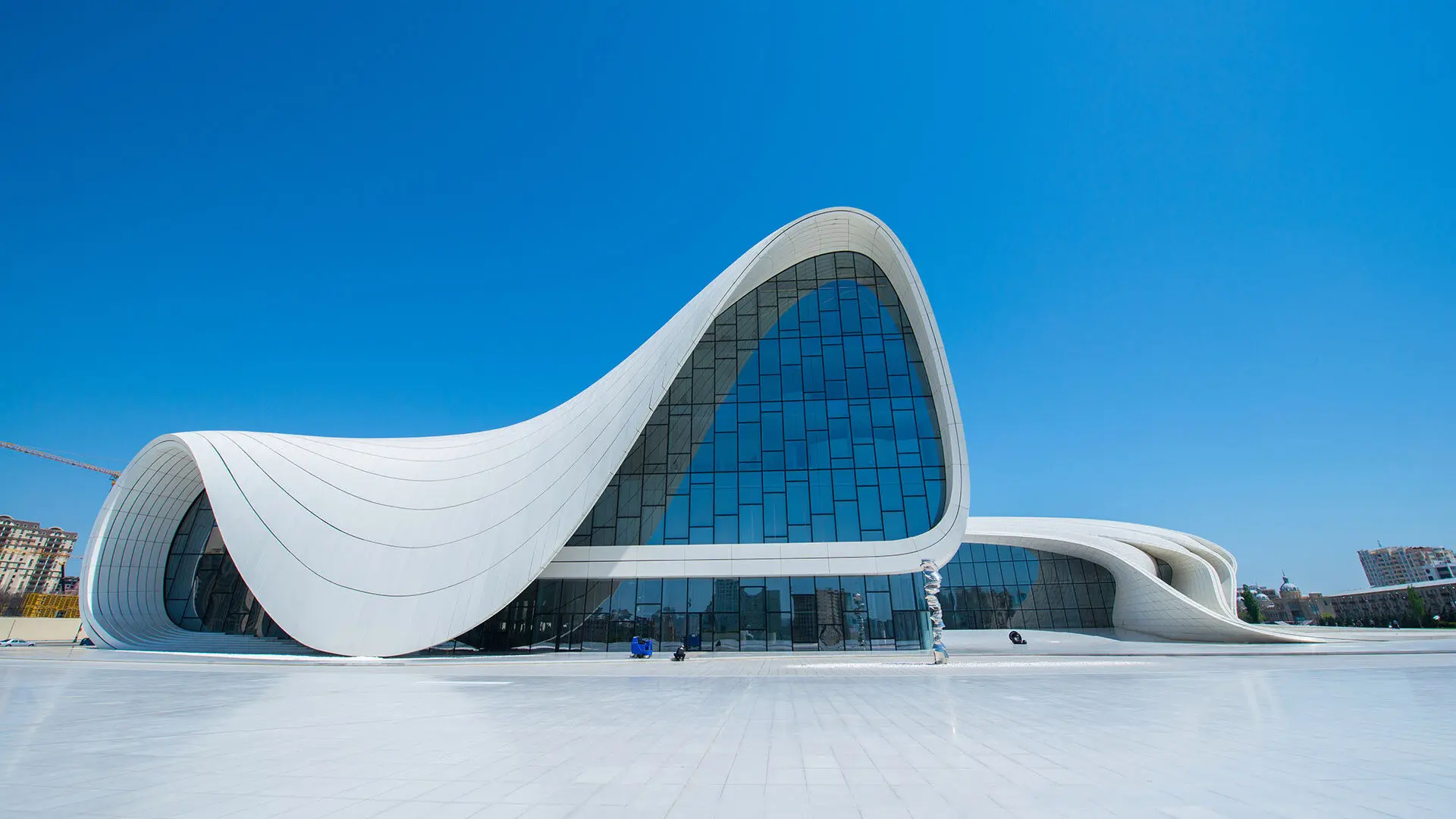
From Luigi Moretti at the 1960 Triennale to Patrik Schumacher’s manifesto and the works of Zaha Hadid: a history of architecture that entrusts form to algorithms, and which seeks to evolve from a method into a style
Major change is under way this year, driven by the Empowering Consumers for Green Transition Directive and a radical shift in public awareness
With the Salone del Mobile.Milano 2026 fast approaching, sustainability will continue to be a central issue for many companies. However, from now on, discussing environmental and social issues will increasingly call for greater precision.
For years, the narrative around sustainability has often relied on broad, evocative terms: ‘green’, ‘environmentally friendly’, ‘responsible’, ‘virtuous.’ These are effective expressions from a communication perspective, but not quite as robust in terms of clarity.
When it comes to the world of design, it’s a far from secondary issue. Whilst in other sectors, the communication of environmental sustainability also relies on codified tools - packaging, labels, standardised wording - in the furnishing sector, the narrative translates into more widespread and subtle ways: in catalogues, marketing materials, product sheets, websites, showrooms, campaign imagery, and brand language.
The new Empowering Consumers for Green Transition Directive
The new European and Italian regulatory framework will, however, call for less vagueness and much greater precision. The Empowering Directive — which transposes Directive (EU) 2024/825 into Italian law, more commonly known as the Green Claims Directive and explained here in greater detail, including its legal and practical aspects, redefines the scope within which the environmental characteristics of products may be communicated, with the aim of building a more reliable information ecosystem for the market and for consumers.
The Directive requires businesses to use more precise language - generic environmental claims become problematic if they are not included on a sustainability label (for which the Directive provides a specific definition) and, in any case, if they are not supported by clear and obvious specifications that can be deduced from the very medium through which the claim is made. In other words, claiming that a product is ‘green’ or ‘environmentally friendly’ becomes misleading unless it is immediately made clear what this actually means.
This is also an important step from a cultural perspective: ‘green’ is an umbrella term that encompasses processes, materials, intentions, improvements, and sometimes even aspirations. Environmental sustainability, however, is a set of different aspects, covering materials, supply chains, durability, reparability, recyclability, consumption, certifications and social responsibility. This is why the legislation underscores principles of clarity, truthfulness, supporting evidence and the absence of ambiguity. This is fully in line with the key points of the Green Claims Directive and was also highlighted by the experts interviewed by FederlegnoArredo: the lawyer Alecsia Pagani and Alice Pedretti, Sustainability Director at Havas PR.
There is a huge difference, for example, between saying that a piece of furniture is ‘sustainable’ and saying that it uses certified wood, or that it contains a proportion of recycled material, or even that it has been designed to facilitate the repair of certain components. In the first case, a sweeping and attention-grabbing claim is made; in the second, more specific, useful and credible information is provided. Design products are by their very nature complex - they bring together different materials, processes, components and lifecycles. It is therefore easy for a positive feature to apply to one part of a product, or one stage of the process, but not to the whole. The new regulatory framework strongly emphasises precisely this point: an environmental claim that relates to only one specific aspect cannot be presented as applying to the entire product.
Verifiability and greenwashing
Another pivotal change concerns the relationship between communication and verification. Green claims are regarded not as promotional messages, but as information that influences purchasing decisions and must therefore be based on verifiable evidence. The Directive reinforces the idea that claims must be supported by relevant and scientifically verifiable information, in both environmental and social terms.
This development is particularly interesting because it introduces the need for ongoing data collection, measurement, traceability, the selection of certifications, and internal awareness. The more structured this upstream work is, the simpler, clearer and more natural the downstream communication becomes. Many companies, especially small and medium-sized ones, are not starting from scratch, but often have not yet turned what they already do into a clear and communicable asset.
Certifications as a language
Another important chapter concerns labels and certification schemes. The Directive also addresses this issue, seeking to bring order to an area crammed with a wide variety of brands, labels and symbols. The aim is not to eliminate environmental communication, but to distinguish reliable systems from self-referential ones, requiring that sustainability labels (which, by definition, also include brands and product names) be based on public criteria that are verifiable and audited by third parties.
This is a particularly sensitive issue for the design sector, because a sustainability label and/or certification scheme (the Directive also provides a precise definition and scope for the latter) may be highly relevant from a technical standpoint, but prove difficult for a wider public to understand. The communication effort required therefore involves the ability to clearly explain what a particular label and/or certification entails, without falling into the trap of oversimplifying or trivialising it. From this perspective, the role of mediating between technical, sustainability, legal and communication departments is becoming increasingly important within a company. It is often the lack of this coordination that gives rise to the risks the new regulation seeks to curb: claims that are very strong from an advertising point of view but tenuous when it comes to verification; or information that is technically correct but incomprehensible to the end user.
A positioning opportunity
Many companies may see this as a competitive advantage, as it forces them to improve the quality of their information, strengthen the link between product and narrative, and build greater consistency between what they do and what they claim.
The Salone del Mobile represents a pivotal moment when brands present their visions, values and innovations, and communication - both verbal and visual - is an integral part of this positioning strategy. In this sense, the new regulations may also be seen as an invitation to more measured yet no less powerful communication, making a narrative more reliable and helping to build credible value.
For Italian design, which has always combined industrial culture, materials research, design quality and narrative skill, this could mark an important transition towards fostering a more conscious approach to design, processes and corporate responsibility, with sustainability moving beyond mere narrative to become substantiated information, thereby strengthening the relationship between producer and consumer.
The provisions of the Empowering Consumers for Green Transition Directive came into force on 24th March 2026 and will apply as of 27th September 2026.