

 Stories





Why darkness is a natural resource that must be protected against waste and light pollution
Michele De Lucchi: from the Tolomeo lamp to the Triennale, a portrait of a master of design
Text by
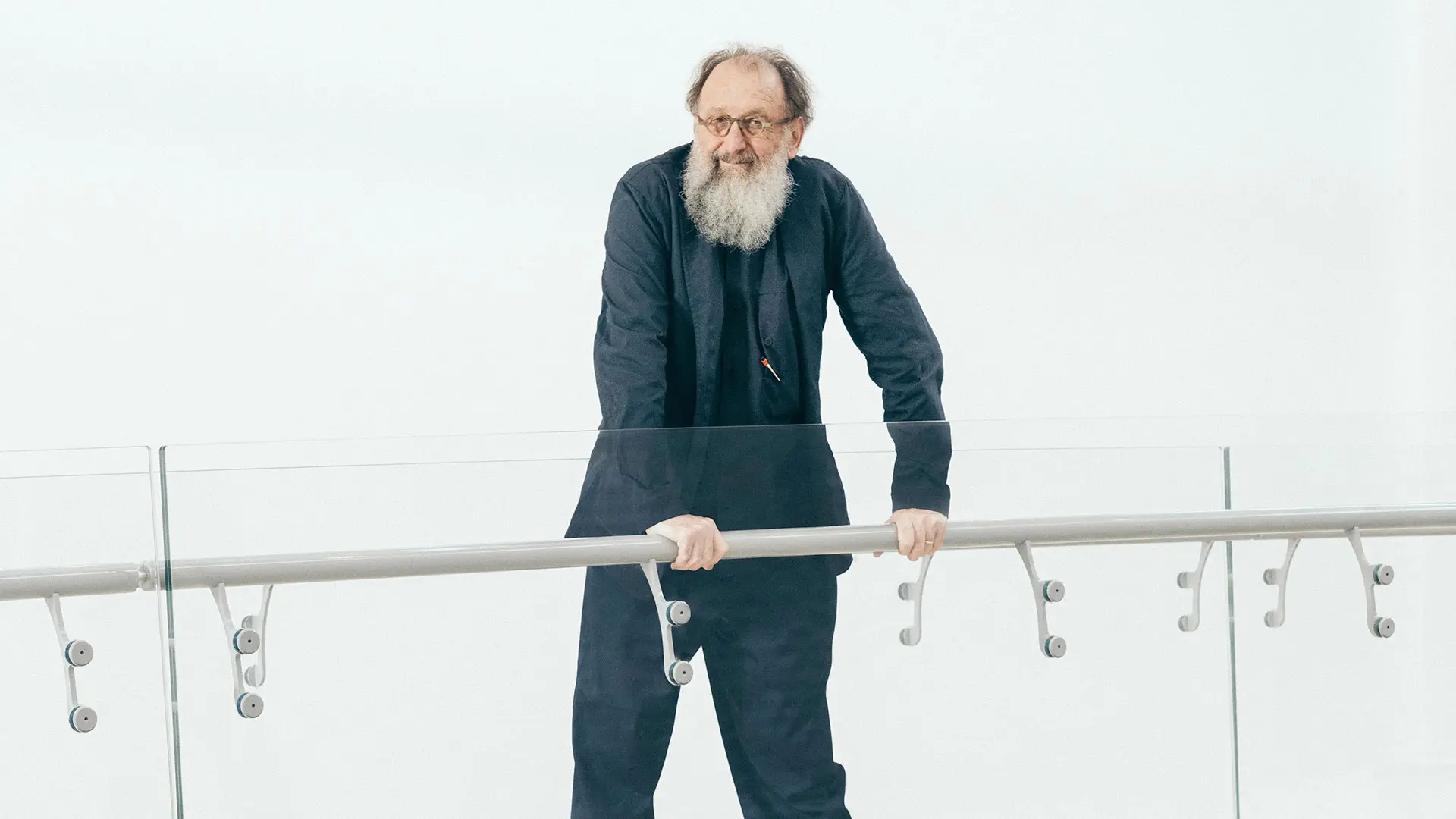
Michele De Lucchi - Ph. Delfino Sisto Legnani
From his years with Memphis to Artemide’s Tolomeo, from the spaces of major corporations to hand-carved wooden sculptures: the story of one of Italy’s most influential designers, now creative director at Triennale Milano
Michele De Lucchi is the creator of “the sort of design in which new and traditional technologies are never at odds, but alternate seamlessly, guided by a serene intelligence,” and a figure who has made the ability to navigate opposing situations his hallmark, according to Andrea Branzi in *Domus.* Born in Ferrara in 1951, De Lucchi graduated in architecture in Florence, moving to Milan in the early 1970s, bringing with him the influences of the radical avant-garde. From that moment on, his career has consistently followed a dual path: large-scale industrial production and experimental craftsmanship; the precision of the mass-produced item and the imperfection of the one-off piece. Two worlds which, in his practice, are not mutually exclusive but coexist.
Michele De Lucchi and Memphis: Sottsass, Olivetti and the First chair
His first testing ground was Gruppo Memphis. De Lucchi met Ettore Sottsass — whom he would always regard as his mentor — in Milan in 1978, and became a co-founder of the group. He was already part of the group at its historic inauguration in September 1981, and two years later he designed the First chair (1983), which became an emblem of the movement: a metal frame, a reclining backrest and two black spheres serving as armrests, a tribute to the lightness of Alexander Calder. During the most playful phase of Radical Design, however, De Lucchi pursued his own personal exploration of curves, discs and spheres, eschewing the trendy angular lines favoured by colleagues such as Sottsass and Peter Shire. Meanwhile, at the height of the Memphis era, he was already head of design at Olivetti: provocation and industry, hand in hand.
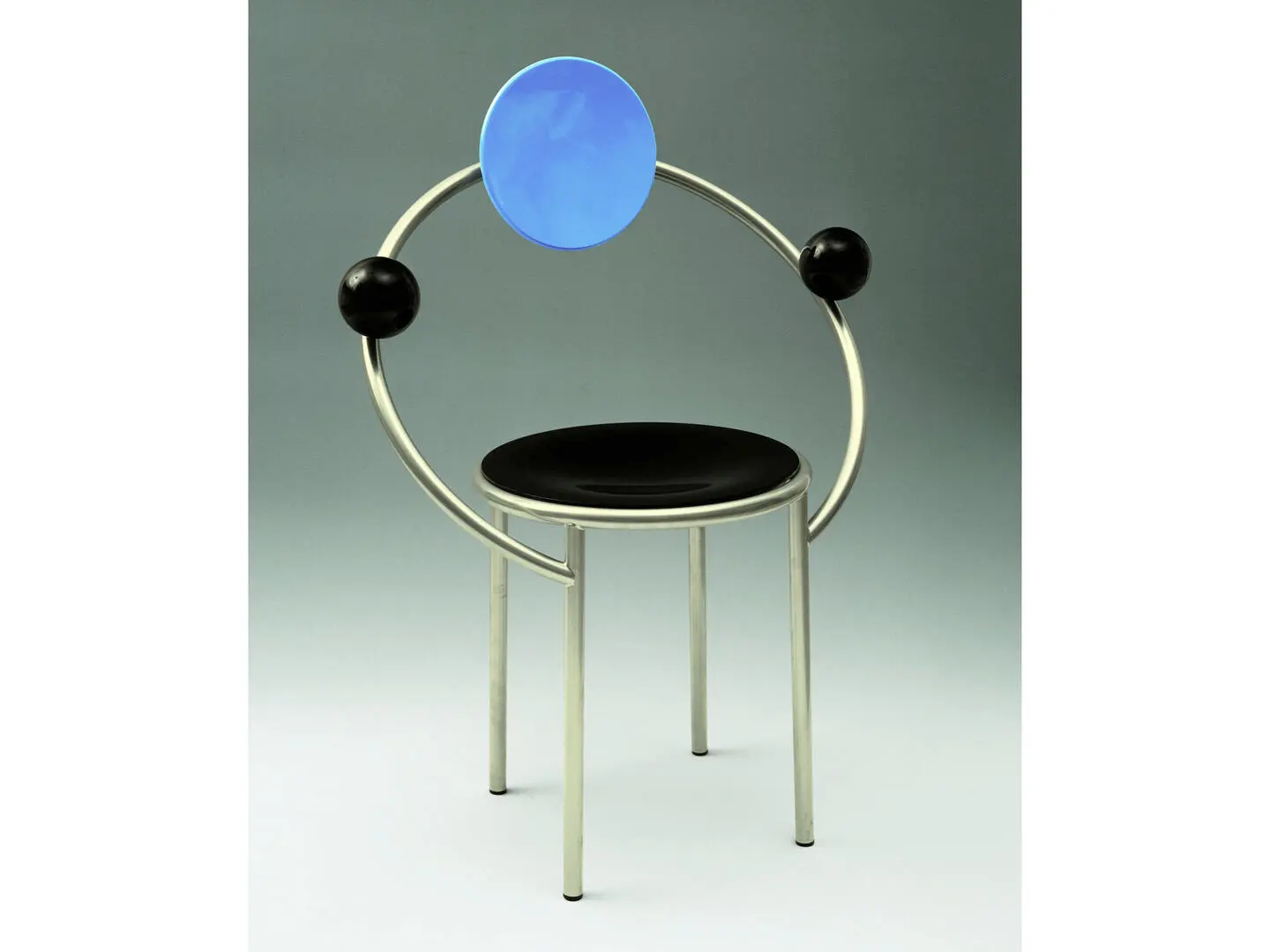
First, design by Michele De Lucchi nel 1983, Gruppo Memphis - Courtesy Memphis Group
The Tolomeo lamp by Artemide: the story of a design icon
It was Olivetti itself that sparked the longest-lasting partnership of his career. Ernesto Gismondi, founder of Artemide, contacted him in 1980 after seeing some of his household appliances for Girmi on display at the 16th Triennale and asked him to design some lamps. His first endeavour was the Cyclos (1982), an experiment that paved the way for the masterpiece, the Tolomeo created between 1986 and 1987, with technical input from Giancarlo Fassina. De Lucchi designed it pretty much with himself in mind, to better illuminate his drafting machine in a bid to revamp the classic pantograph-style work lamps. The mechanism was his own invention, doing away with steel springs in favour of a system of taut cables and joints inspired by the Apulian trabucchi, the ancient fishing machines operated by levers and ropes. Aluminium ensures lightness and keeps costs down; the name, chosen the night before the Salone, references the astronomer in order to evoke a “scientific mindset.” It netted him the Compasso d’Oro in 1989, “for the revival of a traditional design combined with high technological content and performance” - a description that also explains why the Tolomeo has become one of the most ubiquitous objects on film sets, from M’s desk in *Skyfall* to Gordon Gekko’s in *Wall Street.*Artemide still produces around half a million units a year – achieving a level of success that the designer himself struggles to explain: “I’m still searching for its secret, but obviously I haven’t found the answer yet, and I fear I never will.”
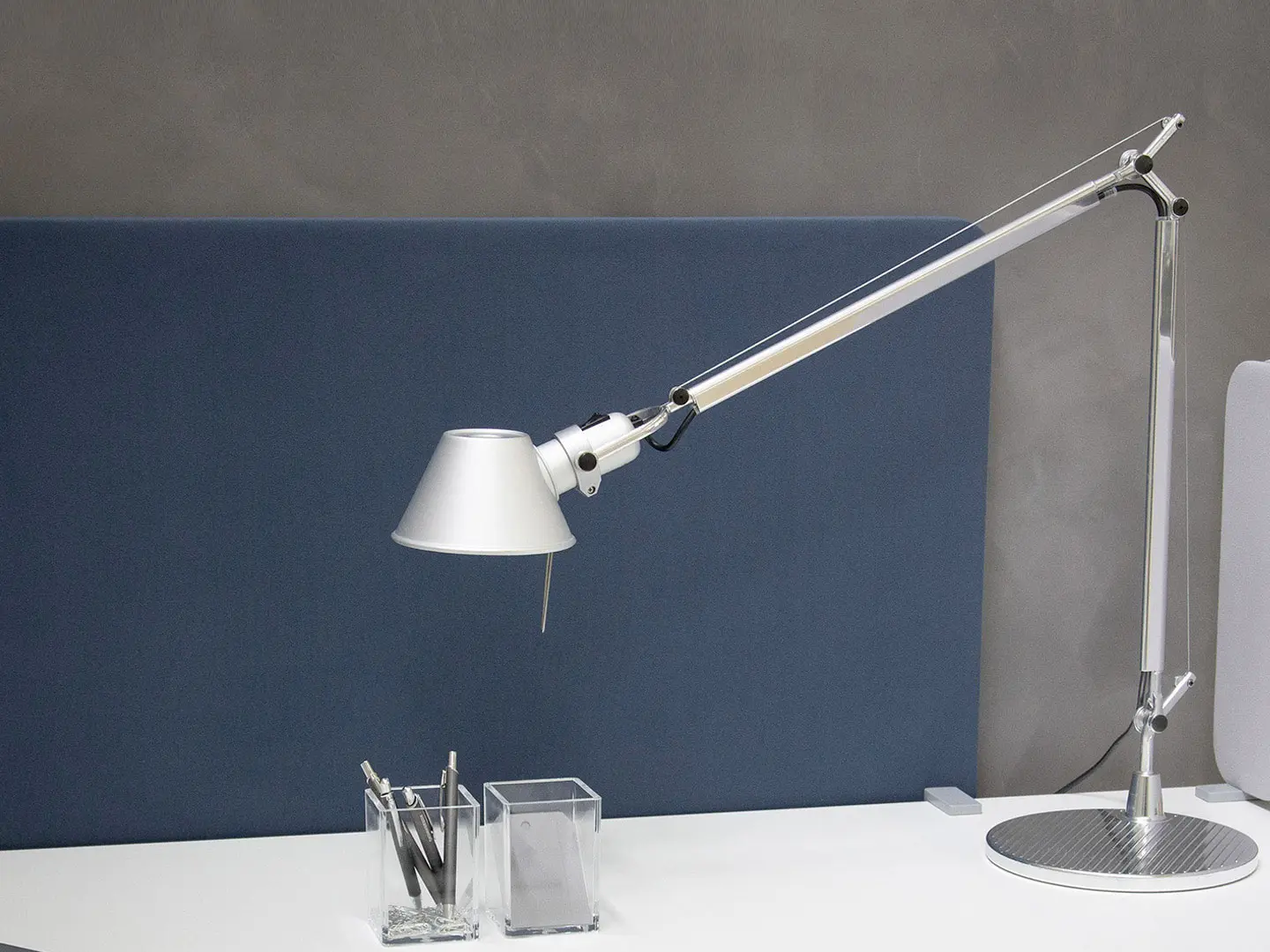
Tolomeo, design by Michele De Lucchi and Giancarlo Fassina, Artemide, Compasso d’Oro 1989
The ENEL smart meter and De Lucchi’s industrial designs
There is, however, a lesser-known, but perhaps the most revealing side to De Lucchi: his long-standing projects for workspaces, service environments and industrial settings. From his time at Olivetti through to Poste Italiane, Telecom Italia, Deutsche Bank, Intesa Sanpaolo and ENEL, he has treated architecture almost as an industrial object, capable of combining efficiency with the quality of the user experience. As of 1998, he did away with the bulletproof glass at the Poste Italiane counters and placed customers and staff on an equal footing; when it came to banks, he turned the concept of the branch as a fortress on its head, opening it up and making it transparent. The most emblematic example is perhaps the most unassuming. In 2001, along with Sezgin Aksu, De Lucchi designed the world’s first electronic meter to be installed on a large scale for ENEL - a smart meter with a domestic, reassuring appearance – the sort we all have at home but never really look at. “For a designer, designing a meter is a very special thing,” he explained, “because it is an object that represents the company for years and acts as an interface with customers. In addition to its technical functions, its symbolic power is fundamental.” A second generation meter, the Open Meter, followed in 2016. The same logic — the project as an interface between business and society — can be seen, on a landscape scale, in the redevelopment of the ENEL power station at Priolo Gargallo, in Sicily.
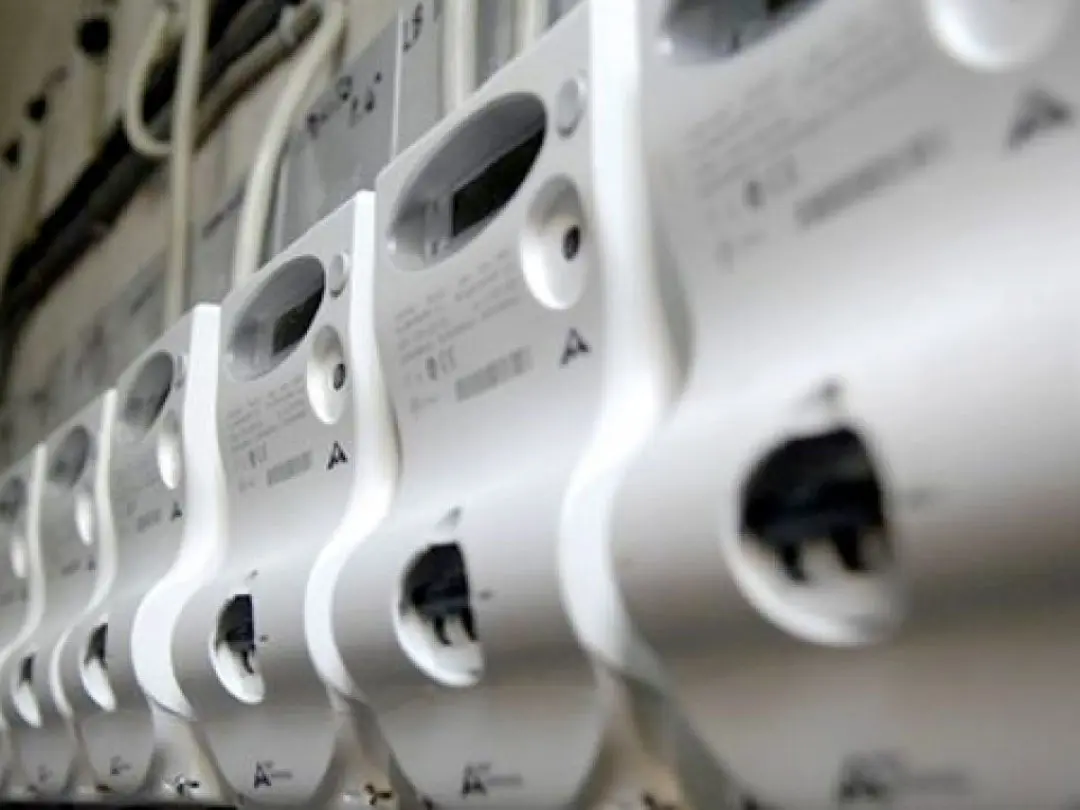
Smart meter, design by Michele De Lucchi and Sezgin Aksu, Enel, 2001
Michele De Lucchi’s wooden sculptures
This public, mass-produced dimension is counterbalanced by an intimate, handcrafted body of work. In his workshop in Angera, on Lake Maggiore, De Lucchi carves sculptures from solid wood: the famous Casette, often fashioned from the trunks of dead trees, but also towers, huts, mountains and stacks. He creates them himself, using a chainsaw and a few antiquated tools, in a slow and laborious process that he regards as a “metaphor for the true meaning of building.” As the designer Francesco Faccin has observed, his genius lies in loving “the perfection of industry and the imperfection of the handmade” in equal measure. Whilst the Tolomeo is the symbol of technical reproducibility, these works — tactile, resin-scented and warmed by living wood — speak of silence and nature. With his long beard, De Lucchi sheds the role of corporate architect in this instance and takes on that of a prophet-craftsman.
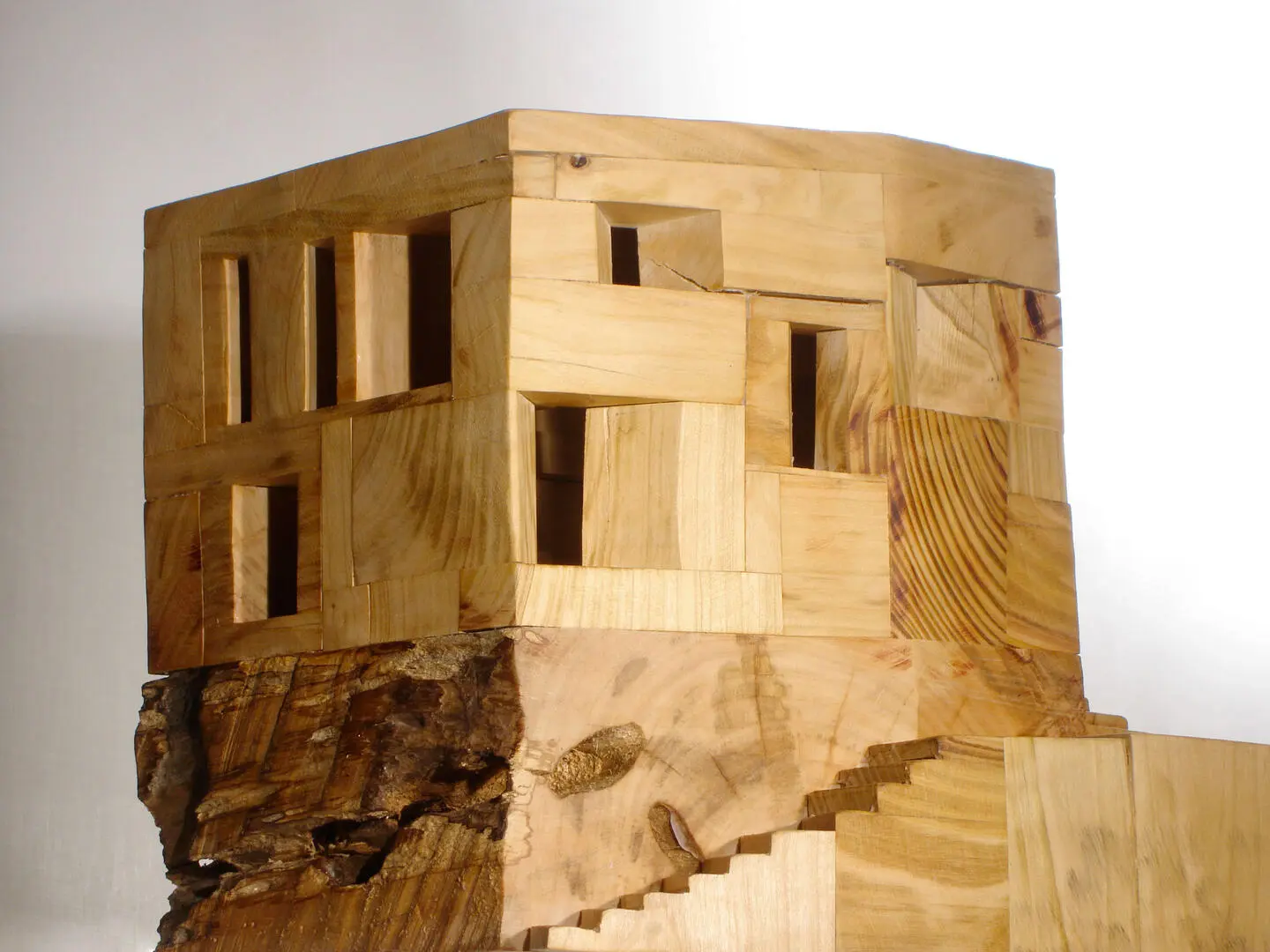
Casetta 111 by Michele De Lucchi, 2007
Michele De Lucchi, Creative Director of Triennale Milano
The circle closes where it all began. In 1973, at the 15th Triennale – a controversial event that was shut down almost immediately – a young De Lucchi appeared at the entrance dressed as a Napoleonic general, wearing a fez and clutching a T-shaped ruler rather as if it were a weapon, with a sign around his neck that read: “Designer in general.” “Listen to me! Listen to me!”, he harangued those present, “I am a designer in general and, in general, a designer. I bestow upon the world the beauty of useful things!” Over fifty years later, that provocateur has become the head of that very same institution. Formerly editor-in-chief of *Domus,* in July 2026 De Lucchi was appointed the first creative director in the history of Triennale Milano — and head of the Museum of Italian Design — as part of the new direction charted by President Vincenzo Trione and vice President Maria Porro for the four-year period 2026–2030. “I am delighted to accept the title of Creative Director,” he said, “because it is the role that suits me best: that of a designer.”