

Salone del Mobile.Milano Milan Design (Eco) System 2025 Annual Report
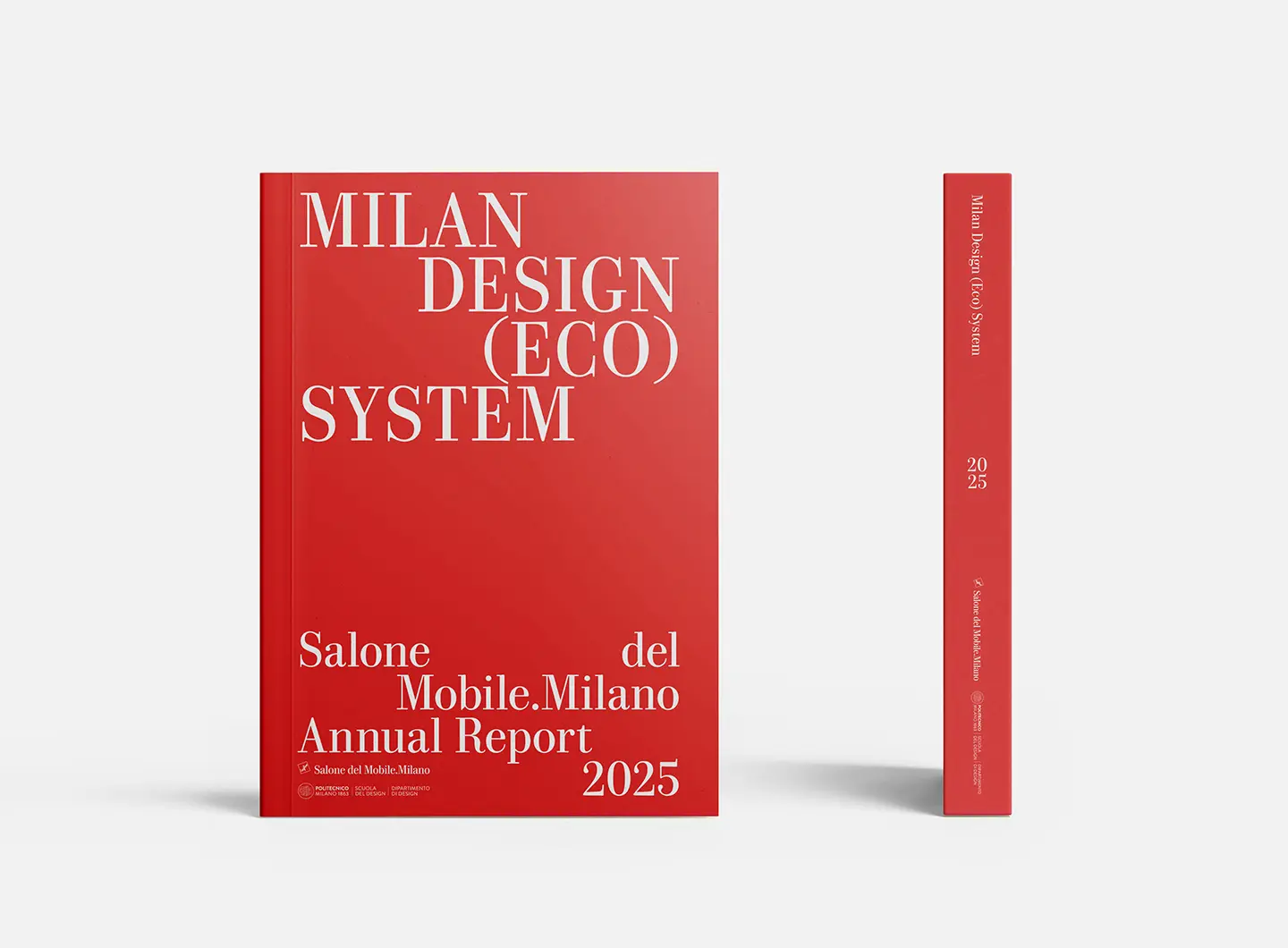
€278 million in economic impact, +18% in digital spending, and record international attendance. Salone del Mobile.Milano presents the second edition of the Annual Report Milan Design (Eco) System: an analysis of the impact of the Exhibition and Milan Design Week on the city. Two major new areas of investigation distinguish the 2025 edition: the analysis of urban flows through mobile network data, and the first structured focus on design cultural production, mapping 533 organisations for the first time.
The first edition of the Salone del Mobile.Milano Annual Report Milan Design (Eco) Design System won the XXIX ADI Compasso d’Oro, the most prestigious award in Italian design.
Explore the Report (PDF, 320 pages, 87 charts)
Watch the presentation event
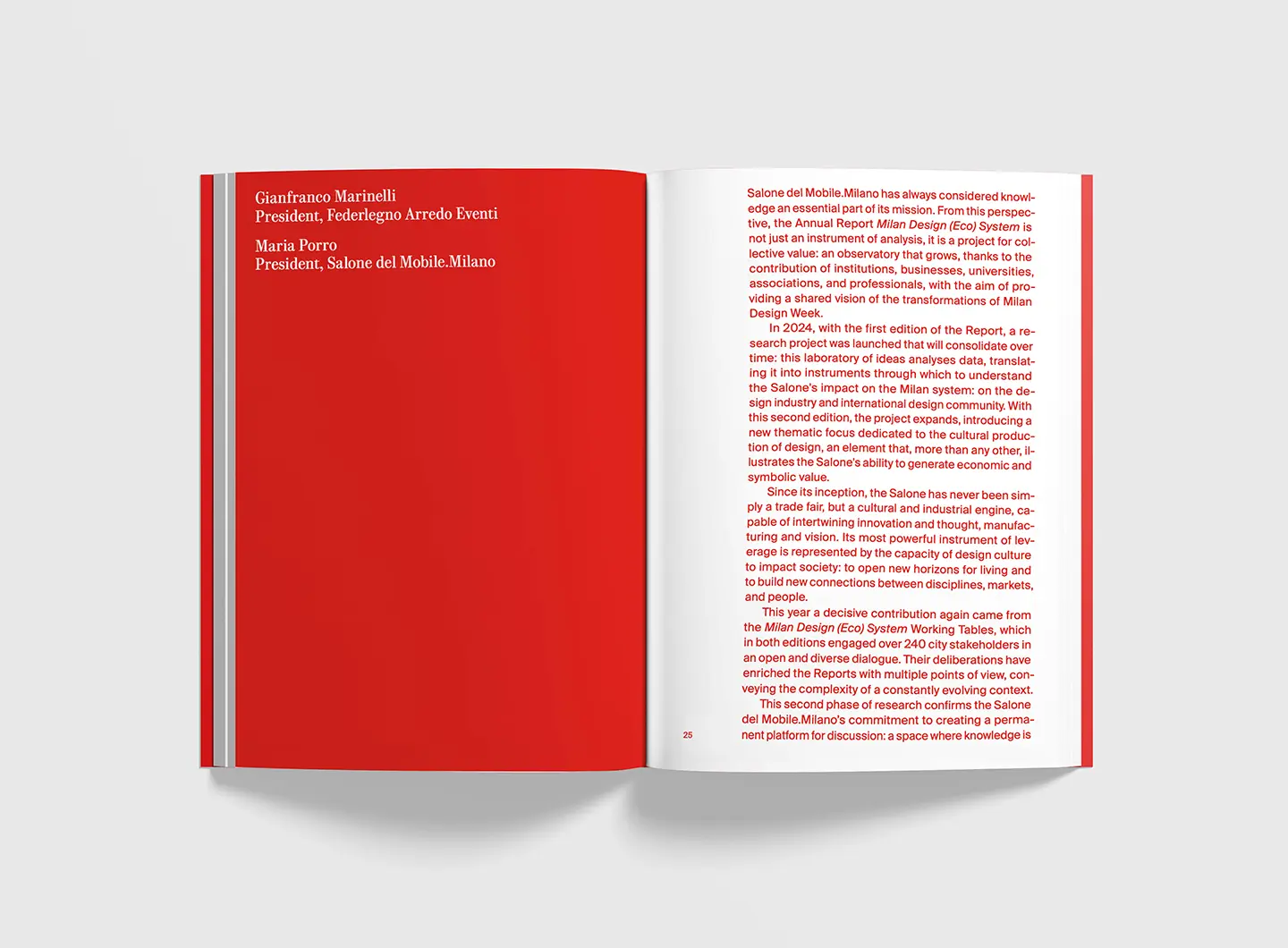
Salone del Mobile.Milano 2025 Annual Report
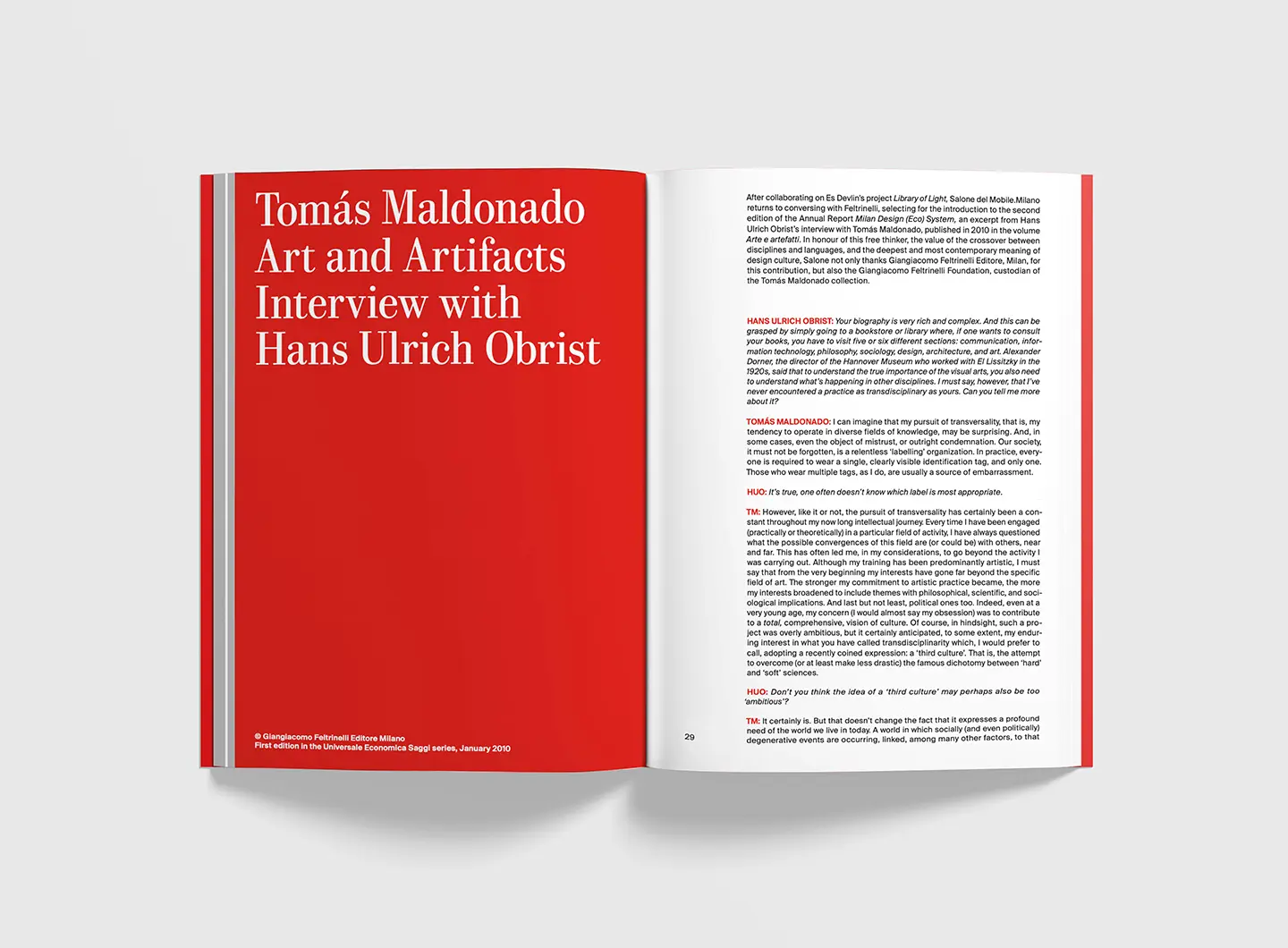
Salone del Mobile.Milano 2025 Annual Report
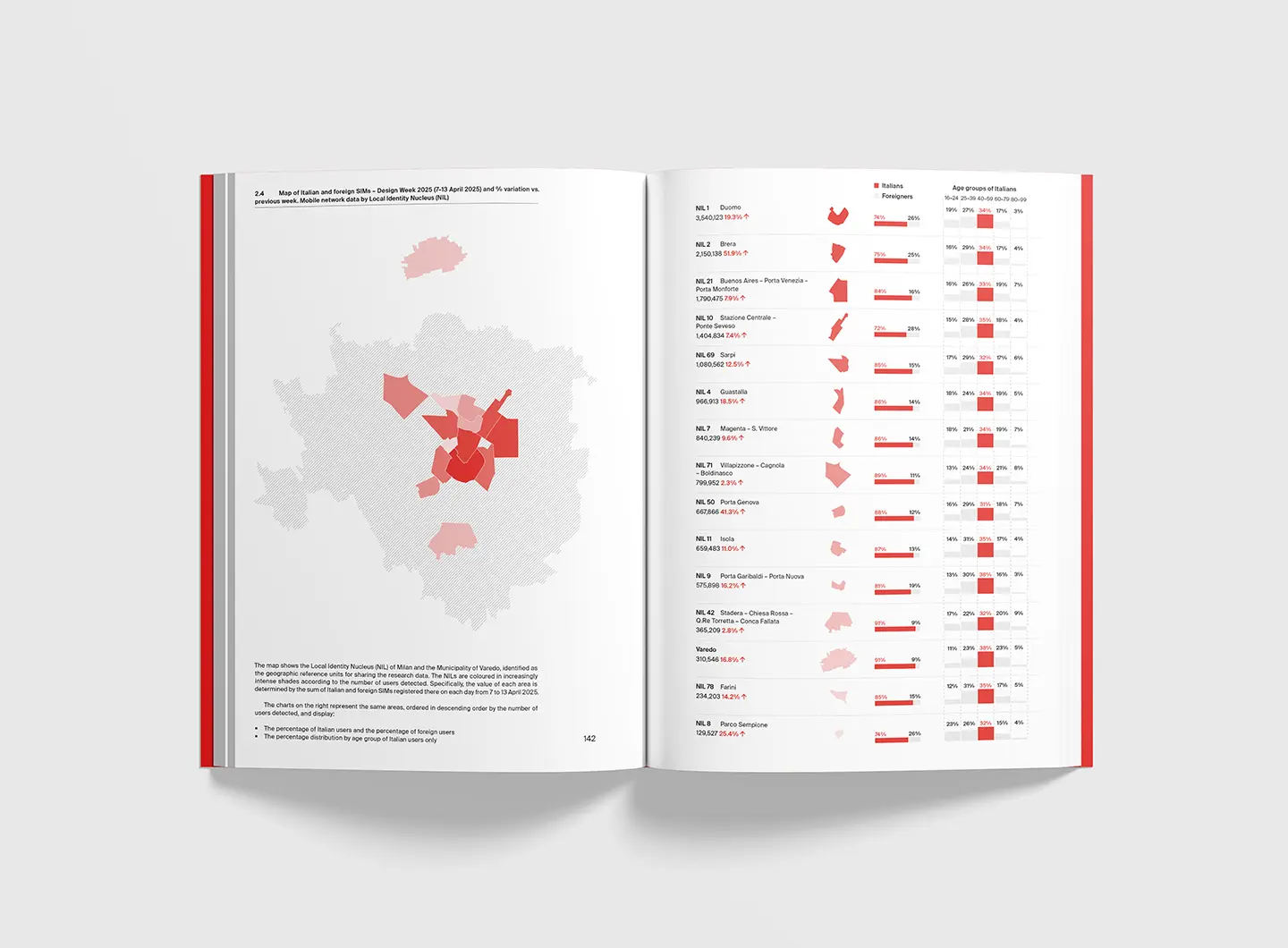
Salone del Mobile.Milano 2025 Annual Report
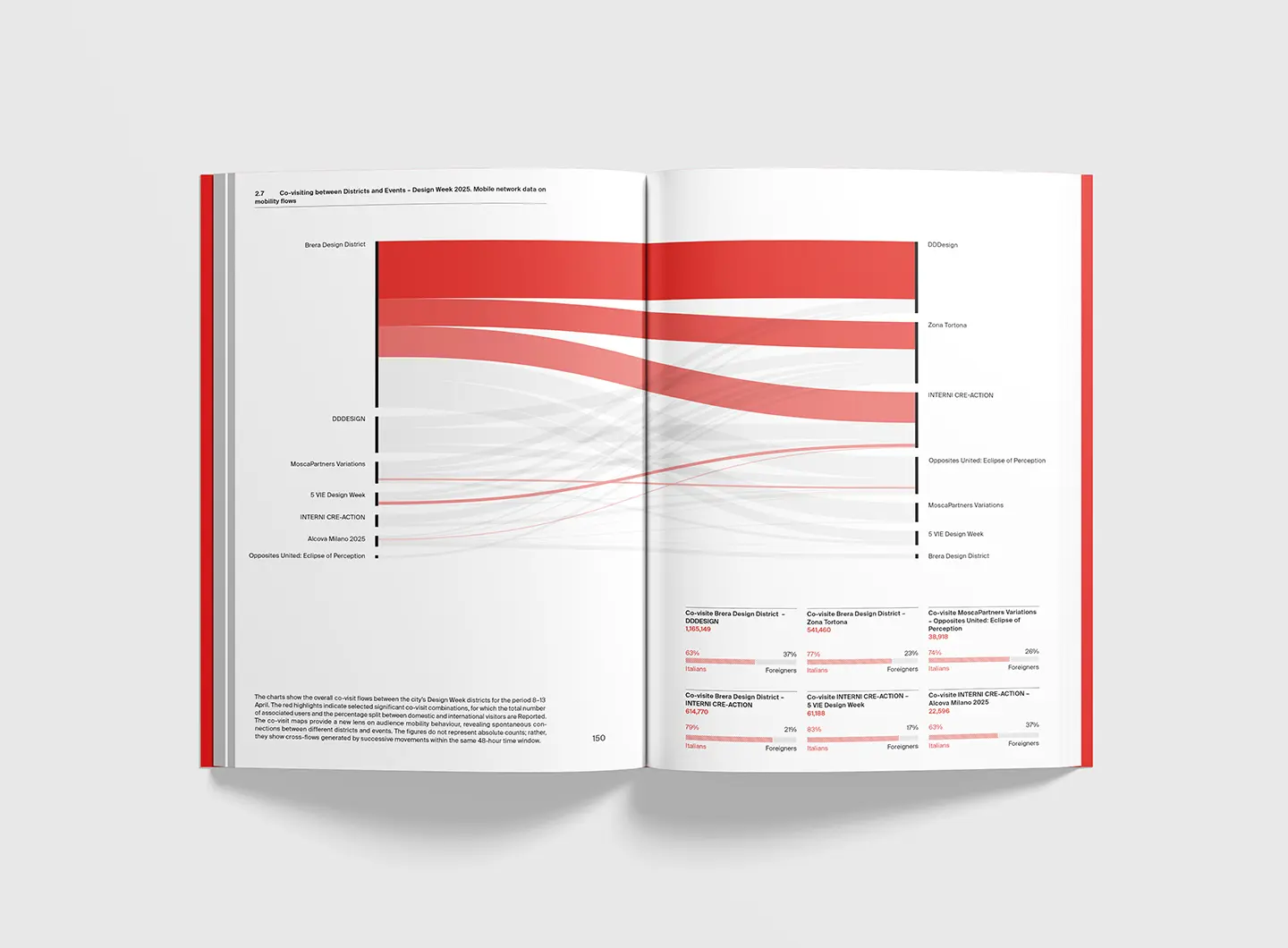
Salone del Mobile.Milano 2025 Annual Report
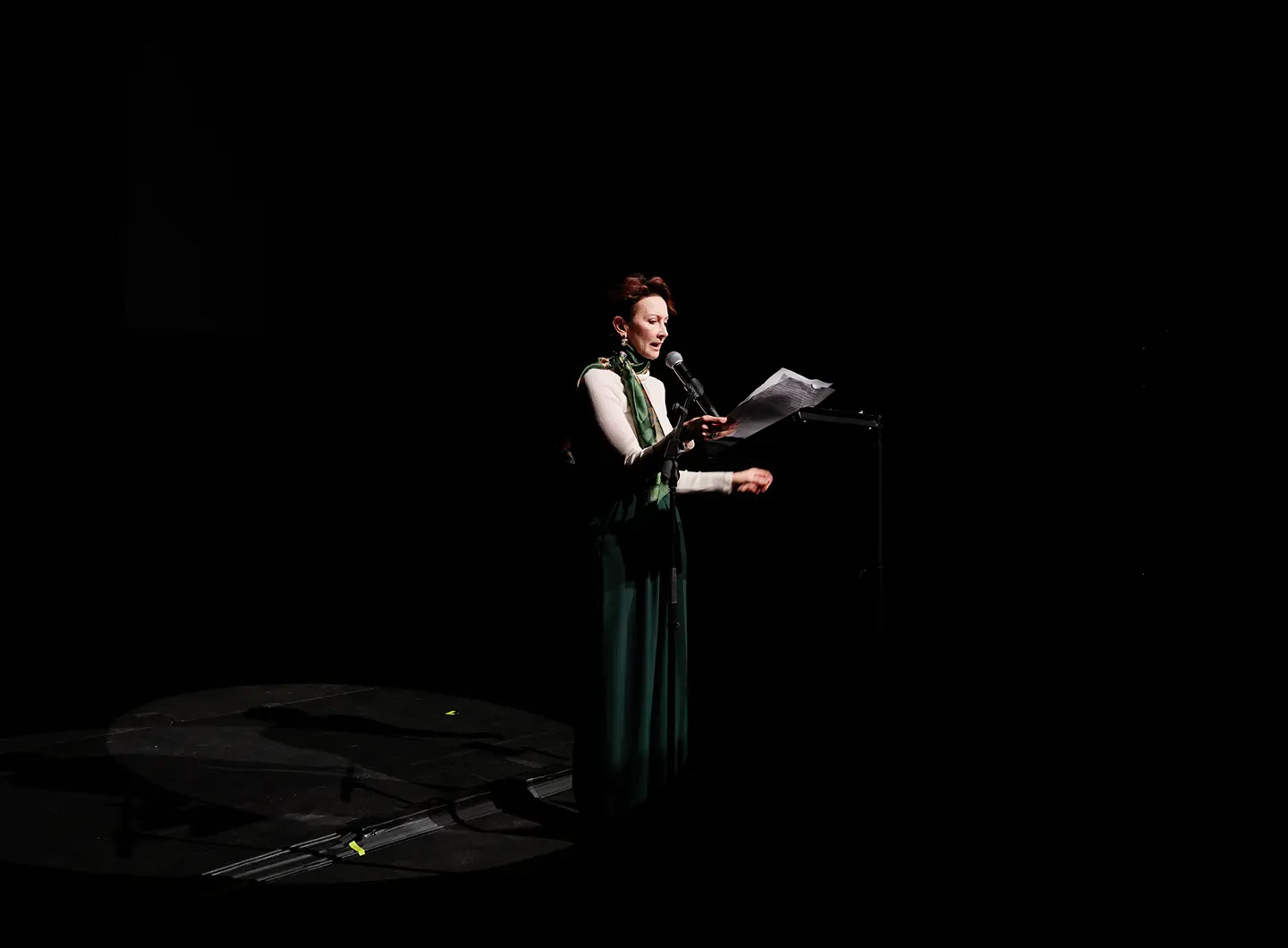
Presentation of Annual Report 2025, Pia Lanciotti's reading of Tomás Maldonado
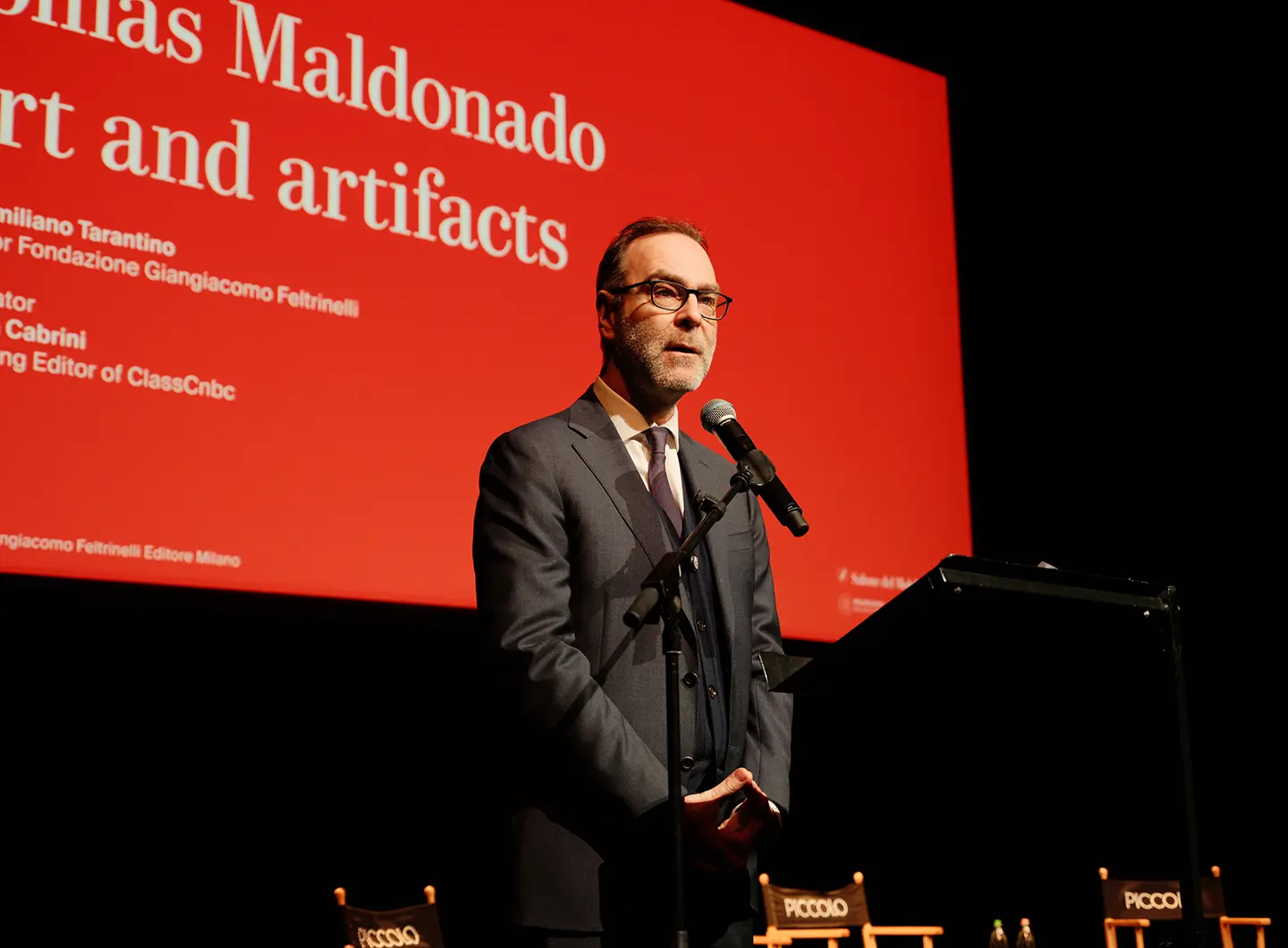
Presentation of Annual Report 2025, Massimiliano Tarantino, Director, Fondazione Giangiacomo Feltrinelli
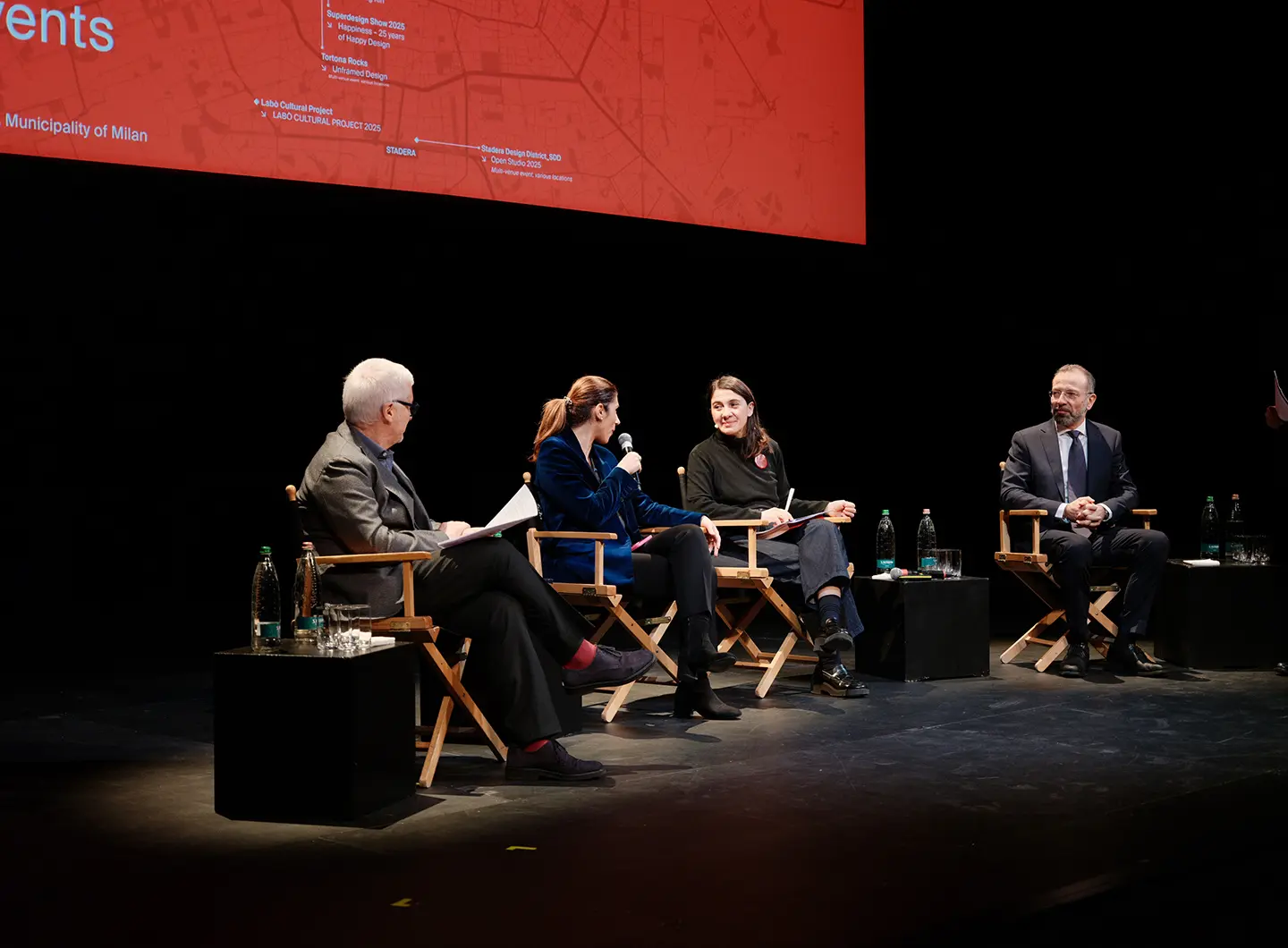
Presentation of Annual Report 2025. From left: Francesco Zurlo, Full Professor, Politecnico di Milano; Alessia Cappello, Councillor for Economic development and Labour Policies, Municipality of Milan; Maria Porro, President, Salone del Mobile.Milano; Gianpiero Carocci Silvagni, Head of Innovative Solutions Marketing, Vodafone Business
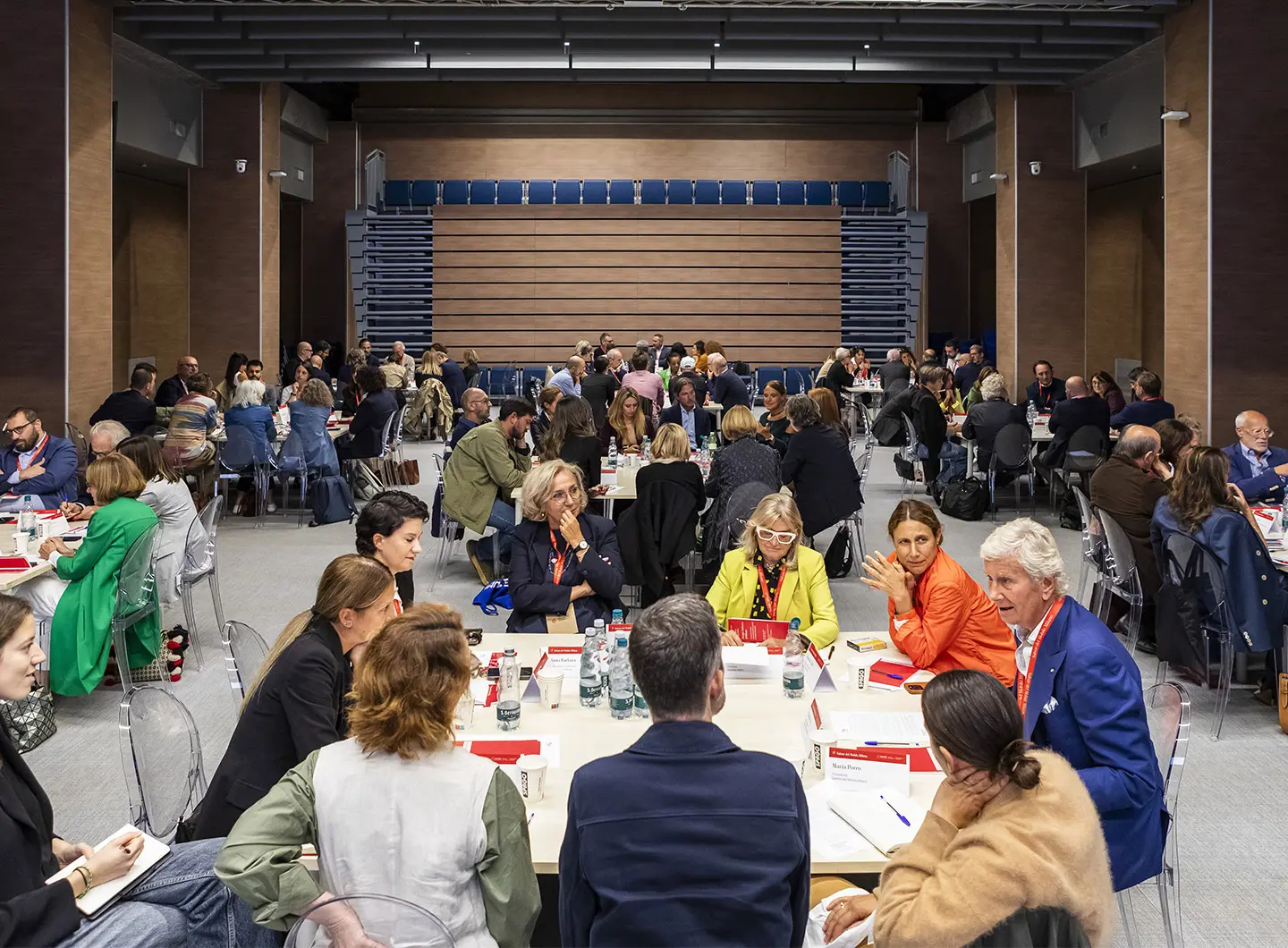
Salone del Mobile.Milano 2025 Annual Report - Roundtables
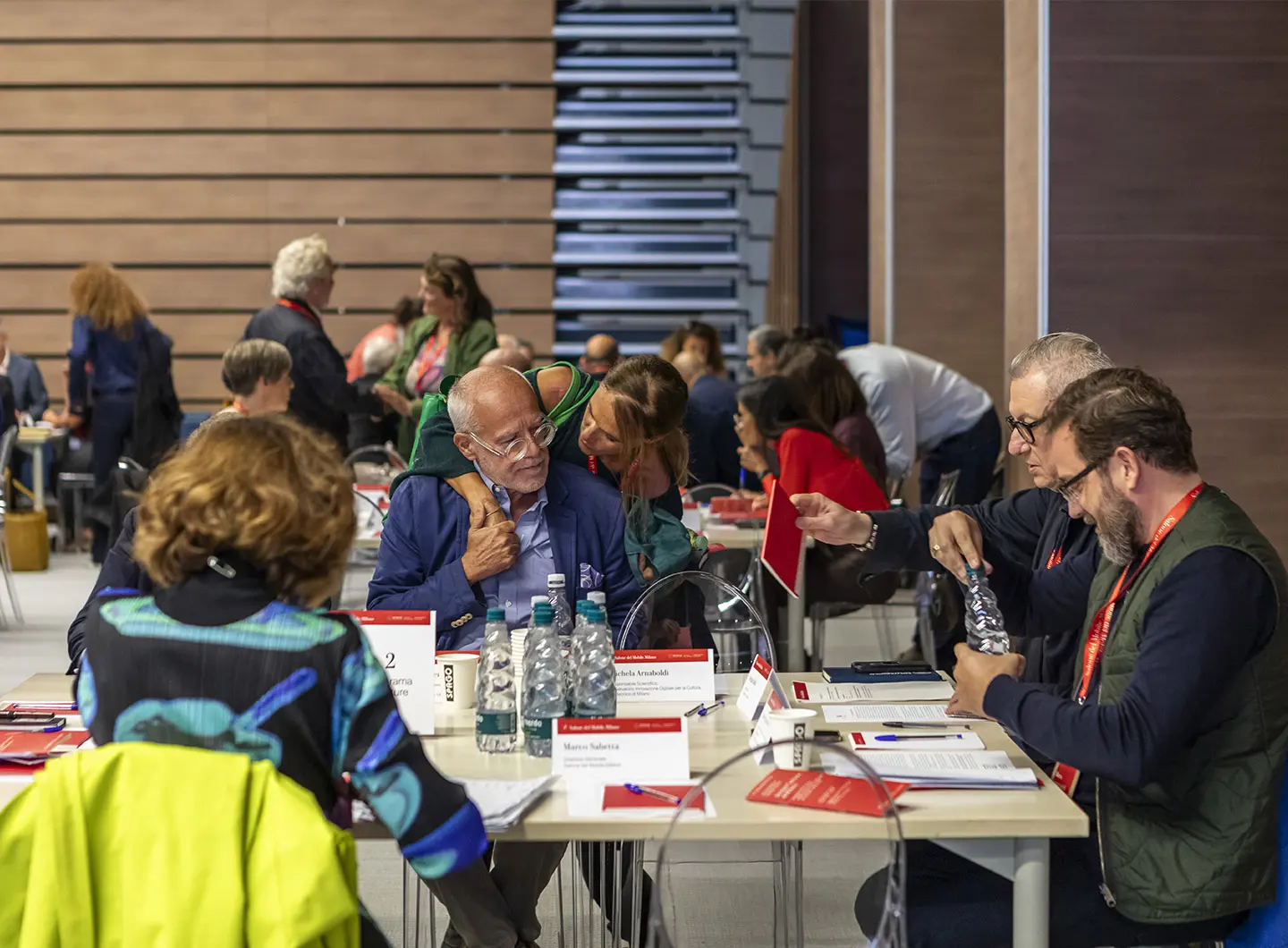
Salone del Mobile.Milano 2025 Annual Report - Roundtables
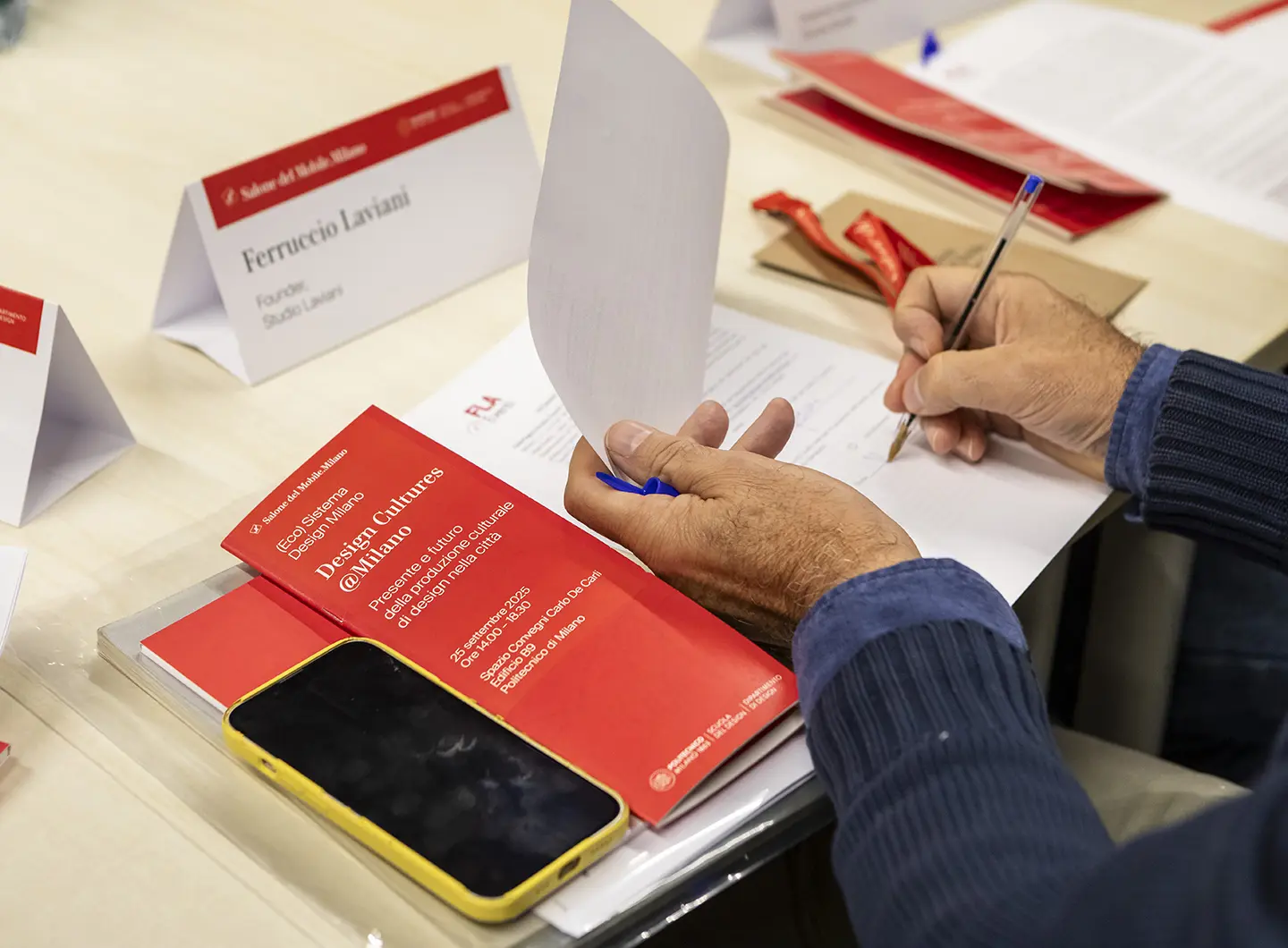
Salone del Mobile.Milano 2025 Annual Report - Roundtables
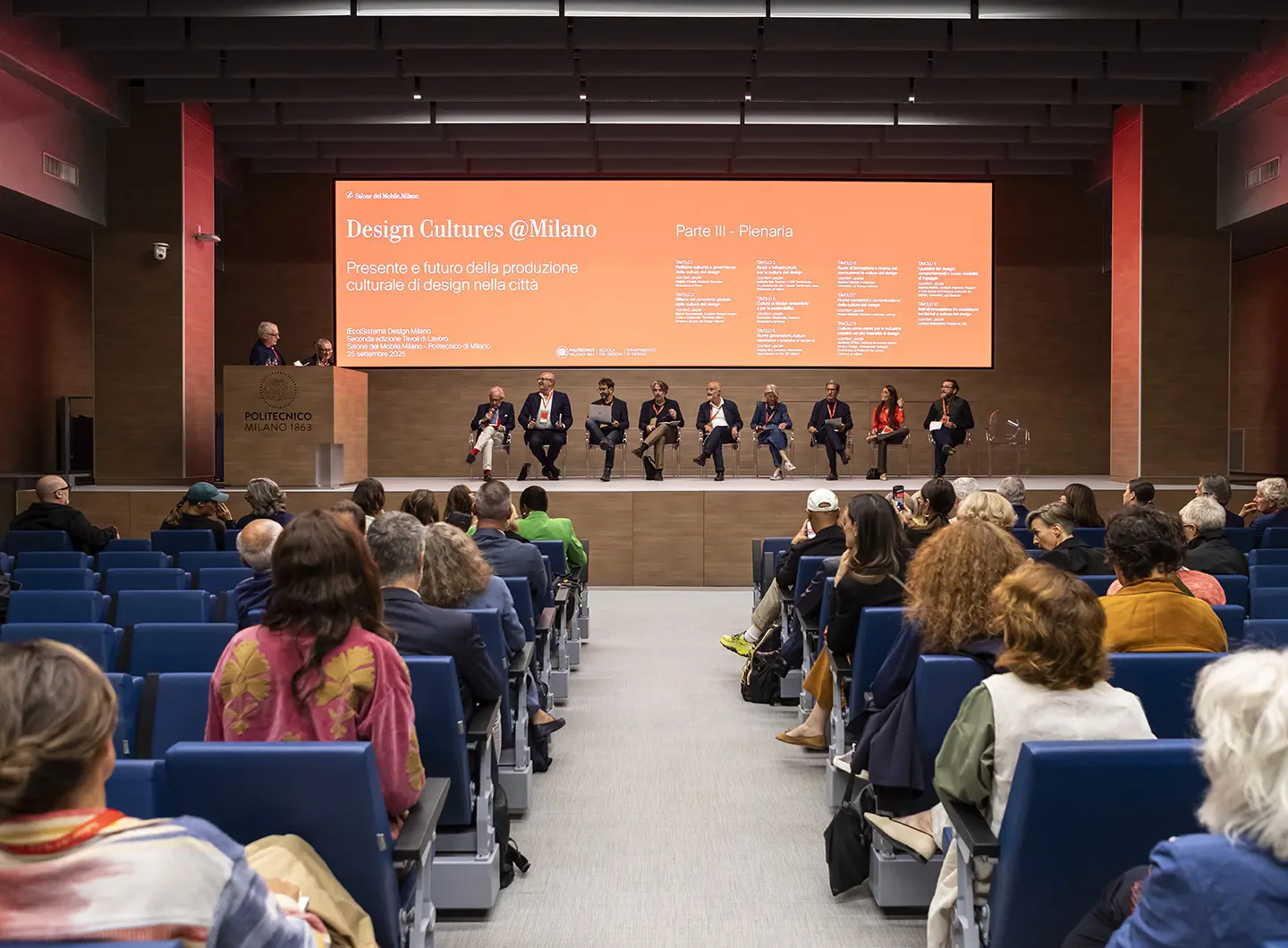
Salone del Mobile.Milano 2025 Annual Report - Roundtables


The 2025 edition of the Milan Design (Eco) System Annual Report , curated by the Salone Observatory under the scientific supervision of the Politecnico di Milano, paints a picture of a city that does not simply host design, but actively produces, interprets and transforms it into a shared language of urban and cultural development.
Within this context, the Salone del Mobile shines an international spotlight on Milan every April, transforming the city into a unique, city-wide platform capable of generating significant impact across multiple dimensions. The 2025 figures confirm €278 million in economic impact (+15% compared to 2023, the year of the Euroluce Biennal), a record annual peak in digital spending (+18%), the highest-ever share of international visitors, metro usage hitting its highest level of the year (+39.6% above average), and a sharp increase in accommodation rates during Design Week.
Driving these figures was the 2025 edition of the Salone, which recorded 302,786 visitors from 160 countries at the trade fair venue. Across the city, meanwhile, the programme registered a 25.7% increase in events compared to 2024, for a total of 1,667 events recorded in the Municipality of Milan’s MDW 2025 survey.
Milan Design (Eco) System: a research platform
320 pages · 87 charts · 22 data holders · 31 contributors
Promoted by the Salone del Mobile.Milano in collaboration with the School of Design at the Politecnico di Milano and curated by Susanna Legrenzi, the Milan Design (Eco) System 2025 Annual Report represents the second year of research conducted by the Salone del Mobile.Milano Observatory — a permanent platform dedicated to analysing and interpreting the major event that reshapes Milan every April through the intersection of manufacturing, creative industries, culture and urban space.
Two major additions distinguish the 2025 edition:
- Urban flows analysed through mobile network data
For the first time, thanks to a collaboration with Fastweb + Vodafone, the Annual Report integrates anonymised mobile network data to reconstruct urban flows and behavioural patterns during Design Week. The dataset portrays a polycentric, connected and constantly moving Milan, where the impact of the Salone can also be measured through its urban reach and spatial extension. - Mapping design cultural production
Introduced as a new focus in the 2025 edition, the research into design cultural production reveals a broad, articulated ecosystem deeply embedded within the urban fabric. Research conducted by the Department of Design at the Politecnico di Milano mapped 533 cultural entities, outlining a constellation that positions design not only as a productive system, but also as a cultural infrastructure.
The figures for 2025
The Salone model
2,103 exhibitors · 302,786 visitors · 1.3 million B2B interactions
With more than 302,000 visitors from 160 countries and 2,103 exhibitors from 37 countries, the Salone del Mobile.Milano confirmed its status as a hallmark event with direct global impact directly reverberates at the local level.
The 2025 Annual Report opens with a reflection on the Salone model: a measurable and rigorously measured event, certified according to ISO 20121 standards, operating as a permanent infrastructure for the design supply chain. The data confirm the strategic role of the Salone as an international, selective and highly structured system capable of generating professional relationships, new demand and exhibitor confidence. Alongside the trade fair dimension, the 2025 Cultural Programme further consolidates the Salone as a platform for dialogue, content production and the creation of professional communities.
Milan Design Week: the paradox of visibility
1,093 initiatives recorded · 861 observed events · 53% concentrated between Duomo and Brera
With 25.7% more events than in 2024, Milan Design Week 2025 revealed both the vitality and the tensions of the Milanese ecosystem: a dense and interconnected creative system capable of generating value, yet increasingly exposed to saturation, trivialisation and growing pressure on its cultural authenticity.
Field observation conducted by the Department of Design at the Politecnico di Milano, involving 100 students, combined desk mapping with on-site research. The study portrays a city with a widespread exhibition offering, yet one strongly polarised geographically. Duomo and Brera alone accounted for more than half of all observed events, with densities significantly above the city average. The Milan Design Week programme thus confirmed its hybrid nature, positioned between cultural production and commercial offering. Events were hosted across institutional venues, showrooms, galleries, historic buildings and temporarily accessible spaces throughout the city.
Economic impact
€278 million in economic impact · +17.92% in digital spending
The economic impact of the Salone extends far beyond the period of the Exhibition itself: it cuts across supply chains, services, tourism, retail and hospitality, confirming design as a strategic driver of the urban economy.
Salone Week continued to demonstrate its capacity to generate economic value at an urban scale, with economic impact figures growing compared to 2023, the year of the Euroluce Biennal. The increase in digital spending and the strong international component portray a city with high global appeal, shaped by qualified flows of visitors, professionals and tourists. The hospitality sector reflected this pressure, with accommodation rates rising sharply during the week of the event. The impact generated was not merely economic but systemic: the Salone strengthened the international reach of the sector, increasing territorial attractiveness, and highlighting the growing need for policies, services and infrastructures capable of supporting a form of growth that, in both scale and complexity, has become strategic for Milan and the Lombardy region as a whole.
Mobility and tourism
412,500 overnight stays · 1.3 million daily metro entries
In 2025, the Salone further strengthened the international reach of the sector, enhanced territorial attractiveness, and reinforced the need for adequate service policies and infrastructure capable of sustaining a growth trajectory that has become strategic for both Milan and Lombardy.
From a tourism perspective, the figures presented in the 2025 Annual Report confirm the international vocation of the Salone. Milan reached full capacity in every sense. According to the Osservatorio Regionale del Turismo e dell’Attrattività di Regione Lombardia, during the week of 7–13 April 2025 the city recorded a total of 136,157 arrivals, 80.2% of which were international visitors (+4.5% compared to the 2024 edition), while domestic arrivals registered a slight decline (-1.9%). Overnight stays hit 412,500 within the city (+11.4%) and 543,565 across the wider province (+13.7%), with the average stay in Milan increasing from 2.81 to 3.03 nights. In terms of digital payments, analysis conducted through the Xcc-Mastercard Geospending Platform showed that Salone Week also represents the annual peak in card-based consumer spending.
The Milan Design System
2,333 specialised companies · more than 17,000 students
The Milan Design System is confirmed as a complex and expanding ecosystem capable of integrating business, education, culture and design professions. The challenge now lies in transforming widespread and progressive growth into stronger organisational capacity, strategic aggregation and systemic innovation.
A total of 7,360 entities — including companies, sole proprietorships and specialised professionals — operate within the design sector across Milan and its province (+8.4%). The number of specialised design companies has hit 2,333: the highest figure ever recorded (+70.5% since 2009).
Milan accounts for:
- one out of every two design companies in Lombardy;
- one out of every seven design companies in Italy.
The system is supported by 42 educational institutions and more than 17,000 students enrolled in design programmes.
On the innovation front, the city hosts 34 innovative design start-ups and SMEs (ATECO 74.10): 70.8% of the Lombardy total and around 25% of the national figure, yet still only 1% of all start-ups operating in Milan. These figures reveal significant untapped growth potential and the need for targeted instruments capable of supporting scalability and consolidation.
A collective undertaking
The 2025 edition of the Report includes institutional contributions from Giuseppe Sala, Mayor of Milan, and Attilio Fontana, President of Regione Lombardia, together with essays by Alessia Cappello, Councillor for Economic Development and Labour Policies with responsibility for Fashion and Design, Municipality of Milan; Tommaso Sacchi, Councillor for Culture, Municipality of Milan; and Debora Massari, Councillor for Tourism, Territorial Marketing and Fashion, Regione Lombardia.The Report also includes reflections from the ten content leaders who chained the Milan Design (Eco) System 2025 Working Tables: Annibale D’Elia, Director of Urban Economy, Fashion and Design, Municipality of Milan; Chiara Rostagno, Deputy Director General, Pinacoteca di Brera and Biblioteca Nazionale Braidense; Marco Sammicheli, Curator of Design, Fashion and Crafts, Triennale Milano, and Director of the Museo del Design Italiano; Isabella Inti, Founder, Temporiuso.net and Co-director of the M-US-T Master in Temporary Uses, Politecnico di Milano; Domenico Sturabotti, Director, Fondazione Symbola; Angela Rui, Curator, Researcher and Head of MA Programs, IED Milano; Stefano Micelli, Professor, Università Ca’ Foscari Venezia; Walter Mariotti, Editorial Director, Domus; Andrea Rurale, Director of the Intensive Program in Arts Market and Finance and Monitor Art Market, Università Luigi Bocconi; and Luciano Galimberti, President, ADI.
The introduction to the 2025 Annual Report features an excerpt from Hans Ulrich Obrist’s interview with Tomás Maldonado — a tribute to the radical and interdisciplinary thinking that has shaped design culture — produced in collaboration with Giangiacomo Feltrinelli Editore.The presentation event at the Piccolo Teatro Melato in Milan was introduced by Massimiliano Tarantino, Director of the Fondazione Giangiacomo Feltrinelli.
With this second edition, the Observatory has consolidated its methodology while expanding the scope of its research: a growing body of shared knowledge evolving year after year alongside the city that generates it.
View the Report (PDF, 320 pages, 87 charts)
Watch the presentation event
View the 2025 Working Tables
Milan Design (Eco) System
Research, event and working tables curated by
Susanna Legrenzi, Curator, Salone del Mobile.Milano
In collaboration with the Department of Design – Politecnico di Milano
Stefano Maffei, Full Professor
Francesco Zurlo, Full Professor
Massimo Bianchini, Associate Professor
Francesco Leoni, Research Fellow
Filippo Parolini, Research Fellow
Graphic design by Giga Studio.
