Exhibitions



The Planning Unit, the collective catalogue of Mies, Saarinen and Bertoia and “meat and potatoes” furniture: how Florence Knoll invented the modern office whilst opting to stay out of the limelight.
China accounts for 72% of the Asia-Pacific contract market potential
Westbund Central, the US$8 billion mixed-use development on the Xuhui waterfront, will act as a case study for the first stopover, dedicated to the evolution of international demand. Hongkong Land, Benoy, MDO and CCD dialogue with the Salone del Mobile.Milano, discussing how major urban developments, decision-making processes and client expectations are changing in the run-up to Salone Contract 2027.
The Salone del Mobile.Milano has chosen Shanghai for the launch of the first edition of the Salone Contract Tour, an international stakeholder engagement initiative that will accompany the debut of Salone Contract 2027. The first stop will take mixed-use development as a lens through which to examine new demand in the contract sector, starting at Westbund Central, Hongkong Land’s US$8 billion development project for a new urban hub on the Xuhui waterfront, comprising over 1.1 million square metres of developable area, featuring a mix of public realm, offices, retail, residential units, hospitality and culture.
The choice of Shanghai reflects the importance of the Chinese market and the scale of the transformation currently under way. China accounts for around 72% of the potential Contract market in the Asia-Pacific region(1), for an estimated value of between 20 and 25 billion euros. Meanwhile, large-scale mixed-use developments, the regeneration of existing buildings, the hospitality sector and new models of living are changing the way briefs, standards, specifications and supplies are defined.
In Shanghai, the discussion will bring together Hongkong Land, Benoy, MDO — More Design Office and CCD — Cheng Chung Design for the talk The Integrated Destination — Designing across asset classes. Westbund Central will thus become a concrete case study through which a broader question can be explored, which is what happens when we no longer design a single hotel, shopping centre, workplace or residential property, but an entire destination in which different asset classes have to function as parts of the same system.
China: a 20–25 billion contract market undergoing a compositional shift
The size of the market is significant, but it is its changing nature that makes China particularly important. Residential properties account for 48% of estimated contract market potential, encompassing traditional residential, rental housing, student accommodation, co-living and senior living. These are followed by offices at 24%, retail at 18% and hospitality at 10%. Mixed-use developments involve a combination of these segments and drive demand for solutions capable of spanning multiple asset classes(2).
Opportunities do not derive solely from new-build projects. Between 2026 and 2030, China plans to commence the regeneration of approximately 115,000 urban residential complexes(3), creating demand for housing, shared spaces, services, amenities and the overall quality of the living experience. The hospitality sector pipeline also remains sizeable: by the end of June 2026, 109 hotel projects were ongoing in Shanghai, while there were 3,588 projects at various stages of development, across China as a whole, of which 2,547 were already under construction(4).This scale generates thousands of decisions regarding guest rooms, lobbies, F&B, lighting, materials, furniture and communal areas.
The growth of branded residences feeds into to this trend, with hospitality, living and design increasingly converging. In Asia-Pacific, the number of branded residence projects has seen 55% growth over the last five years, signalling demand for companies to be able to reconcile international brand standards with the creation of specific identities for each individual project.
For Italian companies, this trend builds on an already significant commercial presence. Furniture sector exports to China hit €364 million in 2025 and €144 million in the first half of 2026(5). However, contract sector exports are driven by different principles to simple product exports: in large-scale projects, decisions start being taken years before handover and involve developers, architects, interior designers, operators, consultants, procurement companies and contractors.
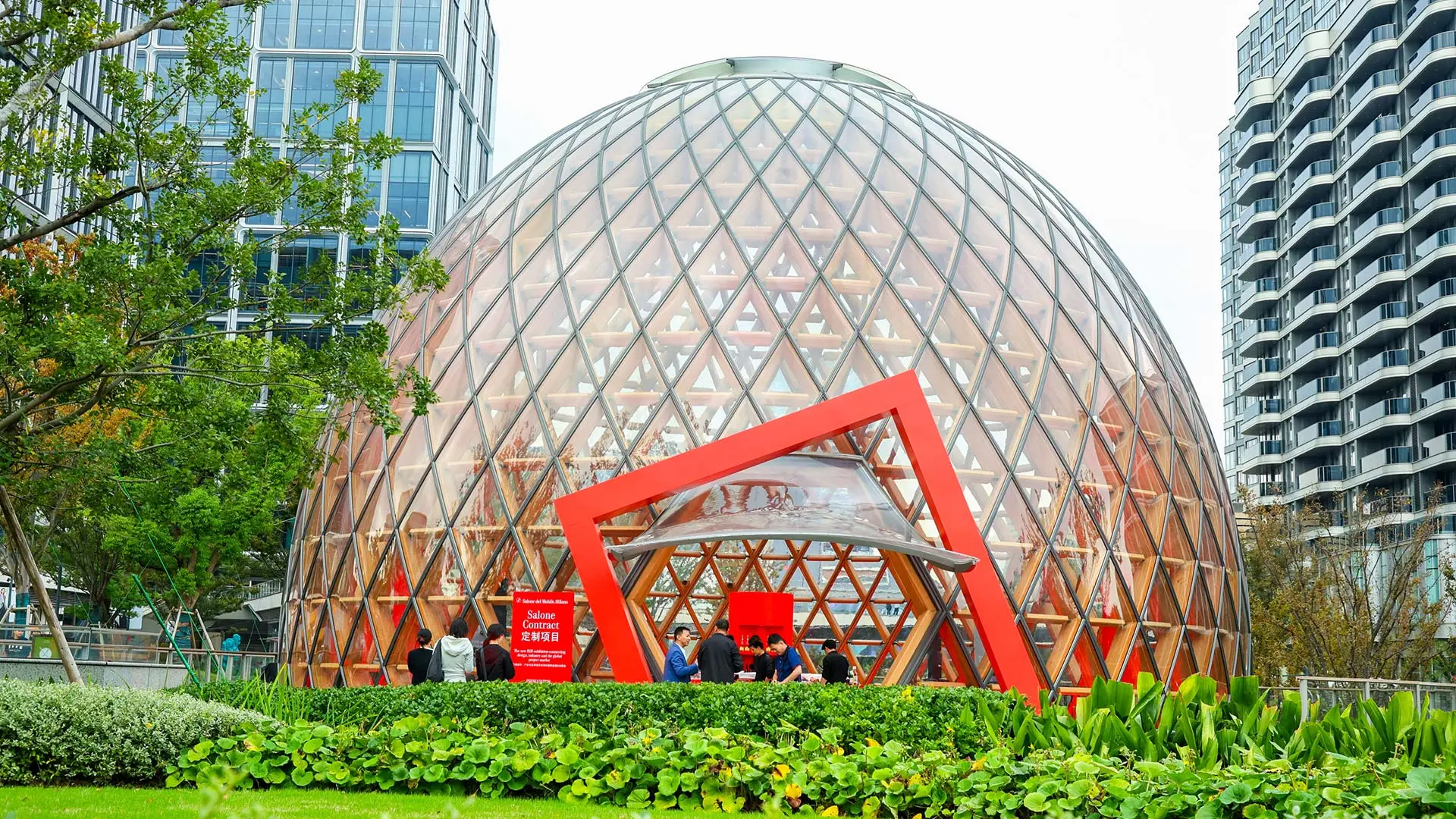
The Seed, Westbund Central, Shanghai
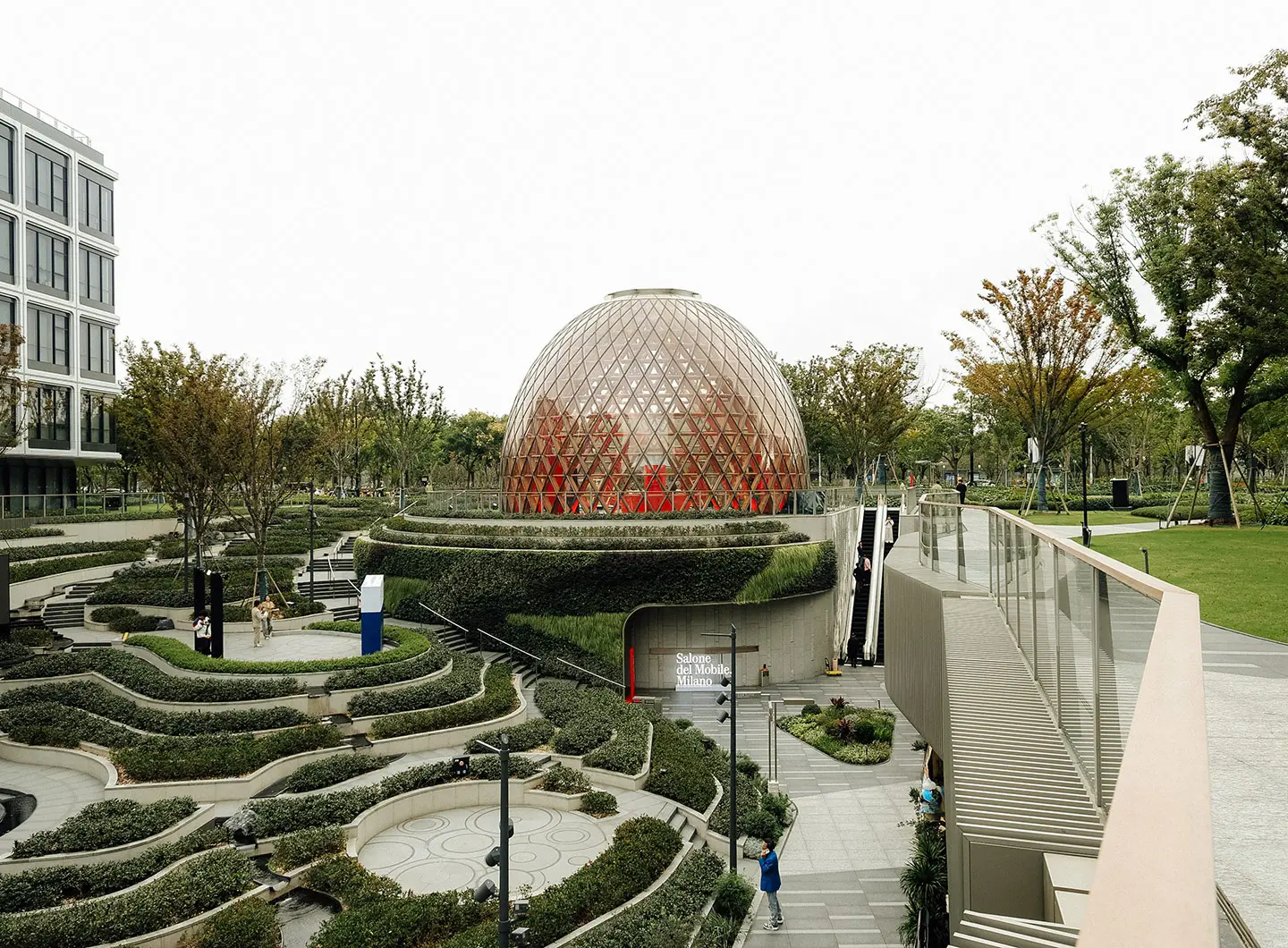
The Seed, Westbund Central Shanghai
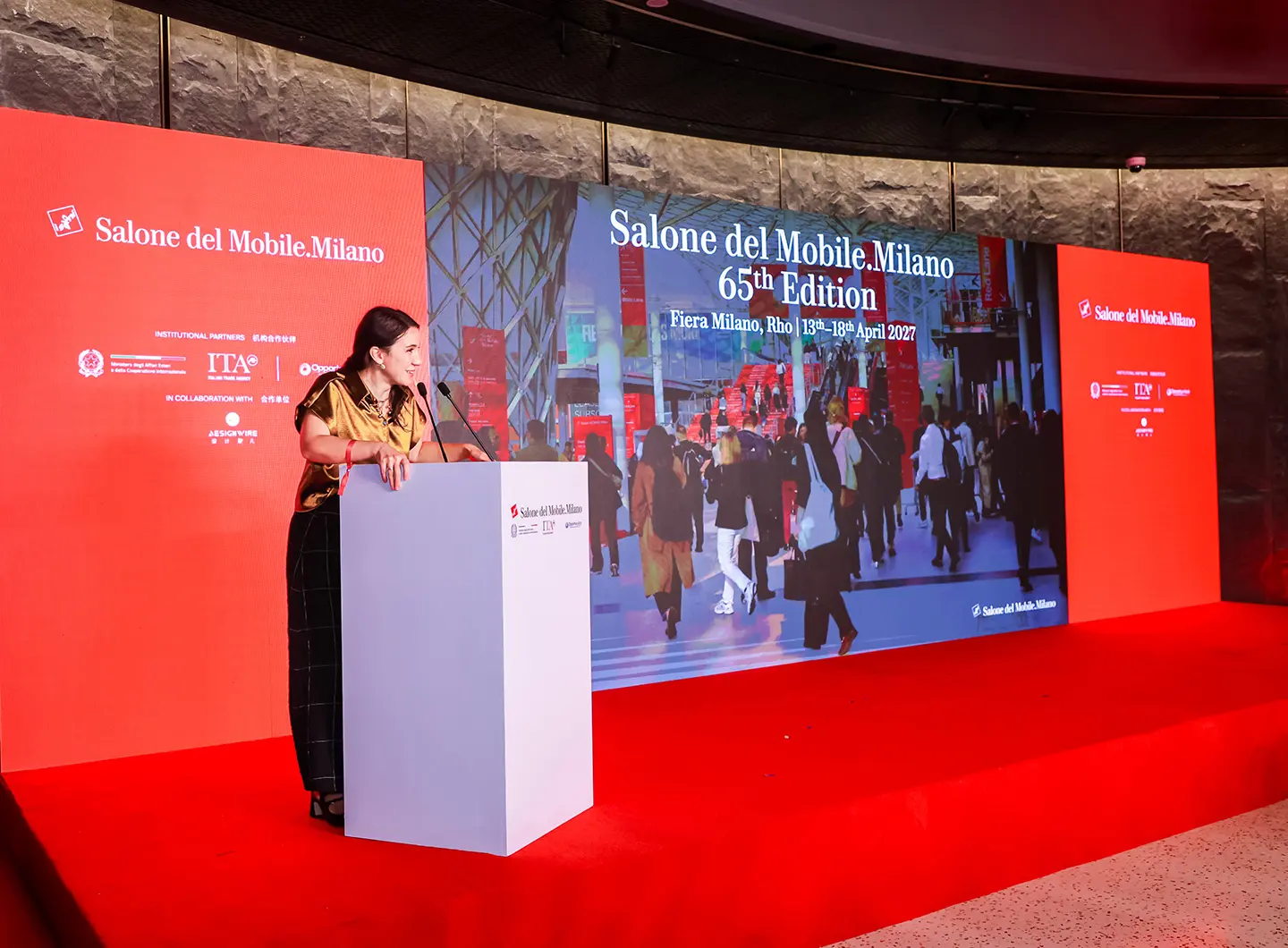
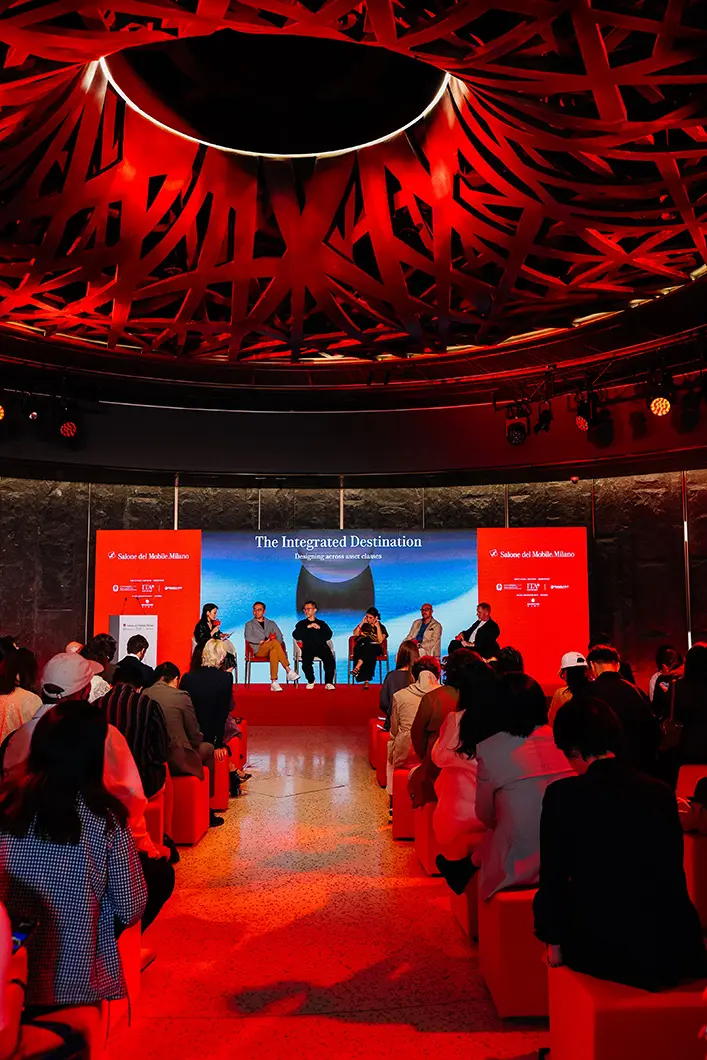
Salone Contract Tour in Shanghai - Maria Porro, President of Salone del Mobile.Milano - The Seed, Westbund Central
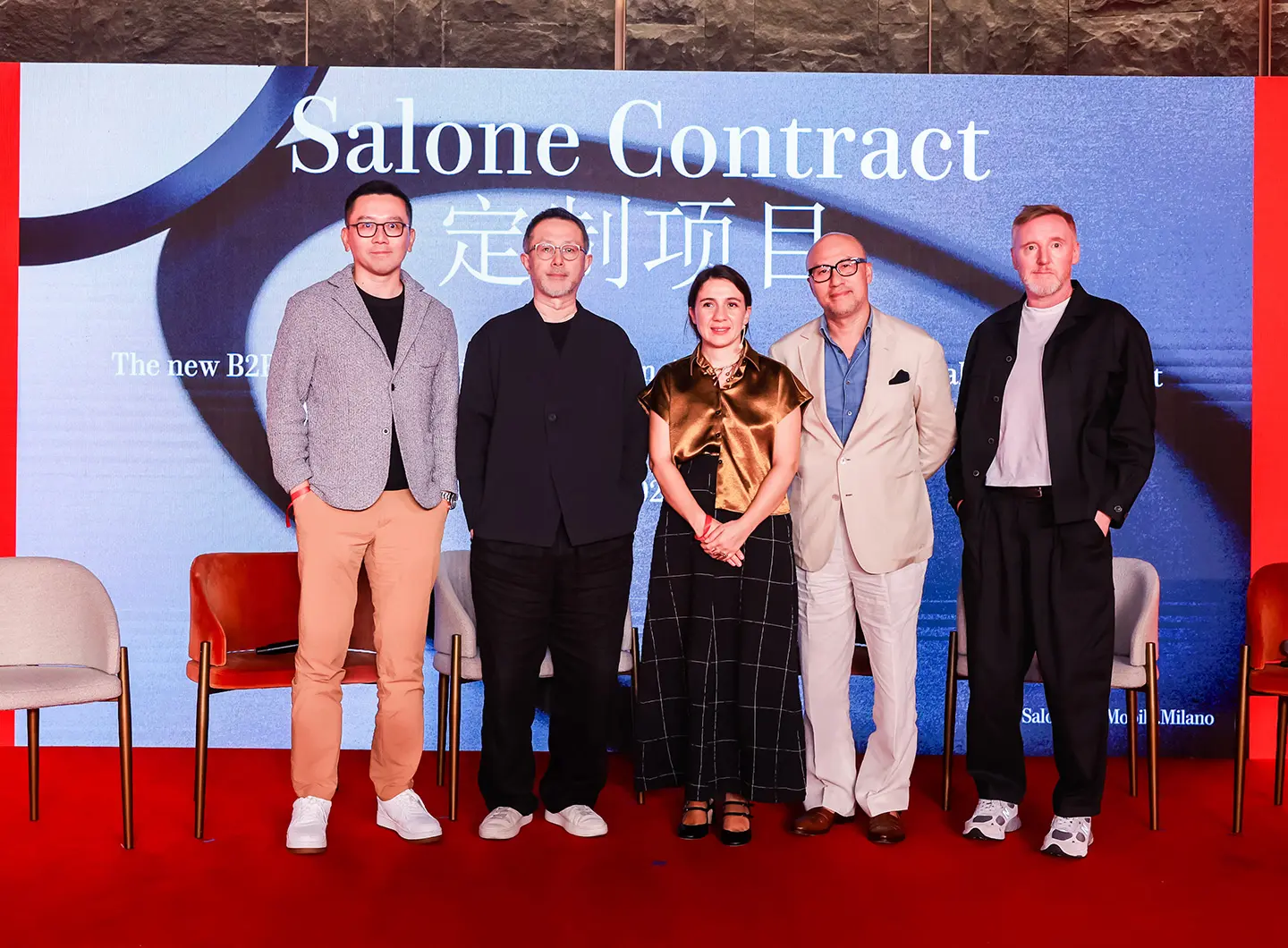
From left: Alvin Lo, General Manager, Design and Planning di Westbund Central, Hongkong Land, Qin Pang, Director, Head of Shanghai Studio e Head of Design di Benoy, Maria Porro, President of Salone del Mobile.Milano, Joe Cheng, Founder di CCD – Cheng Chung Design, Justin Bridgland, co-founder of MDO – More Design Office
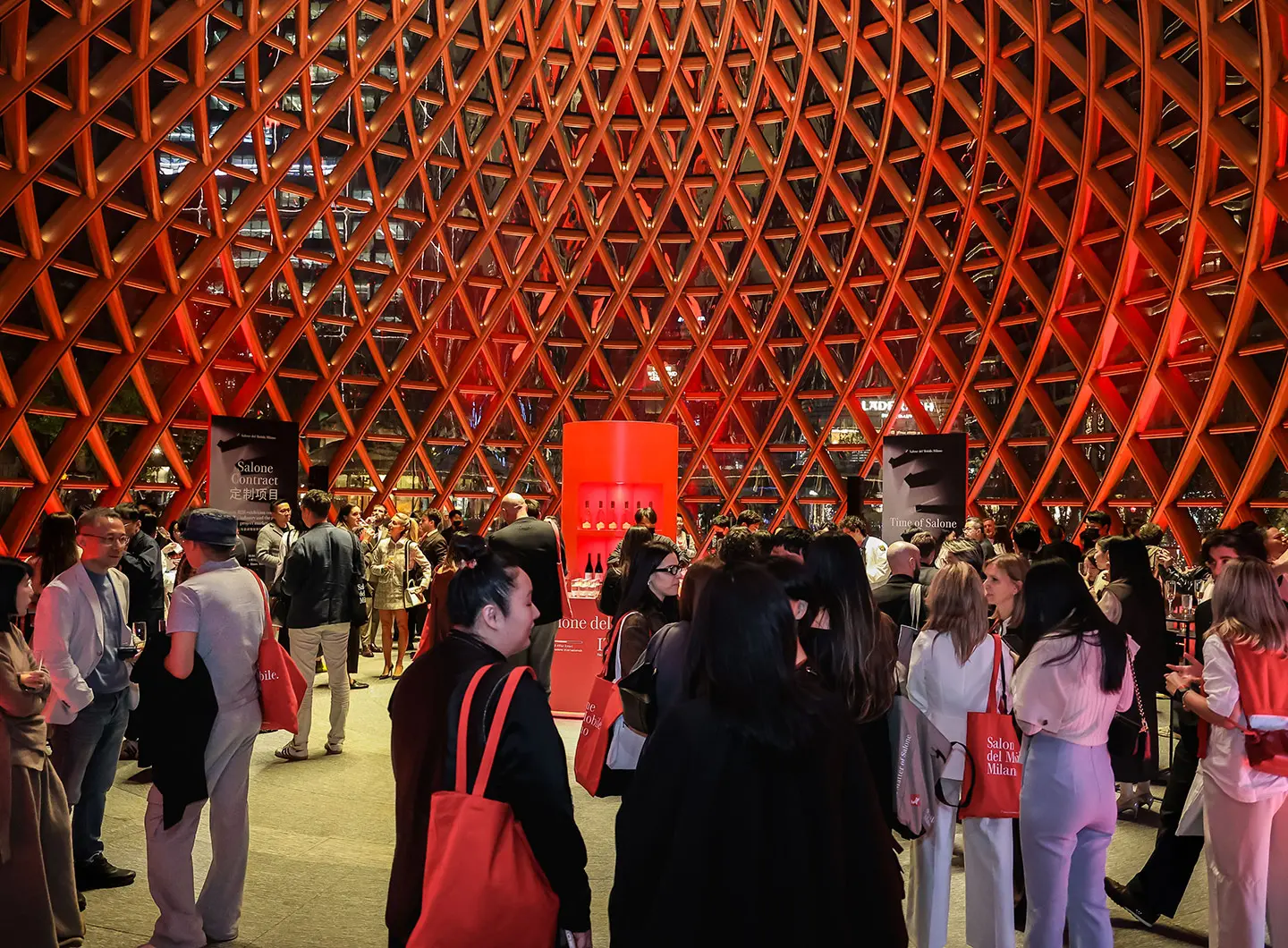
The Seed, Westbund Central Shanghai


Westbund Central: US$8 billion for a new urban hub
The Westbund Central project will make this complexity concrete. The project represents the largest single investment in the history of Hongkong Land, for a value of approximately US$8 billion. It spans 23.1 hectares and provides for over 1.1 million square metres of developable area, within a complex totalling approximately 1.7 million square metres, with ongoing phased completion scheduled up to 2028.
The scale is not merely quantitative. Westbund Central will cater for Grade A offices, luxury retail, waterfront residences, two Mandarin Oriental hotels, convention facilities, cultural venues, sports facilities, wellness centres and public spaces. The masterplan, designed by KPF, coordinates the various components of the development, whilst a network of international firms is responsible for individual fields: Benoy for the commercial and luxury retail elements, HKS for the Mandarin Oriental Hotel and Convention Centre, Heatherwick Studio for The Orbit, and Hassell for the landscape.(6)
From the developer to the interior designer: who drives demand
With Maria Porro, President of the Salone del Mobile.Milano, the discussion will explore the various levels through which Contract demand is shaped: the people who develop and coordinate the project, those who build the destination, those who define the interior experience, and those who translate the standards of major hospitality brands into recognisable spaces that resonate with their context. The focus is on the skills now required of design firms to secure major international projects and collaborate in a more structured way with clients and designers.
From Shanghai to Salone Contract 2027
The insights gleaned during the Tour will feed into Salone Contract, which will make its debut at the 65th edition of the Salone del Mobile.Milano, at Fiera Milano, Rho from 13th to 18th April 2027. The masterplan by Rem Koolhaas and David Gianotten / OMA will shape a platform designed to foster dialogue between projects, industrial capabilities and client requirements through The Dome, Podium, Project Spaces and B2B areas.
The Salone Contract Forum will explore the evolution of demand, investment and collaboration models that are redefining key property assets, whilst the partnership with PwC will provide research, data and analytical tools on markets, asset classes and commissioning processes. The Tour will support this work through direct dialogue with stakeholders across different markets, building an international perspective on the themes that will come together in Milan in 2027. Shanghai will kick off the tour with a focus on mixed-use developments. Subsequent stopovers will broaden the scope to include workplaces, hospitality, residential and marine sectors, whilst conserving the same underlying questions: who is driving new demand in the contract sector, how are projects changing, and what skills are developers and designers seeking within the design industry?
The Salone Contract Tour forms part of the Salone del Mobile.Milano World Tour, organised with the support of the ITA — Italian Trade Agency, the diplomatic and consular network, and the Italian Cultural Institutes of the Ministry of Foreign Affairs and International Cooperation.
(1) Salone del Mobile–PwC Italy, The Contract Market 2026, China/APAC tables, reproduced in Contract Market Focus: China
(2) Salone del Mobile–PwC Italy, The Contract Market 2026; China/APAC market size tables (compiled by PwC Italy). References: Swire Properties and Hang Lung Properties, half-year results 2026.
(3) State Council of the PRC, Urban Renewal Plan 2026–2030, May 2026; Xinhua, 16th July 2026
(4) Lodging Econometrics, China Construction Pipeline Trend Report Q2 2026, public summary of 5th August 2026; data as at the end of June 2026.
(5) Federlegno Research Centre, Furnishing Macrosector Exports to China, 2025 and January–June 2026.
(6) Hongkong Land, press release of 4 May 2026; KPF, West Bund Financial Hub factsheet.
22 October 2026
Share