

 Stories

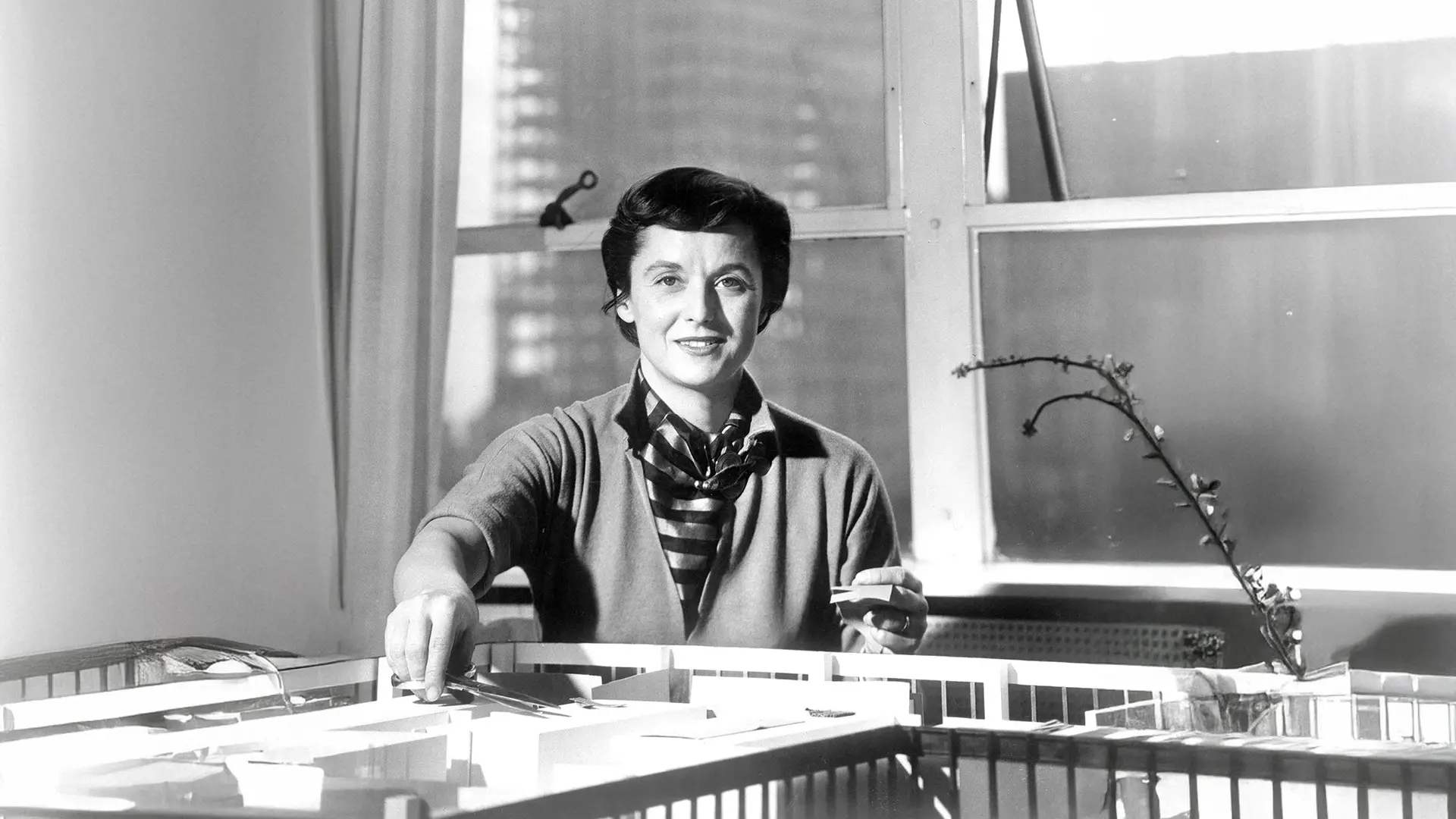
The Planning Unit, the collective catalogue of Mies, Saarinen and Bertoia and “meat and potatoes” furniture: how Florence Knoll invented the modern office whilst opting to stay out of the limelight.
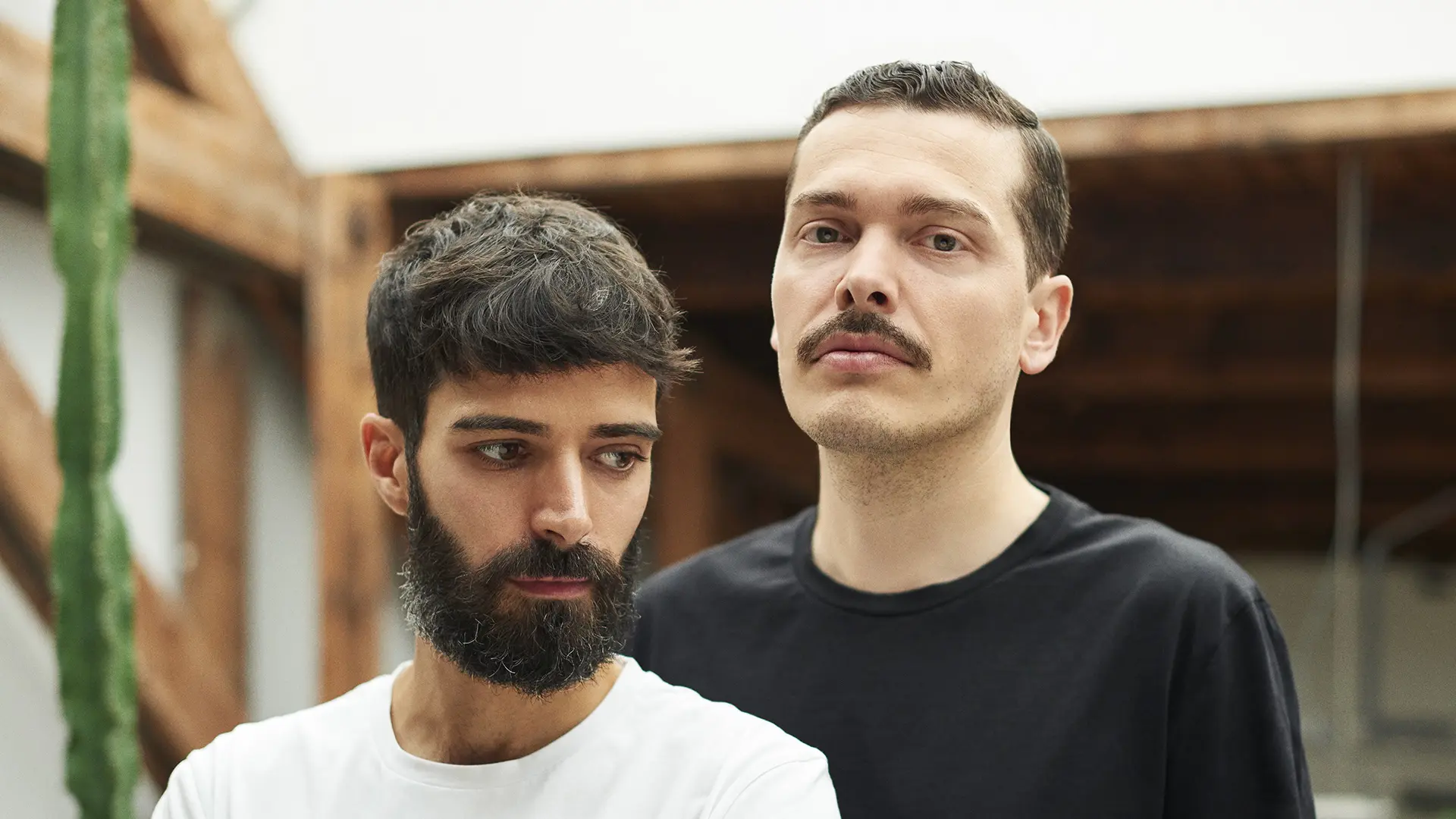
Formafantasma, Andrea Trimarchi and Simone Farresin, ph. Renee de Groot
After the “Drafting Futures” Arena conference space, the Salone Library, and the Corraini Bookshop, the Formafantasma creative duo – Andrea Trimarchi and Simone Farresin – has also designed the new “fair within a fair” setup dedicated to rare objects. Here’s their preview
Formafantasma – the name that Andrea Trimarchi and Simone Farresin chose for the studio they founded in 2009 in the Netherlands, literally meaning “ghost-shape” – speaks volumes about their intention: to focus on the part of a project that cannot be seen. For them it was, and still is, a matter of broadening one’s gaze to include production processes and the broader context, concerned with generating thought rather than – or together with – simple products. In their work form does not disappear, it does not dissolve, but remains subordinate to functionality and to different logics, whether social, political or environmental in nature. We have seen this vision in operations such as Ore Streams (2017-2019), Cambio (2020), and Oltre Terra (2023), conceived as wide-ranging research on the fate of electronic waste and the production of materials such as wood and wool; but also in the design of physical and tangible objects such as SuperWire lamps(2014) for Flos, featuring an LED strip that can be repaired or replaced if necessary, and in the numerous setups and curatorial projects they have carried out in recent years, as aesthetically refined as they are intelligent in taking into consideration the entire life cycle of the materials used.
In the last calendar year, in this field alone, the creative duo has curated the sets for exhibitions dedicated to the Shaker movement at the Vitra Design Museum in Weil am Rhein and to Italian popular history at the MUCIV-Museo delle Civiltà in Rome, imagining stage machines that bring together the different facets of the themes addressed; they have staged the works of American artist Mike Kelley within a maze of metal walls (for the retrospective Ghost and Spirit at the Moderna Museet in Stockholm), conceived a theatrical performance with human and non-human actors dedicated to the encounter/clash between modernism and ecology (Staging Modernity, for Cassina during the most recent Milan Design Week), and dialogued with Carlo Scarpa, returning to the theme of electronics’ environmental impact with new sculptural furnishings that represent the ideal continuation of the Ore Streams project in the historic Olivetti store in Piazza San Marco, Venice. Next April, Formafantasma will design the exhibition setup for Salone Raritas, the exhibition dedicated to limited-edition design and high-end creative manufacturing, part of the programme for Salone del Mobile.Milano, curated by Annalisa Rosso, Editorial Director & Cultural Events Advisor – for which the studio has already designed the “Drafting Futures” Arena, the Library, and the Corraini Bookshop. We sat down with Andrea Trimarchi and Simone Farresin to find out how they worked on the project, and what this new space will look like.
What was the biggest challenge in this project? How did you balance respect for the uniqueness of each exhibitor with the need to operate within the homogeneous context of the fair?
The greatest challenge of this project has been precisely that it’s not a museum but a trade fair, with all the inherent limitations and opportunities that entails. We sought to develop more open platforms to emphasise galleries’ individuality, while maintaining a sense of connection between the different exhibition areas. To ensure a more cohesive final outcome, we had to pay careful attention to the colour palette and spatial design, so exhibitors would not be left with a blank canvas to customise as they pleased.
Colour is always a very important and thought-through element in your setups. I’m thinking, for example, of the palette you chose for the 2020 exhibition on Caravaggio and Bernini at the Rijksmuseum in Amsterdam: it was a bold move that bucked the dark hues and intense contrasts usually associated with Baroque art. What does colour represent for you?
For us, the issue of colour has various natures and motivations. First of all, in a museum context, we like to go against the idea of white space that has become somewhat iconic in the modern concept of exhibition space. Furthermore, colour is an element that has always been considered secondary by most, though not all, so-called “serious designers”. Its role has historically been underestimated. We like the idea that to present works of art, it’s not strictly necessary to demand a level of neutrality that doesn’t exist in reality and can only be apparent. We love working in this space, which has long remained unexplored.
Returning to Salone Raritas, what colours will we see?
It’s too early to tell, as the final design will also depend on the galleries’ choices from the colour palette we’ve proposed. We can anticipate, however, that it’s a fairly understated palette, with some subtle colour accents.
How did you interpret the theme of the “architectural lantern”?
We tried to turn the perimeter wall into a luminous object in itself, so as to easily highlight Salone Raritas’s position within the fair. However, we believe that it will be easier to discuss this once the project is completed, because it’s only when we get to the final details that we understand whether everything in the project is working as we hoped.
Was it helpful for you to have an insider’s perspective on the world of collectible design and to have been previously involved with it as designers?
No, both because it’s such a diverse world and because we don’t like everything that galleries do. Our experience in exhibition design was much more helpful, despite the differences between working in a fair and in a museum. For example, we knew that we needed to work hard on the elements that are “imposed” on galleries, as well as on leaving room for freedom. Our goal was to not let the final result be dictated by individuality, but rather let the collective prevail, obviously within reasonable limits.
You’re always very mindful of the environmental impact of the setups you design, and work with a focus on reuse and recycling. What measures have you taken in this case?
We strive to be responsible with our use of materials; for example, we’ve avoided carpeting and instead built a modular system that can be reused for the next edition, save for the parts that necessarily need to be fixed or replaced. This was also the case with the Arena, which is repurposed every year after restoring any damaged elements. This aligns not only with our vision, but with Salone’s as well, although it’s obviously very challenging when working in the context of a trade fair.
How did you develop an interest in exhibition design and space planning, which you’ve been pursuing alongside other activities for years?
We didn’t like many of the exhibitions we saw, and imagined they could be designed better. Also, as Italians we have an extraordinary, living tradition of exhibition design – think of Franco Albini and Carlo Scarpa, Lina Bo Bardi, or BBPR with their work on Castello Sforzesco, one of the venues we love most. We were interested in measuring ourselves against that background and attitude, but at the same time spatialising ideas is something we’ve always done, and made this a very natural evolution of our journey.
15 December 2025
Share